AirPods 5 bring noise cancellation to Apple’s open fit. The real choice is how much isolation you need
Apple’s AirPods 5 make open-fit earbuds more capable, but ANC cannot change the basic physics of an unsealed earbud. Here is who benefits, which $149 version makes sense, and when AirPods Pro remain the better buy.

Apple has made the AirPods decision more complicated without making it more expensive. The new AirPods 5 start at $129, retain the familiar open fit, add Active Noise Cancellation, and arrive with a second $149 version that adds wireless charging, longer battery life and a new volume gesture. They go on sale September 18, after preorders began September 9.

The important part is not the feature count. It is the conflict between two things buyers usually want from earbuds: a comfortable, non-sealing fit that leaves the ear feeling open, and strong isolation from the world. AirPods 5 try to deliver both. The design makes that compromise more usable, but it does not remove it.
That distinction matters more than Apple’s claim that the new model offers up to 50 percent more noise reduction than AirPods 4 with ANC. The comparison is between two open-fit products. It is not a promise that AirPods 5 will isolate a plane, train or noisy office like a sealed AirPods Pro model.
What Apple actually changed
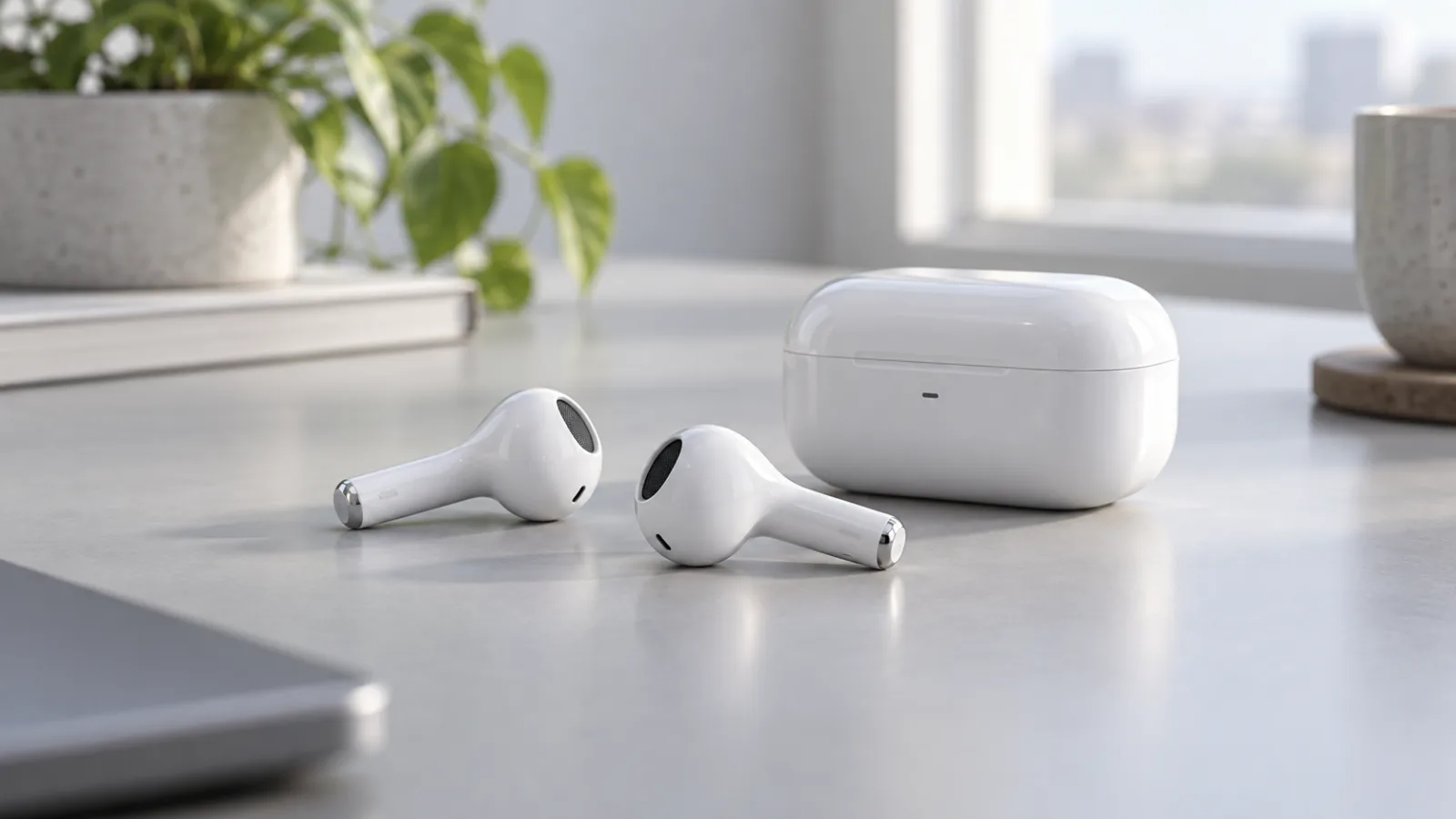
AirPods 5 keep the stem-and-speaker shape associated with Apple’s standard AirPods rather than using silicone ear tips. The speaker sits at the entrance of the ear, but the ear canal remains largely unsealed. Apple says the new model uses a multiport acoustic architecture, next-generation Adaptive EQ and the H2 headphone chip. The company also lists an IP57 rating for dust, sweat and water resistance.
The two versions use the same basic listening hardware. The $129 model comes with a USB-C charging case. The $149 AirPods 5 with Wireless Charging Case can charge through USB-C, a Qi-compatible charger or an Apple Watch charger. It also includes a speaker for Find My and a force sensor that supports swiping up or down on the stem to adjust volume.
Apple’s battery figures show why the $20 difference deserves attention. The base model is rated for up to four hours of listening with ANC enabled and up to 20 hours with the case. The wireless-charging version is rated for up to five hours per charge and up to 22 hours with its case. Both estimates are Apple laboratory figures, so call time, volume, temperature, switching between devices and the use of other features can reduce them.
There is no need to buy the more expensive model for better ANC or better sound on paper. The premium is for charging convenience, Find My hardware, the stem volume control and the extra battery margin. That makes it a useful upgrade for someone who already uses a charging pad or regularly forgets to top up earbuds. It is a poor upgrade if those features will sit unused in a drawer.
Open-fit ANC is still a compromise
Noise cancellation works by generating an opposing signal to reduce incoming sound. The microphones and processing can be remarkably effective, but a physical seal still does much of the work, especially against low-frequency sound. A silicone tip blocks some noise before the electronics have to react. An open earbud lets more of that sound reach the ear in the first place.
That is why the AirPods 5 story should be read as “better noise control for people who dislike ear tips,” not “AirPods Pro isolation at a lower price.” Apple’s design can reduce the apparent level of steady noise and make speech, music or podcasts easier to hear. It is less likely to create the quiet bubble that sealed earbuds produce on a flight or during a commute.
Independent coverage of earlier open ANC earbuds points to the same limitation: the form factor can make a noticeable difference in a café or office, but it struggles more with engine rumble and other bass-heavy sounds. The new acoustic design may improve the result, and Apple’s claimed comparison with AirPods 4 is relevant for that generation, but the claim does not rewrite the acoustics of an open fit.
There is also a subjective trade-off. Some people dislike the plugged-up sensation of silicone tips, the sound of their own voice while speaking, or the pressure that can build during long listening sessions. For those users, modest isolation that they will actually tolerate may be more useful than stronger isolation they stop wearing after half an hour. Comfort is not a secondary specification for earbuds; it determines whether the product becomes part of a routine.
The right test is therefore not “Can AirPods 5 cancel all noise?” It is “In the places where I currently remove sealed earbuds, would these reduce enough noise to keep wearing them?” If the answer is a crowded office, a walk, a shop or a kitchen, the open design may be the main reason to consider them. If the answer is an airplane cabin, underground train or loud workshop, the physical seal of AirPods Pro remains the safer expectation.
The $129 model is the logical default
The base AirPods 5 are the more interesting product because they move ANC into Apple’s ordinary AirPods price tier. They offer the same H2 chip, the same open-ear form factor, the same claimed ANC improvement and the same major software features. For a buyer who wants Apple’s automatic pairing and hands-free controls but does not care about wireless charging, the $129 model covers the central use case.
The cheaper case does impose practical limits. Apple rates it for one fewer hour of listening per charge than the wireless-charging version when ANC is on, and it lacks the case speaker and stem volume swipe. Volume can still be changed with Siri, a connected device or the usual controls, but that is less convenient than a physical gesture when a phone is in a pocket.
The $20 premium is easiest to justify for three kinds of buyers: someone who already owns an Apple Watch charging puck or Qi pad, someone who uses Find My frequently, and someone who values the extra hour enough to avoid carrying a cable. It is also the version to choose if the earbuds will be used for long work sessions and the case will be recharged opportunistically throughout the day.
There is no reason to treat the $149 version as a “Pro Lite” model. It does not add silicone tips, the stronger passive isolation that follows from them, or the full Pro feature set. The price difference buys a better case, not a different class of earbud.
AirPods 5 versus AirPods Pro
AirPods Pro remain the more appropriate choice for buyers who rank isolation, bass response and hearing-related features above an open sensation. The sealed design gives the ANC system a better acoustic starting point, and the ear tips allow the fit to be adjusted. That does not make Pro universally better. A sealed earbud can be uncomfortable, less stable for some ears, or unpleasant when the wearer needs to speak and remain aware of nearby people.
AirPods 5 also borrow several features that used to make the Pro range feel more distinct. Apple says the new earbuds support Siri AI interactions, including head gestures for some responses, and Live Translation when paired with compatible Apple hardware and software. They also support Personalized Spatial Audio and Adaptive EQ. These features may make the standard model feel less stripped down, but they do not change the listening geometry.
The comparison should be made by environment rather than by a checklist. Choose AirPods 5 if you want to hear a colleague without removing an earbud, dislike tips, spend much of the day in moderately noisy spaces, or want standard AirPods at a lower entry price. Choose Pro if you routinely need deep isolation, listen in aircraft cabins, want the most convincing low-end response, or need the fit adjustment that tips provide.
An older AirPods Pro model may also be worth considering if it is heavily discounted, but buyers should check software support, battery condition and warranty status. A discounted pair with a tired battery is not a bargain merely because the original list price was higher. With small sealed batteries, age and previous use can matter more than a modest saving at checkout.
The new features are more dependent on the phone than the box suggests
AirPods 5 can work as Bluetooth headphones with non-Apple devices, but Apple warns that functionality may be limited. The headline features are designed around the company’s ecosystem. Pairing, automatic switching, Find My, Siri interactions, head gestures, Spatial Audio and Live Translation can depend on a compatible iPhone, iPad, Mac, Apple Watch, operating-system version and account settings.
That does not make AirPods 5 unusable with Android. It changes what is being purchased. An Android user may receive a comfortable pair of Bluetooth earbuds with basic playback, calls and some controls, while paying for a platform-specific layer that is difficult or impossible to reproduce outside Apple’s devices. Buyers who switch between an iPhone and Android phone should verify which functions survive that transition before ordering.
Live Translation deserves particularly careful expectations. A translation feature demonstrated at a product launch is not the same thing as a universally available interpretation service. Language support, regional availability, account settings, network access, compatible operating systems and Apple Intelligence support can affect the result. It should be treated as a feature to test in the buyer’s actual languages, not as a reason by itself to replace working earbuds.
The same caution applies to Siri AI. Apple describes a more capable assistant that can use personal context and perform actions across apps, but availability is tied to supported hardware and software. The AirPods are an interface for those capabilities, not an independent AI computer. If the paired device cannot provide the service, the earbuds cannot create it on their own.
Battery life and water resistance are not permission to ignore maintenance
AirPods 5’s IP57 rating is useful, especially for exercise and everyday exposure to sweat or rain. It does not mean the earbuds are indestructible, safe in a shower, or protected from every kind of liquid. Apple’s care guidance still matters: charging contacts should be kept clean and dry, and wet earbuds should not be placed in the case until they have dried. Water resistance can decline with normal wear, impacts and repeated exposure.
Battery numbers also need to be read as a schedule. Four hours from the base model with ANC on is enough for a commute, a work block or a workout, but not a full day of continuous listening without a case break. The wireless-charging version’s five-hour rating is better, not transformative. If earbuds are used for calls, high volume or frequent mode changes, real-world endurance will vary.
The batteries are not user-replaceable in the ordinary sense. Like other compact wireless earbuds, AirPods 5 are designed around a sealed package and a charging case. That makes the purchase a shorter-lived piece of electronics than a wired headset or a larger over-ear headphone with a replaceable battery. AppleCare or another repair plan may change the financial calculation, but it does not turn the product into a repair-friendly device.
This is also why losing one earbud is a meaningful cost rather than a minor inconvenience. Find My and the case speaker reduce the chance of misplacing them, but they do not eliminate it. The $129 price is relatively low for Apple’s ecosystem, yet two or three replacement events can quickly erase the apparent saving over a more durable wired option.
Who should buy AirPods 5 now
AirPods 5 make the most sense for an iPhone owner who has been avoiding AirPods because silicone tips feel intrusive, but who still wants some reduction in background noise. The product is also a reasonable fit for people who want a lightweight everyday earbud for calls, walking, household tasks and office listening. The open design makes awareness easier than with a sealed bud, though users should still keep volume low enough to hear important surroundings.
The $129 version is enough for most first-time buyers. Select the $149 model when wireless charging, Find My on the case or the stem volume gesture solves a problem you actually have. Those are practical reasons; buying the more expensive case simply because it sounds more premium is not.
Existing AirPods 4 owners should be more selective. If the current earbuds fit well and the ANC already handles the environments where they are used, the upgrade may feel incremental. The new model becomes more compelling when the buyer wants better battery life, IP57 protection, the new controls or access to a feature that the current hardware does not support.
Owners of AirPods 3 or older standard AirPods have a clearer reason to consider the change because they are moving from no ANC to ANC, from older charging hardware to USB-C, and from an older chip generation to H2. Even then, the fit should be treated as the first question. A new feature is not useful if the physical shape does not stay securely in the ear.
Who should wait or buy something else
Do not buy AirPods 5 expecting them to replace a good pair of sealed noise-cancelling earbuds for flights, rail travel or very loud work environments. The open design is the product’s defining benefit and its defining limit. If a quiet listening bubble is the priority, AirPods Pro or another sealed alternative is a better starting point.
Do not buy them primarily for Live Translation unless the feature is already supported on the phone, software version and languages you use. Launch-day demonstrations show the intended experience; they do not guarantee identical availability everywhere. The same principle applies to Siri AI. Treat those features as bonuses until they work in the specific setup you own.
And do not assume the AirPods 5 will fit because earlier AirPods did. Ear shapes vary, and open earbuds depend on the angle and position of the speaker more than a tip-sealed model does. A retailer with a clear return policy is valuable here. Fit is one of the few specifications that cannot be settled from Apple’s product page.
The practical verdict
AirPods 5 are a meaningful update to Apple’s standard earbuds because they add ANC without forcing every buyer into a sealed fit. That is a real product distinction, especially for people who find in-ear tips uncomfortable. The feature is useful precisely because it is attached to a form factor that some users already prefer.
The limits are equally clear. Open-fit ANC cannot provide the same isolation as a sealed earbud, the claimed 50 percent improvement is a company comparison rather than an independent universal measurement, and the smartest features depend on Apple hardware and supported software. The $149 model is mainly a better charging case, not a better noise-cancellation system.
For most buyers, the decision is simple: choose the $129 AirPods 5 if you want open-fit comfort and moderate noise reduction; pay $20 more only for the case features and extra battery; choose AirPods Pro if isolation is the main reason you are buying earbuds. That is the useful way to read Apple’s launch. AirPods 5 do not make the old trade-off disappear. They make it available at a lower price and with a more capable open-ear option.
Related articles
Pixel 11 is coming on August 12. The price leak is the real story.
Google has confirmed its next Pixel event, but the bigger question is whether a 256GB base model and possible price increase make the Pixel 11 worth waiting for.


Should You Buy AirPods 5? The $129 Model Finally Makes ANC Affordable, but the Open Fit Still Decides Everything
AirPods 5 bring active noise cancellation, an H2 chip, IP57 resistance, and Live Translation to Apple’s entry-level earbuds. The $20 upgrade is sensible for many buyers, but the open fit and short per-charge battery limit their appeal.
Should you buy Sennheiser MOMENTUM True Wireless 5 before the reviews?
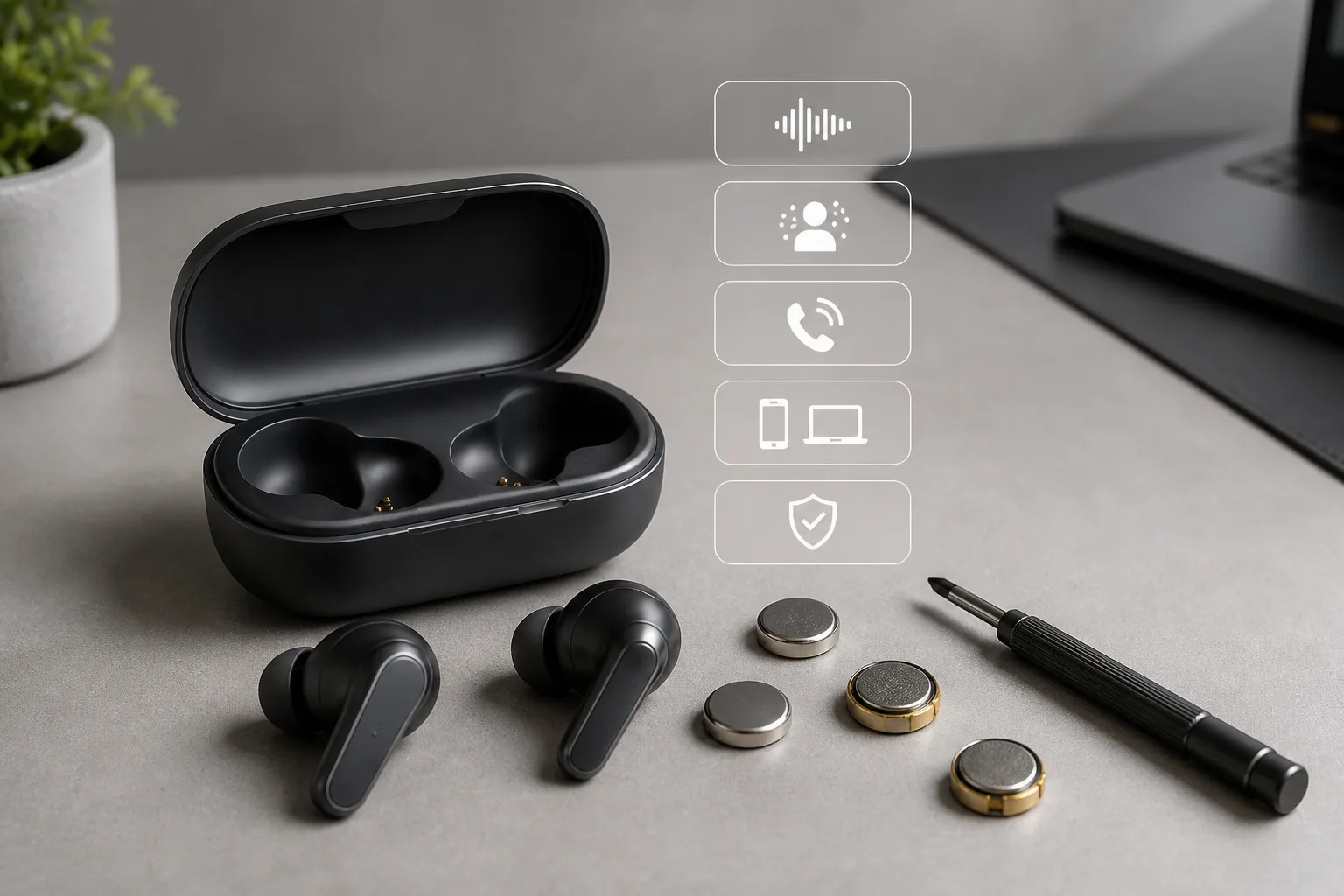
Sennheiser’s new $299.95 earbuds make a rare promise: user-replaceable batteries in the buds and case. That could change the ownership math, but most buyers should wait for reviews and battery-part details before paying launch price.
你应该购买 AirPods 5 吗?129 美元机型终于让主动降噪变得亲民,但开放式佩戴仍决定一切
AirPods 5 为苹果入门级耳机带来主动降噪、H2 芯片、IP57 防护和实时翻译。多花 20 美元通常值得,但开放式佩戴与单次续航仍限制了它的适用范围。
Comments
Sign in to comment.
No comments yet.