Patching rhythm beats security panic
A calm patch-management piece about triage, inventory, canaries and communication before the next urgent advisory.

CISA maintains the Known Exploited Vulnerabilities catalog to push agencies and defenders toward vulnerabilities that attackers are already using, not theoretical risk alone. The same week can contain browser fixes, edge-device advisories, application-library updates and identity-provider changes. The winning move is triage, not panic.
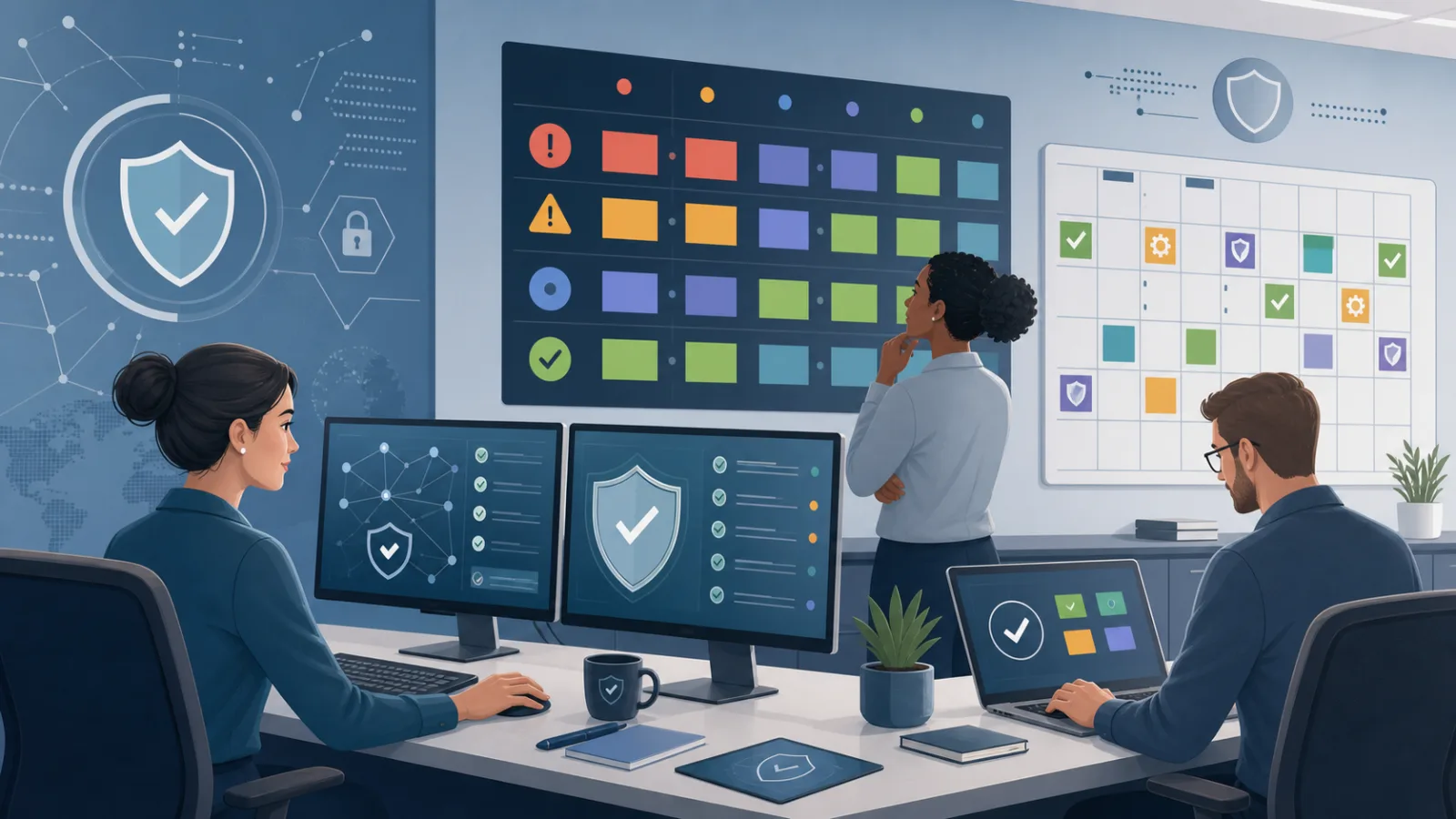
Panic is a bad scheduler
Security teams do not need more adrenaline. They need a patching rhythm that can absorb bad weeks without turning every advisory into a fire drill. Attackers move quickly when a vulnerability is easy to exploit, exposed to the internet, or already folded into public tooling. Defenders still have to work through inventory, compatibility, backups and user impact. The gap between urgency and reality is where panic lives.
Start with exploited risk
A practical patch program starts with what is exposed and what is known to be exploited. CISA’s Known Exploited Vulnerabilities catalog is useful because it pushes attention toward issues attackers are already using. Vendor severity scores still matter, but severity without context can mislead. A critical bug in a system nobody runs is not the same as a medium bug in a VPN appliance facing the internet. The question is not “is this scary?” The question is “can this reach us, and how soon?”
Inventory is the quiet superpower
The hardest sentence in security is often “we do not know where this runs.” Without inventory, patching becomes a scavenger hunt. Teams need to know versions, owners, exposure, business criticality and maintenance windows. They also need the awkward category: systems that are important but poorly owned. Those are the machines and services that turn ordinary advisories into weekend work.
Canaries prevent self-inflicted outages
Fast patching does not mean reckless patching. Canary groups catch broken dependencies, unusual load, failed logins and compatibility problems before the whole organization takes the update. The canary group needs real diversity: old operating systems, remote workers, privileged tools, accessibility setups, different browsers and a few machines with messy histories. Perfect lab devices are too polite to reveal real production trouble.
Communication lowers the temperature
Users tolerate security work better when they are told what is happening in plain language. “We are updating the VPN tonight; reconnect if your session drops” is better than silence. Executives make better decisions when security can say which systems are exposed, what mitigation exists and what risk remains after the patch. Calm communication is not decoration. It prevents rumor, duplicate work and risky shortcuts.
Measure the process, not just the emergency
A mature patching program measures more than time-to-patch. It tracks time-to-identify, time-to-owner, time-to-test, failed deployment rate, rollback rate and exceptions older than their justification. Exceptions are sometimes necessary. Permanent exceptions are just accepted risk with bad handwriting. If the same category of exception appears every month, the organization has a design problem, not a patch problem.
A boring week is the goal
The best security work often looks uneventful from the outside. Systems update, users keep working, logs stay clean and nobody writes a heroic incident memo. That is not a lack of drama. It is the result. Patching rhythm beats panic because it gives teams muscle memory before the bad day arrives. When a genuinely urgent advisory lands, the organization already knows how to move.
Practical check 1: The operational detail worth watching is ownership
The operational detail worth watching is ownership. When a process has a named owner, the same problem becomes easier to discuss because somebody can change the checklist, update the runbook and close the loop after a near miss. The same week can contain browser fixes, edge-device advisories, application-library updates and identity-provider changes. The winning move is triage, not panic. A useful implementation version is concrete: name the owner, define the first signal, decide the allowed action, and write the sentence a user would understand. That turns an abstract good intention into operating behavior.
Practical check 2: Another useful detail is reversibility
Another useful detail is reversibility. A change that can be paused, narrowed or rolled back invites experimentation. A change that can only be endured turns ordinary caution into resistance. Patch work is boring when it succeeds: inventory, exposure checks, canary updates, backups, validation and communication. A useful implementation version is concrete: name the owner, define the first signal, decide the allowed action, and write the sentence a user would understand. That turns an abstract good intention into operating behavior.
Practical check 3: The budget conversation matters too
The budget conversation matters too. Reliability, review and maintenance look expensive until the first avoidable incident consumes a week of senior attention and damages trust with users. CISA maintains the Known Exploited Vulnerabilities catalog to push agencies and defenders toward vulnerabilities that attackers are already using, not theoretical risk alone. A useful implementation version is concrete: name the owner, define the first signal, decide the allowed action, and write the sentence a user would understand. That turns an abstract good intention into operating behavior.
Practical check 4: The best teams write down the lessons while the memory is fresh
The best teams write down the lessons while the memory is fresh. A short post-incident note with symptoms, timeline, decision points and fixes is often more valuable than a long meeting that produces no changed behavior. The same week can contain browser fixes, edge-device advisories, application-library updates and identity-provider changes. The winning move is triage, not panic. A useful implementation version is concrete: name the owner, define the first signal, decide the allowed action, and write the sentence a user would understand. That turns an abstract good intention into operating behavior.
Practical check 5: The practical reader takeaway is modest: build a checklist before the pressure arrives
The practical reader takeaway is modest: build a checklist before the pressure arrives. Do not wait for the emergency to decide who owns the work, what evidence matters and how people will be told. Patch work is boring when it succeeds: inventory, exposure checks, canary updates, backups, validation and communication. A useful implementation version is concrete: name the owner, define the first signal, decide the allowed action, and write the sentence a user would understand. That turns an abstract good intention into operating behavior.
Practical check 6: This is also a culture problem
This is also a culture problem. Teams need permission to slow down for a real risk without being accused of blocking progress, and permission to move quickly when the risk is understood and reversible. CISA maintains the Known Exploited Vulnerabilities catalog to push agencies and defenders toward vulnerabilities that attackers are already using, not theoretical risk alone. A useful implementation version is concrete: name the owner, define the first signal, decide the allowed action, and write the sentence a user would understand. That turns an abstract good intention into operating behavior.
Practical check 7: Metrics should serve judgment rather than replace it
Metrics should serve judgment rather than replace it. A dashboard can show delay, failure rate and exposure, but somebody still has to ask whether the remaining risk is acceptable. The same week can contain browser fixes, edge-device advisories, application-library updates and identity-provider changes. The winning move is triage, not panic. A useful implementation version is concrete: name the owner, define the first signal, decide the allowed action, and write the sentence a user would understand. That turns an abstract good intention into operating behavior.
Practical check 8: The final test is boring but sharp: could a new person join the team, read the procedure and avoid the most obvious mistake? If not, the process still depends too much on memory and luck
The final test is boring but sharp: could a new person join the team, read the procedure and avoid the most obvious mistake? If not, the process still depends too much on memory and luck. Patch work is boring when it succeeds: inventory, exposure checks, canary updates, backups, validation and communication. A useful implementation version is concrete: name the owner, define the first signal, decide the allowed action, and write the sentence a user would understand. That turns an abstract good intention into operating behavior.
What to do next
Do not turn this into a grand transformation program. Pick one dependency, one workflow or one service where the risk is visible and the owner is willing to improve it. Map the current path, remove one ambiguity, add one verification step and rehearse the recovery path. Then repeat. The organizations that handle technology well rarely look heroic from the outside. They look prepared.
The management habit underneath it
The common thread is a management habit rather than a single tool. Good teams convert anxiety into a small decision: who owns this, what evidence would change our mind, what is the safest first move, and how will we know whether it worked. Bad teams leave those questions implicit until the clock is already running. That difference shows up in support queues, incident rooms, customer trust and the amount of weekend work people quietly absorb. The healthier habit is not glamorous, but it travels well across vendors, products and departments. A written habit also survives turnover. When the only map lives in one senior person's head, every vacation and resignation becomes operational risk. When the map lives in a short procedure that people actually use, the work becomes teachable. That is the quiet difference between resilience as a slogan and resilience as a daily practice.
A final reader checklist
Before acting on the next promising tool, urgent advisory or routine change, make the situation small enough to manage. Write the desired outcome in one sentence. List the systems and people touched by the decision. Decide which evidence would prove progress and which signal would prove trouble. Keep a rollback path visible. Tell affected people what they need to know before they discover the change themselves. None of this requires a committee. It requires the discipline to make hidden assumptions visible while the stakes are still low. The payoff is not only fewer incidents. It is calmer work: fewer mystery escalations, fewer duplicated decisions, and more confidence that a routine change will remain routine. It also makes trade-offs more honest. A team can decide to accept a risk for a week when everyone understands the reason, the owner and the review date. What hurts organizations is not every temporary exception; it is the exception that nobody can explain three months later.
Related articles
Patching without panic: the security work that keeps the week boring
A practical guide to browser, plugin, identity and vendor updates: what to fix first, how to reduce risk, and how to avoid turning routine maintenance into a crisis.

RoguePlanet without panic: what the Defender patch really means
Microsoft patched a Defender privilege-escalation flaw, but the practical risk is about post-compromise escalation, patch visibility and disclosure speed.
Microsoft’s 570-patch July update is not a panic signal. It is a prioritization test
Two exploited flaws in AD FS and SharePoint matter more than the headline count; the right response is staged, evidence-based patching.

SharePoint was patched in May. CISA says the risk is real now
CVE-2026-45659 shows why an authenticated on-prem SharePoint RCE can move from patch ticket to incident-aware response once active exploitation is confirmed.

Comments
Sign in to comment.
No comments yet.