Plantain pancakes in Spain: a simple way to cook plátano macho
In Spain, plátano macho is the banana you buy when you want to cook rather than peel and eat. Here is what makes it different, where it fits in Spanish kitchens, and how to turn a ripe one into tender, crisp-edged pancakes.

There is a useful distinction to make before putting a banana in a frying pan: not every banana is meant to be treated as a dessert fruit. In Spain, the name to look for is usually plátano macho. In English it is generally called a plantain, and in shops it may also be labelled banana for cooking. It belongs to the same broad banana family as the sweet bananas we eat out of hand, but its flesh is firmer and starchier, especially while green. It is normally peeled with a knife, then fried, boiled, baked or mashed.
That is the short version. The practical version is that a plantain gives you another kind of pantry ingredient. A green one behaves more like a starchy vegetable; a yellow one with darkening skin becomes softer and sweeter; a very ripe one can carry a whole batch of pancakes without much added sugar. This is why I would not use the terms ordinary banana and cooking banana interchangeably, even though both may be sold in the same fruit aisle.
What plátano macho means in Spain
Spain has its own well-known dessert-banana tradition, especially the bananas grown in the Canary Islands and sold as plátano de Canarias. Those are table bananas: sweet fruit commonly eaten raw. Plátano macho is a different shopping choice. It is associated with Latin American, Caribbean and African cooking and is often found in larger supermarkets with an international range, Latin grocery shops and markets serving those communities. Availability varies by city and season, so a neighbourhood shop may call it plantain, plátano macho or banana para cocinar.
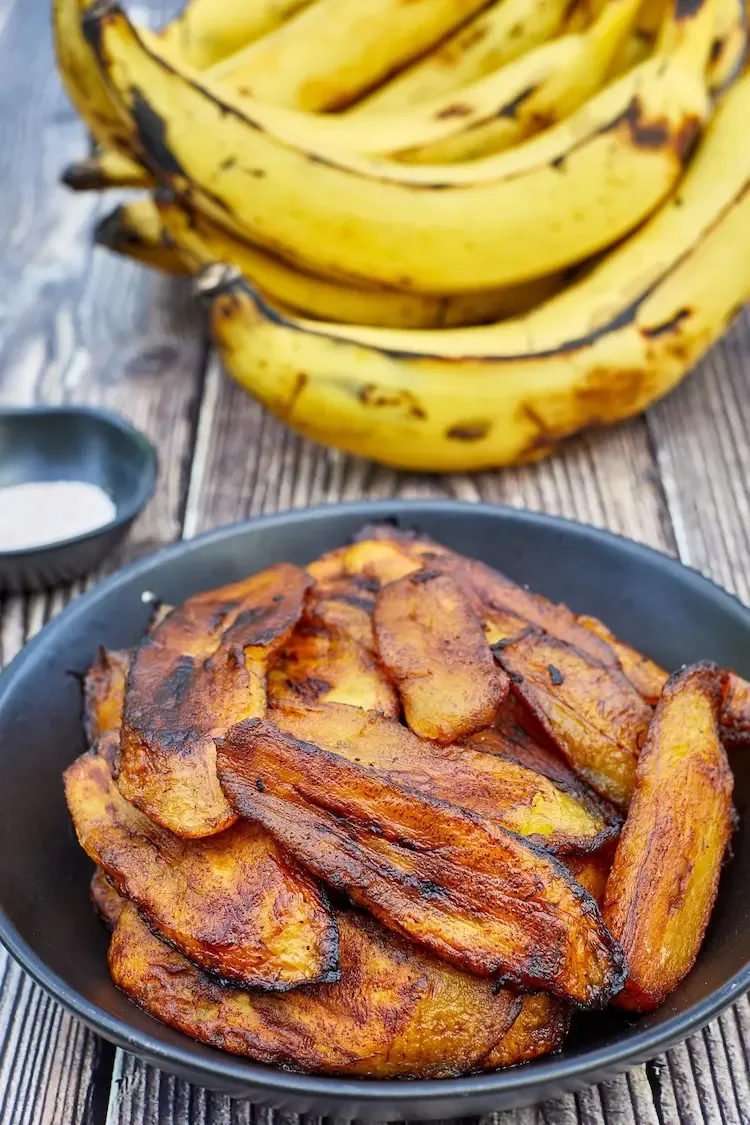
The label is not a promise that every fruit will taste or cook identically. Variety, maturity and storage all matter. What matters at the counter is the condition of the fruit. A green plantain is firm, relatively low in sweetness and high in starch; its peel can cling tightly to the flesh. A yellow one with a few black marks is softer and sweeter but still sturdy enough to slice. A very ripe, heavily spotted plantain is fragrant and soft, and works well mashed into batter, though it can brown quickly in the pan.
A plantain should feel heavy for its size, without wet, leaking patches or a sour smell. Black marks on the skin are not automatically a problem; they can simply indicate ripening. Mold, slimy areas or an unpleasant fermented smell are reasons to discard it. Keep an unripe plantain at room temperature until it reaches the stage you want. Once ripe, refrigeration may slow further softening, although the peel can darken while the inside remains usable.
Why use it for pancakes?
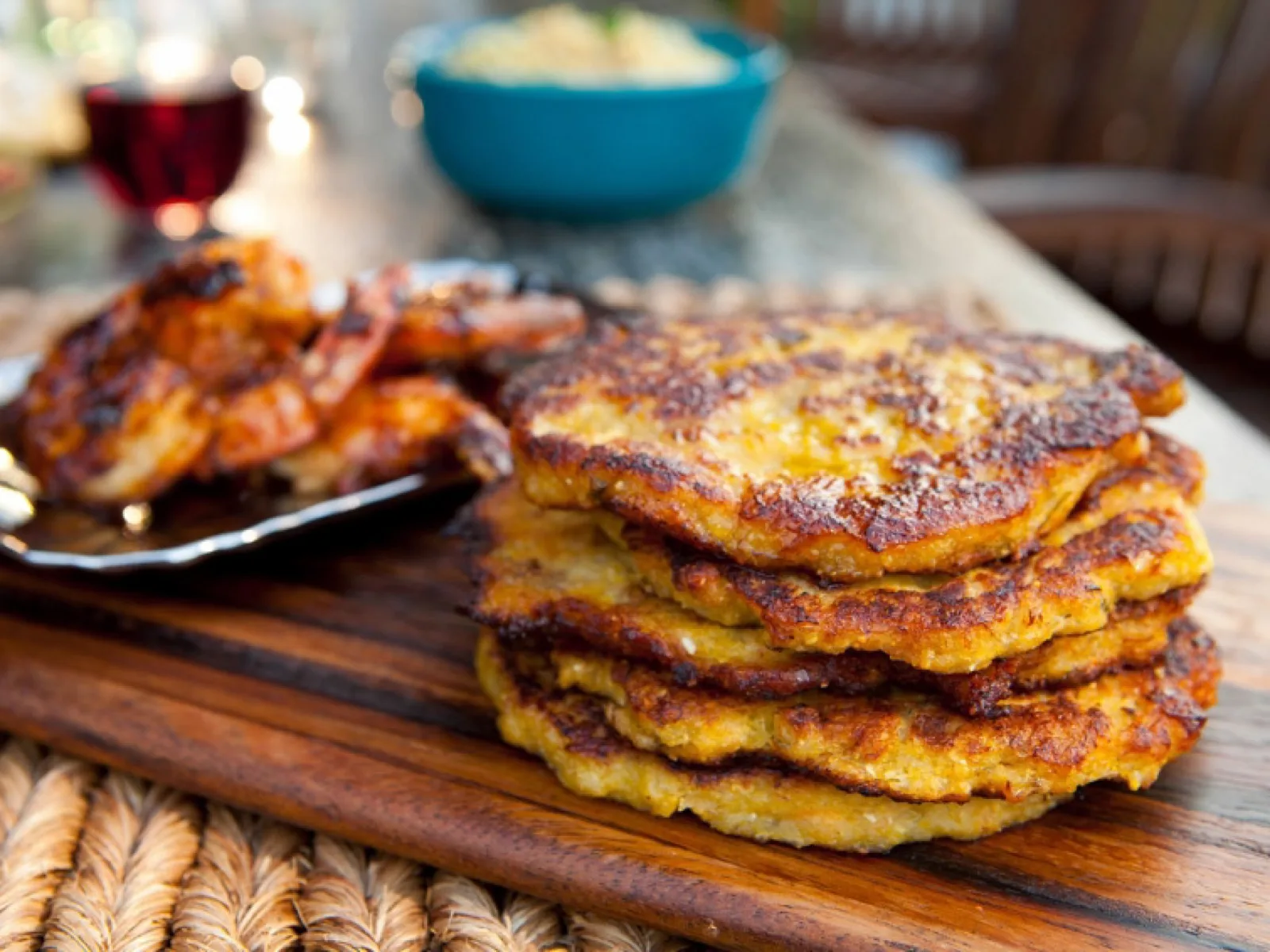
Pancakes show the difference nicely. The plantain does not disappear into a sugary cake. Its flavour stays gently banana-like, while the starch gives the centre a little more body than a pancake made with only a very soft dessert banana. The edges can become lightly crisp where batter meets oil, and the inside stays tender if the heat is moderate.
This is not a strict regional Spanish classic, and I would not present it as one. It is a practical home-cooking adaptation for a fruit that is easy to find in many Spanish cities. The idea is relaxed: use the ripeness available, keep the batter thick enough to turn, and do not buy a specialist ingredient just to make breakfast.
Plantain pancakes
Makes: about 8 small pancakes, enough for 2 people.
Approximate time: 15 minutes preparation and 15 minutes cooking, or about 30 minutes total.
Ingredients
- 1 medium ripe plantain, about 250–300 g before peeling
- 1 large egg
- 80 g plain flour
- 1/2 teaspoon baking powder
- 1/4 teaspoon ground cinnamon, optional
- 1 small pinch of salt
- 60–90 ml milk, added gradually
- 1 teaspoon sugar, optional if the plantain is only yellow
- 1–2 tablespoons neutral oil for the pan
For serving, use plain yogurt, sliced fruit, apple purée or a small drizzle of honey. None is essential. The pancakes are sweet enough for many people when the plantain is well spotted.
Before mixing
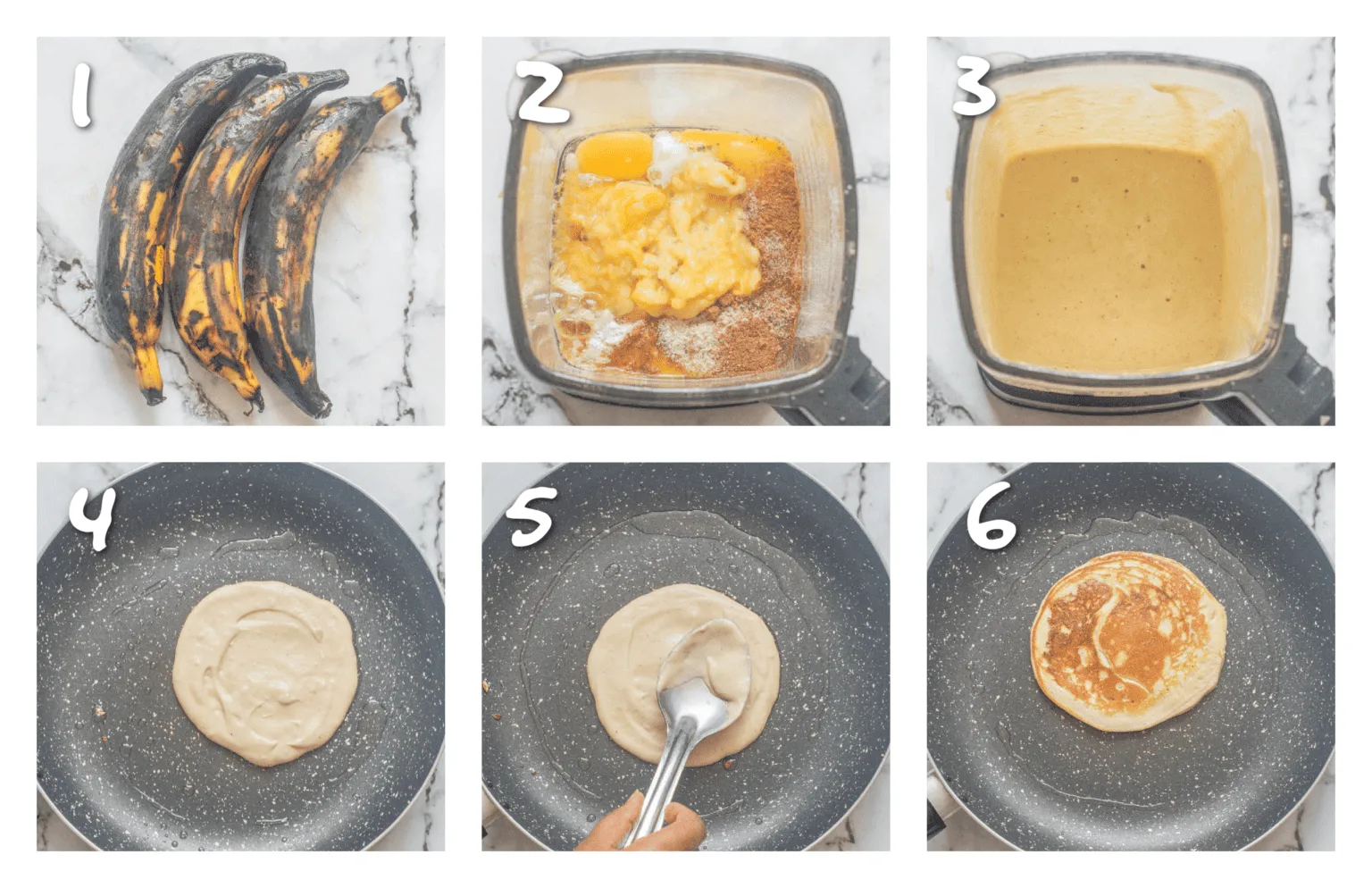
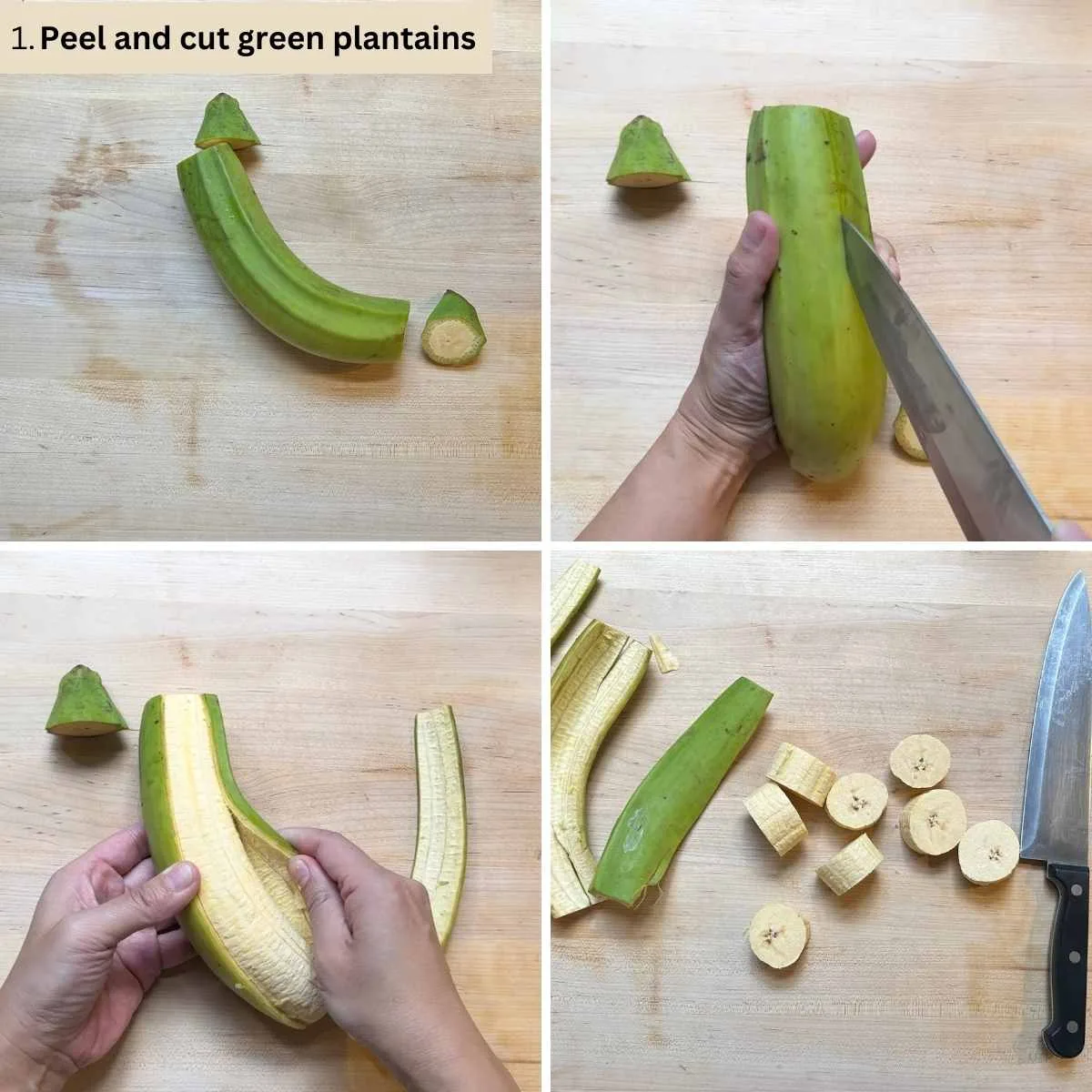
Peel the plantain. With a green or partly ripe fruit, cut off both ends, score the peel lengthwise in two or three places and lift it away with a knife. A ripe plantain is easier, though a knife is useful if the peel sticks. Cut the flesh into coins and mash it in a bowl with a fork. A few small lumps are fine, but large pieces can make a pancake split when it is turned.
Add the egg and stir until even. In a separate bowl, combine flour, baking powder, cinnamon and salt. Add the dry ingredients and stir just until no dry streaks remain. Add 60 ml milk first. The batter should fall slowly from a spoon, thicker than crêpe batter but not stiff like dough. Add another splash only if needed. Plantains vary in size and moisture, so judge the texture rather than adding all the milk at once.
Leave the batter for about five minutes while the pan heats. This short rest is optional, but it lets the flour hydrate and makes the batter easier to handle. Do not leave an egg-containing batter sitting at room temperature for a long time.
Cook the pancakes
Warm a non-stick frying pan over medium to medium-low heat and add a thin film of oil. The pan is ready when a small drop of batter begins to set gently rather than turning dark immediately. Spoon in roughly two tablespoons of batter for each pancake and spread it slightly into a round. Cook for about two minutes, until the underside is golden and the surface has bubbles or looks mostly set. Slide a thin spatula underneath and turn it once. Cook the second side for another one to two minutes. Reduce the heat if the outside colours before the centre sets.
Repeat with the remaining batter, adding a little oil between batches if the pan looks dry. Keep the pancakes small: a plantain-heavy batter is more delicate than a plain flour batter, and a small round is easier to turn. If the first pancake breaks, add one tablespoon of flour to the remaining batter. If it feels heavy and barely spreads, loosen it with a tablespoon of milk.
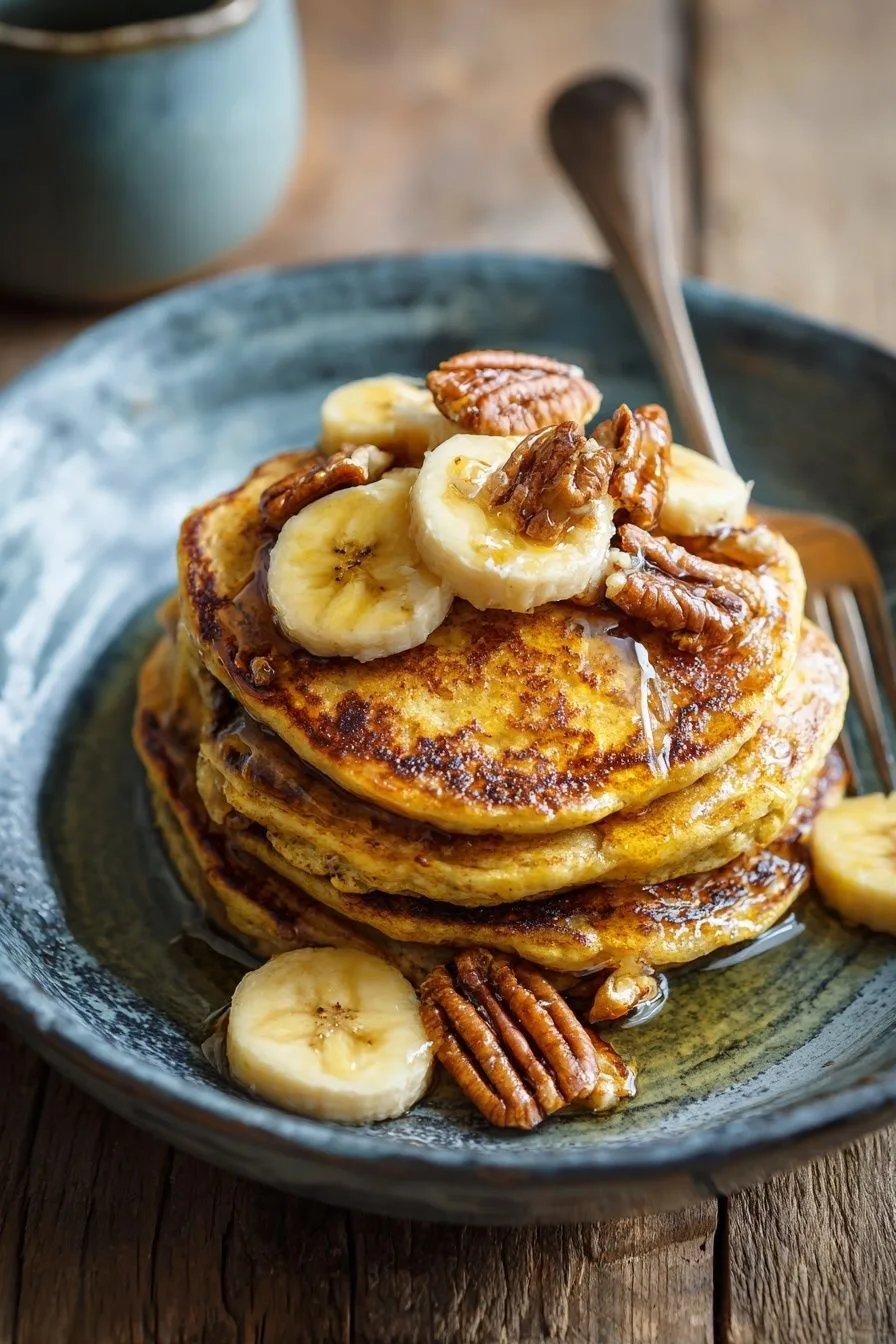
Serve warm. Yogurt and fruit make the result fresh; honey or cinnamon makes it more dessert-like. For a savoury plate, leave out sugar and cinnamon, add a little black pepper, and serve the pancakes alongside fried eggs or beans. This is not meant to imitate a particular traditional recipe; it is simply a useful way to cook the same ingredient when the cupboard is not stocked for a sweet breakfast.
Substitutions that work
A dessert banana can replace the plantain, but use less milk at the start because a very ripe dessert banana is usually softer and wetter. The pancakes will be sweeter and more delicate. If you only have a fairly green plantain, steam or boil peeled pieces until tender, cool them, then mash them before adding the egg. This makes it practical for the recipe, although it adds time and gives a less sweet result.
Whole-wheat flour works for part of the flour. Start with half whole-wheat and half plain flour, adding milk if the batter thickens. A gluten-free plain flour blend can work too, but blends absorb liquid differently, so add milk slowly. For an egg-free version, use a commercial egg replacer according to its packet directions. Mashed plantain alone does not set like egg, so make the pancakes smaller and turn them carefully.
If there is no baking powder, omit it rather than adding random quantities of bicarbonate of soda. The pancakes will be denser but will still cook. A spoonful of yogurt can replace part of the milk and add a little tang. Coconut milk is possible, though it changes the flavour and is not necessary. The pan matters more than elaborate toppings: medium-low heat browns the surface while giving the centre time to set.
Food-safety notes
The recipe contains egg, so cook the pancakes until the centre is set rather than leaving a wet, glossy layer inside. This is especially important when serving young children, older people, pregnant people or anyone with a weakened immune system. Wash hands and utensils after handling raw egg, and do not taste uncooked batter.
Use a clean plate for cooked pancakes, not the plate that held the raw mixture. Refrigerate leftovers promptly in a covered container and reheat them until hot throughout; do not keep them at room temperature for hours. They are best fresh, but can be chilled and reheated in a pan or toaster oven. Check flour blends, yogurt and toppings for allergens. The basic recipe includes egg, milk and wheat, so it is not automatically suitable for people with egg, dairy or gluten allergies.
Plantains are straightforward once their ripeness is read correctly. In Spain, the main challenge is finding the right label and deciding what stage suits the meal. Green means savoury and starchy; yellow means flexible; heavily spotted means sweet and soft. For these pancakes, I would choose yellow skin with several dark patches, cook a small test pancake, and adjust the milk or flour from there. That is enough technique for a useful weekday breakfast, without pretending the kitchen needs one correct way to use a banana.
Related articles

Microclover lawns can beat the heat. They can also be the wrong answer
A viral clover patch stayed green under drought limits, but the practical lesson is not “plant clover everywhere.” Start with region, species, water, traffic and rules.
El ajo de otoño necesita una cama reservada antes que un día exacto de plantación
Comprar ajo para siembra a finales de septiembre puede ser sensato, pero plantarlo de inmediato no siempre lo es. La decisión depende del enfriamiento del suelo, la primera helada fuerte, el drenaje y el espacio que puedas reservar hasta el verano siguiente.
Comments
Sign in to comment.
No comments yet.