Texas Right-to-Repair Law: What Homeowners Can Fix, and Why Major Appliances Are Excluded
Texas’s new repair law expands access to parts, tools and documentation for some digital devices, but it does not cover refrigerators, ovens, HVAC equipment or other major appliances. Here is how to check coverage before opening a device or ordering parts.

What Texas HB 2963 actually gives owners
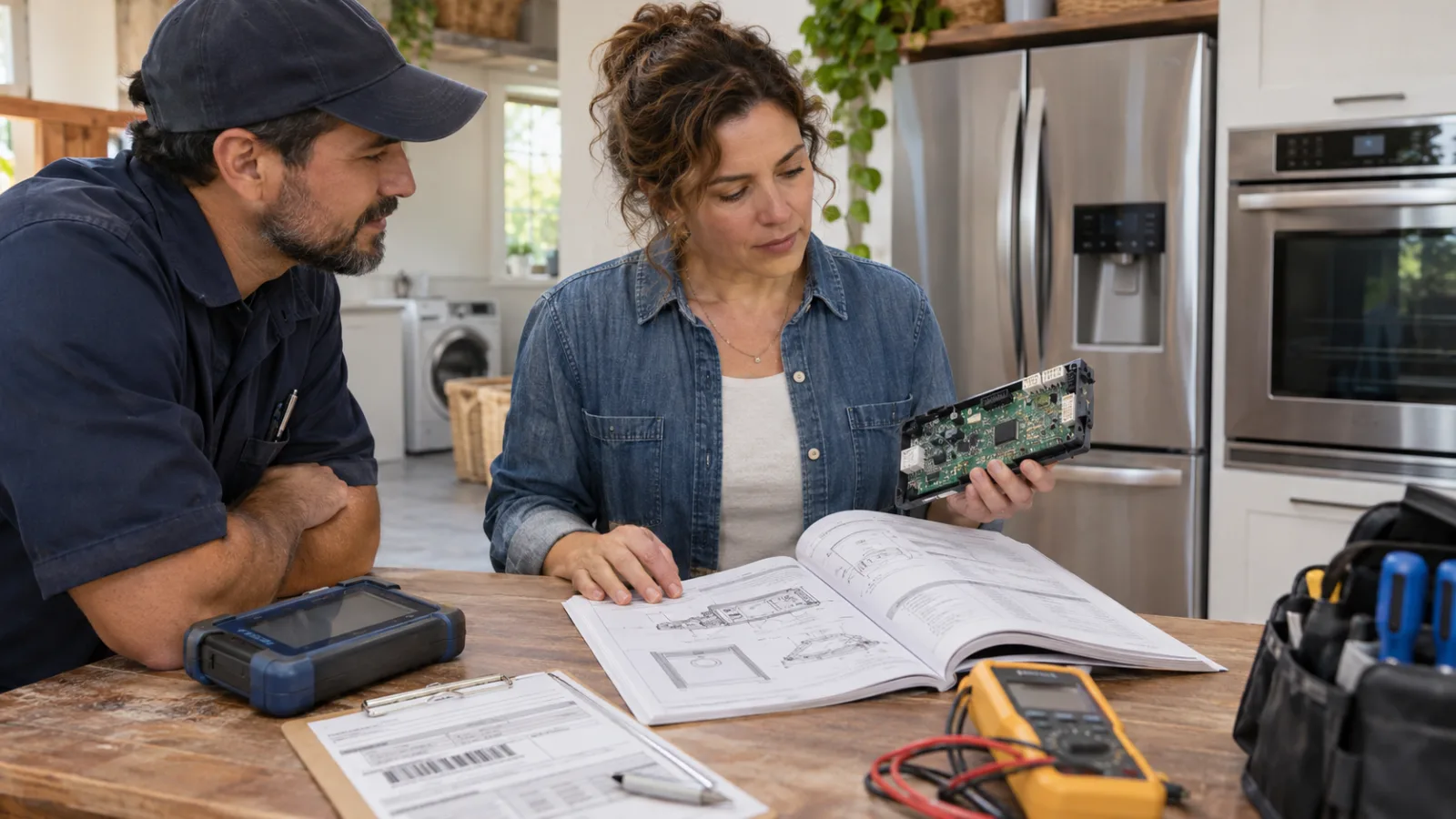
Texas House Bill 2963 is best understood as an access law, not a blanket promise that every broken device can be repaired at home. The measure takes effect on September 1, 2026, and covers qualifying digital electronic equipment first offered for sale in Texas on or after that date, generally when the equipment falls above the statute’s price threshold. For an owner, that timing matters: a device bought later may still need to be checked against the law’s product definition, while an older device is not automatically covered simply because it contains a processor, display or internet connection.
For products within the covered category, the law requires manufacturers to make the information and physical resources needed for repair available to owners and independent repair providers on fair and reasonable terms. In practical terms, that can include service documentation, diagnostic material, replacement parts and the tools needed to use them. The point is to reduce a familiar barrier: an owner may possess the device but lack the manufacturer’s instructions, a specialized part or a tool that an authorized service network has traditionally controlled. Independent repair businesses are included in this access framework, so the owner is not limited to choosing between a manufacturer’s service channel and abandoning the device.
That access can make a repair decision more informed, but it does not turn a repair into a guaranteed or risk-free project. The law does not mean that every repair is safe for an untrained person, that every fault can be diagnosed from a manual, or that a manufacturer must guarantee the result of work performed by an owner or an independent provider. Documentation can explain a procedure without removing the hazards of mains electricity, heat, stored energy, moving parts or other equipment-specific risks. Parts and tools can also be available while the underlying repair remains technically demanding or subject to warranty, code or safety constraints.
The first practical question, therefore, is not simply “Can I get the part?” It is “Is this the kind of product the statute covers, and what exactly does the manufacturer have to provide?” Start with the product’s exact model and serial number, then identify when that model was first offered for sale in Texas. Do not rely only on the purchase date: the application of HB 2963 turns on the product being first offered for sale in Texas on or after the effective date, along with the statutory category and price threshold. A recent purchase of an older product line may not produce the same answer as a newly introduced model.
Next, separate the law’s access requirement from the manufacturer’s responsibility for the repair itself. A manufacturer may have to provide covered documentation, parts and tools on fair and reasonable terms, but that does not require the company to perform the repair for free or to stand behind an owner’s workmanship. It also does not erase other obligations that may apply to the particular product or situation. If the device is under warranty, if a repair could affect a claim, or if the equipment is supplied in a rental property, the owner should check those arrangements before opening the enclosure or changing a component.
The same distinction helps avoid a common overreading of “right to repair.” HB 2963 expands the ability to obtain repair resources for qualifying equipment; it does not create a general right to defeat safety features, bypass access controls, ignore warnings or improvise around a missing procedure. A service manual is a source of information, not permission to remove a fuse, defeat an interlock or alter grounding. Where the documentation identifies a specialized hazard or directs the work to a qualified professional, that direction remains part of the repair decision.
For homeowners, the law’s immediate value is practical and limited in a useful way: it can make the repair pathway more transparent. An owner can ask what information, parts and tools are available, compare an authorized quote with an independent repair option, and decide whether the likely cost and risk justify repair. The coverage check still comes first, because the major-appliance exclusions can change the answer entirely—even when the appliance contains sophisticated digital electronics.
The major-appliance exclusion changes the practical answer
The most important limitation in Texas’s right-to-repair law is that a product can contain sophisticated digital electronics and still fall outside the law’s coverage. House Bill 2963 is aimed at qualifying digital electronic equipment, but the enrolled-law analysis distinguishes that equipment from major household appliances. A refrigerator, oven, microwave, air-conditioning unit or heating system does not become a covered product simply because it has a screen, a Wi-Fi connection, a computer-controlled cycle or a replaceable electronic control board.
That distinction matters because many current appliances look, from the owner’s perspective, like computers attached to familiar household hardware. A refrigerator may display temperatures and manage sensors through a digital control panel. An oven may use a circuit board to regulate settings and heating functions. An HVAC system may rely on electronic controls, diagnostics and connected features. Those digital elements do not, by themselves, move the entire appliance into the category covered by the repair law. For these products, the presence of software or a control board is not enough to establish a right to obtain the manufacturer’s parts, tools and repair information under HB 2963.
The practical result is narrower than the phrase “right to repair” may suggest. An owner may reasonably expect that the law opens access to documentation and replacement resources for certain qualifying electronics, yet that expectation should not be carried over automatically to a large appliance in the home. The refrigerator or furnace may have a service menu and a sophisticated controller, but those features do not erase the product’s exclusion. Coverage turns on the product category and the statutory exclusions, not on how modern or digitally integrated the appliance appears.
The same issue applies to appliances that combine electronics with systems carrying substantial physical or operational risks. An air-conditioning or heating unit is not treated as covered merely because a technician can connect a diagnostic tool to it. A microwave is not brought within the law simply because its controls are digital. An oven is not transformed into covered consumer electronics by a touch display. In each case, the owner has to begin with the legal classification of the product rather than the visible technology built into it.
There is a limited opening for some smaller products. Countertop or stand-alone small appliances may be treated differently from major built-in or household systems, depending on the product and the applicable category. That does not mean every small appliance qualifies, and it does not create a blanket rule that any device used on a kitchen counter is covered. It means the owner must identify the particular product and then check whether it fits a qualifying category or an exclusion before assuming that repair materials must be made available.
This is why the model and product type matter more than a marketing label such as “smart.” A smart refrigerator remains a refrigerator for purposes of the exclusion. A connected furnace remains a heating unit. A digital oven remains an oven. Calling a product connected, computerized or app-enabled does not change the statutory treatment described in the law’s analysis. The same caution applies when a manufacturer sells a replacement control module or publishes a diagnostic application: those offerings may be useful, but their existence does not itself prove that HB 2963 requires broader access.
For homeowners, the safest reading is therefore to separate two questions. First, is the product a qualifying digital electronic device covered by the law? Second, is it one of the major home appliances or other excluded products identified in the law’s scope? If the answer to the second question is yes, the owner should not assume that the repair rights available for covered electronics extend to that appliance. The next step is to verify the exact product category and any separate warranty, service or professional-repair requirements before ordering parts or opening the unit.
A four-step coverage check before buying parts
Before ordering a replacement board, downloading a service manual or opening a device, establish whether Texas House Bill 2963 applies to the product in front of you. The law’s access requirements are tied to the equipment’s legal category and when it was first offered for sale in Texas; they are not triggered simply because a product contains a screen, a circuit board or a wireless connection. A careful check can prevent a homeowner from spending money on parts that cannot be used, assuming that a manufacturer must provide information it does not have to provide for that product, or beginning work that belongs with an authorized or qualified professional.
-
Record the exact product identity. Write down the manufacturer, full model number, serial number and, if available, the product’s manufacture date and place of purchase. Photograph the rating plate and any labels before moving the appliance or removing an access panel. Product families can include several versions with different electronics, manuals and safety requirements, so a general name such as “smart oven” or “connected thermostat” is not enough. Keep the receipt, invoice or other purchase record as well. Those records may help establish which version you own and whether a warranty, service contract or retailer obligation is still relevant.
-
Check when the product was first offered for sale in Texas. HB 2963 applies to qualifying digital electronic equipment first offered for sale in Texas on or after September 1, 2026. The relevant question is not necessarily when you bought the item, when it was delivered or when a repair problem began. A used device may have been first offered for sale earlier, while a product bought later may still belong to an older product line. Ask the manufacturer or seller for confirmation when the date is unclear, and retain the response with your ownership records. The Texas House Research Organization’s analysis and the Repair Association’s description of the law explain that the timing requirement works together with the product definition and statutory exclusions.
-
Match the item to the covered category and exclusions. Read the product description as a legal classification, not as a marketing label. A digital electronic device may fall within the law’s scope while a major home appliance with embedded digital electronics remains excluded. Refrigerators, ovens, microwaves and air-conditioning or heating units are examples identified in the supplied law analysis and reporting as outside the main repair-access requirement. A countertop or stand-alone small appliance may need a separate analysis, but the presence of a digital control panel does not automatically bring a refrigerator, furnace or central air-conditioning system under HB 2963. If the product is supplied with a home or rental unit, also determine who owns it and who is responsible for service before treating it as an ordinary personal device.
-
Request the information and parts in writing. Once the product appears to qualify, contact the manufacturer using the exact model and serial number. Request the applicable service manual, diagnostic information, replacement parts and tools, and ask where the manufacturer’s repair resources are provided to owners or independent repair providers. The law requires covered manufacturers to make necessary documentation, parts and tools available on fair and reasonable terms; it does not promise that every requested component will be free, immediately available or suitable for an inexperienced repairer. Keep copies of the request, the response, prices, shipping estimates and any warnings or qualification requirements. If the manufacturer identifies the product as excluded, ask for the basis of that determination and compare it with the statutory category rather than relying only on a customer-service label.
There is a separate decision point before any purchase or disassembly. Check the warranty, extended service plan and any retailer or installer agreement first. A repair attempt can affect coverage or create a dispute about whether the failure resulted from unauthorized work, even when information or parts are available. For a rental property, contact the landlord or property manager before altering a supplied appliance, control system or safety device. The Texas Attorney General’s renter guidance describes repair responsibilities and the importance of notifying the landlord; a tenant should not assume that a right to seek repair information authorizes changes to the owner’s equipment.
Finally, check whether the proposed work has code, permit or inspection implications. Do not defeat a safety interlock, bypass a fuse, remove grounding, disable an access control or modify wiring merely to make a repair possible. If the coverage check ends with uncertainty about ownership, warranty status, product classification or legal responsibility, pause before buying parts and ask the manufacturer, landlord, retailer or a qualified technician for the next documented step. The purpose of the four-step process is to confirm what access the law provides—not to turn access to a manual into permission to perform work that the product, property rules or safety requirements reserve for trained professionals.
When access to information is not permission to DIY
Access to a service manual, diagnostic instructions, replacement part or specialized tool does not by itself make a repair suitable for a homeowner. The information may explain how a manufacturer expects a device to be serviced, but it does not remove the hazards involved or guarantee that the repair will work. Before opening anything, identify the source of the danger and the consequence of getting the repair wrong. A mistake in a low-voltage electronic device is not the same as a mistake involving household mains electricity, gas, a sealed refrigeration system or an HVAC unit.
A practical stop-and-call-a-professional rule applies when the work involves mains electricity, gas, high-voltage components, sealed refrigerant circuits, fire or life-safety equipment, or structural changes. The same caution applies to leaks that could damage the building and to any repair that requires compliance with a code or permit requirement. Do not defeat safety interlocks, bypass fuses, alter grounding, disable access controls or improvise around a protective device simply to make a machine run. If a repair depends on those systems being changed or bypassed, the right next step is a qualified or authorized technician who can assess the equipment and complete the work safely.
The exclusion of major appliances makes this boundary especially important. A refrigerator, oven, microwave, air-conditioning system or heating unit may contain sophisticated digital controls, but the presence of a control board or connected feature does not automatically place the whole appliance within the law’s repair-access rules. For those products, owners should not treat the availability of a part or a troubleshooting document as a legal or technical invitation to perform hazardous work. A countertop or stand-alone small appliance may raise a different coverage question, but its specific category and the nature of the proposed repair still need to be checked before parts are ordered.
Renters should take an additional step before attempting any repair. If an appliance or safety-related system was supplied with the rental, the tenant should generally notify the landlord rather than altering it independently. This is particularly important for installed appliances, heating and air-conditioning equipment, gas connections, electrical service and any device whose failure could affect the property or another occupant. The landlord or property manager can determine whether the issue falls under the rental arrangement and can arrange the appropriate repair. A tenant who opens, modifies or replaces supplied equipment without authorization may create a separate dispute even when the repair attempt was well intentioned.
For owners who do contact a technician, a short record can make the appointment more useful and help frame the repair-versus-replace decision. Gather the exact model and serial number, the date and place of purchase if known, the symptoms, any displayed error code, when the problem began and whether the appliance still has power or presents an immediate hazard. Note what has already been checked, but do not continue testing if doing so requires exposure to live, hot, pressurized, gas-fed or otherwise hazardous parts. Keep copies of the service information, parts estimates and any warranty or rental correspondence.
Ask the technician to separate the diagnosis from the recommendation. The record should identify the failed component or system, the parts and labor required, whether the repair depends on manufacturer-specific tools or information, and whether code or permit requirements affect the work. It should also state whether continued operation could create a safety or property risk. With those details in hand, the owner can compare the cost and practicality of repair with replacement without confusing legal access to information with permission to take on a dangerous job. Texas’s repair law can improve access to materials for covered digital equipment, but safe judgment remains the first requirement for every repair decision.
Related articles

Smart thermostats in a heat wave: savings, rebates and who controls the temperature
Before accepting a thermostat rebate, check whether the automation saves energy without quietly taking comfort out of your hands.

Dallas to Da Nang for USD 895? Check the e-visa, season and Hong Kong connection before booking
A practical budget-travel checklist for turning a limited Cathay Pacific fare lead into a realistic Central Vietnam trip, with visa, route, weather and local-cost gates checked first.


New World Screwworm and Pets: What Outdoor Owners Should Check and When to Call the Vet
The New World screwworm outbreak is mainly a regional animal-health concern, not a reason for every owner to panic. Here is how to check wounds, think about travel, avoid unsafe home treatments, and recognize when veterinary help is needed.


Can Creatine Build Lean Tissue Without Exercise? What the New Trial Actually Found
A new Texas A&M trial has been widely described as evidence that creatine builds muscle without exercise. The result is more limited—and more interesting—once the study design, DXA measurements, and earlier reviews are examined.

Comments
Sign in to comment.
No comments yet.