Do not rake every leaf: a practical fall cleanup plan for lawns, beds and pollinators
The best autumn yard cleanup is not total removal or total neglect. Zone the yard so leaves feed soil where they help and move them where they cause damage.

Autumn leaf cleanup no longer has to mean stripping a yard bare or leaving every surface under a wet mat. The more useful rule is zoning: keep leaves where they feed soil and shelter overwintering insects, move them away from places where they smother turf or create hazards, and stop treating every bag of leaves as waste.
The timing is right. A Weather Channel home-and-garden segment published on August 28, 2026, pushed a familiar autumn question back into the mainstream: can you leave the leaves alone this fall? Conservation groups such as the Xerces Society have argued for years that leaf litter is habitat, not trash. At the same time, lawn-care communities, homeowners’ associations and city rules pull in the other direction. A thick wet blanket of leaves can damage grass, clog drains, make paths slippery and annoy neighbours. Gas-powered leaf blowers add a separate fight about noise, exhaust, worker productivity and local bans.
The practical answer is not a slogan. A country-house garden, a suburban lawn, a townhouse courtyard and a wildlife border need different treatments. Leaves can become mulch, compost, leaf mold and winter cover for beneficial insects. They can also become a turf problem, a drainage problem or a fire risk if they are piled in the wrong place. The best fall cleanup keeps organic matter on site while making the yard safe, usable and visibly maintained.
What “leave the leaves” really means
The phrase is easy to misunderstand. It does not mean abandoning the whole property until spring. It means asking where leaf litter does useful work and where it causes damage. In garden beds, under shrubs, around trees and in a quiet back corner, whole leaves can protect soil, moderate temperature swings, conserve moisture and create winter cover. On steps, sidewalks, driveways, storm drains and active turf, the same leaves may need to be moved.
Xerces’ core ecological point is that many butterflies, moths and other beneficial insects overwinter in the landscape as eggs, caterpillars, pupae or adults. Some use leaf litter directly. Others depend on standing stems, loose soil and undisturbed edges. A perfectly shaved fall yard removes more than visual clutter; it removes part of the garden’s winter infrastructure.
The second point is waste. When leaves are bagged and hauled away, a free soil resource leaves the property. Municipal composting is better than landfill, but on-site reuse is often cheaper and more useful. Leaves can buffer beds, feed compost, make leaf mold and reduce the need for purchased mulch.
Where leaves help most
Garden beds are the easiest place to keep leaves. A moderate layer around perennials, shrubs and trees insulates soil and slowly breaks down. It also reduces bare soil, which helps with erosion and moisture. If the leaves are large and mat-forming, such as some maples or sycamores, fluff them or mix them with lighter material so water can still pass through.
Tree rings are another good destination. Instead of piling mulch against the trunk, spread leaves in a broad donut under the canopy, keeping them a few inches away from bark. That mimics the forest floor more closely than a shaved lawn right up to the trunk. It also keeps mower damage away from surface roots.
Vegetable beds can use leaves too, but be selective. Clean leaves can cover empty beds through winter, then be moved aside or incorporated according to local advice in spring. Leaves from plants with serious disease problems should be handled more cautiously. When in doubt, follow your local extension service for the specific crop and disease rather than assuming every leaf is safe compost.
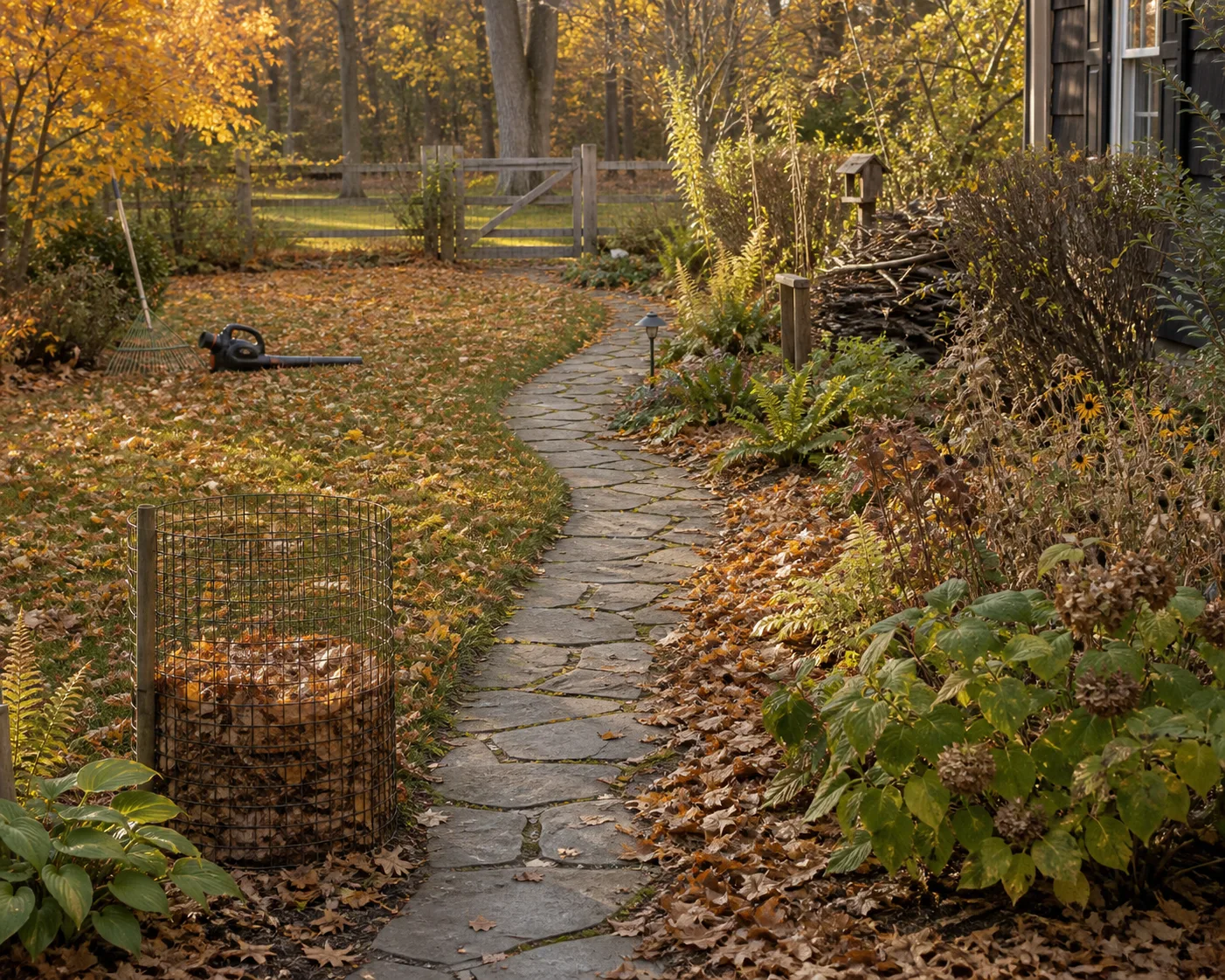
A dedicated leaf-mold bin is the tidy compromise. A simple wire cylinder or corner bin can hold whole leaves without making the yard look neglected. Keep the pile damp but not waterlogged. Over time, fungi break the leaves into a crumbly material that improves soil structure. It is slower than hot compost, but it requires little labour.
Where leaves should not stay
Active lawn is the place where the slogan fails most often. A thin scatter of dry leaves can be chopped by a mulching mower and returned to the grass. A thick, wet layer blocks light and air, encourages matting and can leave dead patches. If you want both turf and ecological value, move excess leaves from the lawn into beds or a leaf-mold area instead of sending them away.
Hard surfaces need a cleaner standard. Leaves on steps, decks, paths and driveways become slippery when wet. Leaves in gutters, drains and roadside channels can create local flooding. Clear those areas early and repeatedly. This is not anti-ecological housekeeping; it is basic safety and drainage management.
Fire-prone regions need another caveat. Dry leaves piled against foundations, decks, fences or sheds can add fuel. Local fire guidance should override a general habitat rule. In those climates, keep the defensible space clean and move leaves to safer, designated areas.
Small urban yards and regulated neighbourhoods also need a social plan. If a yard simply looks abandoned, the gardener may face complaints or fines even when the ecological intent is good. Keep edges neat, paths clear and piles contained. A visible leaf bin or maintained bed reads differently from a blanket of leaves across the entire frontage.
Whole leaves or shredded leaves?
This is the key compromise. Whole leaves are better habitat for many overwintering insects because shredding can destroy eggs, caterpillars and cocoons. That is why conservation groups often prefer moving whole leaves into beds and undisturbed areas. If your goal is maximum habitat, avoid running every leaf through a mower or blower shredder.
But turf has different needs. On a lawn, finely chopped leaves are usually safer than an intact mat. Mulch mowing a thin layer can return nutrients without blocking grass. The practical split is simple: keep some leaves whole where habitat matters, and shred only the portion that must stay on lawn or enter faster compost.
Do not turn shredding into an all-or-nothing rule. A yard can include a tidy lawn with mulched leaf fragments, a bed with whole leaves, a corner where stems and leaf litter remain undisturbed, and a bin for excess material. That is better than both extremes: total removal or total neglect.
The leaf blower problem
Leaf blowers are not just tools; they are now part of local politics. Portland’s gas-powered leaf blower ban drew enough attention to reach Hacker News in January 2026, and other cities and states continue debating restrictions. The objections are familiar: noise, exhaust, dust, worker exposure and the feeling that every autumn weekend becomes a small-engine competition.
For homeowners, the practical lesson is to reduce the amount of blowing required. If leaves are staying on site, you may not need to move them across the entire property. A rake, tarp, electric blower or battery tool can be enough for paths and bed edges. A mulching mower handles thin lawn coverage. The quietest cleanup is usually the one that moves fewer leaves shorter distances.
Contractors have a different constraint: time. A crew paid to leave a property “clean” may rely on blowers because clients expect bare surfaces. If you hire help, give a different specification: clear hard surfaces, mulch-mow the lawn, move excess leaves into beds or a designated bin, do not strip the entire garden. The instruction matters more than the machine.
A one-weekend fall protocol
Start with a slow walk around the yard. Mark four zones: lawn, planting beds, hard surfaces and storage areas. Then decide where each leaf pile should end up. Do not begin by bagging. Begin by moving material from places where it causes harm to places where it becomes useful.
On the lawn, remove heavy wet mats first. If coverage is light and dry, mulch-mow. If chopped leaves still form clumps, rake the excess into beds. The goal is visible grass and airflow, not a sterile carpet.
In beds, spread leaves loosely rather than packing them. Keep crowns of delicate plants from being buried too deeply. Leave some perennial stems standing until spring if they are not diseased and do not create a safety problem. Stems can shelter insects and give winter structure.
On paths, steps, driveways, decks, curbs and drains, clear leaves fully. This is the non-negotiable zone. A pollinator-friendly garden still needs safe walking and working surfaces.
For excess leaves, build a leaf-mold bin or contained pile. Chicken wire, welded wire or a simple wooden bay is enough. Water the pile if it is dry. Do not expect finished compost immediately; leaf mold is a slow, low-effort soil conditioner.
What not to do
Do not bag every leaf by habit. You are exporting organic matter and often paying for the privilege. If local collection turns leaves into municipal compost, that is better than landfill, but it is still less efficient than keeping some material where your soil needs it.
Do not leave a thick wet layer on turf for weeks. Ecological intent does not protect grass from lack of light and air. If you want a lawn, manage the leaves on it.
Do not block drains or pile leaves in the street. Washed leaves can clog storm systems and move nutrients into waterways. Keep curb lines and drainage channels open.
Do not shred everything if your goal is insect habitat. Shredding has a place, especially for lawn management and faster decomposition, but whole leaves in quiet beds and corners are more valuable for overwintering life.
Do not ignore local rules. Some municipalities regulate yard-waste pickup, curb piles, blower use, fire clearance or HOA appearance standards. A good ecological plan also survives local enforcement and neighbour expectations.
A decision map for different yards
If you have a mostly ornamental garden with little turf, keep most leaves in beds and under shrubs. Clear paths and drains, then use a bin for the extra. This is the easiest setting for the conservation approach.
If you have a large active lawn, mulch-mow thin layers and move the rest to beds or a leaf-mold pile. Do not force the lawn to carry all the ecological work. Create habitat zones at the edges instead.
If you have a small urban yard, make the intention visible. Keep the front edge neat, contain the leaf pile, and use beds or planters as destinations. A small sign or tidy border can prevent the “abandoned yard” misunderstanding.
If you live in a dry fire-risk area, follow local defensible-space rules first. Keep leaves away from structures and combustible edges. Habitat can still exist, but not in places that increase fire exposure.
If you use a lawn crew, change the job description. Ask for selective cleanup, not total removal: clear hard surfaces, mulch-mow, move leaves into beds, leave some stems, and avoid noisy blowing where a rake or tarp works.
The practical verdict
Leaves are not trash, but they are not magic either. They are a resource that needs placement. The best autumn cleanup is not the cleanest-looking yard and not the laziest yard. It is a yard where organic matter stays in the system, grass still breathes, walkways stay safe, drains remain open and wildlife gets at least some undisturbed cover.
For most homeowners, the upgrade is simple: stop asking “should I remove the leaves?” and start asking “where should these leaves work?” Keep them whole where habitat matters. Chop them where turf needs help. Move them away from hazards. Store the surplus as leaf mold. That is the middle path between ecological theater and old-fashioned over-cleaning.
Related articles
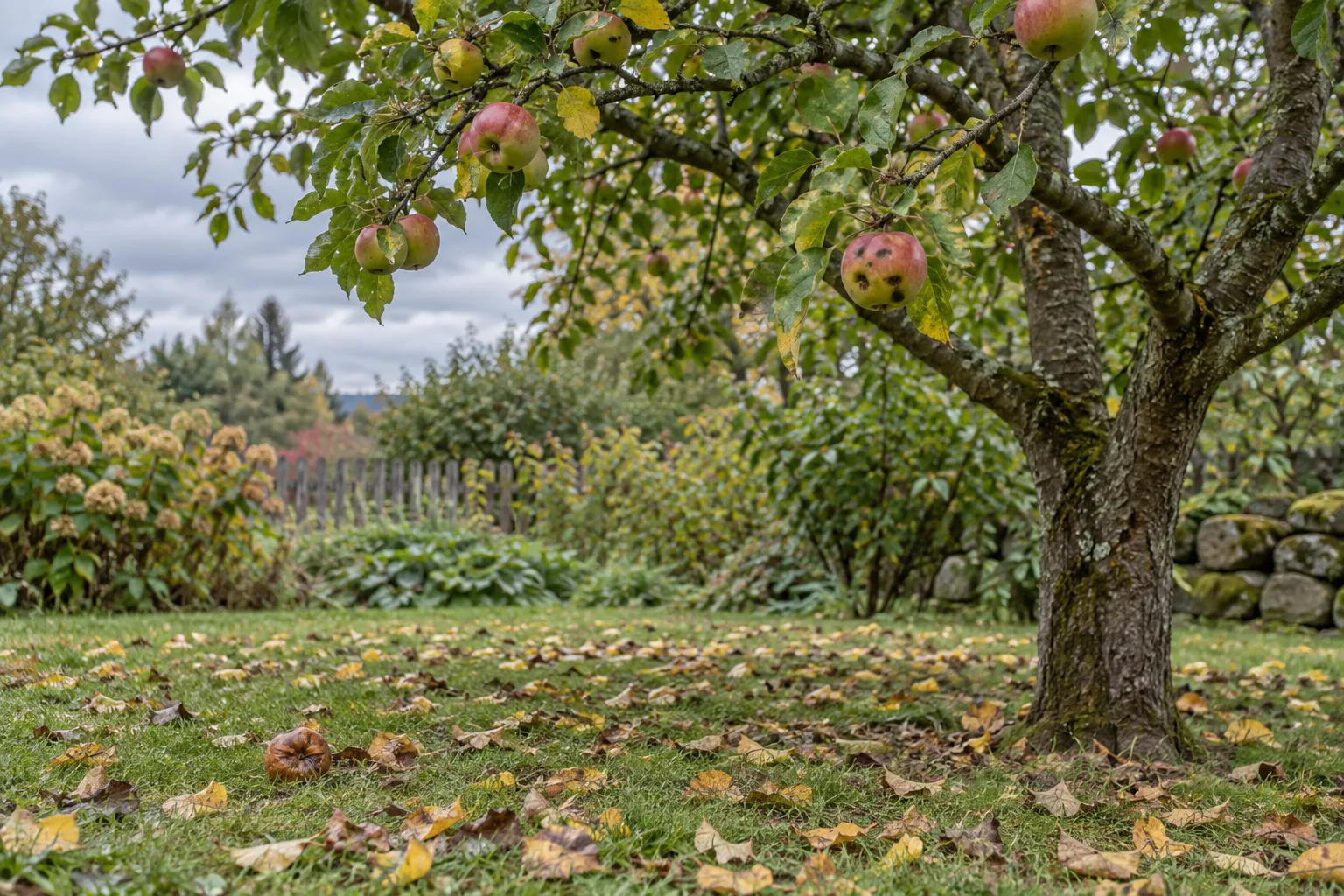
Before Autumn Rain: A Practical Apple-Tree Check for Scab, Rot and Next Year’s Crop
A wet spell can turn a minor apple-tree problem into next spring’s disease reservoir. Use this late-season checklist to sort harvestable fruit, remove infection sources and prepare a realistic prevention plan without spraying blindly.
Empty Vegetable Beds in September Need a Cover Crop, Not Bare Soil
A practical September guide to choosing oats, rye, clover, radish or a simple mulch for empty vegetable beds, with timing, rates, watering and spring termination caveats.

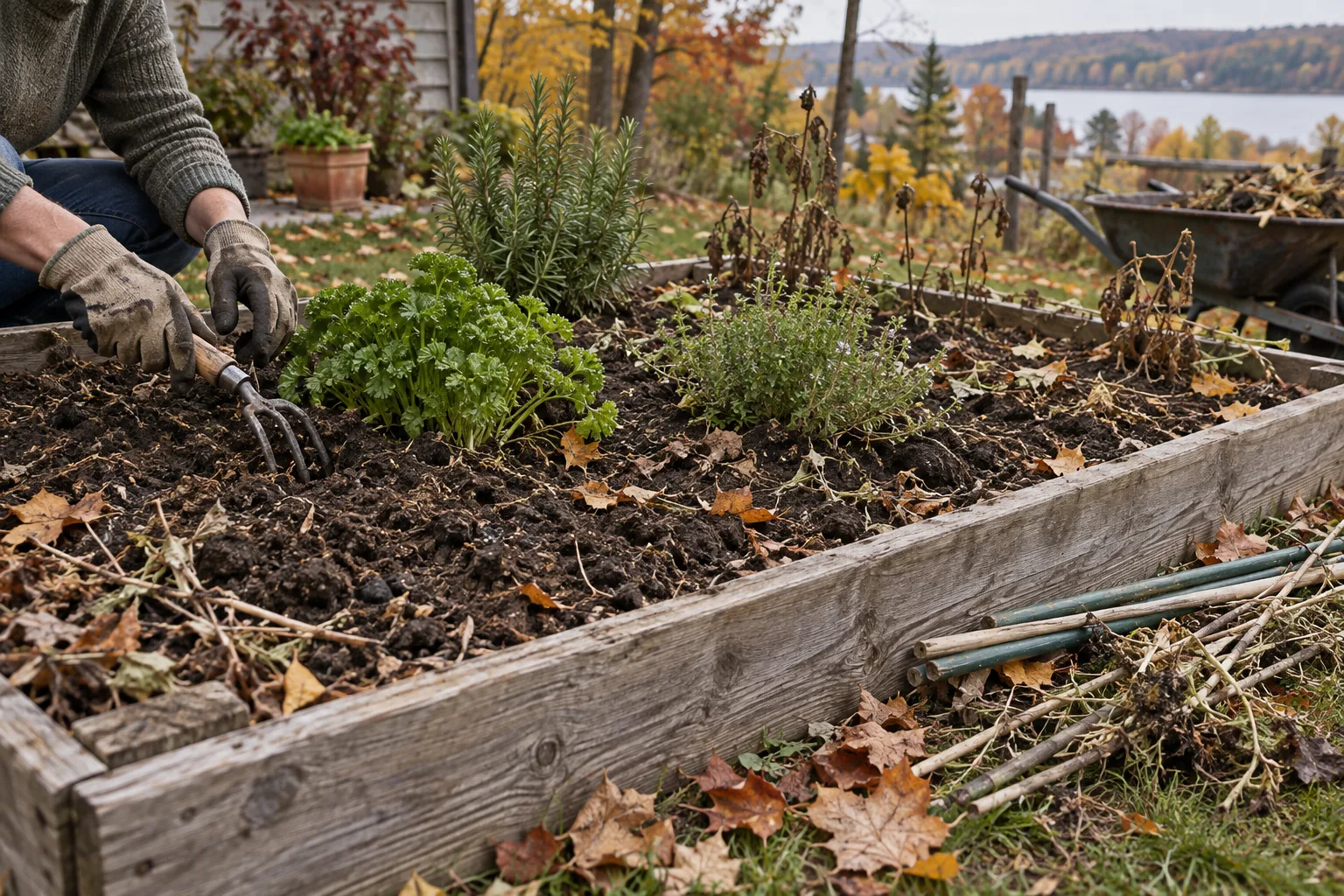
A Late-September Reset for a Raised Bed That Produced Almost Nothing
A poor raised-bed harvest does not automatically mean you need more compost. Use this late-season checklist to separate compaction, drainage, excess organic matter, timing, and crop-choice problems before spending money on a rebuild.
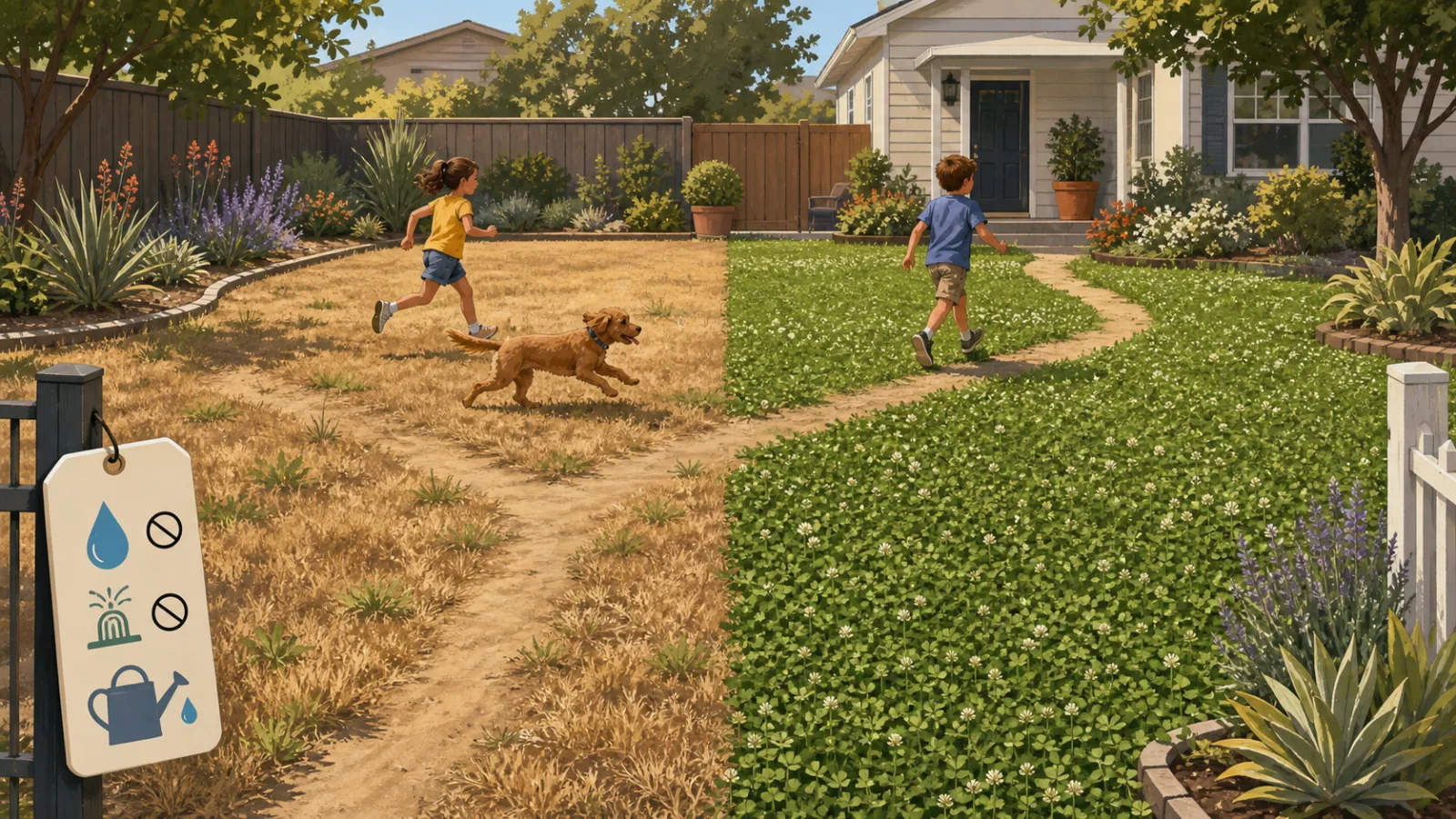
Microclover lawns can beat the heat. They can also be the wrong answer
A viral clover patch stayed green under drought limits, but the practical lesson is not “plant clover everywhere.” Start with region, species, water, traffic and rules.
Comments
Sign in to comment.
No comments yet.