Mosquito bucket of doom: when a Bti bucket helps the garden, and when it is just standing water
A practical look at the viral Bti bucket: how it interrupts mosquito larvae, why it does not repel adults, and how to use it without creating a new hazard.

August is when a garden can feel perfectly planted and still become unusable after sunset. You go outside to water tomatoes, pick beans or sit on the terrace, and the mosquitoes arrive first. The viral answer now circulating through garden sites and neighborhood discussions sounds wrong at first: put out a bucket of standing water. The crucial difference is that a “mosquito bucket of doom” is not ordinary standing water. It is a deliberately attractive egg-laying spot treated with Bti, a larvicide meant to kill mosquito larvae before they become biting adults.
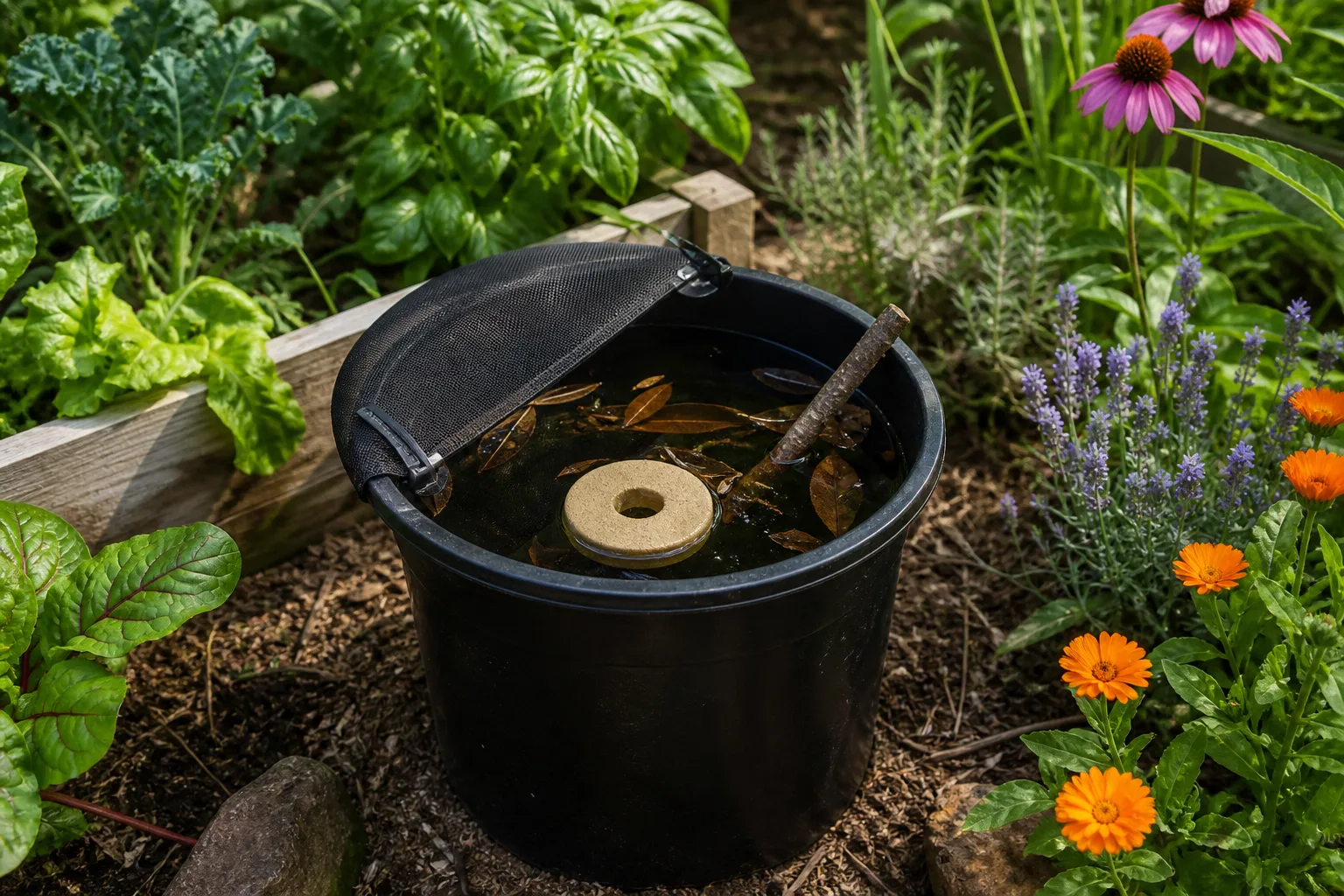 The idea has returned because many gardeners want mosquito control without fogging the whole yard. Broad insecticide spraying can feel satisfying for one evening, but it also raises concerns for pollinators, fireflies, beneficial insects, pets and neighbors. A Bti bucket is slower and less dramatic. It does not repel mosquitoes from your ankles tonight. It tries to break the next generation in a small, managed water source. That makes it useful, but only when the limits are understood.
What the bucket is supposed to do
The common recipe is simple: a dark bucket or tub, water, a handful of leaves, grass clippings or straw, and a mosquito dunk or bits containing Bacillus thuringiensis subsp. israelensis, usually shortened to Bti. The rotting plant material makes the water attractive to female mosquitoes looking for a place to lay eggs. The Bti product releases toxins that are eaten by larvae. According to EPA material on Bti, those toxins affect larvae of mosquitoes, black flies and fungus gnats, and registered products can be used in standing-water sites around homes when the label directions are followed.
That last phrase matters. Follow the product label. Different dunks, bits and granules have different rates, intervals and approved uses. Some labels discuss birdbaths, rain barrels, flower pots, gutters or small ornamental water features; others may not match your situation or country. A bucket method should never become “throw any pesticide into any water”. It is a specific larvicide used in a specific way.
Why it is not a repellent
CDC guidance on larvicides makes the basic biology clear: larvicides are applied where mosquitoes lay eggs and where larvae develop. They target immature stages in water. They do not control adult biting female mosquitoes already flying around. That is the first correction to make before anyone buys a packet of dunks. A bucket will not create an invisible mosquito shield over the patio. If adults are already present, you may still need screens, fans, long sleeves, repellents, habitat cleanup or professional advice for disease-risk situations.
The bucket works on a time delay. Mosquitoes go from eggs to larvae, pupae and adults, with speed depending on species and temperature. If your bucket attracts egg-laying females and the larvae die there, fewer adults emerge later. Gardeners who expect results in forty-eight hours are likely to call the method a failure. Gardeners who use it as part of several weeks of water management are using it closer to its design.
Why gardeners like it
The appeal is practical. A bucket is cheap. It requires no pump, app or subscription. It can sit in a shaded corner where mosquitoes already prefer to breed. It is easier to explain to neighbors than a complicated integrated pest-management plan. Grassroots pages such as Sidewalk Nature and doombuckets.com have turned the method into a neighborhood action: instead of one yard spraying repeatedly while nearby drains, buckets and tarps keep producing mosquitoes, several households create treated lure buckets and remove untreated standing water.
The pollinator argument is also strong emotionally and ecologically. Gardeners who plant milkweed, herbs, fruit trees and native flowers do not want to coat everything with broad sprays at dusk. Bti is not the same as spraying adulticides across plants. EPA’s Bti page says no risks to people have been identified when registered products are used according to label directions, and Bti products are used in residential, commercial and agricultural settings. That does not mean every product is suitable everywhere. It does mean the bucket deserves a more serious look than a meme usually gets.
Where the method fits
A Bti bucket fits small yards, patios, community gardens, allotments and country-house corners where mosquitoes breed in containers and small water pockets. It is especially sensible when you can also remove the obvious sources: saucers under pots, old tires, folded tarps, clogged gutters, toys, wheelbarrows, buckets, watering cans and low spots in greenhouse trays. If the only untreated water left is hard to remove, such as a rain barrel or birdbath, label-approved Bti products may be part of the plan.
It can also fit gardens where neighbors coordinate. One treated bucket may help a small enclosed yard, but mosquitoes do not respect fence lines. If the next property has a neglected pool, a blocked drain or ten open containers, your bucket becomes only one small intervention. The method is most convincing when it changes neighborhood habits: remove useless standing water, treat unavoidable small water, and stop relying on repeated yard-wide sprays as the first answer.
How to set one up safely
Use a sturdy bucket that will not tip easily. Put it in shade, because many container-breeding mosquitoes prefer darker, protected water and because sun can speed evaporation. Add water and a modest amount of leaves, grass or straw. Add the Bti dunk, bits or portion specified by the label for that water volume and use. Mark the date. Replace or refresh according to the label, not according to a random social-media timetable.
Safety is not optional. An open five-gallon bucket is a drowning hazard for small children. Keep it out of reach, use a secure mesh or lid design that still allows mosquitoes access if appropriate, and do not create an attractive hazard near play areas. Sidewalk Nature’s instructions include a stick so small animals can climb out; mesh can also reduce wildlife risk. Do not place the bucket where pets will knock it over, drink from it, or turn it into a mud game. If local rules restrict standing water, larvicide use or rain-barrel treatment, follow those rules.
The mistakes that turn it into a bad bucket
The worst mistake is forgetting the Bti. A bucket of rich, stagnant water without active larvicide is exactly what you were trying to avoid. The second mistake is treating the bucket as permission to ignore every other source of water. Mosquitoes need only small amounts. A plant saucer, a wrinkle in a tarp, a clogged gutter or a child’s toy can outproduce your carefully managed trap.
A third mistake is overpromising. The bucket does not kill every mosquito in the area, does not handle all species equally in all climates, and does not replace public-health guidance when mosquito-borne disease risk is high. Dry climates may need different placement and refill habits. Wet yards may need more source reduction. Dense vegetation may shelter adults even after larval control improves. If mosquitoes remain severe after cleanup and correctly used larvicide, it may be time to talk to local vector-control or extension services.
What to check each week
Once a week, inspect the yard before inspecting the bucket. Empty water that should not exist. Clear gutters and drain trays. Rinse plant saucers or fill them with sand if appropriate. Check rain barrels, birdbaths and water features against the label for the specific product. Then look at the bucket. If you see wriggling larvae and the dunk is exhausted, replace it as directed. If the water has evaporated, refill to the intended level. If children or animals can access it, fix the physical setup before worrying about mosquitoes.
A calendar helps. Put the replacement date on painter’s tape on the bucket or in a garden app. Treat Bti like any other garden input: labelled, dated, stored properly and used only where intended. The low cost of the method is part of the appeal, but low cost should not mean careless.
When spraying may still enter the conversation
The bucket is best seen as one tool in integrated mosquito management. Source reduction comes first. Larval control comes next where standing water cannot be removed. Personal protection and house barriers matter: window screens, door seals, fans and repellents can reduce bites while the larval cycle catches up. In disease outbreaks or heavy infestations, local authorities may recommend measures beyond a bucket. The article should not turn a DIY method into a public-health substitute.
That balanced view is why the method is useful. It gives gardeners a practical alternative to starting with yard-wide insecticide applications, but it does not ask them to believe in magic. The paradox is real: to reduce mosquitoes, you may create one small pool of standing water. The discipline is what keeps the paradox from becoming a problem: Bti, label directions, child safety, animal escape, weekly inspection and removal of every unmanaged water source around it.
Sources
EPA material on Bti for mosquito control; CDC guidance on larvicides and homeowner use of mosquito dunks or bits; Martha Stewart/Yahoo coverage of the “Bucket of Doom” method; Sidewalk Nature and doombuckets.com for grassroots setup practices and safety cautions; university extension mosquito-control material used for source-reduction context; Reddit and local community discussions used only as evidence of active practical debate.
Related articles

Your smart home needs a backup before it needs another sensor
A Home Assistant debate exposed a boring but serious risk: many smart homes depend on one device, one disk, or one missing encryption key.

Tu casa inteligente necesita un backup antes que otro sensor
Un debate sobre Home Assistant mostró un riesgo poco vistoso pero serio: muchas casas inteligentes dependen de un solo dispositivo, disco o clave perdida.
Votre maison connectée a besoin d’un backup avant un nouveau capteur
Un débat autour de Home Assistant rappelle un risque banal mais sérieux: trop de maisons connectées dépendent d’une seule machine, d’un disque ou d’une clé oubliée.
Ihr Smart Home braucht ein Backup vor dem nächsten Sensor
Eine Home-Assistant-Debatte zeigt ein langweiliges, aber ernstes Risiko: Viele Smart Homes hängen an einem Gerät, einem Laufwerk oder einem verlorenen Schlüssel.
Comments
Sign in to comment.
No comments yet.