The November Microclimate Audit: Which Garden Plants Need Winter Protection—and Which Do Not
After an unusually stressful growing season, winter protection works best when it follows exposure, plant age and forecast—not a blanket-wrapping routine. This guide separates sunscald, winter burn, animal damage and light frost risk.

Start with exposure, plant age and the forecast—not the calendar
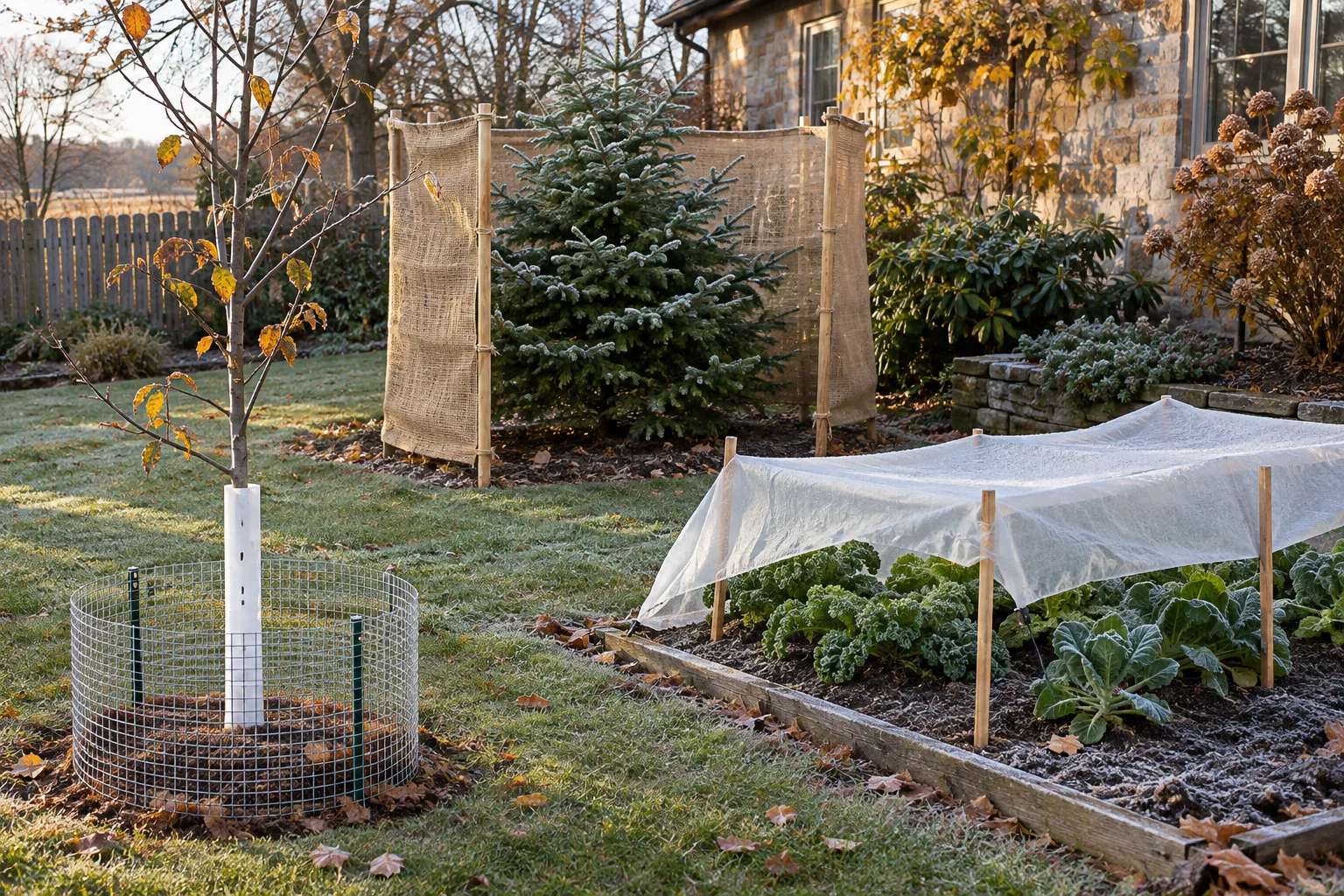
November is a useful point for a garden audit, but it is not a universal signal to wrap every plant. After a season marked by unusual weather stress, the sensible question is not simply whether winter is approaching. It is which plants are exposed, how established they are, what the local forecast is likely to bring, and whether the proposed protection addresses a real risk. A garden can contain several different winter climates within a short distance: a south- or southwest-facing wall may hold warmth and reflect winter sun, while a wind corridor can dry foliage and loosen covers. A low spot may collect cold air and become a frost pocket, even when a nearby sheltered courtyard remains comparatively mild.
That variation makes the calendar a poor substitute for observation. First frost, hard freeze, persistent wind and the point at which soil freezes do not arrive at the same time everywhere. The same plant may need attention in one part of a property and no intervention in another. Before buying materials, walk the site and note where cold air settles, where wind reaches unchecked, where winter sun strikes bark or evergreen foliage, and where buildings, fences or dense plantings provide shelter. These observations turn “winter protection” from a blanket routine into a targeted response to exposure.
Plant age should be the next filter. Newly planted trees and shrubs have had less time to establish their root systems, so they deserve closer attention than well-established plants of the same kind. Thin-barked trees are also more vulnerable to winter conditions that can stress or injure exposed bark, particularly where strong sun and fluctuating temperatures meet. Marginally hardy plants—those already close to the limit of what the local climate reliably supports—have less room for error than fully hardy choices. Container-grown plants belong high on the list as well: their root systems are surrounded by a relatively small volume of growing medium and are more exposed to rapid temperature changes than roots insulated by open ground.
The forecast helps decide when that vulnerability matters. A light frost is a different event from a hard freeze, sustained wind or a period when the soil remains frozen. Protection should therefore be matched to the expected stress rather than applied automatically. A breathable cover may be appropriate for a crop facing a brief frost, while an exposed evergreen may need a screen that reduces drying wind and harsh winter sun. A young tree may need a trunk guard, and a container may need to be moved or otherwise protected from the coldest exposure. None of these measures is a universal winter solution; each addresses a particular combination of plant, location and weather.
A practical first pass can be organized around four questions:
- Is the plant newly planted, thin-barked, marginally hardy or growing in a container?
- Is it positioned in a frost pocket, wind corridor or highly exposed sunny location?
- Does the forecast point to light frost, a hard freeze, strong wind or conditions that will leave soil frozen?
- Will the proposed material address that specific problem without trapping moisture, restricting airflow or creating a new hazard?
This audit also helps identify plants that do not need intervention. A mature, well-sited plant that is suited to the local conditions may be better left uncovered. Unnecessary wrapping can add labor, obscure damage during inspections and encourage the idea that every winter risk can be solved with more material. The aim is not maximum coverage. It is to spend attention where age, exposure and weather combine to make damage more likely, then select a method that fits that risk.
Match the protection to the actual winter problem
Winter protection works only when it answers a specific exposure. A light frost, winter sun, drying wind, frozen soil, repeated freeze-thaw cycles and browsing animals can injure plants in different ways, so one covering cannot solve every problem. Start by identifying the vulnerable tissue: foliage, bark, roots, stems or the plant’s entire above-ground structure. The same young tree may need a white trunk guard for sunscald and animal damage, while a nearby evergreen needs a wind screen and a container plant needs protection for its root zone.
For young, thin-barked trees, a white trunk guard or white tree wrap can reduce the risk of winter sunscald by reflecting strong winter light and limiting rapid temperature changes in the trunk. The guard should protect the lower trunk without trapping moisture or remaining in place indefinitely. It is a targeted barrier, not insulation for the whole tree: it will not prevent drought stress in the root zone, protect exposed branches from wind, or stop animals from reaching unprotected stems. Young trees also benefit from a moderate layer of clean mulch over the root area, but mulch should be kept away from the trunk rather than piled against it. Guidance from University of Minnesota Extension and Penn State Extension treats trunk protection and mulching as separate measures with separate jobs.
Evergreen winter burn is a foliage problem. Needled or broadleaf evergreens can lose moisture from leaves when the ground is cold or frozen and roots cannot replace that moisture, especially when sun and wind increase water loss. A burlap screen placed on the windward or most exposed side can reduce wind and winter sun without sealing the plant inside an impermeable cover. It should function as a screen, with air space around the foliage, rather than as a tight wrap. Burlap cannot restore foliage that has already dried, and it does not replace watering before the soil freezes. Where conditions are dry, deep watering before frozen soil can help charge the root zone; watering frozen ground is not a substitute for that preparation. Penn State Extension’s guidance on winter burn emphasizes reducing exposure while preserving air circulation.
Frost protection for late crops is a different task again. Breathable frost fabric or row cover can buffer a brief, light frost when it is supported and anchored so that it does not rest heavily on plants or lift in the wind. The cover is useful for short-term cold events, not as a permanent winter shelter and not as a guarantee against every hard freeze. It also cannot protect a crop whose roots are already failing from saturated, frozen or severely exposed soil. Use stakes, clips or other supports to hold the fabric above the foliage, and secure the edges where wind can enter. The Oregon State University frost-protection guide distinguishes temporary frost protection from broader winter management.
Root-zone stress is often less visible than frost injury but can be just as important. Containers are especially exposed because their roots have less surrounding soil to moderate temperature changes. A container may need to be moved to a more sheltered location or otherwise protected according to its plant and exposure, while a plant rooted in the ground may need only adequate moisture before freeze-up and a moderate mulch layer. Mulch moderates the root zone; it does not warm the plant indefinitely, correct poor drainage or protect foliage from wind. It should also remain clear of trunks and stems so the base stays dry and visible.
Animal browsing calls for a physical barrier rather than a frost cover. Quarter-inch hardware cloth or another appropriate guard can protect young trunks and lower stems from small animals, while a barrier around an evergreen addresses browsing only if it is high and secure enough for the expected conditions. A white trunk guard may help with some trunk injuries, but it should not be treated as a complete animal-exclusion system. Likewise, burlap around a shrub may reduce wind exposure while leaving lower branches accessible. Separating these functions prevents a common mistake: adding more layers of one material when the actual threat requires a different kind of protection.
A useful November decision is therefore not “Should this plant be wrapped?” but “What damage am I trying to prevent?” Use a trunk guard for vulnerable bark, a burlap screen for exposed evergreen foliage, breathable fabric for a brief frost event, mulch for the root zone and hardware cloth for browsing or gnawing. Each measure has limits, and protection becomes safer and more effective when those limits are respected.
Build a low-cost protection kit and install it safely
A useful winter-protection kit does not need to begin with specialized equipment. Start with materials that solve distinct problems: white tree wrap or trunk guards for young, thin-barked trees; quarter-inch hardware cloth for rabbits, voles and other browsing or gnawing animals; frost fabric or breathable row cover for late crops; stakes and clips for securing fabric; burlap for making a wind screen around exposed evergreens; and clean mulch for moderating soil temperature and protecting the root zone. The right combination depends on the plant and the exposure. A sheltered, established shrub may need nothing more than adequate soil moisture and a sensible mulch layer, while a newly planted tree in a windy corridor may need both trunk protection and a barrier against animals.
Think of the kit in practical budget tiers rather than as a single shopping list. The lowest-cost approach uses materials already on hand—stakes, clips, clean fabric and mulch—provided they are breathable, sound and large enough to stay in place. A middle tier adds purpose-made frost fabric, burlap and white guards for plants that are exposed or recently planted. A more complete setup adds quarter-inch hardware cloth and enough stakes to make barriers stable through wind and changing snow conditions. Spending should follow vulnerability: protect the plants that are young, marginally hardy, container-grown or positioned where wind, reflected sun, animal traffic or cold air creates a clear disadvantage.
Installation matters as much as the material. Covers should not be pressed directly against foliage when an air space can be left between the fabric and the plant. Use stakes or a simple frame to hold frost fabric above late crops, then clip or anchor the edges so wind cannot lift the cover. The purpose is to create a stable protective layer, not a sealed enclosure. Breathable fabric can moderate exposure while allowing air movement; a tight plastic wrapping can trap moisture, overheat in sun and create a different set of problems. For an exposed evergreen, burlap is best used as a screen that reduces wind and harsh exposure, with room around the plant rather than a tightly bound bundle of branches.
Young trees need careful trunk protection. A white trunk guard or white tree wrap can reduce the contrast between sunny and shaded bark and help protect vulnerable trunks from winter injury, while a separate hardware-cloth cylinder can address animal damage. These are different jobs and should not be treated as interchangeable. Keep the animal barrier secure and high enough to remain effective if snow accumulates, and keep it from becoming embedded in the trunk as the tree expands. Do not use a trunk guard as a substitute for protection from browsing, and do not rely on hardware cloth to prevent sunscald.
Mulch should moderate the root zone, not bury the plant. Spread a moderate layer over the soil around trees and shrubs, keeping it away from trunks and stems so the base remains open and dry. The same principle applies after planting or transplanting: protect the surrounding soil without piling material against bark. Mulch can reduce rapid temperature changes near roots, but it cannot correct a site that stays waterlogged or replace attention to a plant that enters winter dry. For plants in containers, inspect the pot, root zone and placement rather than assuming a container cover alone is enough. Containers are more exposed than plants rooted in the ground, so moving them to a more sheltered position may be more effective than adding layers of wrapping.
Avoid improvised fixes that create heat, moisture or chemical hazards. Electrical heaters are difficult to use safely in a wet, windy garden and are not a routine substitute for selecting the right physical barrier. Plastic sheeting should not be draped directly over plants as though it were frost fabric; without air space and ventilation, it can seal in moisture or heat. Pesticide shortcuts also miss the central problem when damage comes from exposure, drought or browsing. A sound installation is simple to inspect, breathable, anchored against wind and matched to the specific risk. Before leaving it in place, walk around each protected plant and ask whether the cover can rub, collapse, trap moisture, expose the roots or fall below the level that animals can reach.
Audit the yard after the first freeze and avoid common fixes that backfire
After the first freeze, inspect the garden as a set of small climates rather than one uniform space. Start with low spots where cold air settles, wind corridors, exposed corners and the sunny side of walls. Look at every cover from the outside and underneath it. Frost fabric that has collapsed onto foliage, shifted off its stakes or collected water needs attention before the next cold night. A plant may look unharmed at midday while still being vulnerable if wet leaves are pressed against a cover or wind has opened a gap at the base.
Use a repeatable walk-through. Check that young trees still have intact white trunk guards, that animal barriers are anchored and that snow or loose soil has not pushed them down. Inspect the root zone for exposed roots, eroded soil and mulch that has moved away from the plant. Around shrubs and evergreens, look for dry or discolored foliage on the windward, south or southwest side. Winter sun and wind can draw water from evergreen foliage while frozen roots cannot replace it, producing browning or bleaching; newly transplanted plants are especially vulnerable. The University of Minnesota Extension recommends screening exposed evergreens with burlap or similar material while leaving the top open for air and light.
Containers deserve a separate inspection. Confirm that they have not tipped, dried out beneath a roof overhang or been left in a position where roots are more exposed than they would be in the ground. For a cover that is otherwise sound but touching the plant, add stakes or another support to create air space. If burlap has loosened, re-anchor it on the exposed side without tying it tightly against the foliage. If hardware cloth has lifted, close the gap at ground level and extend the barrier above the expected snow line. For young trees, keep guards from rubbing the trunk and make sure they do not trap moisture. Protection should be breathable, removable and easy to inspect.
Water management requires restraint once the ground is freezing. Deep watering before frozen soil can help a plant enter winter with adequate moisture, particularly after a dry fall, but watering a frozen root zone does not correct winter drought. Check the soil when it is workable; water deeply only when the plant is dry and the ground can absorb it, then allow drainage. Do not compensate for a poor site with repeated shallow watering. Extension guidance also warns against late-season overwatering and fertilizing that encourages tender growth close to winter.
Mulch can protect roots from sharp temperature changes, but only when spread as a wide, low layer. Pull it away from trunks and stems so the bark remains visible and dry. A tall mound of mulch can hold moisture against the trunk, encourage decay and provide shelter for rodents. Inspect for vole tunnels and gnawed bark, but treat those signs as a reason to improve physical exclusion and reduce nearby cover—not as a reason to apply a pesticide shortcut without identifying the animal and following the label.
Several emergency fixes can backfire. Sealed plastic sheeting is not a substitute for breathable frost fabric: if it rests on foliage, it can trap condensation and increase injury. Dark or black trunk guards can absorb winter sun and intensify temperature swings; white guards reflect sunlight and are the recommended choice for young, thin-barked trees. Do not wrap trunks so tightly that the guard abrades the bark, and remove seasonal wraps in spring after the last frost. Avoid late nitrogen as a rescue measure; it cannot repair frozen tissue and may encourage growth that is poorly hardened.
A practical decision rule is to protect a plant when the likely damage is foreseeable, the plant is valuable or newly established, and the remedy directly addresses the exposure. A young tree in a sunny, windy position may justify a white trunk guard; an exposed evergreen may justify a burlap screen; a late crop may justify breathable frost fabric; a container may be better moved to shelter than wrapped repeatedly. If a plant is badly damaged, its cover repeatedly collapses, or it is fundamentally unsuited to the site, harvesting, moving or replacing it may be more sensible than escalating protection. Recheck after each sharp cold event, correct the specific failure and remove protection when it no longer serves the plant.
Related articles
The November Planting Window: What Can Still Go in the Ground Before Winter
November is not a universal planting deadline. A practical decision guide for bulbs, hardy vegetables, trees and shrubs, with soil, frost, watering and regional limits that determine whether planting now is sensible.

November Pruning Triage: What to Cut Now, What to Leave, and When to Wait
A November pruning decision guide for trees, shrubs, roses, and perennials: match the cut to dormancy, weather, bloom timing, and the risk of winter damage.
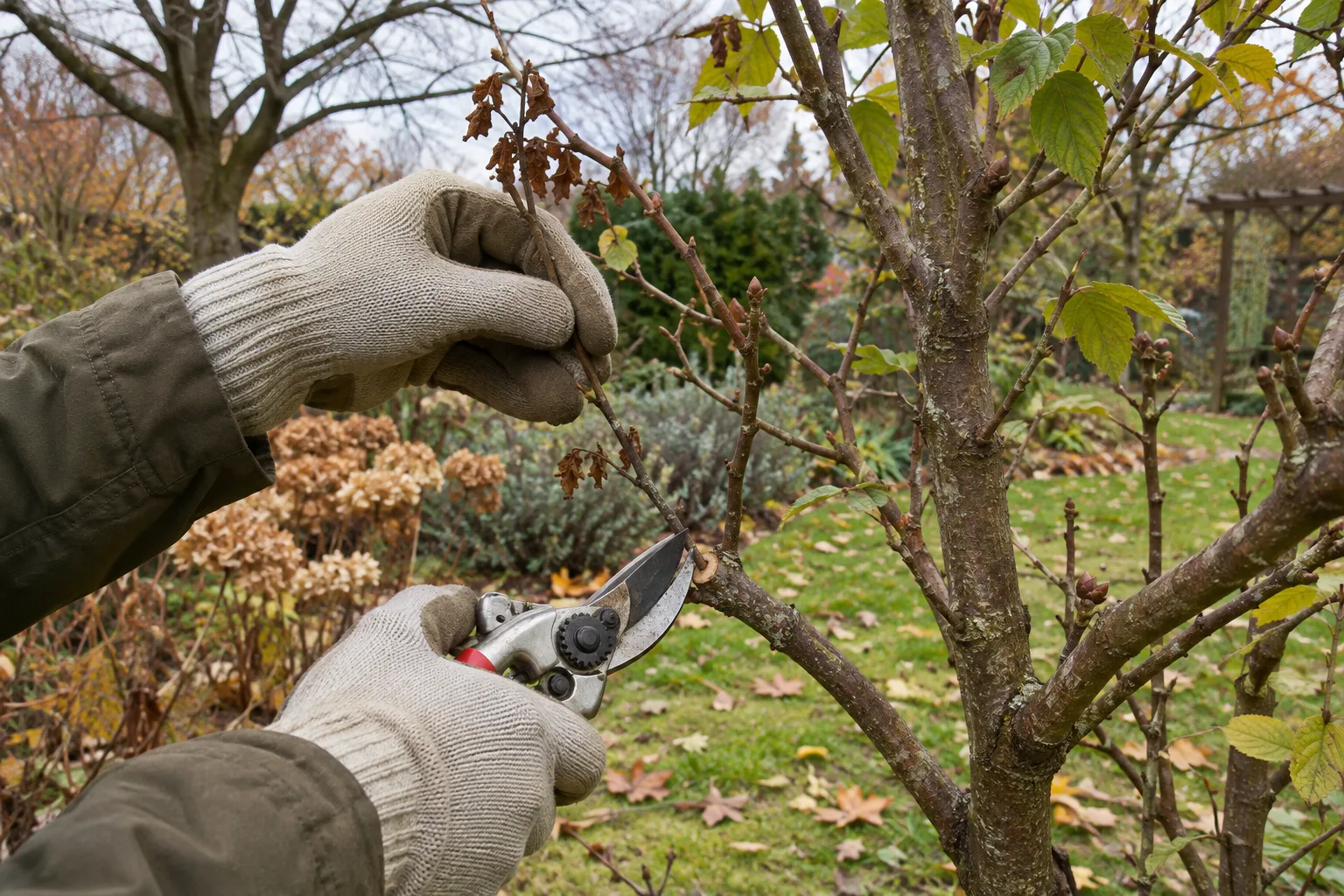
Before You Put Out a Winter Bird Feeder, Make the Yard Safe
A feeder can help birds through a difficult season, but it can also concentrate disease, attract rodents and send birds toward reflective windows. Use this practical November audit to choose a safe location, set a cleaning routine and know when to pause feeding.
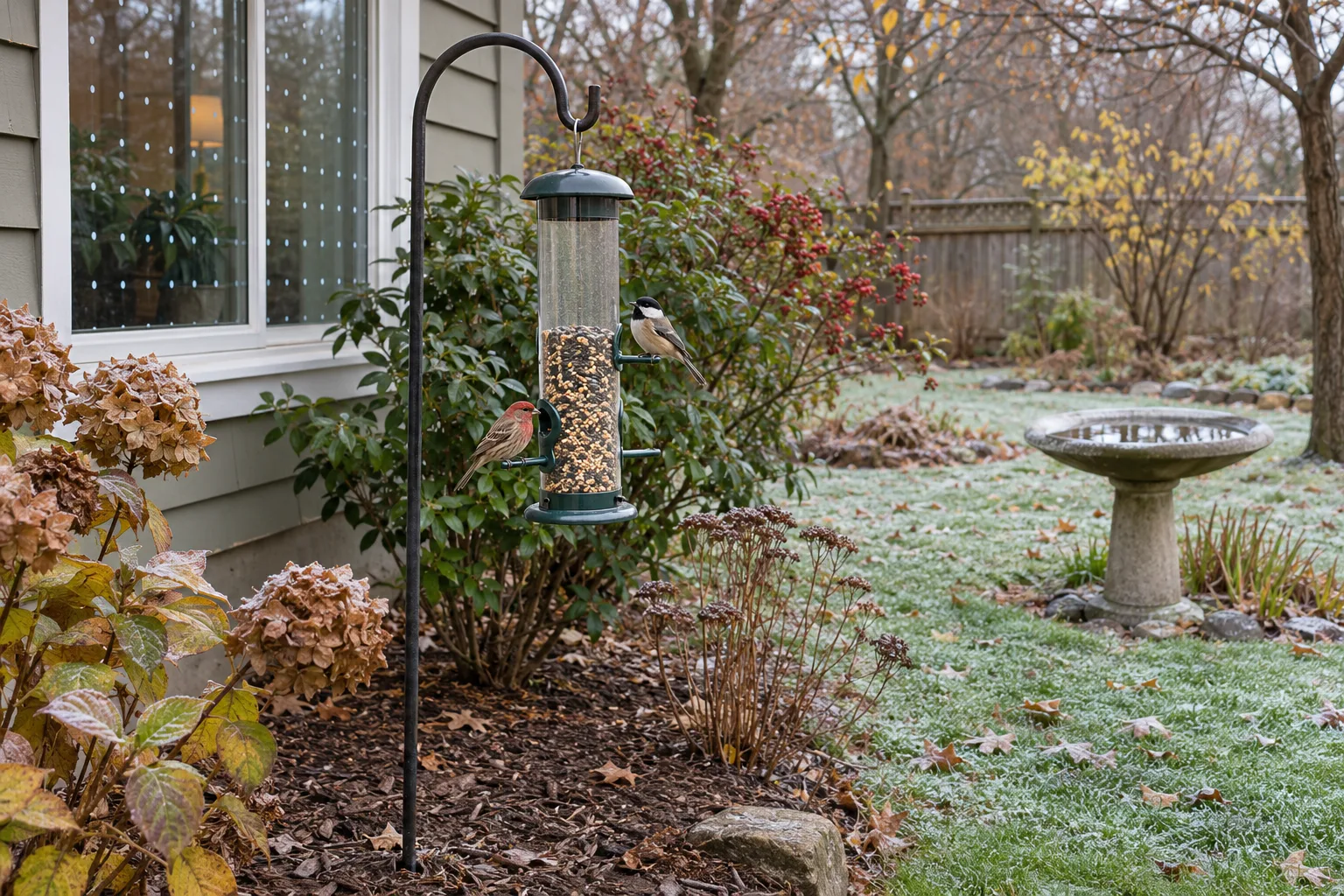

ARRL November Sweepstakes 2026: Check the Exchange and Online Log Workflow Before CW Weekend
The 2026 ARRL November Sweepstakes begins November 7. This practical checklist focuses on the exchange, operating-time rule, Cabrillo details, and the online-only submission workflow that can derail an otherwise valid log.

Comments
Sign in to comment.
No comments yet.