Geologic hydrogen is becoming measurable, not magical
Fresh field data and stimulation experiments make underground hydrogen a cautious good-tech story: promising for hard-to-electrify industry, but still waiting for scale, cost and leakage proof.

The encouraging part of the new geologic hydrogen story is not that somebody has found an endless fuel hidden under our feet. That would be the old hydrogen temptation: a clean-sounding promise that outruns infrastructure, cost and physics. The better news is narrower and more useful. In mines, boreholes and field experiments, geologists are beginning to measure hydrogen flows that can be argued about with numbers rather than slogans. Engineers are also testing whether water, heat and controlled rock fracturing can stimulate more of the same underground chemistry.
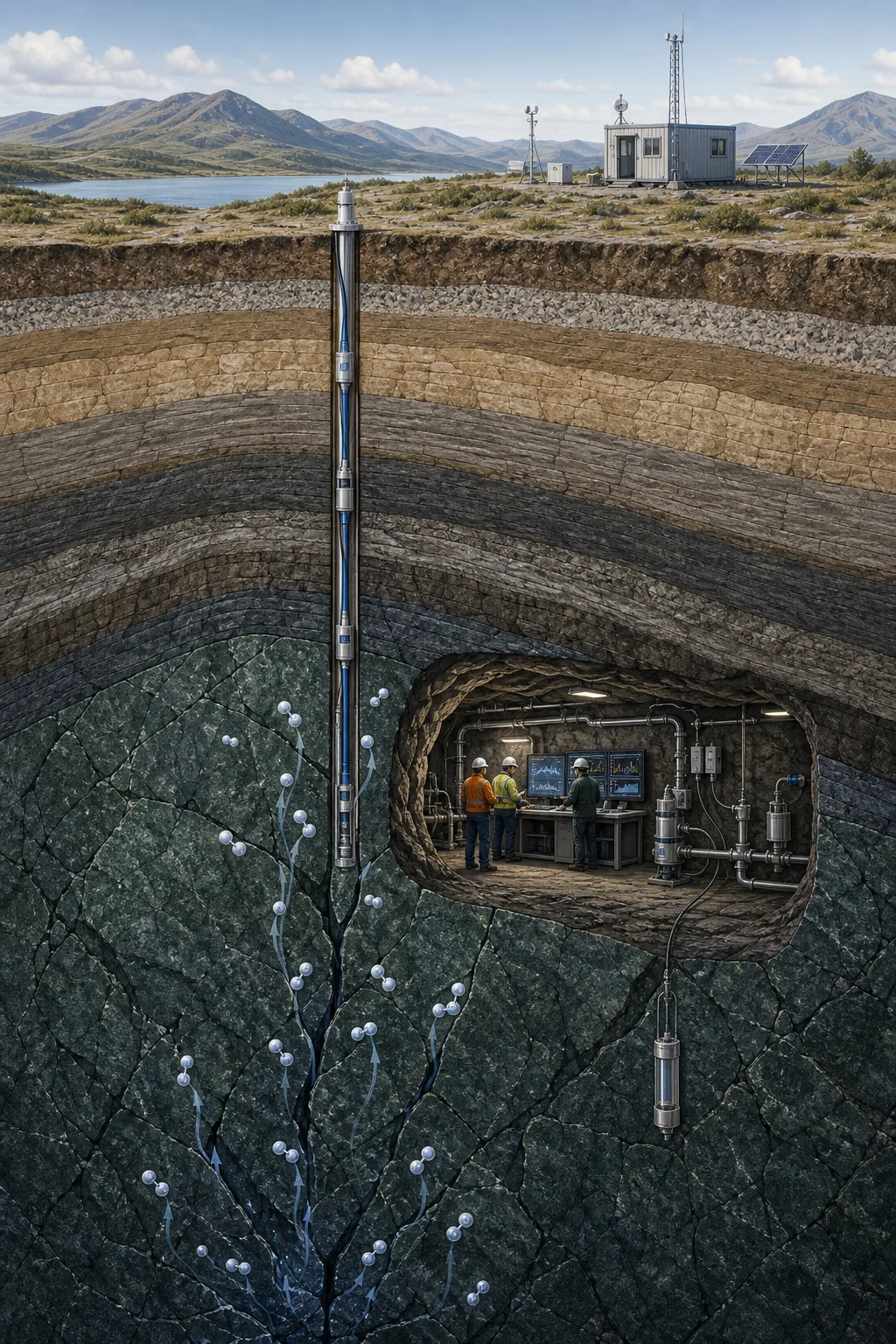
That is why the mid-August wave of reporting from MIT Technology Review and IEEE Spectrum is a good fit for sober technology optimism. MIT Technology Review’s account of underground hydrogen emphasized the gap between real natural flows and a publicly proven commercial reservoir. IEEE Spectrum’s engineering report on Eden GeoPower described electrical reservoir stimulation, a method that uses high-voltage pulses to create fracture networks and potentially accelerate reactions that release hydrogen from suitable rocks. Neither story says a new fuel economy has arrived. Both say the field is becoming testable.
The context matters. Today’s hydrogen is already an industrial molecule, not a futuristic lifestyle accessory. It is used for ammonia fertilizer, refining and chemical processes, and it is often discussed for steelmaking, shipping, aviation fuels and high-temperature heat where direct electrification is difficult. But most hydrogen is still made from fossil fuels. Green hydrogen from electrolysis can be low-carbon if powered by clean electricity, yet it remains expensive, energy-intensive and dependent on large amounts of renewable power that also has many other uses. Geologic hydrogen is interesting because it asks whether some of the molecule can be obtained from natural subsurface reactions instead of manufactured at the surface.
What geologic hydrogen is, and what it is not
The language around this field is messy. “Natural hydrogen,” “white hydrogen” and “geologic hydrogen” are often used loosely. A clearer way is to separate three cases. First, there may be natural accumulations: hydrogen already generated and trapped underground, somewhat like a gas reservoir but with different chemistry and leakage behavior. Second, there may be stimulated accumulation: water or other fluids are injected to increase the amount of hydrogen produced by reactions that were already possible in the rock. Third, there may be stimulated generation: engineers deliberately create conditions, fractures and fluid pathways that make fresh hydrogen production more likely.
Those distinctions are not academic. A natural accumulation would be explored with tools closer to mining and petroleum geology, though hydrogen’s small molecule and reactivity create special problems. Stimulated production looks more like geothermal engineering, enhanced mineral reaction and subsurface monitoring. It raises familiar questions about water use, induced seismicity, wells, permitting, land disturbance and whether the process consumes more energy than it produces. Treating every version as a miracle fuel makes the discussion useless. Treating each version as a different engineering system makes it possible to evaluate progress.
One reason the field has become more credible is that it now has specific measurements. At Kidd Creek mine in Ontario, researchers examined long-running observations from dozens of boreholes. MIT Technology Review summarized the reported average flow as about 8 kilograms of hydrogen per year per borehole. Extrapolated across more than 14,000 boreholes, the mine-scale figure is roughly 140 metric tons per year. That is not a planet-changing amount. It is a small industrial stream, and it is currently more a demonstration of subsurface flux than a business. But it is also not zero, not a press-release molecule and not only a model. It is gas that can be measured.
Another much-cited case is the Bulqizë chromium mine in Albania, where researchers reported roughly 200 metric tons of hydrogen per year escaping from the mine system. Again, the number is not enough to rewrite global energy tables. It matters because it shows that high-purity hydrogen can appear in real underground settings and persist at rates worth studying. The practical question is whether those cases are rare curiosities or pointers to broader geology that can be mapped, monitored and used.
Why the Oman experiment caught attention
The Oman field work described in recent coverage is especially intriguing because it points toward stimulation rather than simple discovery. A team drilled roughly one kilometer down, injected about 50,000 cubic meters of water, and later observed gas that was reported to be around 90 percent hydrogen. The caveat is essential: public information does not yet prove whether the hydrogen was newly generated by stimulation or whether the well connected to a system that already contained it. For a serious technology story, that distinction is everything.
If stimulation can reliably increase hydrogen production, the field becomes more than a search for lucky traps. It becomes an engineering problem: choose the right rock, create the right fluid pathways, monitor gas chemistry, avoid unwanted methane or other impurities, and keep the system safe. If the gas was simply pre-existing, the result is still useful for exploration, but it does not prove that engineers can turn common rock into a controllable hydrogen source. That is why the next good news will not be another headline about “90 percent hydrogen.” It will be a transparent flow curve, gas composition over time, energy input, water balance, leakage monitoring and cost per kilogram.
IEEE Spectrum’s Eden GeoPower report fits into that same testable frame. The company’s electrical reservoir stimulation is not just a hydrogen idea; it has potential applications in mining, geothermal energy and carbon storage. For hydrogen, the claim is that electric pulses can fracture rock more precisely than conventional mechanical approaches and open reactive surfaces to water. ARPA-E’s 2024 support for subsurface hydrogen work, including a reported $20 million across 16 teams and $900,000 for Eden’s electricity-based approach, shows that public research agencies see enough promise to fund experiments. It does not prove commercial success. It does show the field has moved from speculation to funded trials.
The good news, without the hype
The optimistic case is straightforward. If geologic hydrogen can be produced with low emissions, steady flow and acceptable cost, it could help sectors where batteries and direct wires are not enough. Fertilizer plants need hydrogen feedstock. Iron and steel need reducing agents or high-temperature process changes. Shipping and aviation may need synthetic fuels. Some industrial heat is hard to electrify at the pace climate targets require. A reliable low-carbon hydrogen source near mines, ports, industrial hubs or suitable geology would be a useful tool, not a universal replacement for renewables.
The local scale could matter first. A mine that vents hydrogen today might use a modest captured stream to power equipment, displace some diesel, feed a fuel cell or prove monitoring methods. That would not solve global aviation. It would create a real demonstration with safety procedures, gas cleanup, measurement routines and economics that can be audited. Good technology news often begins that way: not with total system transformation, but with a working niche that teaches the larger system what is possible.
The USGS release of a first national map of geologic hydrogen potential in the United States also matters for the same reason. Maps do not produce fuel. They help scientists narrow where to look, which rocks and structures deserve attention, and where land-use or environmental constraints make projects inappropriate. A map turns a vague underground hope into a research program with coordinates, uncertainty and places where negative results are also useful.
The skeptical case is just as important
Hydrogen has a long history of being oversold. Cars, household boilers and broad “hydrogen economy” narratives often promised cleaner futures while ignoring cost, infrastructure, conversion losses and better direct-electric options. Geologic hydrogen will fail the public-interest test if it becomes another excuse to delay wind, solar, transmission, batteries, heat pumps and efficiency. Its strongest role is probably not everyday electricity or passenger cars. It is the narrower set of industrial uses where the molecule itself has value.
Clean Air Task Force’s overview is useful because it lists the friction points alongside the promise: resource uncertainty, lack of commercial-scale extraction, infrastructure limits, extraction complexity, possible methane co-production, hydrogen leakage and land-use scrutiny. Hydrogen leakage is not harmless; in the atmosphere it can indirectly affect climate chemistry. Methane impurities would change the emissions story. Water injection and rock stimulation invite questions familiar from geothermal and hydraulic-fracturing debates. None of these issues make the technology impossible. They make measurement and regulation non-optional.
Economics is another hard filter. A resource estimate measured in trillions of tons is not the same thing as recoverable, affordable hydrogen delivered to a user. The cost includes exploration, drilling, stimulation if used, compression, purification, monitoring, pipelines or local conversion, safety systems and long-term liability. If the result cannot compete with cleaner alternatives in the applications that actually need hydrogen, the resource will remain a scientific curiosity. If it can compete only by ignoring leakage or methane, it is not good news.
The social discussion around the IEEE story on Hacker News reflected exactly this mix. Some readers were attracted by the possibility of a new low-carbon industrial feedstock. Others immediately compared stimulation to fracking, asked where the energy balance closes, and questioned whether hydrogen hype was returning in a geological costume. That skepticism is healthy. A technology worthy of public attention should survive questions from engineers, geologists, climate analysts and local communities.
What would count as a real breakthrough
For the next few years, the meaningful milestones are boring on purpose. Sustained flow rates over years. Published gas composition, not just peak purity. Energy returned compared with energy used for stimulation. Water balance. Methane and impurity accounting. Monitoring that can detect leakage. Cost per kilogram at the wellhead and at the point of use. Permits that show how communities, landowners and regulators respond. Independent data from more than one geology and more than one operator.
A single impressive borehole will not be enough. Neither will a map, a venture round or a laboratory reaction. The field needs connected evidence: geological models that predict where hydrogen should form; boreholes that confirm it; stimulation tests that show controllability; and users who can consume the gas without building a sprawling new infrastructure fantasy. If those pieces line up, geologic hydrogen could become a practical addition to the clean-energy toolbox.
That is why this is a good technology-news story rather than a triumph story. It describes progress from myth to measurement. The promise is real enough to investigate, and the unanswered questions are concrete enough to test. If geologic hydrogen succeeds, it will not be because the Earth handed humanity infinite clean fuel. It will be because scientists learned where the molecule forms, engineers learned how to produce it responsibly, and regulators learned how to count the risks before the hype took over.
Related articles
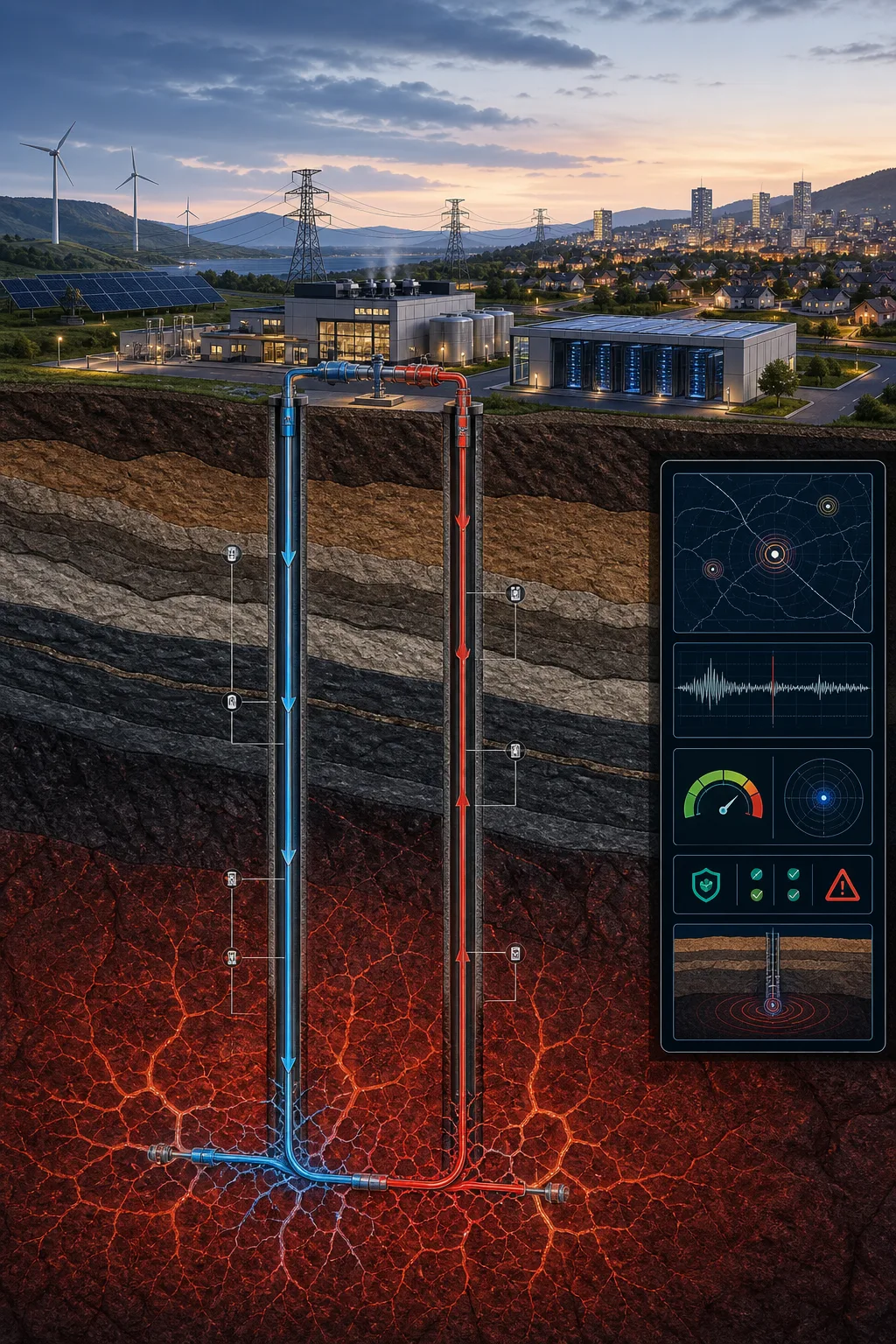
La geotermia vuelve a ser una buena noticia porque los ingenieros la hicieron más difícil
La parte esperanzadora no es un titular milagroso. La nueva geotermia convierte el calor subterráneo en un problema medible: perforar mejor, modelar mejor, vigilar mejor y demostrar la economía proyecto por proyecto.
Geothermie wird zur guten Nachricht, weil Ingenieure sie messbar machen
Die Hoffnung liegt nicht in einem Wunder-Titel. Neue Geothermie macht Erdwärme zu einem überprüfbaren Technikproblem: besser bohren, besser modellieren, besser überwachen und die Wirtschaftlichkeit Projekt für Projekt beweisen.
Geotermia znów jest dobrą wiadomością, bo inżynierowie zaczęli ją mierzyć
Nadzieja nie polega na cudownym haśle. Nowa geotermia zamienia ciepło pod ziemią w sprawdzalny problem: lepiej wiercić, lepiej modelować, lepiej monitorować i dowodzić ekonomiki projekt po projekcie.
Геотермальная энергетика снова стала хорошей новостью — потому что инженеры усложнили задачу
Хорошая новость не в обещании чудесного источника. Новая геотермия становится проверяемой инженерной задачей: лучше бурить, точнее моделировать, прозрачнее мониторить и доказывать экономику проект за проектом.
Comments
Sign in to comment.
No comments yet.