How many words should you learn at once? 10, 20 or 50
A bigger list is not always a better lesson. Choose a vocabulary size that matches your time, familiarity and next practice session.

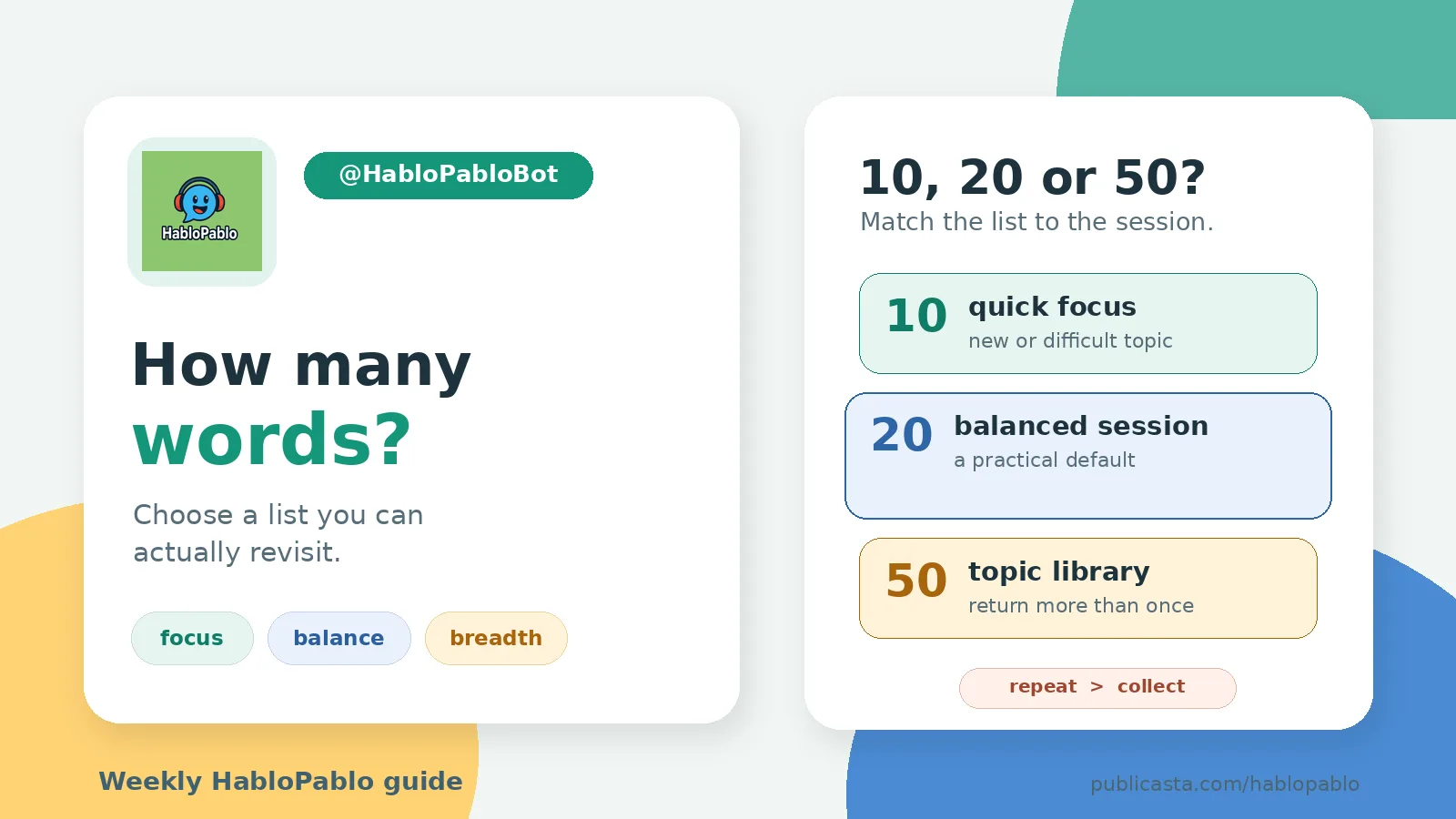
How many words should a new vocabulary contain? There is no universal number, but there is a useful test: choose a list you can revisit, not merely generate. Ten focused words can teach you more than fifty words you see once and forget.
The right size depends on three things: how familiar the topic is, how much time you have today, and what you plan to do after reading the list.
Choose 10 words for focus
A ten-word vocabulary is a good starting point when the topic is new, the words are difficult, or you only have a few minutes. It is also useful for verbs, confusing pairs and words that have already caused mistakes.
With ten items, you can read every translation carefully, say the words aloud and finish a matching session without turning it into a long test. The list is small enough to repeat tomorrow and notice what actually stayed in memory.
Try ten words when your topic is narrow: “hotel check-in”, “kitchen verbs”, “weather adjectives” or “phrases for a pharmacy” rather than simply “travel” or “daily life”. If you are preparing a practice vocabulary, remember that individual words usually work better than full sentences.
Choose 20 words for a balanced session
Twenty words are a practical default for a familiar topic. The list has enough variety to feel useful but remains manageable for reading, listening and active recall.
This size works well when you want one compact lesson: first scan the meanings, then listen to the vocabulary, and later open word-pair practice. You do not need to complete every step at once. The important part is returning to the same material instead of replacing it immediately with another list.
If you are unsure where to begin, choose 20. After the session, look at the result rather than guessing: several difficult pairs suggest that the next list should be smaller or more specific; an easy clean round means you can add variety next time.
Choose 50 words for collection, not instant mastery
Fifty words can be useful when you are collecting vocabulary for a trip, a course chapter or a larger work topic. It gives you breadth, but it is rarely a realistic one-sitting memorization target.
Treat a long vocabulary as a source you will revisit. Read it once to see the territory, listen when convenient, and then create smaller focused lists for the words that matter most. A 50-word list is successful when it helps you organize a topic, not when you can force every item into memory before closing Telegram.
Avoid mixing several unrelated themes just to reach a large number. “Airport, hotel and restaurant” can become three useful vocabularies instead of one crowded list.
Let tomorrow choose the number
A simple rule is to ask what you can repeat the next day. If ten words fit naturally into tomorrow's schedule, ten is the right number. If twenty familiar words feel comfortable, use twenty. Choose fifty only when you expect several contacts with the same material.
Open HabloPablo, choose a specific topic and create a list that fits the session you can actually do. Generating a new AI vocabulary or MP3 is a separate action; practicing an existing vocabulary does not start a new AI request.
For a repeatable rhythm, combine the size you chose with the 7-day vocabulary routine. Start small, return to the same words, and use your mistakes to decide what deserves the next round in HabloPablo.
Related articles
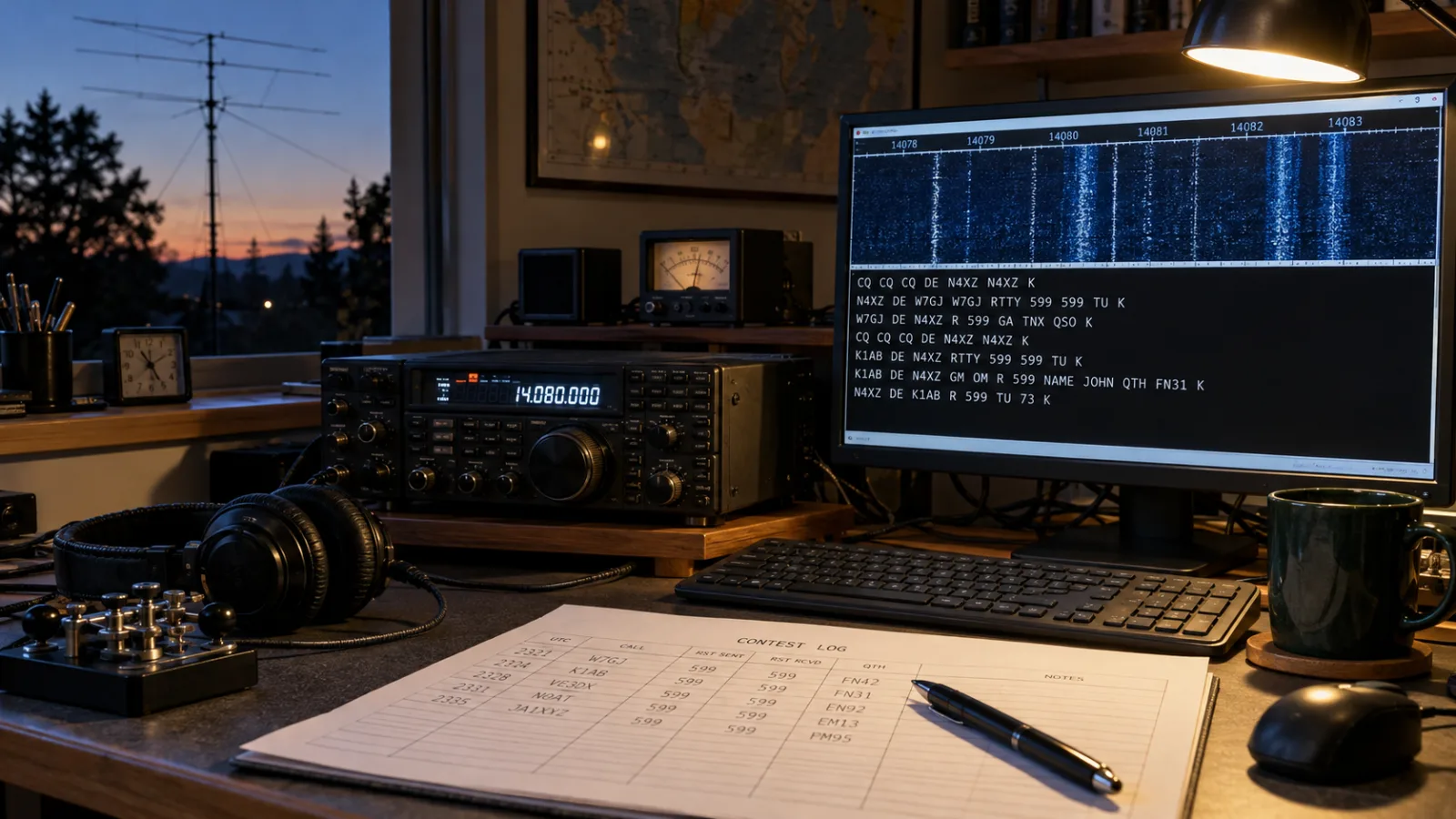
The First JARL World Wide RTTY Contest Is October 17–18: A Practical Setup and Logging Guide
JARL’s new World Wide RTTY Contest inherits the former JARTS weekend but introduces its own rules, exchange, categories, and Cabrillo details. Here is how to prepare a modest station without confusing Baudot RTTY with FT8-style automation.

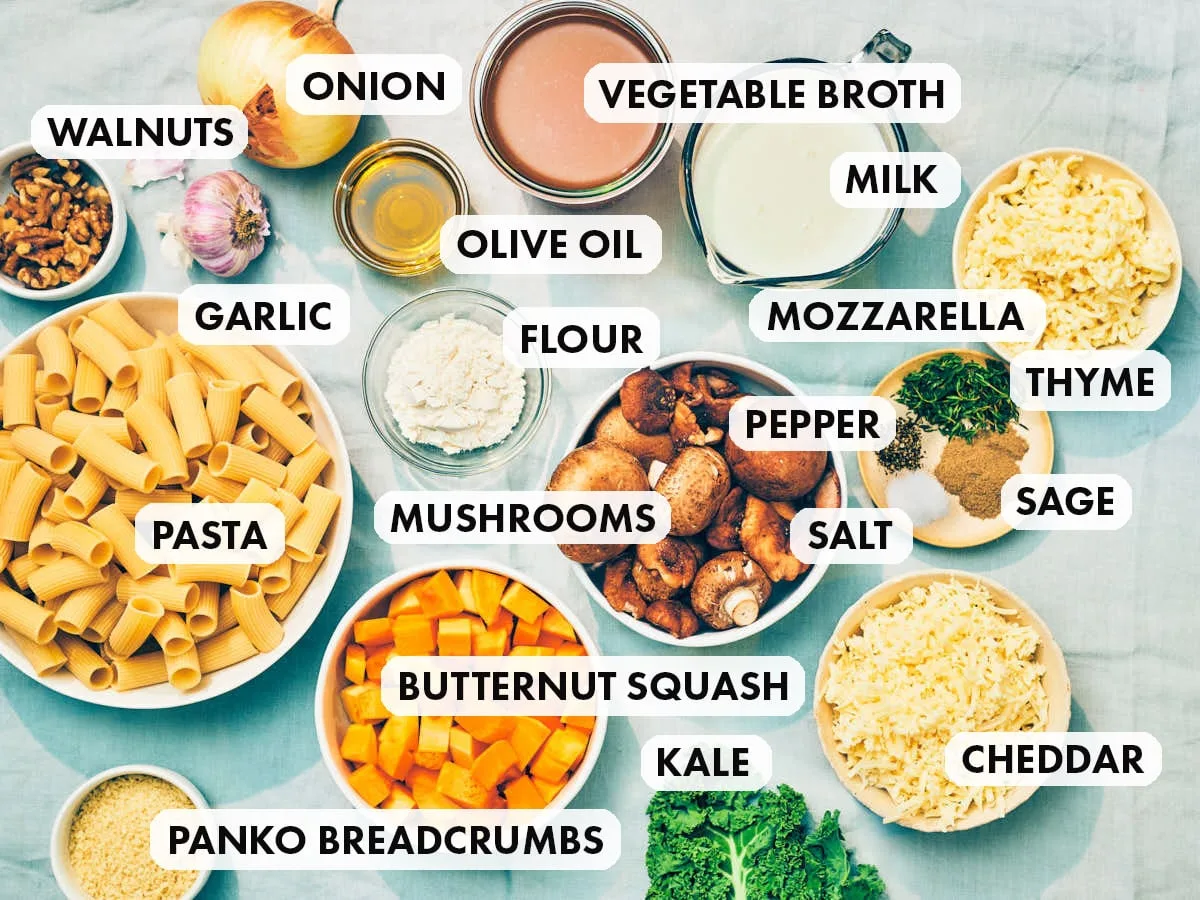
The November Make-Ahead Dinner That Reheats Well: Butternut Squash, White Bean and Sage Pasta Bake
A practical November dinner for the weeks when the calendar fills up: roast squash, white beans and pasta become a creamy, crisp-topped bake that can be assembled ahead, refrigerated or frozen, and finished when you need it.

Mojo’s open-source compiler is the real test after the 1.0 release
Modular has opened Mojo’s compiler, tooling and language sources under Apache 2.0 with LLVM exceptions. That removes the loudest adoption blocker, but developers still need to test buildability, governance, MAX boundaries and real use cases.


Your GPS Tracker Already Works with Another Service. How to Switch to LiveGPSTracks
Already using your GPS tracker with another service? Learn how to switch it to LiveGPSTracks safely: save the original server settings, use the test port, verify the device ID, and complete the connection without losing the option to switch back.

Comments
Sign in to comment.
No comments yet.