When clean eating posts stop being harmless: what new research says about food rules online
A new content analysis of TikTok and Instagram wellness posts adds detail to a familiar concern: healthy eating advice can slide into rigid food rules, body comparison and misleading claims. The issue is not vegetables. It is certainty without context.

A post about meal prep can be useful. A recipe video can make dinner easier. A registered dietitian explaining fiber, protein or food allergies can help people ask better questions at the grocery store or in a clinic. The myth worth checking is narrower: that social media clean eating content is automatically a harmless push toward better health because it uses the language of wellness.
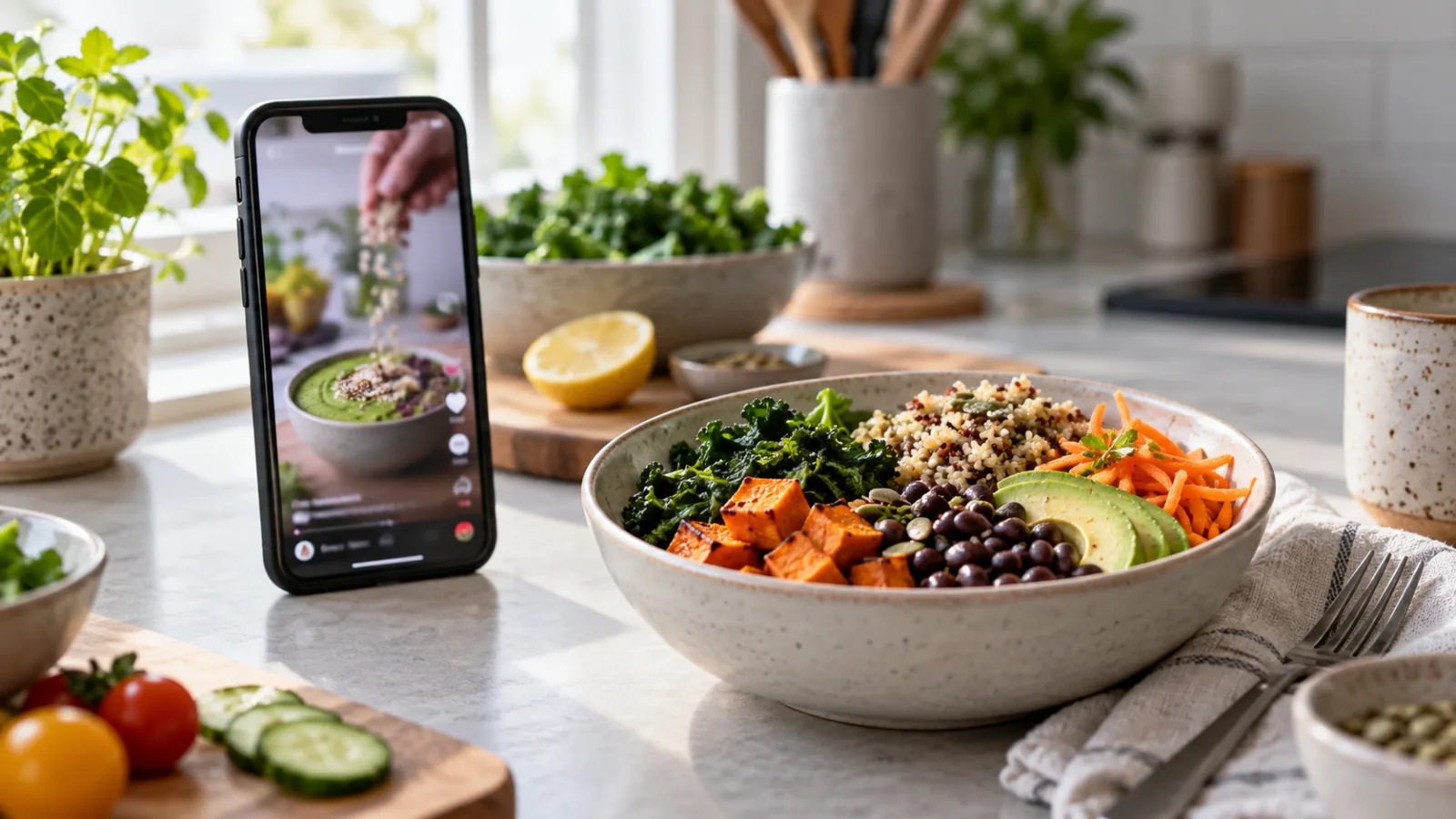
A new Flinders University study, publicized on September 8, 2026, makes that assumption harder to defend. The researchers analyzed 300 popular TikTok and Instagram posts tagged #healthylifestyle, #nutrition and #cleaneating. According to the university release and the article record, many posts did not simply encourage ordinary balanced eating. They often attached health to strict rules, moral labels for food, body display and the idea that eating like a creator could help viewers look like that creator.
That does not prove that watching a clean eating video causes an eating disorder. The study looked at content, not at viewers over time. Still, it gives a clearer picture of the messages people may be absorbing when the algorithm serves wellness as a stream of bodies, rules, supplement claims and before-the-camera certainty. Paired with recent reviews of orthorexia nervosa and social media, it supports a practical conclusion: healthy eating advice online deserves the same skepticism as any other health claim, especially when it turns flexible habits into purity tests.
What the new study actually looked at
The article, titled Eat Like Me = Look Like Me: A Content Analysis of Healthy Lifestyle, Nutrition and Clean Eating Social Media Content, was published in the Journal of Technology in Behavioral Science in July 2026. The public summary from Flinders University says the team examined 300 popular TikTok and Instagram posts using three common wellness hashtags: #healthylifestyle, #nutrition and #cleaneating.
The study is timely because it studies the front door through which many people now meet nutrition advice: short videos and reels, not textbooks, public health leaflets or long consultations. The researchers were not testing a diet, measuring nutrient intake or diagnosing viewers. They were coding what popular posts communicated. That distinction matters. A content analysis can show patterns in the messages, but it cannot tell us exactly how many viewers changed their eating, who was harmed, or whether a particular person developed symptoms because of a particular video.
The findings are still useful. The Flinders summary reports that 67% of posts emphasized clean or healthy eating, almost one-third promoted food restrictions or rules, and about one in five framed food in good-versus-bad terms. Nearly two-thirds featured body objectification, and many linked health to a lean or toned appearance. The same release says unqualified influencers accounted for 78% of creators analyzed, more than two-thirds of health information was classified as misleading or deceptive, and three-quarters of posts promoted supplements or superfoods, often without much scientific context.
Those numbers do not mean every creator in the sample intended harm. They do show that the visible culture around clean eating can package restriction as discipline, appearance as proof of health, and product use as a marker of doing things correctly. That is different from basic public health advice such as eating a varied diet, limiting excessive alcohol, or including fruits, vegetables, whole grains and enough protein in ways that fit a person’s culture, budget and medical needs.
The myth: clean eating is just common sense
Clean eating is hard to check as a scientific claim because it rarely has one stable definition. In one post it may mean cooking more meals at home. In another it may mean avoiding heavily processed foods. In another it becomes a long list of forbidden ingredients, moral categories, detox claims, supplement routines and rules about when, how and with whom a person is allowed to eat.
That flexibility is part of the problem. A phrase that sounds gentle can carry very different levels of intensity. Someone can say clean eating and mean I am trying to eat more foods that make me feel well. Another person can use the same phrase to mean I feel anxious, guilty or unsafe if I eat anything outside a shrinking list of approved foods. The first may be a normal preference. The second is a warning sign that food has become less flexible, less social and more loaded with fear.
The new study’s title captures the more subtle sales pitch: eat like me, look like me. The claim is rarely stated with enough precision to be tested. It appears through repetition. A creator shows a body, then shows a day of eating. The video may imply that the body is the natural result of the foods, the brand of protein powder, the avoided ingredients or the morning routine. What gets left out is large: genetics, income, disability, age, health conditions, medication effects, sleep, stress, eating disorder history, editing, lighting, posing and the fact that a single day of eating is not a controlled experiment.
For a health myths channel, the right verdict is not that healthy eating is fake or that every nutrition influencer is dangerous. The more accurate point is that the clean eating label does not make advice evidence-based. It can hide weak claims behind familiar health words. It can also turn sensible nutrition into a rigid identity project.
Where orthorexia fits, and where the evidence is still unsettled
Orthorexia nervosa is commonly described as an unhealthy fixation on eating foods viewed as healthy, pure or correct. The National Eating Disorders Association notes that orthorexia is not formally recognized in the DSM-5-TR, the diagnostic manual used by many clinicians in the United States, but awareness of the pattern has grown. NEDA’s overview emphasizes that concern about nutrition quality is not itself a problem. The concern becomes more serious when the fixation damages well-being, narrows food variety, causes distress, or interferes with daily and social functioning.
That distinction is important because otherwise the discussion becomes sloppy. People may avoid certain foods for allergies, celiac disease, religious practice, ethical reasons, sensory reasons, pregnancy guidance, diabetes management, kidney disease, gastrointestinal conditions, budget constraints or simple preference. None of that is automatically orthorexia. The problem is not having food boundaries. The problem is when rules become compulsive, punitive, medically unsupported or so rigid that they crowd out health rather than support it.
A 2024 systematic review of reviews in Psychopathology found that the orthorexia field still has major measurement problems. Prevalence estimates vary widely, diagnostic criteria remain debated, and older screening tools have been criticized for poor specificity. In plain language: researchers agree the pattern is worth studying, but they do not yet have a universally settled clinical definition or a clean way to count exactly how common it is.
A 2025 umbrella review in Current Nutrition Reports reached a similar cautious position. It described orthorexia as an emerging condition associated with obsessive-compulsive traits, perfectionism, compulsive exercise and eating disorder symptoms, while also stressing that inconsistent tools and study designs limit firm conclusions.
So the evidence does not support a dramatic claim that clean eating posts are causing a wave of diagnosable orthorexia in a simple, one-way manner. It does support a more careful claim: social media environments can amplify themes that overlap with orthorexic thinking, including purity, control, fear of ordinary foods, moralized eating, body comparison and suspicion of flexibility.
What reviews say about social media and food obsession
A 2026 PLOS One scoping review, Orthorexia nervosa and social media: A mixed-methods scoping review using a systematic methodology, looked across 31 studies published between 2017 and 2024. The authors found that the relationship between social media and orthorexia appears bidirectional and underexplored. People with more orthorexic symptoms may seek out nutrition and fitness content; repeated exposure to that content may also reinforce symptoms in some users.
That is a useful correction to the common algorithm-blame shortcut. Algorithms matter because they can repeat and intensify themes. But users are not identical. A teenager recovering from disordered eating, an adult with a history of anxiety around food, a competitive athlete, someone newly diagnosed with a medical condition, and someone casually looking for dinner ideas may react very differently to the same video.
The PLOS review also notes that most available studies are cross-sectional and often focus on Westernized populations. Cross-sectional studies capture a snapshot. They can show associations, but they cannot establish sequence: did the content lead to symptoms, did symptoms lead someone to the content, or did both reflect a third factor such as body dissatisfaction, perfectionism or poor health literacy?
Another recent systematic review on idealized body images and fitness lifestyles found that frequent social media use, fitspiration and thinspiration content were linked with symptoms of orthorexia and muscle dysmorphia. Again, the strongest lesson is not simple causation. It is that nutrition content is rarely only about nutrients. It often carries body ideals, discipline scripts and social comparison cues.
For readers, this means the question should shift from Is this food clean? to What is this post asking me to believe or do? Is it giving context, or is it making health sound like a performance? Is it explaining evidence, or turning anxiety into engagement?
Red flags in wellness posts
The most concerning posts are not always the loudest. Many look calm, polished and responsible. Some use scientific vocabulary, a kitchen counter, a white coat, a supplement shelf or a grocery-store tour to create authority. A viewer does not need to diagnose the creator or themselves. It is enough to notice when a post pushes patterns that research and eating disorder organizations repeatedly flag as risky.
One red flag is moral language. Food described as good, bad, clean, toxic, poisonous, guilt-free or cheating can make eating feel like a character test. There are real differences in nutrient quality, food safety and medical suitability. But moral labels often flatten those differences into shame. A cookie is not a diagnosis. A salad is not proof of virtue.
Another red flag is a shrinking menu. Advice becomes more questionable when each video removes another category: no seed oils, no gluten, no dairy, no fruit after a certain hour, no packaged foods, no restaurant meals, no carbs, no foods with more than a few ingredients. Some people have medical reasons to restrict specific foods. Broad restrictions aimed at everyone require stronger evidence than a confident reel usually provides.
A third red flag is body-as-proof reasoning. The fact that a creator has a lean, muscular or conventionally attractive body does not validate their nutrition claims. Bodies are influenced by many factors, including genetics, training history, age, illness, medication, socioeconomic conditions, lighting, posing and editing. A body can sell an idea without proving it.
A fourth red flag is supplement dependence. The Flinders summary reports that three-quarters of posts in the sample promoted supplements or superfoods. That does not make every supplement claim false. It does mean viewers should separate ordinary dietary advice from product marketing. When a creator earns money from a powder, plan, affiliate link or brand deal, the claim deserves extra scrutiny.
A fifth red flag is intolerance of context. Serious nutrition guidance usually has caveats: this may not apply during pregnancy, in childhood, in eating disorder recovery, with kidney disease, with diabetes medications, with gastrointestinal disease, with allergies, or in people who are undernourished. Social posts that speak to everyone as if bodies and lives were interchangeable are easier to share but less medically responsible.
What clean eating posts can and cannot prove
A single video cannot prove that a diet works. A week of meals cannot prove that a supplement improves immunity. A creator’s appearance cannot prove that their food rules caused their body. Testimonials can be sincere and still be misleading because people often change several things at once: sleep, exercise, alcohol, calorie intake, protein intake, social support, medication, stress and body composition goals.
The new content analysis can prove something more limited: in the sampled popular posts, certain themes were common. Restrictive rules, moralized food categories, body objectification, supplement promotion and misleading information appeared often enough to be a pattern. That is evidence about the media environment, not a diagnosis of viewers.
The broader orthorexia literature can also prove only so much. It supports concern about associations between social media, body dissatisfaction, perfectionism, fitness content and symptoms of obsessive healthy eating. It does not yet provide a precise threshold where a person crosses from intense interest into a formal disorder, partly because orthorexia is not a settled DSM diagnosis and measurement tools remain debated.
This uncertainty should make the public conversation more careful, not less. We can avoid two bad extremes at once. It is not helpful to dismiss all clean eating concerns as overreaction. It is also not accurate to claim that everyone who avoids a food or follows nutrition accounts has orthorexia. The better approach is to look at function: is the behavior improving life in a flexible way, or is it narrowing life through fear and compulsion?
Why appearance-based health advice is especially slippery
The most persuasive wellness content often merges two claims without saying so directly. The first is about health: eat this way and you will feel better. The second is about appearance: eat this way and you will look like this. Those are not the same claim.
A person may improve blood pressure, blood sugar, digestion, energy or nutrient intake without becoming leaner. Another person may become leaner through methods that do not improve health. A third may look visibly fit while dealing with disordered eating, fatigue, menstrual disruption, anxiety, overtraining or other problems viewers cannot see.
NIMH’s public information on eating disorders is a useful reminder that people with eating disorders can have different body weights and may appear outwardly healthy while being medically unwell. This matters because social media trains viewers to judge health visually. The camera cannot show electrolyte balance, bone density, menstrual function, blood pressure trends, psychological distress, digestive symptoms or the cost of maintaining a rigid routine.
That is why the phrase look like me deserves skepticism. Nutrition can affect health. Physical activity can affect fitness. But a creator’s body is not a controlled outcome measure. It is a sales surface, a social signal and sometimes an edited performance.
A more useful way to evaluate nutrition content
The first question is not whether a post sounds scientific. It is whether it behaves like responsible health communication. Responsible nutrition content usually names limits. It distinguishes general patterns from individual medical needs. It avoids diagnosing strangers. It does not frame ordinary foods as poison. It does not imply that a supplement is essential for everyone. It does not turn one person’s routine into a universal rule.
Check the credential, but do not stop there. A qualified clinician or dietitian can still overstate a point online, and an uncredentialed person can share a harmless recipe. The credential is one piece of context. The quality of the claim matters too. Does the post cite evidence that matches the claim? A study in athletes may not apply to sedentary adults. A mouse study may not support a human diet rule. A short-term biomarker change may not mean a long-term health outcome. A correlation between food habits and disease risk may not prove that one ingredient caused the result.
Watch for certainty that outruns the evidence. Strong claims need strong support: this causes inflammation, this destroys hormones, this detoxes the body, this fixes gut health, this balances cortisol, this reverses disease, this is the only breakfast you should eat. The more universal and dramatic the wording, the more careful the evidence should be.
Notice what happens after you watch. A good recipe account may leave you with meal ideas. A good education account may leave you with a clearer question for a clinician or dietitian. A risky stream may leave you afraid of more foods, ashamed of normal hunger, suspicious of social meals, or convinced that health requires constant monitoring. The after-effect matters.
When a health goal starts costing too much
There is no need for readers to self-diagnose from an article. But it is reasonable to take certain changes seriously. If eating rules are expanding while actual food variety is shrinking, that is worth noticing. If grocery shopping, restaurants, family meals or travel become sources of high distress because approved foods may not be available, that is more than normal preference. If a person spends hours checking labels, planning around fear, comparing their body to creators, or feeling intense guilt after eating ordinary foods, support from a clinician may be appropriate.
This is especially important for children and adolescents, people who are pregnant, people with chronic disease, people taking medications affected by food intake, and anyone with a current or past eating disorder. Generic online rules can clash with real medical needs. A restrictive rule that seems harmless for one adult may be risky for another person.
It is also worth taking physical symptoms seriously. Unexplained weight change, fainting, persistent fatigue, loss of menstrual periods, chest symptoms, gastrointestinal problems, feeling cold all the time, compulsive exercise, or significant anxiety around eating are not internet debates. They are reasons to speak with a qualified health professional. This article cannot assess an individual situation.
What to keep, what to ignore
The useful part of online nutrition culture is not complicated. Recipes can help. Skills can help. Seeing different ways to cook beans, vegetables, fish, grains, tofu, eggs, soups or packed lunches can make ordinary eating easier. Practical content about budgeting, food safety, allergies or culturally familiar meals can be valuable.
The part to treat with caution is the purity frame. Health is not a ladder where each eliminated food moves a person upward. It is not a body type. It is not proven by a supplement stack. It is not created by fearing restaurants or turning every ingredient label into a threat assessment.
A calmer rule of thumb is this: nutrition advice should make eating more workable, not make life smaller. It should leave room for medical differences, culture, pleasure, cost, access, disability, family life and recovery from disordered eating. It should be able to say sometimes, for some people, it depends.
The current evidence does not show that every clean eating post is harmful. It does show that popular clean eating content can carry messages linked to obsessive healthy-eating patterns: rigid rules, moral judgment, body comparison and unsupported claims. That is enough to stop treating the label as harmless by default.
Material in this article is for general information and evidence checking only. It does not diagnose, treat or replace advice from a qualified health professional. For personal concerns about eating, body image, symptoms, pregnancy, children, chronic illness or medications, consult an appropriate clinician.
Related articles
Does Cutting Recreational Screen Time Make Children More Active? What a Danish Trial Found
A Danish randomized trial found that children moved more after their families sharply reduced recreational screen use for two weeks. The result is real, but it does not justify a universal screen ban or a magic daily limit.

Are seed oils really inflammatory? What human studies say about the viral cooking-oil claim
A calm evidence check separates viral seed-oil warnings from human research on linoleic acid, inflammation, saturated-fat swaps and overall diet.


An AI Image Is Not Proof: How to Handle a Message Claiming Someone Found Your Lost Pet
A new wave of lost-pet scams uses stolen details, urgent payment demands and AI-generated images. Here is a calm verification plan that protects your money, accounts and search effort without dismissing a genuine finder.
New World Screwworm and Pets: What Outdoor Owners Should Check and When to Call the Vet
The New World screwworm outbreak is mainly a regional animal-health concern, not a reason for every owner to panic. Here is how to check wounds, think about travel, avoid unsafe home treatments, and recognize when veterinary help is needed.

Comments
Sign in to comment.
No comments yet.