The 12-Month Recurring-Expense Map: How to Catch Annual Renewals and Payment Leaks
Monthly subscription scans miss annual renewals, changing bills and charges hidden behind different payment descriptions. A 12-month recurring-expense map shows what is due, where it pulls from and what to verify before money leaves your account.

A monthly subscription check catches the obvious charges. It does not reliably catch the annual domain renewal, the insurance installment that changed in April, the software plan billed through an app store, or the membership paid from a second card. Those expenses are not necessarily hidden. They are simply spread across different dates, payment methods and merchant descriptions.
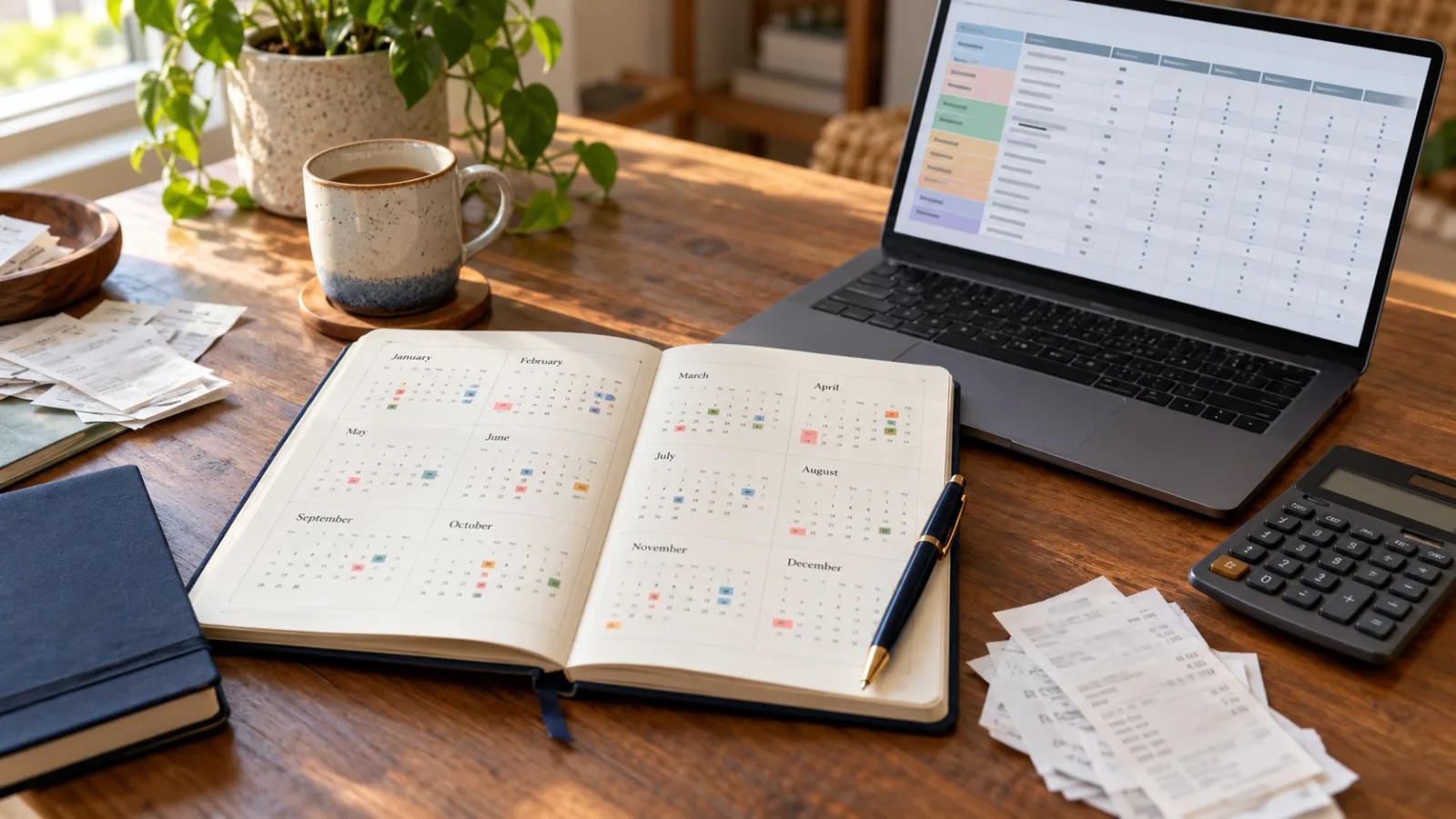
That is why a useful household review needs a longer view than one bank statement. The practical tool is a 12-month recurring-expense map: a plain record of every payment that repeats, renews, changes after a promotion, or can arrive after a long period of silence. It is a way to answer four questions before a charge appears:
- What is this payment for?
- How often can it recur?
- Which account or card will be charged?
- What action is required if the price, service or renewal is no longer wanted?
The timing matters. The Federal Trade Commission’s subscription guidance describes negative-option offers as arrangements that can automatically bill consumers unless they take action, including free-to-paid trials and automatic renewals. The agency has also continued reviewing rules around recurring payments. Meanwhile, a recent personal-finance discussion showed the ordinary version of the problem: people finding old recurring payments only after looking back several months, then discovering that annual charges and free trials required a different review.
The goal is not to distrust every recurring payment. Automatic billing can be convenient. The goal is to make silence a deliberate choice rather than an accidental renewal.
Why a monthly scan is not enough
A recurring payment can be regular without being monthly. Some charges repeat every week, quarter, six months or year. Others are not fixed at all: a promotional price ends, a plan changes tiers, usage varies, or an annual renewal is billed on a date chosen when the account was first created.
A three-month statement review can therefore produce false confidence. It may find a streaming service billed on the fifth of every month but miss a password manager that renews each November. It may catch a gym membership but overlook a professional association whose fee is deducted from a card used only for travel. It may show an internet bill but not reveal that the provider added equipment insurance or a premium support package in a separate line item.
There is another complication: merchant names are not always the names consumers remember. A payment can appear under an app-store billing entity, a payment processor, a parent company, a shortened descriptor or a different regional entity. A family member may have authorized the charge. A card may have been replaced while the merchant’s stored payment credentials continued through an account update. Looking only for familiar brand names is not enough.
The map solves this by recording the payment’s identity and timing, not just its amount. If you know that a $79 charge can occur between October and December, you can investigate it before it becomes a surprise. If you know that a service is billed through a particular app store or bank account, you know where to cancel and which statement to monitor afterward.
Build the map from transactions, inboxes and account settings
Start with data you already have. Do not begin by trying to remember every service in the household. Memory is especially weak for charges that are small, infrequent or paid by somebody else.
Review at least 12 months of checking-account, debit-card and credit-card transactions if those records are available. If a full year is not available in the current dashboard, download older statements from the institution or search archived email for billing confirmations. Check digital-wallet activity and app-store purchase history as separate sources; a card statement may show the platform rather than the service.
Then search email and text messages for terms such as “renewal,” “receipt,” “membership,” “trial,” “invoice,” “billing,” “annual,” “plan,” “next payment” and “your subscription.” This often identifies the renewal date and the account used even when the transaction description is vague.
Add household services that may not have appeared during the review period. Examples include:
- cloud storage and backup;
- domain names and website tools;
- antivirus and security services;
- news, fitness or professional memberships;
- software licenses;
- roadside assistance;
- insurance premiums and add-on coverage;
- children’s activities and school platforms;
- delivery memberships;
- municipal, utility or property-related fees;
- warranties, maintenance plans and equipment rentals.
Do not classify a charge as recurring only because it appeared once. Instead, mark uncertain items for verification. An unfamiliar one-time transaction may be a legitimate annual renewal, a duplicated charge, a family purchase or an unauthorized payment. The map is an investigation list, not proof that a merchant has done something wrong.
Use a record that shows the decision, not just the amount
A spreadsheet is enough. So is a note with consistent fields. The useful columns are:
| Field | What to record |
|---|---|
| Merchant or service | The name you recognize and the statement descriptor if different |
| Purpose | What the household receives in exchange for the payment |
| Amount | Current charge, plus whether it can vary |
| Frequency | Weekly, monthly, quarterly, annual, irregular or usage-based |
| Likely renewal window | Exact date if known; otherwise the month or range |
| Payment rail | Bank debit, credit card, debit card, app store, digital wallet or invoice |
| Account ending | A non-sensitive identifier such as the last four digits |
| Promotion end | When a trial or introductory price changes |
| Cancellation route | Website, app store, phone, written request or contract process |
| Evidence | Receipt, confirmation email, terms, screenshot or statement line |
| Decision | Keep, downgrade, renegotiate, cancel, investigate or revisit |
Avoid storing full card numbers, bank credentials, passwords or security answers in the map. The document should help you navigate an account, not become a second copy of sensitive financial information.
The “payment rail” column is particularly important. A subscription can be canceled with the merchant while a bank debit authorization remains active, or a service can be stopped in an app store while a separate direct-billed account continues. The payment method tells you which system must be checked next.
Separate four kinds of recurring cost
Not all repeated payments deserve the same action. Sorting them prevents a blunt “cancel everything” approach that can create late fees or remove something the household actually needs.
Fixed and useful
These are predictable expenses that deliver ongoing value, such as a necessary insurance policy, a carefully used storage plan or a required software license. The review question is not whether to cancel immediately. It is whether the amount, coverage, renewal date and payment method still match the need.
Check for silent additions, duplicate coverage and price changes. A product can remain useful while a premium tier, add-on or extra seat is no longer justified.
Variable but expected
Utilities, usage-based software, data plans and some insurance bills may repeat but change in amount. Record the normal range and the reason it can move. A variable charge deserves an alert threshold or a calendar reminder, not an assumption that every amount is correct.
When a bill rises, compare the invoice with the service level and the prior period. A higher amount can result from usage, a rate change, a tax, an expired discount or an added feature. Those causes require different responses.
Promotional or time-limited
Free trials, introductory rates and discounted annual plans need two dates: the date the benefit ends and the date the next charge is expected. Recording only the sign-up date is not enough.
The FTC advises consumers to understand what happens after a trial, when the charge begins and how cancellation works. It also warns that fake renewal notices can be used to collect payment details. If a notice arrives unexpectedly, do not use the phone number or link in the message. Open the service through a known website or app and verify the account there.
Optional and forgotten
These are the candidates for cancellation, downgrade or a deliberate pause. A small charge is not automatically harmless. A $9 charge that repeats monthly is $108 over a year; a $39 annual charge may be less material but easier to miss. The point is to compare the full cost with actual use and alternatives, not to shame small purchases.
Put annual renewals on a calendar with two reminders
Once the map is built, create a reminder before the likely renewal window. Two reminders are better than one:
- an early review reminder, placed 30 to 45 days before renewal when the service is expensive, difficult to cancel or tied to a contract;
- a final confirmation reminder, placed several days before the expected charge.
The first reminder is for comparison and decision-making. The second is for checking that the chosen action was completed.
For a low-cost service with a clear online cancellation route, a shorter lead time may be enough. For insurance, professional memberships, software used for work or anything that requires a phone call or written notice, allow more time. The correct lead time depends on the terms, not on a universal rule.
If the renewal date is unknown, use the transaction history to estimate a window and mark the estimate as uncertain. Then look for the original receipt or account settings. Do not treat an estimated date as a guaranteed deadline.
A calendar reminder should state the action, not merely the merchant name. “Review annual design software: check seats, renewal price and cancellation terms” is useful. “Software renewal” is easy to dismiss.
Check the price before deciding to keep it
A renewal decision should include more than the current charge. Record the full price after any discount, the billing interval, taxes or service fees that may appear separately, and any minimum term or early-cancellation consequence.
Then ask what changed since the last review:
- Is the service still used by the same people?
- Has a free or lower-cost alternative replaced part of it?
- Did the provider add features that the household did not request?
- Is the current plan larger than the actual usage?
- Does an annual plan save money only if it is used for the entire year?
- Would switching payment methods add a fee or remove a benefit?
- Is the renewal tied to another account, device or contract?
Do not count a headline discount as savings until the total obligation is understood. A lower monthly figure may require an annual prepayment. An annual plan may reduce the unit price but make a refund less straightforward. A “free” trial may require a payment method and convert automatically. Cashback may be conditional on activation, a spending threshold, a particular payment method or a limited redemption period.
This is also where fees matter. A payment that looks cheaper on one rail can cost more if it carries a convenience fee, foreign transaction fee, installment charge or other surcharge. The Consumer Financial Protection Bureau explains that automatic debits and bank bill-pay are different arrangements: one permits the company to pull money, while the other instructs the bank to send it. That distinction affects where a consumer must act.
Cancellation has two separate jobs
When a service is no longer wanted, cancellation has two parts:
- end the service or recurring contract with the company;
- stop or change the payment authorization through the relevant payment system if necessary.
These are related but not always identical. The CFPB’s guidance on automatic payments advises consumers who want to stop automatic payments from a bank account to contact the company, revoke permission and follow up in writing. It also says that stopping an automatic payment does not itself cancel an underlying contract or loan. A stopped debit can therefore prevent one withdrawal while leaving an unpaid obligation behind.
For a subscription, use the provider’s cancellation process first when possible. Save the confirmation page, email or reference number. Record the effective date and whether access continues until the end of a paid period. If the cancellation route is unclear, ask the provider to state in writing what will happen to future charges.
If the merchant continues taking money after cancellation or after permission was revoked, contact the bank or credit union promptly and provide the evidence. The appropriate dispute or stop-payment process depends on the payment type and institution. Do not assume replacing a card will resolve every recurring charge, and do not assume a bank stop instruction replaces a merchant cancellation.
Audit the account after the decision
The review is not complete when the cancellation button is clicked. Check the next expected statement and the account where the charge was previously drawn. If the service bills annually, the proof may not appear for months, so keep the confirmation with the calendar entry.
For a downgrade, compare the next bill with the promised plan. For a renewal, compare the amount with the terms you reviewed. For a change of payment method, verify both the old and new methods. For an account closure, confirm that no essential bill was attached to it.
This follow-up also catches a common bookkeeping problem: a subscription is canceled, but a separate add-on, household account or platform-billed version remains active. The map should be updated with the outcome and the date of the last expected charge.
If a transaction is unfamiliar, avoid rushing to conclusions. First compare the statement descriptor, receipt history, family accounts, digital wallets and app-store records. If the charge still cannot be explained, contact the institution through a known channel and ask about its fraud or dispute process. Never hand over a one-time code, password or remote access because someone claims to be arranging a refund.
What current subscription rules do and do not solve
The FTC announced a final “click-to-cancel” rule in 2024 that was intended to make cancellation easier and to require clear disclosure and informed consent for covered negative-option programs. The agency’s rule materials also explain that the framework has specific effective dates, exceptions and interactions with other laws. Rules can change, and state protections may add requirements.
The practical consumer lesson is narrower: a difficult cancellation path is a reason to preserve evidence and ask precise questions, not a reason to assume that every charge will automatically be refunded. Legal protections depend on the facts, the product, the payment method, the jurisdiction and the status of the rule.
Do not quote a general rule to a provider as if it guarantees a result. Instead, document the offer, the stated renewal terms, the cancellation attempt and the charge. Those records make a problem easier to explain to the merchant, bank, regulator or dispute service.
The FTC’s refund information carries a separate warning that is relevant to recurring-payment reviews: scammers impersonate agencies and companies while promising a refund. Legitimate refund processes do not require consumers to pay money to unlock a payment. Verify any notice through the official agency or company website, not through contact information supplied in an unexpected message.
A 20-minute version for a busy household
A full 12-month map can be built gradually. For a first pass, set a timer and do this:
- Export or open the last 12 months of checking and card activity.
- Search for repeated merchant names, similar amounts and charges in the same month each year.
- Check digital-wallet and app-store purchase histories.
- Search email for renewal, receipt, trial, invoice and billing.
- Add each likely recurring item to a simple record.
- Circle charges with an uncertain purpose, payment rail or renewal date.
- Put the next review date on a calendar.
- Choose one action: keep, verify, downgrade, renegotiate, cancel or investigate.
- Save evidence after taking the action.
- Recheck the next statement or renewal window.
If the household has several people paying for services, each person should review the accounts they control. A shared map can list the service and renewal month without exposing login details. The point is coordination, not centralizing every credential.
The decision checklist
Before keeping, changing or canceling a recurring charge, answer these questions:
- Do we know exactly what this charge buys?
- Is the amount fixed, variable or likely to change after a promotion?
- Is the payment monthly, annual or irregular?
- Which account, card, wallet or app store is involved?
- Do we know the next likely charge date?
- Is there a minimum term, notice period or early-cancellation consequence?
- Is an add-on, extra seat or premium tier included?
- Have we compared the full price rather than the promotional headline?
- If we cancel, have we saved confirmation and checked the effective date?
- If the merchant continues billing, do we know which bank or card process applies?
- Is the message about a refund or renewal verified through a known official channel?
A “keep” decision is still a decision. It means the service has been checked and remains intentional. A “revisit later” decision should have a date, otherwise it becomes another forgotten renewal.
A quieter kind of saving
The 12-month map is not a promise of a dramatic reduction in spending. Some households will find only a few optional charges. Others will find that the larger opportunity is not cancellation but correcting an inflated plan, removing an unused add-on or preventing a payment from landing in the wrong account.
It also makes future reviews easier. Once the renewal month, payment rail and cancellation path are recorded, the next check is a confirmation rather than a scavenger hunt. That reduces the chance that an annual charge disappears into the background simply because it arrived at the wrong time of year.
Offers, fees, taxes, renewal terms and eligibility vary by country, provider, account and date. This is a bookkeeping and consumer-protection framework, not personalized financial advice. The useful result is a clearer record: recurring payments stay because they are still wanted, change because the terms changed, or stop because the household made an informed decision.
Related articles
Amazon Prime Settlement Refunds Are Expanding: How to Track the Payment Without Losing the Paper Trail
A new October payment phase expands automatic Amazon Prime settlement refunds and raises the potential total to $200. Here is how the program works, what to record, and how to handle a payment that arrives without treating it like ordinary income or a guaranteed windfall.
How to Verify a Subscription Refund Before You Click, Deposit or Share Details
Real refund programs can look surprisingly suspicious. Use the Amazon Prime settlement as a practical model for checking a payment notice, avoiding refund scams and tightening recurring charges without guessing.

After the Fed’s Rate Hike: A Household Interest-Rate Audit for Borrowing, Saving and Cash
The Federal Reserve raised its target range to 3.75%–4%. That does not change every account at once, but it is a useful prompt to inspect variable-rate debt, savings yields, automatic transfers, fees and lock-ins before moving money.


Should You Buy the Dyson CameraJet? The $500 Toothbrush Needs a Reliability Pause
Dyson’s CameraJet combines sonic brushing, mouthwash jets, a camera and app guidance, but early component failures and a temporary supply interruption change the buying decision. Here is who should wait, who might still consider it, and what to check first.

Comments
Sign in to comment.
No comments yet.