Amazon Prime Settlement Refunds Are Expanding: How to Track the Payment Without Losing the Paper Trail
A new October payment phase expands automatic Amazon Prime settlement refunds and raises the potential total to $200. Here is how the program works, what to record, and how to handle a payment that arrives without treating it like ordinary income or a guaranteed windfall.

The latest phase of the Amazon Prime settlement is easy to misread. A payment may appear in PayPal, Venmo, or the mail without a new claim, a form, or a conversation with customer service. That convenience is useful, but it also creates two practical problems: recipients may not know which part of the settlement they are seeing, and scammers can imitate a real refund story closely enough to make an urgent message look plausible.
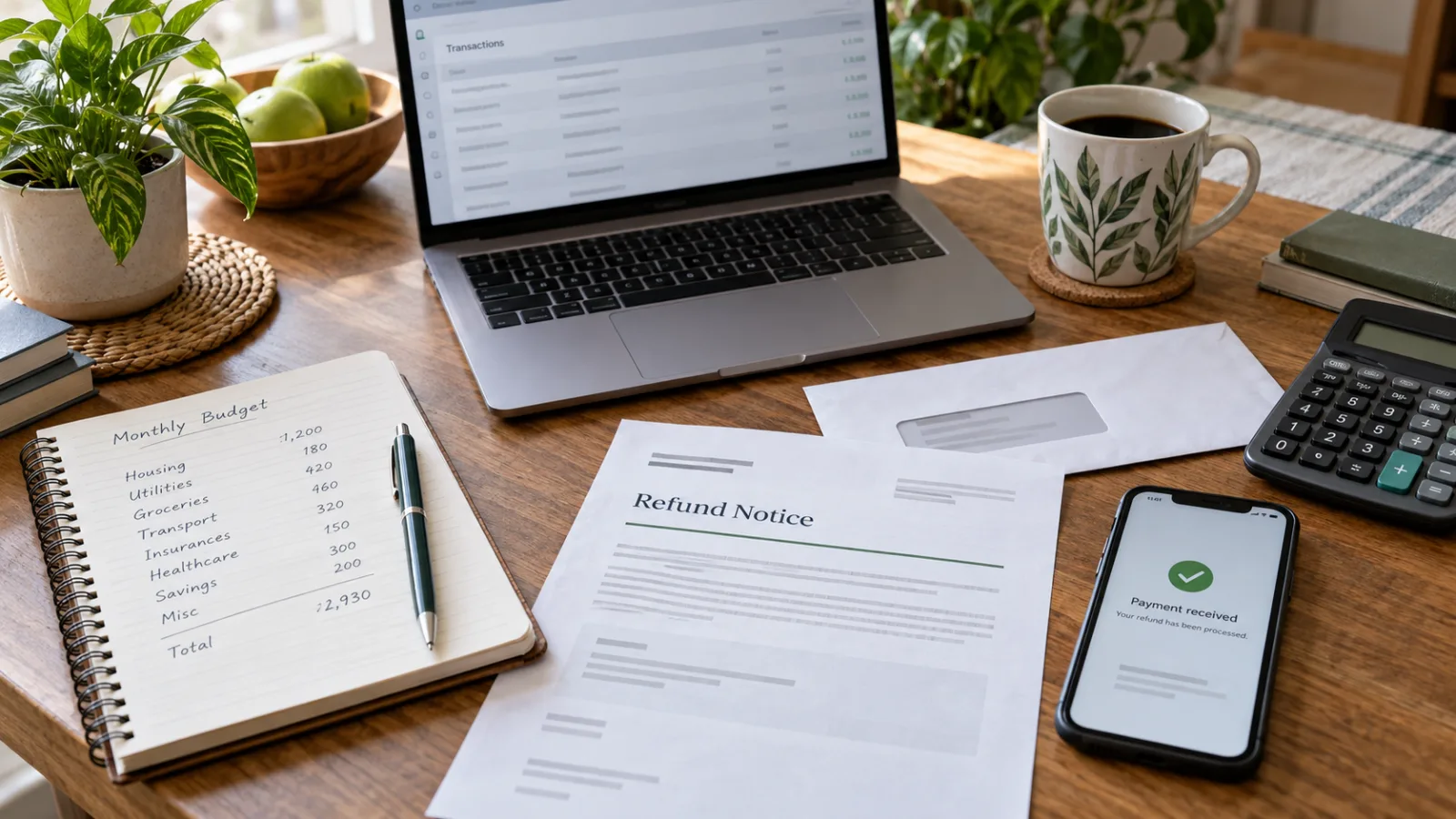
The most useful way to approach the payment is as a small records-and-reconciliation task. Confirm what program it belongs to, preserve the notice and payment details, check whether the amount is part of an earlier payment or a new phase, and keep the money separate from assumptions about future payments. The settlement is specific to eligible U.S. consumers and its eligibility rules are narrower than the phrase “Amazon refund” suggests.
This article explains the mechanics of the October 2026 expansion, the differences between an automatic payment and a claim, and a simple household checklist for recording the money. It is not tax, legal, or personalized financial advice. The Federal Trade Commission’s official refund page and court documents control if a message, post, or article conflicts with them.
What changed on October 1
The Federal Trade Commission announced in September that a revised court-approved order would expand the pool of consumers receiving redress in the Amazon Prime case. The new phase began on October 1, 2026. It covers additional consumers identified in Amazon’s records who used between 11 and 20 Prime benefits during a 12-month period of enrollment, subject to the settlement’s other eligibility conditions.
The earlier automatic-payment rules focused on consumers who used fewer than 10 Prime benefits during a one-year period. The revised arrangement adds the 11-to-20-benefit group and removes the need for those newly covered consumers to submit another claim. The FTC says the new payments will be sent automatically by electronic payment through PayPal or Venmo, or by mailed check.
The change also raises the maximum total payment under the program from $51 to $200. That figure is a ceiling, not a promised amount. A recipient’s actual payment can be lower, and receiving one payment does not mean that another payment is guaranteed. The settlement administrator calculates and distributes payments under the court-approved process.
The FTC reported that Amazon had issued more than $845 million in redress by September 2026. The underlying settlement requires up to $1.5 billion in consumer redress, alongside a $1 billion civil penalty. Those figures describe the program as a whole; they do not establish what any particular person is owed.
The FTC announcement about the expanded payments gives the public timing and payment details. The court-approved residual-payout order is the more technical source for the payment phases and the definition of the additional eligible group.
Why a payment may arrive without a claim
Many consumers are accustomed to class-action settlements that require a claim form, a confirmation number, and a deadline. This redress program has more than one pathway. Some payments are automatic because Amazon’s business records identify consumers who appear to meet the relevant conditions. Other consumers were involved in a claims process, and earlier payment phases have already distributed money.
That distinction matters when you are reviewing your own records. A payment arriving in October does not necessarily mean that the recipient recently completed a form. It may be an automatic payment from the newly expanded phase, a payment from an earlier phase that was delayed or reissued, or a supplemental payment connected to the program’s later funding calculation. The amount and delivery method alone may not identify the phase with certainty.
The official Amazon Refunds page maintained by the FTC says that eligible consumers do not need to take action to receive an automatic payment. It also says that payments are sent by check, PayPal, or Venmo and that payments expire 60 days after the issue date. That expiration rule is one reason to keep the payment notice rather than treating it as disposable email.
A practical record should answer four questions:
- What is the exact payment amount?
- What date was it issued, and when was it received or accepted?
- Which delivery method was used?
- What official explanation connects it to the Amazon Prime settlement?
If you cannot answer the fourth question, do not fill the gap with a social-media post or a message that asks you to act quickly. Start from the FTC’s website by typing the address yourself or using a saved bookmark.
The eligibility story in plain language
The settlement concerns allegations that Amazon enrolled consumers in Prime without adequate consent and made cancellation difficult. Amazon settled the case without admitting wrongdoing. The redress program is not a general refund for every Prime member, every Prime fee, or every order.
The FTC’s refund information describes eligible customers as people who were enrolled in Prime during the relevant period and meet the program’s conditions. The exact records and benefit-use thresholds matter. For the October expansion, the important new group is consumers who used between 11 and 20 Prime benefits during a 12-month period of enrollment, provided they satisfy the remaining requirements and were not already paid in a way that excludes them from that phase.
“Used a Prime benefit” is not the same as “placed an order.” The program’s calculation can involve the benefits recorded during the relevant enrollment period. A consumer should not try to reconstruct an exact payment by adding up annual or monthly membership charges unless the official settlement information tells them to do so. The program does not promise a dollar-for-dollar refund of every fee.
There is also a difference between being a plausible member of the affected population and being identified for payment. News articles, forum discussions, and a person’s memory of joining Prime cannot override the administrator’s records. If the official refund page does not say that a new claim or appeal is available, sending duplicate forms or paying a third party to “unlock” a payment is unlikely to help and may create a fraud risk.
A safe way to reconcile the money
A refund is easier to handle when it is treated as a transaction that needs an audit trail, not as a surprise bonus that must be spent immediately. The process can take ten minutes.
1. Capture the notice before accepting or depositing anything
Save the payment notification, the envelope, or a PDF of the message. Record the sender as it appears, the payment method, the amount, the date, and any reference number. If the money appears in a wallet or bank account, take a screenshot of the transaction details and note the account where it landed.
Do not forward the original message to friends or post a screenshot publicly without removing addresses, transaction identifiers, phone numbers, and QR codes. A legitimate refund notice can still contain information that helps someone impersonate you.
2. Check the source independently
Do not use a phone number, login link, or payment button supplied by a suspicious message. Open the FTC website independently and compare the program details. The FTC says no one from the agency will contact consumers to request money in connection with the Amazon matter, and no one from Amazon will ask for money to obtain the refund.
A genuine payment should not require a fee, gift card, cryptocurrency transfer, password, one-time authentication code, or remote access to your device. It should not require you to “upgrade” a PayPal or Venmo account by sending money back. If a sender asks for any of those things, stop the interaction.
3. Match the payment to the program, not to a rumor
Write a short note such as: “Amazon Prime FTC redress, automatic payment, issued October 2026, $X, received by check/PayPal/Venmo.” If you had a prior payment, record it separately. Do not merge several settlement-related payments into one line just because they arrived close together.
This is especially useful if the program later distributes an additional payment. The FTC’s September announcement says that if accepted consumer payments do not reach the required threshold by February 2027, consumers who already accepted payments may become eligible for an additional payment of up to $149, bringing their total to as much as $200. The announcement says that this possible supplemental round would begin by April 2027. It is conditional, so it should not be entered into a household budget as expected money.
4. Check the deadline attached to the instrument
The FTC’s refund page says payments expire 60 days after the issue date. A check can therefore be real but no longer negotiable if it sits in a drawer. An electronic payment can also require acceptance within a time window. Record the issue date and the deadline when you first receive the notice.
If a payment has expired or never arrives, use the contact information published on the official FTC refund page. Avoid searching for a settlement administrator’s phone number through an advertisement or an unsolicited text.
5. Decide where the money belongs
The settlement payment is a recovery connected to a past consumer transaction, not a recurring source of cash. You can place it in the same account used for ordinary household spending, move it to a savings bucket, or use it for a known expense. The important bookkeeping decision is to label it clearly so that a future budget review does not mistake it for salary, a recurring benefit, or a payment that will repeat next month.
For a shared household, note whether the purchase history and Prime account belonged to one person or were used by several people. That avoids a later argument about whether the payment is a household refund or someone’s individual reimbursement. The settlement documents do not tell families how to divide a payment internally; that is a private household decision.
What not to infer from the $200 maximum
The phrase “up to $200” does several kinds of work in headlines, but it does not answer the questions consumers often have.
First, it does not mean every eligible consumer will receive $200. The FTC’s description sets a maximum total payment. A smaller payment can be consistent with the program.
Second, it does not mean a person who received $51 is automatically entitled to another $149 today. The possible additional payment depends on the settlement’s funding threshold and the conditions described by the FTC.
Third, it does not mean that every Prime customer should file a new claim. The October phase is described as automatic for the newly covered group. The claims deadline for earlier portions of the program is a separate issue.
Fourth, it does not establish that a payment will arrive on a particular day. “Starting October 1” describes the beginning of a distribution phase, not a guarantee that every payment will be delivered on October 1 or within a fixed number of days. Postal delivery, payment-wallet processing, account information, and the administrator’s schedule can affect when a consumer sees the money.
Finally, the cap is not an instruction to contact Amazon customer service and negotiate for the difference. The redress process is governed by the court order and administrator records. A customer-service representative cannot necessarily calculate or change the settlement payment.
The scam pattern to expect
High-profile refunds produce a familiar fraud pattern: a real story is used as the pretext for a false request. The message may contain accurate details about the settlement, a believable amount, and a warning that the recipient must respond before a deadline. Those details do not prove the message is authentic.
The most important red flags are requests for money or secrets. Be cautious if a message asks you to pay a release fee, confirm a password, provide a bank login, send a one-time code, install an app, scan a QR code, or transfer money to receive the refund. The FTC specifically warns that the agency is not contacting consumers to request money about this matter and that Amazon will not ask consumers to pay to get the refund.
A second red flag is pressure to use a different account or a different payment route. A message might claim that your PayPal account failed and ask you to send a small amount to “verify” it, or say that your check is waiting until you pay a processing charge. Do not solve a payment problem by sending money to the person who announced it. Use the independently located FTC information instead.
A third red flag is a request to return an overpayment. If a stranger sends money and asks you to send part of it back, pause. The original payment could be reversed, disputed, or connected to an account takeover. Contact the payment service through its official support channel before moving the money.
If you gave away a password, authentication code, or financial information, contact the relevant bank or payment service promptly using a number from its official website or statement. Change reused passwords and review account activity. If money was lost, report the incident to the FTC at ReportFraud.ftc.gov and consider reporting relevant payment fraud to the payment provider and law enforcement.
How to handle a missing, wrong, or expired payment
A missing payment is not proof that someone stole it. It may be in another phase, addressed to a default mailing address, delayed in the payment system, or excluded because the consumer does not match the administrator’s criteria. Start with the official refund page and read the current instructions.
The FTC’s consumer guidance has addressed situations such as an automatic-payment notice without a visible payment and a check sent to an old default shipping address. That guidance is more useful than guessing from a forum thread because it reflects the administrator’s process at the time it was published.
Make a compact file containing:
- the name and email address associated with the Prime account, if relevant;
- the old and current mailing addresses, without posting them publicly;
- the payment notice and issue date;
- the payment method and any transaction identifier;
- a note of earlier settlement payments; and
- the date and method of each contact with the official administrator.
Do not send more personal information than the official process requires. A person claiming to be an administrator should be able to explain why a requested document is needed and how it will be protected. If the request arrives through an unsolicited message, leave that conversation and use the contact path on the FTC’s website.
If a check is payable to someone who no longer lives at the address, do not alter it or deposit it into another person’s account without understanding the bank’s requirements. If a payment belongs to a deceased household member or a closed estate, the correct procedure may depend on the payment method and local law. That is a situation for the issuing administrator, bank, or qualified legal professional—not an improvisation with a signature.
Why this matters beyond one refund
The settlement is also a useful reminder about subscription accounting. A small recurring charge can be difficult to notice when it is bundled with shopping activity, a shared household account, or a payment wallet. A later refund does not repair every downstream problem: it may not restore time spent disputing charges, update a budget automatically, or cancel a subscription that is still active.
Keep three separate records:
- the settlement payment;
- the original membership charges or account history, if you need them for your own records; and
- the current status of the subscription.
The first record explains money received. The second explains why the payment may exist. The third prevents a refund from creating the false impression that future renewals have stopped. A settlement payment is not the same thing as cancellation.
This separation also protects against a common budgeting mistake: using a one-time recovery to justify a permanent monthly expense. If the Prime membership is still active and you do not want it, review the account directly and cancel it through the ordinary account controls. If it is attached to a shared household account, make sure the person who uses the benefits knows about the change. The FTC settlement’s existence does not decide whether a current membership is worthwhile for a particular household.
A short decision checklist
Use this checklist when a payment or message appears:
- Is the payment connected to the official Amazon Prime FTC redress program, or is it merely using the same words?
- Did it arrive by one of the methods described by the FTC: mailed check, PayPal, or Venmo?
- Does the notice ask for money, a password, an authentication code, or remote access? If yes, stop.
- Have you recorded the amount, issue date, delivery method, and reference information?
- Is this a first payment, a later payment, or an uncertain payment that should remain a separate line in your records?
- Have you checked the 60-day expiration information for the specific instrument?
- Are you treating a possible future supplemental payment as uncertain rather than as budgeted income?
- Is the Prime subscription itself still active, independent of the refund?
- If something is missing or incorrect, are you using the contact route published on the FTC’s official refund page?
The checklist is intentionally ordinary. The safest response to a settlement payment is usually careful verification and good records, not a faster click.
What to do with the money after it clears
Once the payment is confirmed and available, the financial choice can remain simple. Use it for an existing household expense, keep it in a general cash reserve, or set it aside until you have decided what it represents in your records. There is no universal “best” use, and the settlement does not require a particular spending plan.
If you are unsure about taxes or reporting, do not rely on a generic claim that all settlements are taxable or all refunds are exempt. The treatment can depend on what the payment represents and on the recipient’s circumstances. Keep the official notice and payment record, then ask a qualified tax professional if the amount is material to you or if a tax filing question arises.
Avoid lending, investing, or transferring the money merely because a message says the payment must be moved quickly. The settlement has no requirement that recipients buy a product, open an account, pay a fee, or transfer the money to another person.
The larger lesson is modest but durable: unexpected money deserves a label. A clear label prevents a one-time refund from disappearing into a vague account balance, makes a later question answerable, and gives you a safer basis for spotting a false payment request.
Sources and scope
This article was prepared for readers in the United States using the FTC’s September 2026 announcement, the court-approved payment order, the FTC’s current Amazon refund page, and the FTC’s consumer guidance. Dates, payment methods, thresholds, eligibility, and deadlines can change if a court order or administrator instruction changes. The official pages are the controlling references.
The FTC announcement on additional Amazon Prime settlement payments establishes the October 1 start date for the expanded phase, the 11-to-20-benefit group, the automatic payment methods, the raised $200 maximum, the prior $845 million distribution figure, and the conditional supplemental-payment description.
The FTC Amazon Refunds page provides the current public instructions on eligibility, payment delivery, the 60-day expiration period, and fraud warnings.
The court order on residual payouts supplies the formal description of the additional eligible consumers and the distribution phases.
The FTC consumer alert about Amazon Prime settlement questions provides earlier practical guidance for consumers who receive notices, have payment-delivery questions, or need to understand the difference between automatic payments and other settlement steps.
The FTC fraud-reporting portal is the appropriate starting point for reporting suspected impersonation or payment fraud to the agency.
The central advice is straightforward: keep the notice, verify independently, record the payment, and do not pay anyone to receive money that the official settlement says will be sent automatically.
Related articles
How to Verify a Subscription Refund Before You Click, Deposit or Share Details
Real refund programs can look surprisingly suspicious. Use the Amazon Prime settlement as a practical model for checking a payment notice, avoiding refund scams and tightening recurring charges without guessing.


Ring TAKE makes smart cameras safer by default, but not fully private
Ring’s new encryption is a real improvement for ordinary homes, but owners still need to choose between cloud convenience, E2EE and local-first cameras.
كيف تتحقق من استرداد رسوم الاشتراك قبل النقر أو الإيداع أو مشاركة بياناتك
قد يبدو برنامج استرداد حقيقي مريبًا على نحو مفاجئ. استخدم تحديث تسوية Amazon Prime نموذجًا عمليًا لفحص إشعار الدفع، وتجنب احتيال الاسترداد، ومراجعة الرسوم المتكررة بهدوء.
Как проверить возврат за подписку, прежде чем нажать, внести деньги или раскрыть данные
Настоящее уведомление о возврате может выглядеть подозрительно. Разберём обновление по делу Amazon Prime и практический способ проверить выплату, распознать мошенничество и остановить нежелательные регулярные списания.
Comments
Sign in to comment.
No comments yet.