BIND 9.20.29 fixes 14 security flaws: what DNS operators should check before and after upgrading
ISC’s BIND 9.20.29 is more than routine maintenance: it fixes fourteen disclosed vulnerabilities across recursive, authoritative and encrypted-DNS code paths. Here is how to scope the exposure, choose the right branch and upgrade without losing operational visibility.

BIND 9.20.29 is a maintenance release that DNS operators should treat as a security change

The Internet Systems Consortium’s September BIND release is easy to misread as routine package maintenance. BIND 9.20.29 is the current stable release, while 9.21.26 is the development-branch counterpart, and both arrived with ordinary fixes and improvements. The important difference is the security payload: ISC disclosed fourteen vulnerabilities on 16 September and shipped fixes at the same time.
That makes this a practical operations story, not a reason to panic. ISC says it is not aware of active exploitation, and several flaws require unusual protocol states, timing, configuration choices or a remote service that the operator has deliberately exposed. But DNS resolvers and authoritative servers sit underneath almost every service. A crash, an incomplete zone transfer or a resource-exhaustion condition can become a much larger incident when the affected daemon is part of a shared infrastructure layer.
The useful advice is specific: inventory the role and branch of every BIND installation, check whether it is supported, move stable installations to 9.20.29 through the normal package or build process, and use the release as a prompt to test rollback, signing and monitoring. Treat 9.21.26 as a development release, not a drop-in production recommendation.
What changed in the September release
ISC’s release announcement describes 9.20.29 and 9.21.26 as maintenance releases containing bug fixes, feature improvements and security fixes. The stable branch fixes all fourteen issues disclosed in the coordinated publication. The development branch fixes thirteen; ISC’s vulnerability matrix says CVE-2026-19662 does not affect BIND 9.21.
The release is also a reminder that version numbers do not tell the whole support story. ISC currently lists 9.20.29 as the current stable ESV release, with support shown through the second quarter of 2028. The same page lists 9.21.26 as development. BIND 9.18.50 is shown as EOL on that release page, so operators still running an older branch need to make a branch decision rather than assume that a small package update will provide a complete security answer.
The 9.20.29 changelog groups the work by failure mode. The fixes include stricter handling of incoming zone transfers, safeguards around negative caching and DNSSEC proofs, corrections to SVCB and HTTPS record processing, and protections against malformed or out-of-zone data. Some bugs terminate named; others can consume CPU, alter the treatment of zone data or create conditions that are difficult to diagnose from an application dashboard.
The release does not turn BIND into a different DNS product. It changes the code paths that handle hostile or malformed input. That is why the right response is a controlled upgrade with post-change observation, not a feature evaluation.
The fourteen issues are not one identical risk
The number fourteen is useful for triage only when it is broken down. The advisories cover several categories, and the exposure depends heavily on how each server is configured.
One of the clearest examples is CVE-2026-77692, an unauthenticated remote crash involving DNS over HTTPS. The published description says a sender can crash named with one request containing an invalid SIG(0) signature if the sender closes the connection before signature verification finishes. This matters to operators who answer DoH traffic, but it is not a claim that every BIND server on the internet has the same endpoint exposed. Start by locating BIND listeners for HTTPS and TLS, reverse proxies in front of them, and any split-DNS architecture that sends public traffic to the resolver.
CVE-2026-19662 is different. It is a use-after-free involving cached DNSSEC NOQNAME proof data. ISC rates it medium, says the attack is remote, and describes a sequence in which an attacker-controlled authoritative server returns crafted DNSSEC-signed answers in a particular order and timing pattern. The stated impact is an unexpected exit of a recursive resolver. The advisory says no workaround is known and that ISC was not aware of active exploitation.
The changelog describes CVE-2026-19667 as a malformed negative-cache record problem. A crafted response could make a resolver cache a record that does not fit in the expected data structure, then terminate when it is read back. This is a default-configuration concern for recursive resolvers, which is why “we do not enable unusual DNSSEC options” is not a sufficient inventory question.
Several other fixes concern DNSSEC validation and negative answers. CVE-2026-19666 involves a use-after-free in query_addnoqnameproof() through the DNS64 filter-aaaa path. CVE-2026-19941 involves acceptance of an out-of-zone NSEC as a wildcard non-existence proof. CVE-2026-80274 can make a validating resolver abort while caching a mismatched NOQNAME proof. These names sound narrow, but they identify a broader class of input: recursive servers must parse, cache and validate answers that were produced by parties the operator does not control.
The SVCB and HTTPS family deserves its own check. CVE-2026-81563 concerns an SVCB AliasMode additional-data error that can leak qpcache references. CVE-2026-81736 is a remote CPU denial of service through cached SVCB/HTTPS AliasMode trees. Modern clients increasingly use HTTPS records for service discovery, encrypted transport hints and endpoint metadata, so a resolver that never served web content can still process these records on behalf of its users.
CVE-2026-76163 describes a crash on a TKEY query when the configuration has no global options statement. CVE-2026-78301 concerns out-of-zone database nodes becoming authoritative zone cuts. CVE-2026-75029 addresses retention of identical singleton RDATA that could enable wire-to-work amplification. The remaining advisories include an IXFR issue in which unauthenticated deltas could be applied to a live zone before TSIG verification, and additional assertion or resource-handling defects listed in ISC’s matrix.
Those details should not be turned into a homemade exploitability score. The public advisories are the authoritative place to map a CVE to a branch and configuration. They are more useful than a headline that labels the whole release “critical” or “minor.”
Why recursive and authoritative roles need separate plans
A BIND host can be a recursive resolver, an authoritative server, a hidden primary, a secondary, a forwarding layer or some combination. The security impact and maintenance procedure are different for each role.
A recursive resolver accepts questions from clients and retrieves answers from the DNS hierarchy. Its main risk in this release is processing hostile or malformed answers, including DNSSEC proofs, SVCB/HTTPS data and negative cache material. A resolver may be reachable only from a private network, but compromise of a client segment or a malicious authoritative server can still provide a path to its input parser. For recursive services, operators should check the resolver’s upstream behavior, DNSSEC mode, DNS64 configuration, cache telemetry and restart policy.
An authoritative server answers for zones the operator controls. It does not normally chase arbitrary DNSSEC answers in the same way a recursive resolver does, but it can be exposed to zone-transfer traffic, dynamic updates and crafted queries. The IXFR-related issue makes transfer authentication and primary/secondary topology especially relevant. Verify which hosts are allowed to send transfers, whether TSIG is required on every message in the path, and whether monitoring would detect a serial or zone-content change that was not produced by the deployment process.
A hidden primary has an additional operational problem: it may be absent from public scans while still controlling the data served by many public secondaries. A “no internet exposure” assumption is not enough if an internal service accepts data from a broad automation network. Conversely, a public secondary may have a small, predictable role and a simpler maintenance window. Inventory by function, not by hostname.
If DoH or DoT is enabled, include the front-end path in the inventory. BIND may listen directly, or a proxy may terminate TLS and forward DNS messages locally. Upgrading only the proxy does not patch BIND’s parser. Upgrading BIND while leaving an unexpected public listener enabled also leaves an avoidable exposure.
A sensible upgrade sequence
The first step is an inventory that can answer four questions for each instance:
- Which BIND branch and exact package build is installed?
- Is the process recursive, authoritative, forwarding, or mixed?
- Which transports and ports are reachable from outside the intended trust boundary?
- How is the service upgraded, restarted, monitored and rolled back?
Use the platform’s package metadata and the running process configuration rather than trusting a container tag or a dashboard label. Record the source of the binary, package repository, architecture, configuration path and whether the deployment uses a vendor backport. A distribution may carry the fix under a package revision that does not exactly match the upstream version string; in that case, use the distribution security notice as well as the ISC advisory.
Next, read the 9.20.29 release notes and the known-issues material for the way the service is deployed. Check configuration syntax before the maintenance window, but do not treat a successful syntax check as a security test. A configuration can parse correctly while the service is still exposed to a vulnerable role, an unexpected listener or a stale package in a second node.
For a redundant resolver pool, remove one node from service, upgrade it, start it, run health checks and compare query latency, SERVFAIL rates, DNSSEC validation failures, cache hit behavior and process restarts with the remaining nodes. Rotate through the pool only after the upgraded node behaves normally. If there is no pool, schedule a short maintenance window and ensure clients have a defined fallback. Do not restart every resolver at once just because the packages were downloaded together.
For authoritative service, update a secondary first where the topology permits it, confirm it can load zones and answer expected records, then move to the primary or hidden primary according to the provider’s documented procedure. Watch SOA serials, transfer logs, NOTIFY behavior and DNSSEC signing status. If the deployment uses inline signing, validate that the signer and the serving view agree after restart. A daemon that is “up” but serving an old zone is not a successful result.
After the change, verify more than a version string. Query from the same network positions used by real clients. Check A, AAAA, CNAME, MX, TXT, SRV, SVCB and HTTPS records where those types matter. Test DNSSEC-valid, DNSSEC-invalid and unsigned names using the operator’s normal diagnostic tooling. For authoritative installations, test transfer authorization and confirm that an unauthorized transfer attempt is rejected and logged. For DoH or DoT, test the complete TLS and HTTP or TLS path, not just a local UDP query.
Have a rollback plan that is technically real. Keep the previous package available according to the operating system’s retention policy, preserve configuration and zone data, and know whether downgrading across a database or zone-file format change is supported. A rollback should not mean restoring a week-old server image with unknown zone state. If the previous version is affected by the disclosed vulnerabilities, rollback is a temporary availability measure while the upgrade is repaired, not a security resolution.
What not to infer from “no active exploitation”
ISC’s advisories say it is not aware of active exploitation. That is useful context, but it is not an argument to defer indefinitely. BIND is a high-value and widely deployed network service, and the public disclosure itself changes the information available to attackers. The cost of exploitation also varies: a crash may be enough to disrupt a small organization, while a large provider may have capacity to absorb one failed resolver.
At the same time, “patch immediately” should not mean “copy an unreviewed binary into production.” Use a trusted package source, verify signatures where the deployment process supports them, and confirm that the package is actually the vendor build containing the fix. The ISC download page provides tarballs, signatures, packages and release-note links; distributions may provide a separately versioned update. Keep a record of what was installed and when.
The advisories also do not say that every issue is remotely exploitable in every configuration. Some depend on recursive behavior, DNSSEC validation, DNS64, SVCB/HTTPS processing, DoH or zone transfer traffic. Security teams should use that distinction to prioritize exposure and testing, not to dismiss an entire category of bugs. A private recursive resolver can still receive hostile DNS data. An authoritative server can still be part of a transfer path. A hidden primary can still be operationally critical.
Version and branch choices
For an existing stable production deployment, 9.20.29 is the straightforward target when the platform and support policy allow it. It is the current stable ESV release listed by ISC and contains the full set of fixes associated with this disclosure.
BIND 9.21.26 is the development branch. It is appropriate for teams that deliberately test development releases, contribute upstream feedback or need a feature from that line. It is not a general recommendation for a conservative production resolver simply because its number looks newer. ISC notes that CVE-2026-19662 does not affect 9.21, but the branch still has its own release discipline and should be treated as such.
The EOL status of 9.18.50 is a separate concern. If an installation remains on an unsupported branch, the right project may be a branch migration rather than a one-night patch. That migration can involve package names, configuration defaults, crypto libraries, systemd units, container images, logging formats and signing integrations. The security release is a good forcing function to make that work visible, but it does not erase the compatibility testing it requires.
Operators using vendor-supported BIND packages should check whether the vendor has backported the fixes. Package version comparisons can mislead when a distribution keeps an older upstream base and increments its own revision. The question is not “does the string say 9.20.29?”; it is “does the supported package address the advisories for this branch, and can the vendor document that mapping?”
Alternatives and when they make sense
The release is not a reason to replace BIND automatically. BIND remains a mature implementation with broad support, extensive documentation and a role in many existing deployments. Replacing a core DNS service during a security response can introduce more risk than upgrading it.
There are legitimate reasons to evaluate alternatives. Unbound is often considered for recursive caching because its operational model is focused on that role. Knot DNS and NSD are common points of comparison for authoritative service. PowerDNS has different authoritative and recursive components and may fit teams that prefer its database-backed workflows or API integrations. Managed DNS can reduce the number of servers an organization patches directly, though it changes the trust, cost, portability and outage model rather than eliminating risk.
An alternative should be evaluated against the actual requirement: recursive validation, authoritative serving, transfers, dynamic updates, DNSSEC signing, DoH/DoT, views, catalog zones, automation and observability. A tool with a smaller feature surface may be easier to operate, but only if it covers the deployment’s required semantics. Switching after a vulnerability disclosure is especially prone to deadline-driven under-testing.
A better near-term comparison is often operational. Can the team patch all BIND instances? Can it identify unsupported branches? Can it detect a resolver crash quickly? Can it remove a node from service without a client-visible outage? If the answer is no, the most valuable improvement may be inventory, redundancy and runbook work rather than a product change.
The practical verdict
BIND 9.20.29 is worth applying as a normal, prioritized security maintenance update. The release fixes fourteen disclosed vulnerabilities, including several denial-of-service and assertion-failure paths and an unauthenticated crash affecting a DoH code path under the described conditions. ISC reports no known active exploitation, but the service’s position in the network makes prolonged delay hard to justify for exposed or shared resolvers.
Start with role-aware inventory. Patch stable installations through a verified source. Test recursive and authoritative behavior separately, pay attention to DNSSEC, DNS64, SVCB/HTTPS, transfers and encrypted DNS listeners, and monitor after the restart. Keep 9.21.26 in the development category, and treat the EOL status of older branches as a migration problem rather than a cosmetic version mismatch.
The release is a useful example of why open-source infrastructure maintenance is rarely just “upgrade to the latest.” The source is available, the advisories are public and the fixes can be inspected. The operational work is still ours: knowing where the daemon runs, what it is allowed to receive, what clients depend on it and how quickly we can recover when a maintenance change does not go to plan.
Related articles

Tailscale was not hacked, and that is why the Hugging Face intrusion matters
A stolen CI enrollment key became 181 tailnet nodes. The hard lesson is about reusable credentials, alerts and what Zero Trust does not do automatically.

Semgrep 1.179.0 adds Bun lockfile support and fixes Python 3.14 parsing
Semgrep 1.179.0 is a practical dependency-scanning release: it understands Bun’s text lockfiles, handles more Python 3.14 exception syntax, and updates PyJWT compatibility. The useful question is where the new coverage fits—and where it still stops.


Passkeys are not magic: what Pass-ta-key really changes
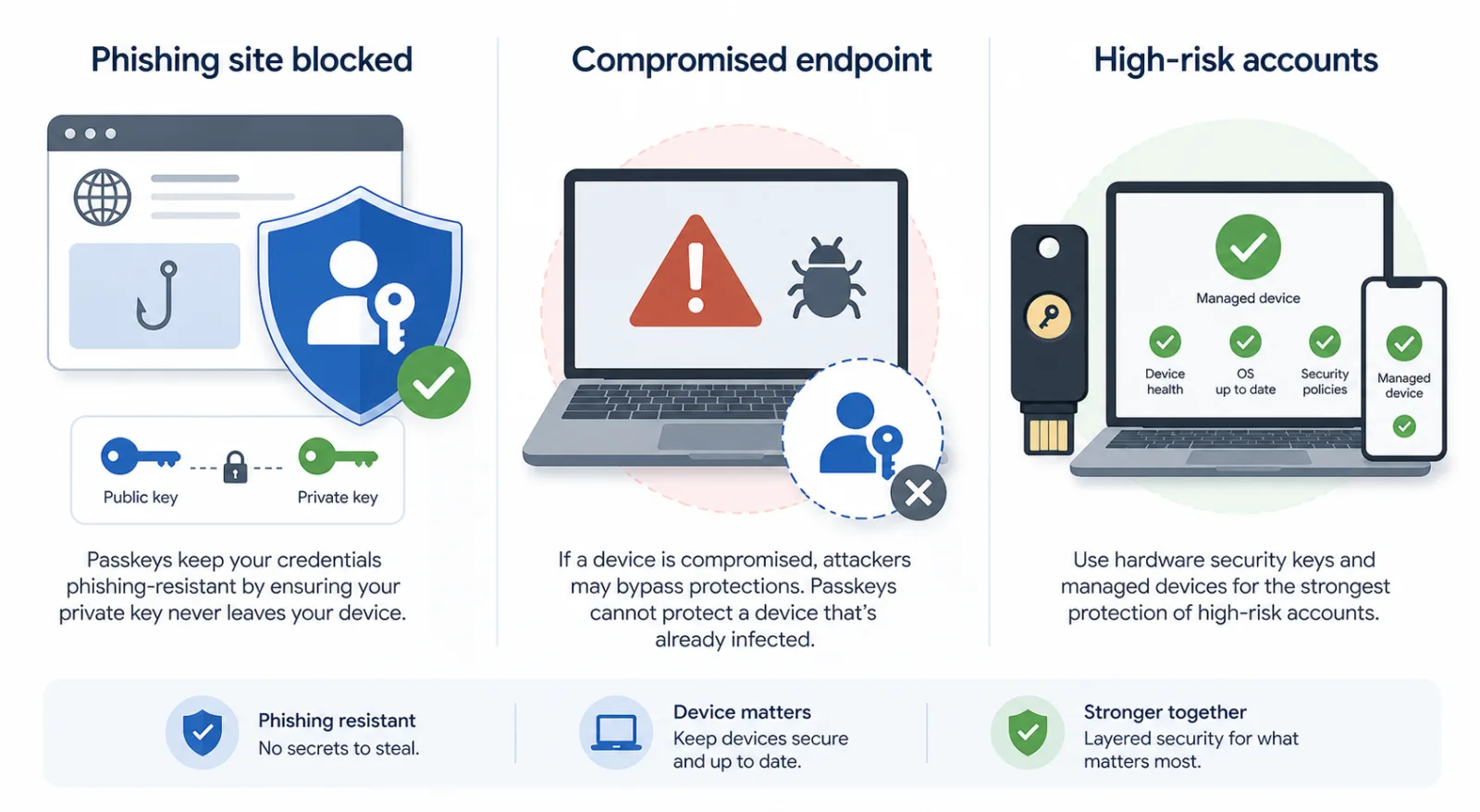
A calm guide to the attacks passkeys stop, the endpoint risks they do not, and the checks that make WebAuthn safer.

Persimmon soap for body odor: what the tannin can do, what it cannot, and how to buy it on a budget
Persimmon soap is suddenly appearing in body-care feeds as a solution for musty body odor. The useful question is not whether the fruit is natural, but whether the formula contains meaningful persimmon tannin and suits your skin.

Comments
Sign in to comment.
No comments yet.