ONNX Runtime’s GitHub Disappearance Is a Dependency-Resilience Test
ONNX Runtime’s source repository briefly returning 404 exposed a distinction many teams overlook: installed packages may keep working while source builds, release assets, and CI automation fail. Here is what to check before changing runtimes or trusting a mirror.

A 404 from a major open-source repository is easy to misread. It can look like a project has been abandoned, a package has been yanked, or a security incident has already been confirmed. In the case of Microsoft’s ONNX Runtime on November 17–18, 2026, the public evidence supported a narrower conclusion: the main GitHub repository and related repositories became unavailable to visitors, while the project’s documentation and package distribution channels remained reachable. The cause was not publicly established at the time of reporting.
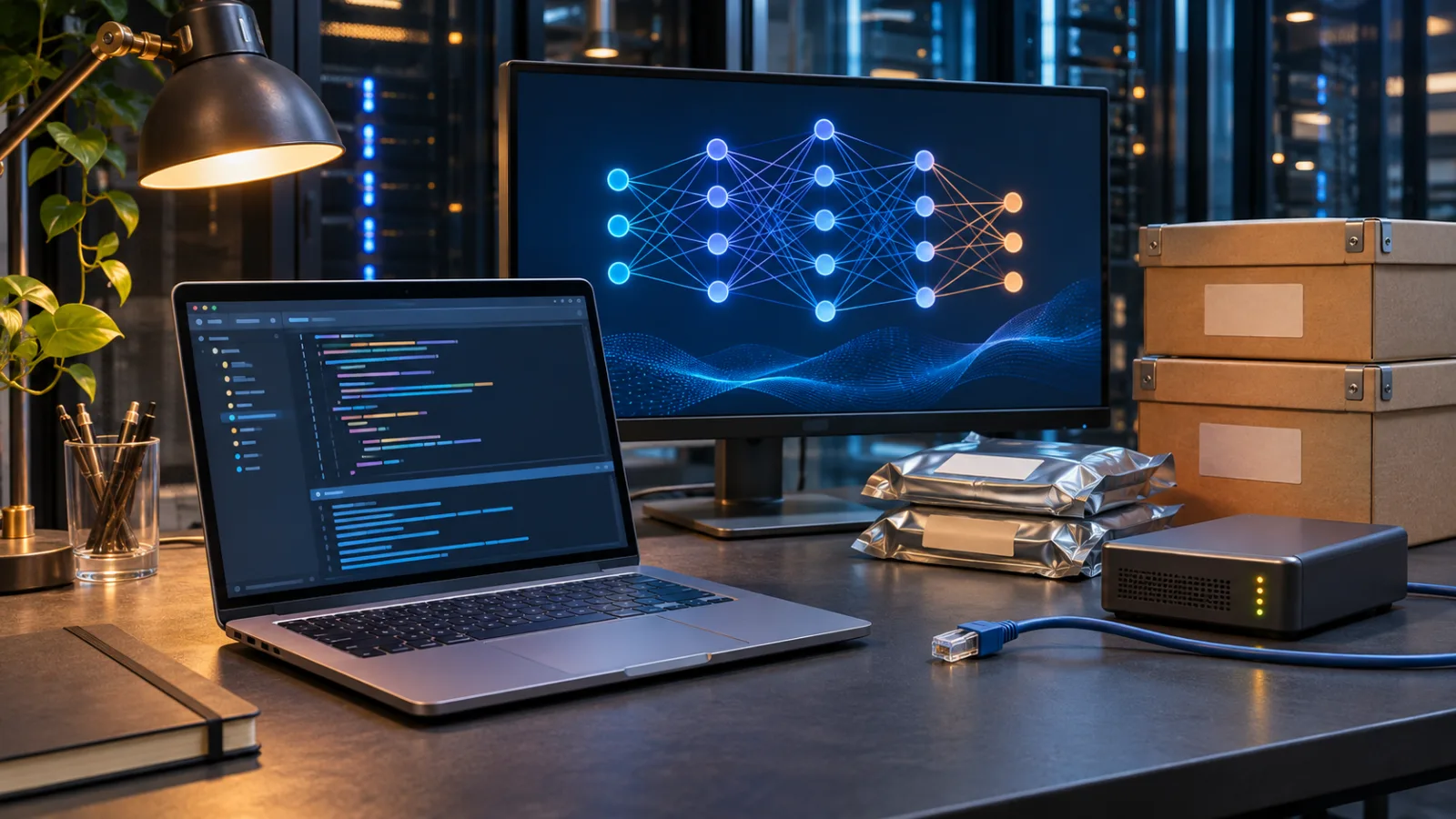
That distinction matters because ONNX Runtime sits underneath many applications that do not present themselves as ONNX applications. It is used to load and execute ONNX graphs, to select hardware-specific execution providers, and to package inference for Python, C#, C++, Java, Android, iOS, Node.js, and web environments. A team may never clone the repository during normal development, yet still depend on its release assets, native libraries, generated bindings, container layers, or source checkout in a reproducible build.
The practical advice is therefore not “replace ONNX Runtime immediately.” It is to map which part of the project your system actually needs, preserve known-good artifacts, and separate an upstream availability event from a runtime failure.
What happened, and what did not happen
Reports on November 18 described github.com/microsoft/onnxruntime returning a 404, along with several related repositories and release paths. The incident reached the Hacker News front page and prompted questions from users whose source-based workflows and automated fetches could no longer resolve the repository. At the same time, the official ONNX Runtime documentation remained available, and package installation instructions continued to point developers toward PyPI, NuGet, Maven, CocoaPods, and other distribution routes.
A GitHub 404 is deliberately ambiguous from the outside. The repository may have been deleted, made private, renamed, disabled, temporarily restricted, or affected by a service-side problem. A 404 does not prove that Microsoft ended the project. It also does not prove that a security cleanup caused the outage. Those explanations circulated in community discussion, but they were hypotheses rather than a maintainer-confirmed account.
The repository was accessible again in later checks, which makes the event more consistent with a temporary availability or administrative change than with a confirmed permanent shutdown. That is still an inference, not an official post-incident explanation. For production teams, the important fact is the interruption itself: a build that assumes GitHub will always serve the canonical source or release archive can fail even when the already-installed runtime continues to execute normally.
The source repository describes ONNX Runtime as a cross-platform inference and training engine for ONNX models. Its documented pipeline loads a model, optimizes its graph, partitions work across execution providers, and executes the resulting graph. The project supports CPU and accelerator paths across multiple operating systems and language bindings. That breadth is useful, but it also means the project has more artifacts and more integration points than a small Python-only dependency.
Why installed applications may keep working
Most package managers do not resolve a dependency by cloning the Git repository on every application start. A Python environment may already contain an onnxruntime wheel. A .NET application may have restored Microsoft.ML.OnnxRuntime into a local or remote package cache. An Android build may have downloaded an AAR from Maven Central. A JavaScript application may have its web or Node package pinned in a lockfile and stored in a registry cache.
Those artifacts can remain usable after a repository becomes unavailable. The distinction is between consuming an immutable artifact that has already been downloaded and resolving, building, or updating the artifact from an upstream source. A running service that loads a local wheel is not automatically affected by a GitHub 404. A clean-room rebuild that expects to fetch a tag, submodule, release asset, or generated archive from GitHub may be affected immediately.
This is also why a quick pip install onnxruntime test is insufficient. It answers whether the package index currently serves a compatible wheel for the machine making the request. It does not answer whether a source build can be reproduced, whether native headers are available, whether a specific execution provider can be rebuilt, or whether the exact binary used in production can be reconstructed from a clean environment.
Teams should classify their dependency into at least four layers:
- Runtime artifact: the wheel, NuGet package, JAR, AAR, CocoaPod, npm package, or native library loaded by the application.
- Model artifact: the ONNX or ORT-format model, tokenizer or preprocessing code, and any external initializers required by that model.
- Build inputs: source tags, submodules, compiler versions, CMake configuration, dependency archives, generated files, and execution-provider sources.
- Operational metadata: checksums, provenance records, license notices, SBOM entries, release notes, and compatibility constraints.
A repository outage primarily threatens the third and fourth layers first. It may later affect the first layer if a package must be rebuilt or a new platform wheel is needed. It does not automatically invalidate the second layer or the behavior of a binary already tested in production.
The source-build problem is larger than a Git clone
ONNX Runtime’s build documentation explicitly recommends using an official release branch for production builds and warns developers away from building unreleased main unless they need a specific feature. The documented build process can involve CMake, language-specific toolchains, compiler runtimes, platform SDKs, and optional execution providers. Dependencies may be obtained through vcpkg, built from source, or resolved as preinstalled packages.
That makes a source build a supply chain rather than a single download. Even if the repository itself returns, the build can still be non-reproducible if the CI job relies on floating dependency versions, an unpinned submodule, an external archive without a checksum, or a package index that has changed since the last run.
A useful test is to rebuild the exact version currently in production without network access to the live upstream repository. This does not require an immediate migration. It requires a controlled exercise using a disposable builder, an internal artifact cache, and a documented toolchain. Record whether the build can find:
- the exact ONNX Runtime source revision;
- all Git submodules and generated inputs;
- the compiler, CMake, Python, Java, .NET, and platform SDK versions;
- the ONNX and protobuf versions expected by the build;
- provider-specific dependencies such as CUDA, cuDNN, TensorRT, DirectML, OpenVINO, or QNN components;
- release archives and headers used by downstream native integrations; and
- the license and notice files that must accompany redistribution.
If a clean rebuild fails, do not label the failure as an ONNX Runtime regression until the missing input is identified. A repository availability event, a package-index outage, an incompatible CUDA stack, and a compiler drift can all produce different symptoms in the same CI job.
What to check in an existing deployment
Start with the artifact actually loaded at runtime. For Python, inspect the installed distribution version, wheel filename, platform tag, and package hash. For .NET, inspect the resolved assets file and the native runtime selected for the target architecture. For Java and Android, record the Maven coordinates, repository URL, checksum, and native libraries inside the AAR or JAR. For Node.js or web deployments, identify whether the application uses a prebuilt package, a locally bundled WebAssembly build, or a native binding.
Next, record the execution providers selected by the inference session. ONNX Runtime can use different providers for CPU, CUDA, TensorRT, DirectML, OpenVINO, CoreML, QNN, and other targets. A package that imports successfully may still fail when the application requests a provider whose shared libraries are absent or incompatible. The official installation documentation lists separate packages and compatibility requirements for several of these paths, and it notes that DirectML is in sustained engineering while new Windows projects may need to consider WinML.
Then test the model, not just the import. A minimal health check should load the exact model or ORT-format model used by the service, create an inference session with the intended provider order, run a representative input, and compare output shape, data type, and a small set of numerically stable values against a stored reference. This catches provider and graph-optimization problems that a successful package import cannot reveal.
Finally, test the failure path. What happens if the package cache is empty? What happens if the source archive is unavailable? Does CI silently download a nightly build? Does a lockfile pin the runtime but allow transitive native libraries to float? Does the deployment system rebuild a container from a moving base image? The answers determine whether the GitHub incident was merely inconvenient or capable of stopping a release.
A small containment plan for maintainers
The first step is to stop depending on live URLs during a release. Pin a version and store the exact artifact, checksum, and source revision in an internal registry or long-lived object store. Keep the original upstream URL as provenance, but make the build consume the verified internal copy during normal releases.
For source builds, archive the complete source tree or a verified source bundle, including submodules and generated files where the project’s licensing and distribution terms permit it. Preserve the build manifest and the command line used to configure the build. If the project’s official release process produces a tarball or signed release asset, prefer that over an ad hoc archive of a moving branch.
For package-based deployments, enable a local or organization-wide proxy cache and verify that it stores the platform variants your fleet uses. A CPU-only Linux wheel does not replace a CUDA-enabled package, a Windows provider package, an Android AAR, or a Node binding. Inventory the matrix instead of recording only the logical dependency name.
For containers, pin image digests and retain the corresponding image in a private registry. If the image contains a native runtime, record the operating-system base, glibc or musl assumptions, GPU libraries, and entrypoint configuration. A rebuild from the same Dockerfile is not equivalent to the original image if the base image and package indexes are floating.
For release engineering, make CI fail loudly when a required upstream asset is missing. The dangerous behavior is not a red build; it is a job that responds to a missing release asset by selecting latest, switching to a nightly package, or rebuilding from main without a visible approval step.
What not to do yet
Do not switch to a fork solely because a 404 appeared. A fork may be useful as a temporary source mirror, but it creates a new trust boundary. Before using one, compare its commit history with a known-good upstream revision, inspect workflow files and release scripts, verify the license and notices, and establish how security fixes will be tracked.
Do not treat a package that still installs as proof that the project is healthy. Package indexes often retain artifacts after source hosting changes. That is good for continuity, but it does not confirm that future releases, security patches, new architectures, or source-level fixes will arrive on schedule.
Do not assume that a repository being restored resolves every build concern. If a clean build was previously dependent on mutable URLs or unpinned tools, the outage exposed a process weakness that will recur during a different service interruption. The right response is to preserve the dependency and make the path reproducible, not simply to wait for the upstream page to return.
Do not use nightly builds as an emergency substitute without changing the risk decision. The official installation documentation describes nightly packages as useful for testing changes between official releases and advises against deploying them to production because support is limited. That warning is especially relevant when a team is already operating under uncertainty about source availability.
Alternatives and migration boundaries
There is no universal replacement for ONNX Runtime because the useful part of the project is often its provider and platform coverage rather than the API name alone. A team may be able to use a framework-native runtime, TensorRT, OpenVINO, Core ML, DirectML, WebAssembly, or a vendor-specific inference engine for a particular model and device. Each alternative changes the supported operator set, quantization behavior, performance profile, packaging requirements, or portability.
The right comparison starts with the model and target hardware. List the operators used by the model, the required precision, dynamic-shape behavior, custom operators, batching assumptions, memory limits, and latency budget. Then test the candidate runtime on the same inputs and provider configuration. A benchmark that measures only a warm CPU path does not establish equivalence with a cold-start GPU service or an Android application.
ONNX itself remains valuable as an interchange format, but interchange does not guarantee identical execution. Different runtimes can implement the same graph with different kernels, graph transformations, rounding behavior, and unsupported-operator fallbacks. Preserve numerical tolerances and application-level acceptance tests before treating a migration as a package rename.
The open-source lesson is about artifact boundaries
The most useful lesson from the ONNX Runtime incident is not that GitHub is unreliable or that a Microsoft project should be abandoned. It is that “open source” describes access to source and rights under a license; it does not guarantee that every build input, binary, mirror, package index, or hosting service will be continuously available.
ONNX Runtime’s repository is presented under the MIT license, but the project also incorporates many dependencies with their own notices and license terms. A redistributor needs to preserve the applicable notices rather than treating the top-level license as the only compliance input. This matters when an organization creates internal mirrors, repackages native libraries, or ships a customized build to customers.
The incident also shows why source availability and operational availability should be tracked separately. A project can remain open, documented, and packageable while a particular forge, release path, or CI integration is temporarily inaccessible. Conversely, a repository can be visible while its release process is not reproducible. A mature dependency review records both the legal ability to inspect and modify the code and the practical ability to rebuild and verify the artifact.
For teams already using ONNX Runtime, the reasonable next action is a short resilience exercise: identify every artifact fetched from GitHub, freeze the version in production, verify the package and model paths independently, rebuild from an internal cache, and document the execution-provider matrix. Keep the current runtime if it passes those checks. Open a migration investigation only when the project’s support, security, platform coverage, or reproducibility no longer matches the application’s requirements.
That is a more durable response to a transient 404. It protects today’s deployment, gives maintainers a clearer failure signal, and leaves the organization with a working dependency even when the next upstream outage involves a different forge, package index, or vendor.
Related articles
FFmpeg 9.0 is the open-source multimedia upgrade worth testing carefully
The “Lei” release brings animated WebP, deeper Vulkan work, ONNX Runtime filters and a full-library ABI break — a reminder that critical free software moves forward by cleaning up as well as adding features.

Should you buy Microduck? The $399 robot duck is a project, not a pet
Microduck is cute, open and unusually affordable for robotics. That does not make it an impulse buy: preorder it only if you want a tiny lab.
FFmpeg 9.0 “Lei”: главный open-source мультимедиа-движок стоит тестировать аккуратно
Новый major-релиз приносит animated WebP, Vulkan/GPU-направление, ONNX Runtime filters и полный ABI break — полезное обновление, которое нельзя накатывать вслепую.
FFmpeg 9.0 “Lei” ترقية مهمة للبنية التحتية المفتوحة للوسائط
الإصدار الجديد يجلب animated WebP ومساراً أعمق لـ Vulkan/GPU ومرشحات ONNX Runtime وكسر ABI واسعاً، لذلك يستحق التجربة لا النشر العشوائي.
Comments
Sign in to comment.
No comments yet.