Before You Buy a Viral Toy Online: A Parent’s 2026 Marketplace Safety Audit
Holiday toy warnings increasingly point to the listing itself: unclear sellers, counterfeit products, missing age information and recalled items can hide behind polished photos and reviews. This practical audit shows what to check before ordering.

Why the online listing deserves its own safety check
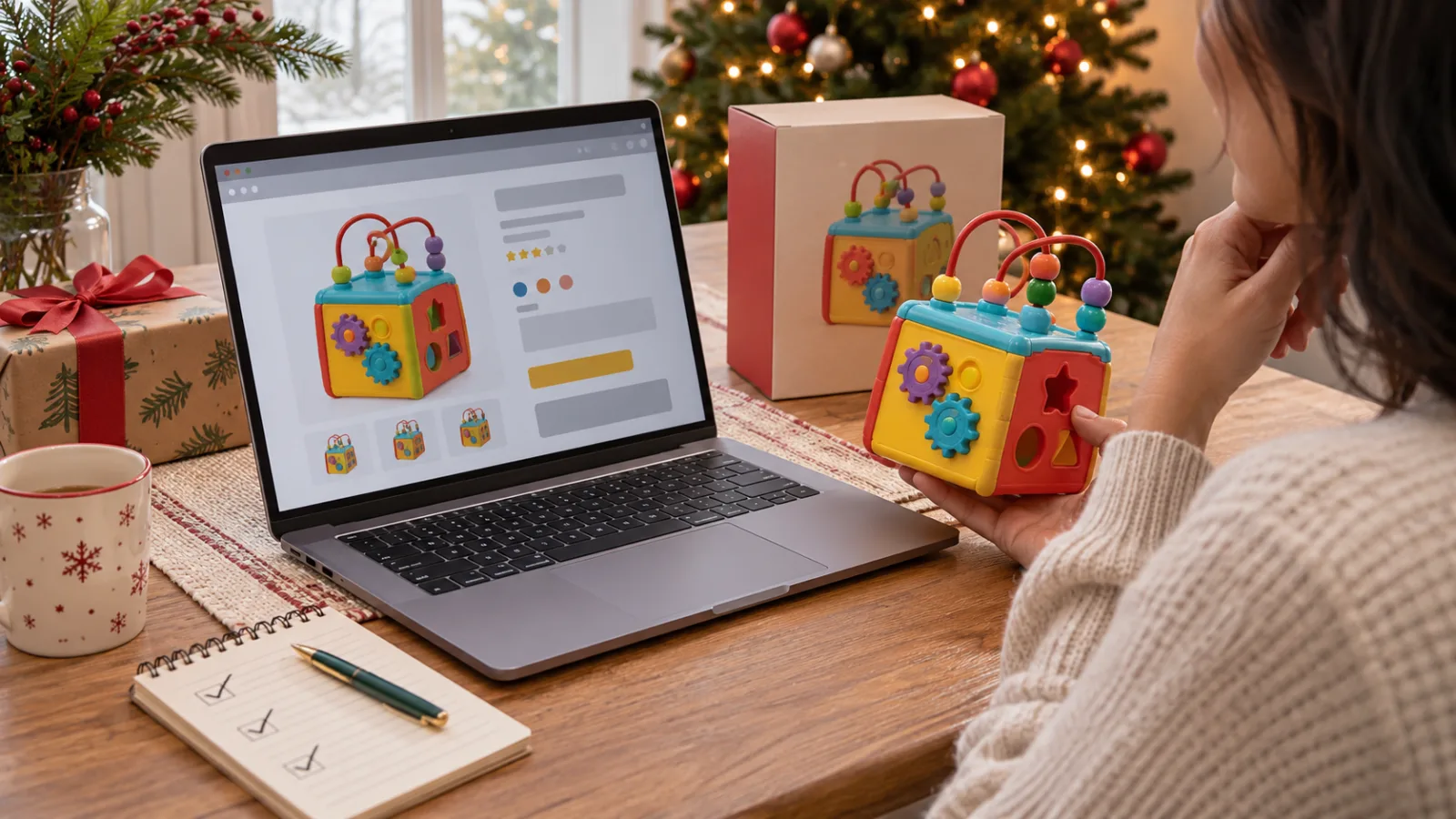
A toy can look familiar, cheerful and thoroughly reviewed while the listing still leaves basic safety questions unanswered. That is why this holiday season’s warnings deserve to be read as a marketplace problem as well as a toy-design problem. Current Trouble in Toyland coverage from U.S. PIRG points to counterfeit and recalled toys, questionable online resellers and newer risks connected with AI-powered products. The concern is not that every viral toy is dangerous. It is that a polished product page can make it difficult to see who actually made the item, who imported it, whether the product is genuine and which child age the design is intended for.
The listing is therefore part of the safety assessment. A parent is not only choosing between colors or features; they are deciding whether the product has a traceable identity. The seller name, manufacturer or importer, model information, age grade and warnings should form a consistent trail. If those details are missing, vague or contradictory, a low price and a large review count do not fill the gap. Reviews may describe delivery or appearance, but they cannot establish that the toy meets the requirements that apply to its materials, construction or intended age group. A photograph can also be reused across different products, and a copied description can conceal differences between the item shown and the item shipped.
The Toy Association’s 2026 testing report illustrates why this distinction matters. In its sample of 37 unbranded or knockoff toys purchased from Temu and Shein, 89% failed at least one U.S. toy-safety requirement. That is a finding about the tested sample, not a claim that every product on either marketplace fails. Its value for shoppers is more practical: marketplace presentation alone cannot be treated as proof of compliance. When an item has no clear brand, no accountable manufacturer or importer and no reliable age guidance, the buyer has fewer ways to verify what is being sold before a child receives it. The more anonymous the product, the more important it becomes to pause before ordering.
This is especially relevant when a listing resembles a toy already popular on social media or in short-form videos. Virality can compress the buying decision into a few visual cues: a recognizable shape, an unusually low price, a long list of enthusiastic ratings or a claim that the item is a must-have. None of those cues answers whether the product is authentic, whether it has been subject to a recall or whether small parts, magnets, batteries or other components are appropriate for the intended child. A familiar design may even make an imitation seem trustworthy because the image carries the reputation of another product.
The U.S. Consumer Product Safety Commission’s guidance for buying and selling products online and its information on stopping the sale of recalled products reinforce the same principle: online availability does not remove the need for product accountability. Recalled products should not be offered for sale, and an attractive listing is not a reason to assume that a product has cleared every relevant safety check. A recall search should be tied to the exact brand, model and product details rather than a broad keyword search for a toy category. When those identifiers cannot be established, the uncertainty is itself useful information.
Parents should also keep the scope of the check wider than the traditional choking warning. The current holiday discussion includes counterfeit and recalled products, questionable resellers and AI-enabled toys alongside familiar physical hazards. A listing that clearly identifies the product and provides usable safety information does not guarantee that every design decision is sound, but it gives the buyer a basis for checking. A listing that hides the seller, omits age information or relies on generic images removes that basis before the purchase even begins.
The practical takeaway is simple: treat the page as evidence that must be inspected, not as packaging for a foregone purchase. Before considering the toy’s novelty or price, establish who is responsible for it, what exact product is being offered and which age guidance applies. That short shift in attention can expose the difference between a traceable toy and an anonymous listing dressed up with polished photos and reviews.
A five-minute audit before an order
Before paying, treat the product page as part of the toy’s safety information—not merely as a place to compare colors, prices and delivery dates. Start by identifying the exact brand, model and seller. A listing that names only a marketplace, uses a vague shop name or gives no clear route to the manufacturer deserves extra scrutiny. Record the model name and any identifying number shown on the page, because a memorable product nickname or a photograph alone may not be enough to distinguish one version from another. The seller’s identity matters as well: the same-looking toy may be offered by different businesses, and the listing should make it possible to tell who is actually responsible for the sale.
Next, look for a complete age grade, warnings and manufacturer or importer information. The age guidance should be visible and consistent across the listing, packaging information and product description. Pay particular attention when the child is under three: at that age, small detachable parts require especially strict scrutiny, and a product that seems suitable from its photograph may still be inappropriate if its safety information is incomplete. Older children also need more than a quick age check. Magnets, button batteries, cords, chemical concerns and breakage risks can remain relevant even when a toy is marketed for school-age children. Supervision can reduce some situations, but it does not correct a design problem or make missing safety information acceptable.
A recall check should be a separate step, not an assumption based on a retailer’s reputation or the number of reviews. Search the CPSC recalls database, or the relevant national recall portal if the purchase is being made outside the United States, using the brand, model and other identifying details. Compare the result with the actual listing rather than relying on a broad search result: similar names and product photographs can conceal important differences. If the product cannot be identified precisely enough to check, that uncertainty is itself a reason to pause. A listing that provides no usable model information leaves the buyer unable to establish whether the item matches a recalled product.
Then inspect the page for signs that its information has been assembled carelessly. Vague stock images, copied descriptions, inconsistent product details or differences between the photographs and the written specifications all weaken confidence in the listing. Check whether the age range changes from one part of the page to another, whether the warning language appears incomplete, and whether the stated brand matches the packaging shown. A polished presentation, a high review count or an unusually low price cannot substitute for traceable product information. Reviews may describe delivery or appearance, but they do not prove that a toy meets the applicable safety requirements.
Finally, confirm the return process before placing the order. Find out who handles the return, what condition the product must be in and whether the seller provides a reachable customer-service trail. Keep a record of the listing page, seller name and model details at the time of purchase; online information can change, and those details may be important if the item arrives with different markings or if a concern emerges later. The U.S. Consumer Product Safety Commission says its e-commerce team monitors online listings and advises consumers to report suspected hazards with the exact page link and screenshots. Saving that evidence makes a report more useful and gives the buyer a clear record of what was offered.
A compact audit can therefore follow this order:
- Identify the product and seller. Confirm the exact brand, model and business responsible for the sale.
- Read the safety information. Check the age grade, warnings and manufacturer or importer details, with especially strict attention to small parts for children under three.
- Search for recalls. Use the CPSC recalls database or the relevant national portal and compare the result with the specific item.
- Test the listing’s consistency. Look for copied text, vague images, conflicting ages, mismatched specifications or other signs that the page may not describe the product accurately.
- Check the remedy. Make sure the return process and customer-service route are clear before paying, then retain the page link and screenshots if the listing raises concern.
The purpose is not to demand certainty from every online purchase. It is to notice when the basic chain of information is broken: who made the toy, who is selling it, which child it is intended for, what warnings apply and whether the item can be checked against recall information. When several answers are missing, the five-minute audit has already delivered its most useful result: a reason not to proceed until the product can be identified and assessed more clearly.
What current warnings mean for different toy types
Current toy warnings are easier to use when they are treated as practical categories rather than as a list of frightening possibilities. A squishy toy, for example, may look harmless until its outer material ruptures and exposes water beads. The relevant question is not whether the product is popular or soft, but whether a child could reach and swallow the contents after ordinary play or damage. If the listing does not clearly identify the product, its maker and its intended age range, there is no reliable basis for judging that risk.
Pull-string toys and teething products require the same kind of attention to construction. A cord, loop or detachable component can create a choking danger when it is unsuitable for the product or becomes loose during use. Parents should examine the listing for specific warnings and age guidance, then inspect the delivered item for strings, seams and parts that do not appear securely attached. A reassuring photograph cannot establish that a toy has been designed or tested appropriately, and supervision cannot make a defective component safe.
High-powered magnets deserve a separate rule. The danger is not limited to the magnet’s size or to whether a child is currently playing with it under supervision. If more than one powerful magnet is swallowed, the pieces can attract each other through tissue and cause severe internal injuries. That makes missing parts, vague descriptions and incomplete age information especially important warning signs. A listing that calls a product a puzzle, building set or desk novelty does not remove the need to check whether it contains powerful magnets or whether the item is appropriate for the child who will receive it.
Button batteries also call for a direct physical inspection. They can cause serious harm when they are accessible, so the battery compartment should not be treated as a minor design detail. Before giving the toy to a child, check whether the compartment is secure and whether the product has any loose battery cover, visible battery or sign that the enclosure can be opened easily. If the listing omits battery information, gives inconsistent product details or uses photographs that do not match the item received, that uncertainty is itself a reason to pause. The safest response to an unclear battery design is not to rely on a child’s care or on an adult’s constant attention.
Conversational AI toys raise a different group of questions. Their risks are not only physical: a toy that responds to a child may produce inappropriate answers, record interactions or offer weak parental controls. Those concerns should be assessed separately from choking, magnet or battery hazards. A parent can ask what the toy hears, where recordings go, whether controls are available and how the product limits or reviews its responses. If the listing provides no meaningful explanation of those functions, polished marketing language and a large review count should not be treated as evidence that the system is suitable for children.
These categories should guide the audit rather than turn every toy into a danger signal. The key distinction is between a hazard built into the product and a concern that can be managed through informed use. A child’s age, the toy’s intended use and the quality of its instructions all matter, but supervision does not repair an unsafe design, replace a missing warning or make an inaccessible manufacturer traceable. When the product information is incomplete, parents should treat the uncertainty as part of the purchase decision and prefer an item whose safety details can be checked before it reaches the child.
When to skip the purchase and what to do afterward
A useful safety audit needs a stop rule. If the listing does not identify the seller or the manufacturer clearly, pause before paying. The same applies when the age guidance is missing, conflicts with the child’s age, or appears to have been copied from another product. A polished photograph, a large review count, and a sharply reduced price do not fill those gaps. They may describe how the listing is presented, but they do not establish who made the toy, who imported it, or whether the product has been tested and tracked through a responsible supply chain.
Skip the purchase when the safety information is absent or inconsistent, when the product details change between the title, photographs and description, or when the item appears to be a counterfeit or an imitation of a known brand. Uncertainty after a recall search is another reason to stop. A toy does not become a safer choice because the listing is still active, because other buyers say it arrived quickly, or because the seller promises that it is “safe.” If the basic facts cannot be checked before the order, the buyer is being asked to accept the risk without a reliable way to identify the product later.
The safer alternative is a listing connected to a retailer or brand that can be reached after the sale. Look for a real customer-service trail, a clear return process and a remedy that does not depend on guessing which version of the toy was shipped. Keep the product page, seller name, order confirmation and any model or batch information. This record matters if the package contains a different item from the one pictured, if the toy breaks, or if a safety notice appears after purchase. Screenshots are especially useful when a marketplace listing changes or disappears.
When the toy arrives, do not treat delivery as the end of the check. Compare the item with the listing and packaging, then inspect the parts most likely to reveal a problem: seams, joins, cords, battery compartments, magnets and small detachable pieces. Check that the age guidance and warnings on the physical product match the information used to make the purchase. For toys with batteries, confirm that the compartment is secure and that no button battery is accessible. For toys containing magnets, look for loose or detachable pieces. If a seam opens, a part detaches, a magnet comes loose, or the toy overheats, stop using it and keep the item, packaging and identifying details together.
Supervision is not a substitute for a sound product. An adult may reduce the chance that a child handles a toy incorrectly, but supervision cannot repair a defective design, restore a missing warning or make an unidentified product traceable. That distinction is important for toys used by younger children, who may put small pieces in their mouths, but it also matters for older children when a toy contains magnets, batteries, cords or parts that can break during ordinary play. If the product no longer matches the safety expectations created by the listing, remove it from use rather than waiting for another failure.
In the United States, the Consumer Product Safety Commission says that selling recalled products is unlawful. Its online-shopping guidance also asks consumers to report suspected hazardous sales with the exact page link and screenshots, which is why preserving the listing before reporting can be valuable. A suspected unsafe toy or an online sale of a recalled product can be reported through SaferProducts.gov. The report should include the product name, seller or marketplace, model details if available, what happened or what warning is missing, and supporting photographs or saved page information.
Readers outside the United States should use the relevant national product-safety or consumer-protection authority and its recall portal, while also contacting the marketplace and seller through the order record. The route differs by country, but the practical evidence is the same: identify the exact toy, preserve the listing and packaging, describe the hazard precisely, and stop use while the issue is unresolved. If a child may have swallowed a magnet, accessed a button battery, or been injured by a broken part, seek appropriate urgent medical help and retain the product for identification.
The final decision can therefore be simple. Buy only when the seller, manufacturer, age guidance and safety information are sufficiently clear, and when a recall check does not raise unresolved questions. Skip the listing when those checks fail. After delivery, inspect the actual toy, keep its identifying details and report a serious concern through the applicable safety channel. That small amount of friction is a reasonable price for knowing what entered the home and what to do if the product proves unsafe.
Related articles

A Galaxy phone allegedly failed in a pocket. Here is the smartphone heat and battery safety guide that actually helps
A reported Samsung Galaxy pocket incident is a reason for calm, practical battery-safety habits—not panic or brand blame.

Should you still pay for GitHub Copilot after the billing shock?
Copilot remains useful, but usage-based billing turns the buying decision into a question of workflows, model choice and budget caps.
Should you buy Microduck? The $399 robot duck is a project, not a pet
Microduck is cute, open and unusually affordable for robotics. That does not make it an impulse buy: preorder it only if you want a tiny lab.

Beef tallow for your face: budget moisturizer or overpriced viral balm?
A practical ingredient check for anyone tempted by tallow balm, with cheaper occlusive and moisturizer comparisons before you spend.
Comments
Sign in to comment.
No comments yet.