Service robots need operations before hype
A grounded robotics article about why service robots succeed through route design, support, safety cases and unglamorous operations.

Service robots are having a more interesting year than the demo videos suggest. The useful shift is not that machines suddenly became magical coworkers. It is that more companies are learning the boring conditions under which robots can do real work: mapped routes, predictable handoffs, trained staff, repair plans, safety reviews and managers who know what problem the robot is supposed to solve.
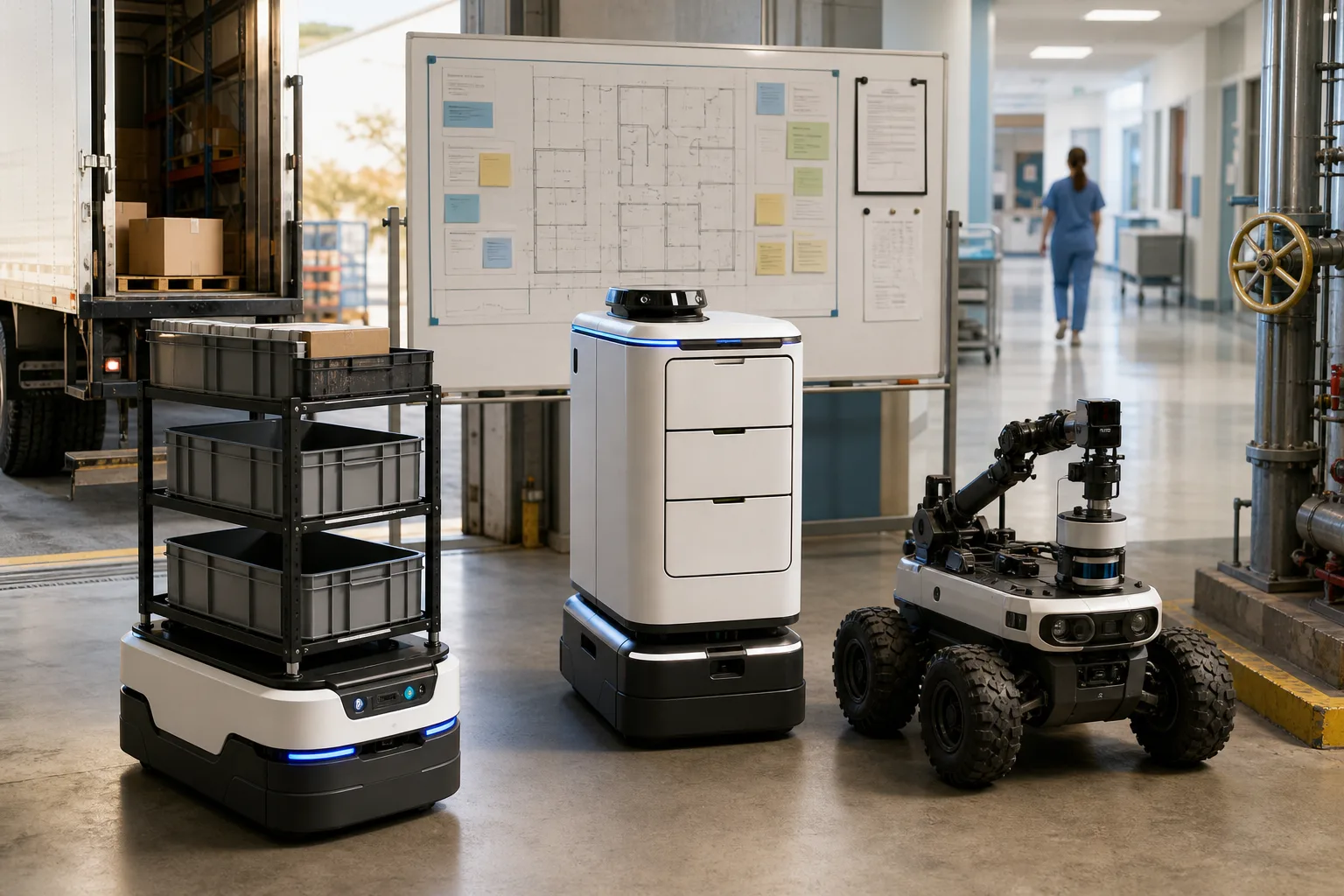
That distinction matters because robotics has always been good at producing impressive clips and bad at surviving Monday morning. A robot that glides across a trade-show floor is one thing. A robot that shares a corridor with nurses, pallet jacks, tourists, cleaning carts, elevator delays and one confused person blocking a doorway is a different proposition. The second robot needs operations more than theatre.
What changed
The strongest current signal is in service work where the task is narrow and the environment can be made partly cooperative. Hospital delivery robots move linens, samples or medications along known paths. Warehouse mobile robots carry bins and carts between stations. Inspection robots walk or roll through facilities where a human visit would be slow, dangerous or repetitive. Agricultural robots weed, scout or spray in constrained rows. None of these jobs require a robot to understand the whole world. They require it to do one useful job reliably enough that people stop babysitting it.
Reliability is the central issue. A robot that completes ninety-five percent of routes but needs a rescue every twentieth trip may still be too annoying for a busy team. The cost is not only the rescue. It is the interruption, the loss of trust, the staff member who starts routing around the machine, and the manager who discovers that the official productivity calculation forgot human patience. Robotics succeeds when the exceptions are rare, visible and cheap to handle.
The practical problem
The first practical test is route design. Robots like boring geography: wide paths, stable lighting, known doors, predictable elevators, clear charging locations and few surprise obstacles. Humans can improvise around a blocked hallway; robots need a policy. Can the machine wait, reroute, call for help or safely stop without becoming a hazard? That answer should be written before deployment, not invented during a shift.
The second test is handoff. Many service robots do not replace a person; they move work from one person to another. A delivery robot may save walking time for nurses, but only if pickup, loading, unloading and exception handling are clean. A warehouse robot may improve flow, but only if the surrounding stations are not the bottleneck. A restaurant robot may carry trays, but staff still manage hospitality, spills, timing and unhappy customers. A bad handoff turns automation into a moving inconvenience.
Safety cases deserve plain language. The question is not whether the robot is generally safe. The question is what happens near children, visitors, forklifts, wet floors, emergency alarms, reflective glass, poor Wi-Fi and people who deliberately test boundaries. Standards, risk assessments and incident logs are not paperwork for lawyers only. They are how the operator learns where the machine is fragile before a small surprise becomes a public problem.
Where the work gets real
Maintenance is where many robotics pilots reveal their real economics. Batteries age. Wheels wear. Sensors get dirty. Maps drift when furniture moves. Software updates change behavior. Spare parts have lead times. A robot fleet without a maintenance plan is not a fleet; it is a collection of future interruptions. The buyer should ask who fixes the unit at 7 a.m., what the service-level agreement covers, how long common repairs take and whether staff can perform simple recovery without voiding support.
There is also a labor story here, but it is more specific than the usual replacement debate. In many deployments, robots take the walking, carrying, watching or scanning parts of a job while people keep the judgment, persuasion, dexterity and exception handling. That can be good if it removes drudgery. It can be bad if it simply speeds up the remaining human work or gives management a new way to measure people harshly. The ethical question is not only how many jobs disappear. It is whether the jobs left behind become more humane or more squeezed.
Return on investment should include the hidden costs. A robot may reduce walking time, injuries, travel to dangerous sites or overnight staffing pressure. It may also require facility changes, employee training, support contracts, integration work, insurance review, cybersecurity checks and a champion who keeps the deployment alive after the vendor leaves. A serious buyer counts both sides. If the business case only works when every best-case assumption comes true, it is not a business case. It is a brochure.
The risks to watch
Integration with existing systems is another quiet gate. A delivery robot that cannot talk to access control, elevators, inventory software or ticketing tools may still work, but people will spend time bridging the gaps manually. An inspection robot that collects images but cannot fit the maintenance workflow creates a new inbox. The goal is not robot movement. The goal is completed work. Data has to land where decisions are made.
Cybersecurity is easy to ignore because the robot looks physical. That is exactly why it matters. A mobile machine may have cameras, microphones, maps, remote-support access, cloud dashboards, fleet-management APIs and local wireless credentials. The operator should know what data is collected, where it is stored, who can remotely control the unit, how updates are signed, and how access is revoked when a contractor leaves. Physical automation still has a digital attack surface.
A better operating routine
The useful deployment pattern is small, measured and honest. Start with one route or one workflow. Baseline the old process. Define success before the robot arrives: fewer missed deliveries, less walking, safer inspection, faster restocking, lower night-shift burden, better documentation. Track interruptions, rescues, staff complaints, maintenance time and the tasks that move back to humans. If the robot works, expand deliberately. If it fails, the data should explain why.
Staff training should not be treated as a launch-day formality. People need to know what the robot can do, what it cannot do, how to pause it, how to report trouble, and when not to rely on it. The best training also gives workers permission to criticize the workflow. Frontline staff usually see the awkward edge cases before managers do. If they learn that criticism is unwelcome, the deployment loses its best sensor.
The reader takeaway
Robotics will keep improving. Better perception, cheaper sensors, stronger simulation, improved manipulation and more capable planning will widen the useful zone. But the near-term winners will still be the teams that respect the unglamorous details. A service robot is not a science-fiction employee. It is a machine inserted into a social and physical system. If that system is messy, the robot inherits the mess.
The reader takeaway is simple: judge service robots by the work around them. Ask about routes, handoffs, recovery, maintenance, data, safety and staff trust. The robot itself may be impressive, but the deployment is the product. When the deployment is thoughtful, automation can remove real drudgery and make hard work safer. When it is lazy, the machine becomes another thing people have to manage. That is not progress. It is choreography with an invoice.
Procurement questions that prevent regret
Before buying a service robot, ask the vendor to describe the worst normal day, not the best demo. What happens when the lift is busy, the Wi-Fi drops, a door is propped open, a sensor is scratched, or a delivery point is occupied? Ask for uptime measured after human rescue, not before it. Ask which integrations are already running in comparable sites and which ones still need custom work. Ask how many deployments were expanded after the pilot. The answers reveal whether the vendor sells machines or working systems.
What success should look like after ninety days
A serious pilot should have a ninety-day review with numbers and complaints on the same page. Count completed missions, failed missions, rescues, average delay, staff time saved, maintenance tickets, safety stops and user workarounds. Then read the comments from people who share space with the robot. If the numbers look good but staff quietly hate the workflow, the deployment is not healthy yet. If staff trust the robot but the measured benefit is tiny, the task may be emotionally satisfying but financially weak. Both truths matter.
Why facilities teams belong in the room
Robotics decisions are sometimes made by innovation teams while facilities staff inherit the consequences. That is backwards. Facilities teams know door widths, floor transitions, elevator behavior, cleaning schedules, storage constraints, fire routes and the small repairs that shape daily movement. They also know which hallway is always blocked by a cart even though the map says it is clear. Bringing them in early is not bureaucracy. It is how a robot learns the building before the building humiliates it.
The honest role of autonomy
Autonomy should be judged by how gracefully the robot handles limits. A machine that admits uncertainty early, stops safely and asks for help in a useful way may be better than one that tries to bluff through a situation. Human workers do this constantly: they ask a colleague, choose a different route, or delay a task because the context changed. Robots need the same humility expressed in software and procedure. The goal is not pretending the robot never gets confused. The goal is making confusion cheap, safe and visible.
The contract should include the boring day two work
The contract should describe training, spares, software updates, incident review, data retention, support response and the point at which the pilot becomes a normal operational system. Otherwise the buyer may get a successful installation and an unsupported routine. Day two is where robotics stops being innovation theatre and becomes either useful infrastructure or an expensive hallway guest. A good vendor will not be offended by these questions. A good vendor has had to answer them before.
Related articles
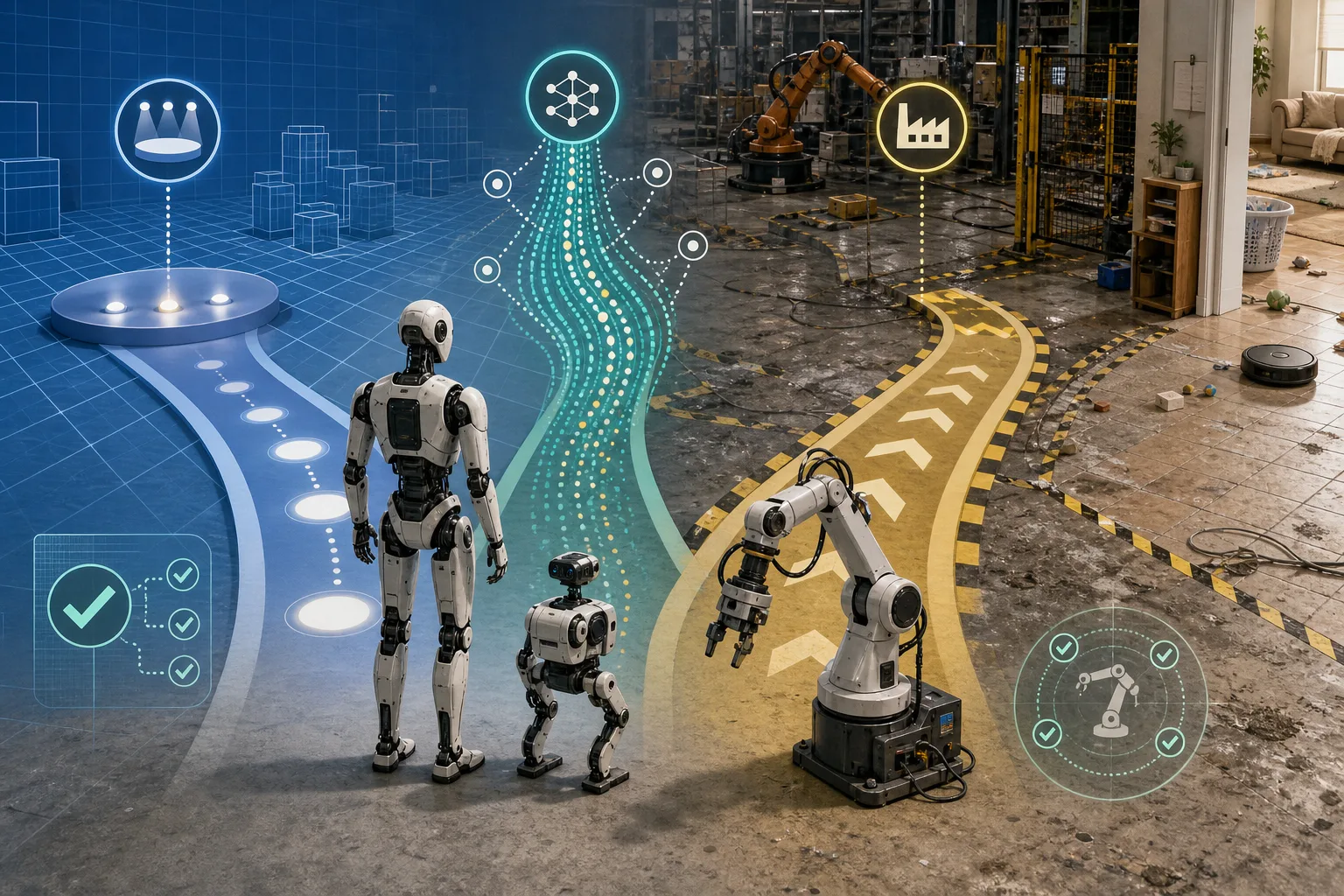
Robotics is still waiting for reliability, not another demo video
Physical AI has better models, cheaper developer robots and stronger industrial demand. The missing breakthrough is not spectacle — it is dependable work in messy real environments.
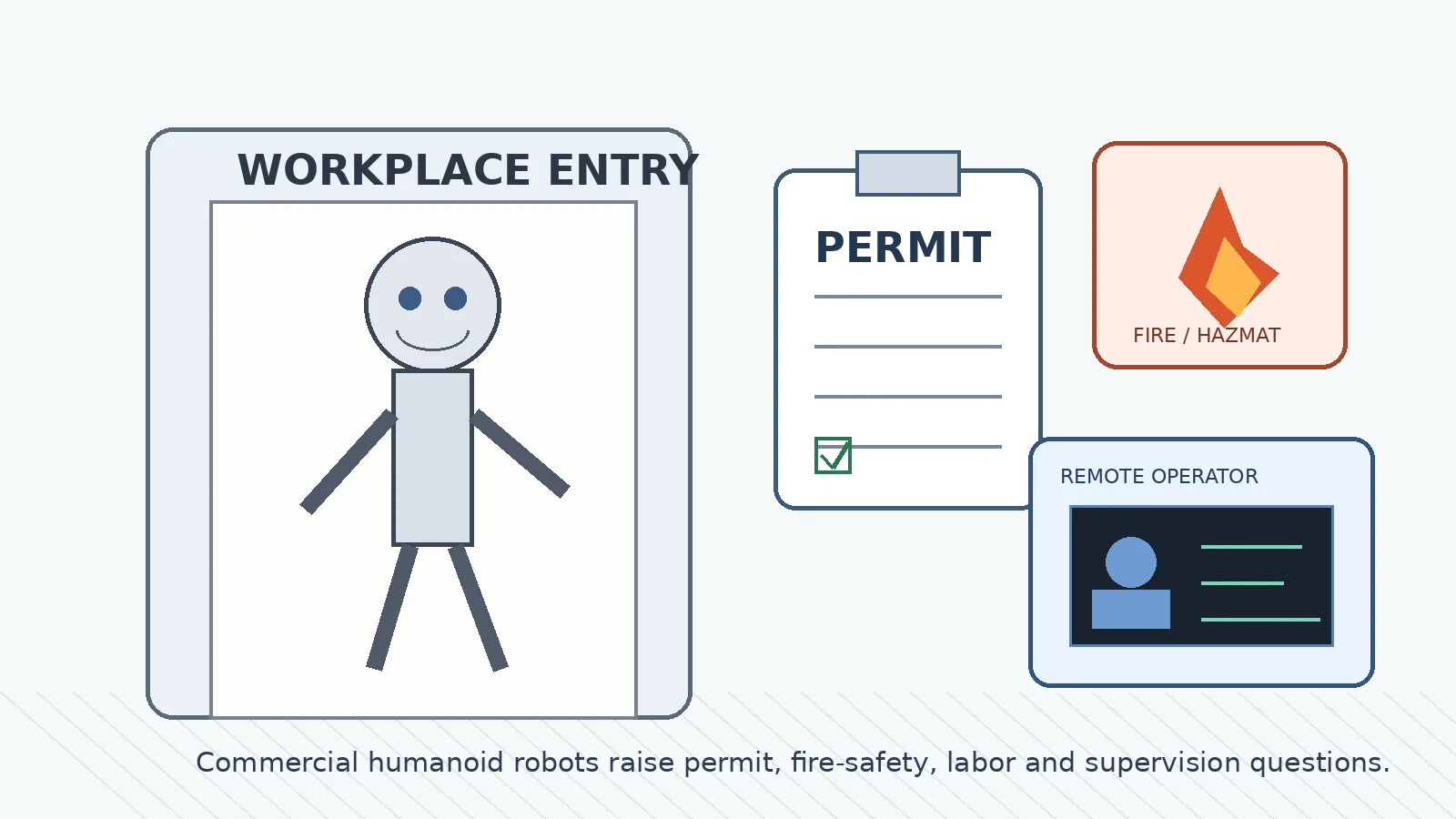
San Mateo’s humanoid robot permit push tests the rules for physical AI
A Silicon Valley county is not banning humanoid robots; it is asking what permits, fire rules, supervision and labor disclosures must exist before commercial deployment.
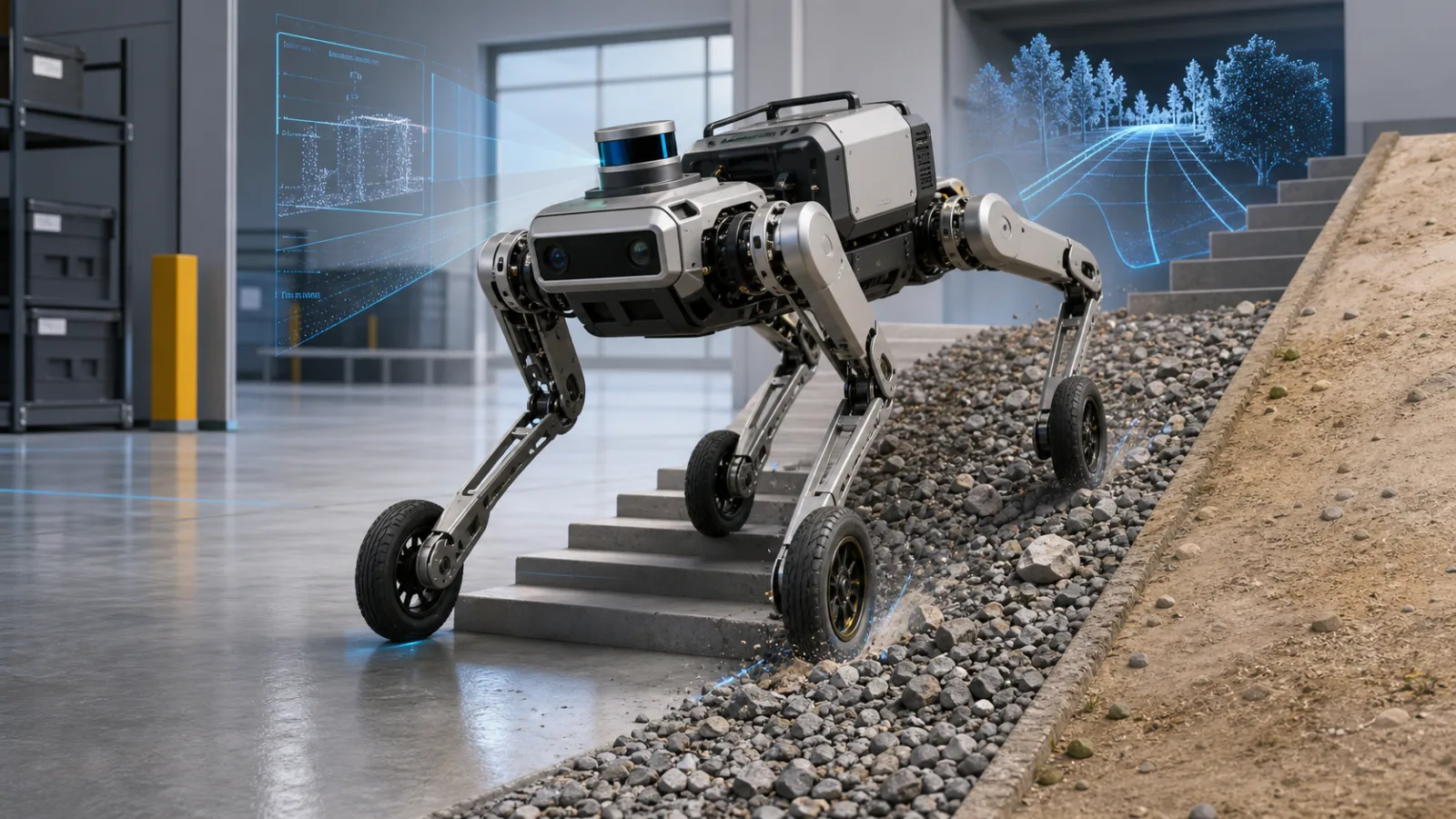
Unitree AS2-W and the case for wheel-legged robots
Unitree’s new AS2-W is not just another robot dog clip. It shows why robotics companies are mixing wheels and legs, and why buyers should ask harder questions about autonomy, safety and developer access.
The US robot ban is no longer theoretical: HoverAir and Unitree show the new robotics split
A flying pocket camera and a robot-dog distributor now show the same shift: robotics is moving from gadget hype into supply-chain regulation, national-security review and regional manufacturing choices.
Comments
Sign in to comment.
No comments yet.