Drones did not kill the tank; they changed the robotics around it
Combined Resolve and Aurora 26 show why small drones, operators and fast feedback loops now matter as much as heavy machines.

At Combined Resolve in Germany this spring, a useful robotics lesson arrived in an uncomfortable form. Ukrainian drone operators participating in the U.S. Army exercise were able to find and notionally destroy American armored vehicles so quickly that the vehicles had to be returned to the scenario so training could continue. Ars Technica reported the episode on August 13, citing The Wall Street Journal's account of the exercise; official Army material identifies Combined Resolve 26-07 as a Hohenfels training event from April 9 to May 10, 2026, with the 3rd Armored Brigade Combat Team, 1st Cavalry Division as the main training audience.
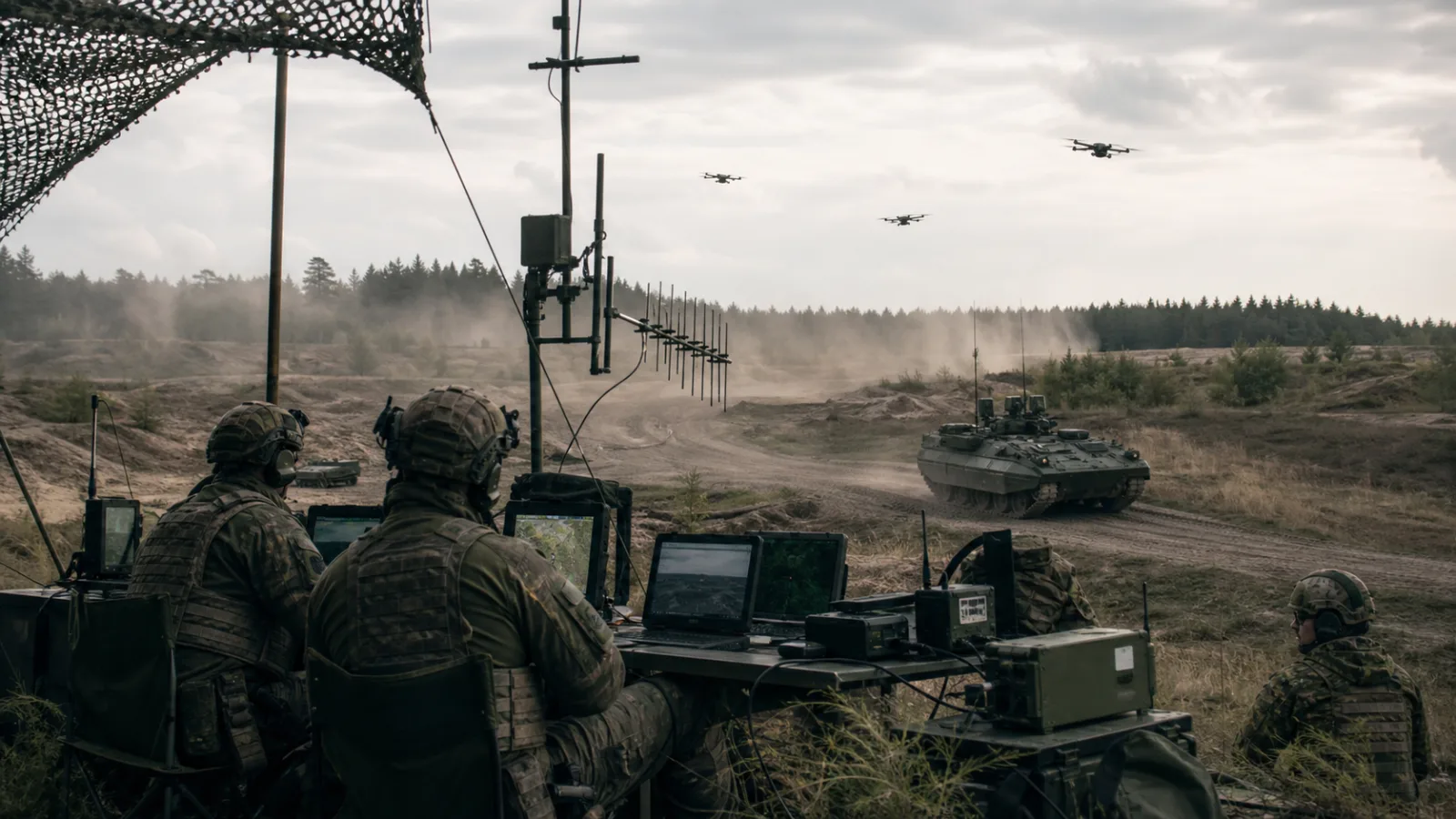 The striking part is not a slogan about the death of the tank. It is the collision between two very different ideas of robotics. One side is the expensive armored platform: protected, powerful, crewed, slow to procure and built around decades of doctrine. The other is a distributed layer of small flying machines, human operators, cheap cameras, datalinks, jammers, improvised procedures and constant software-like iteration. In that contest, the first machine to see, report and cue an effect can matter more than the heaviest machine on the road.
What the exercise actually showed
Combined Resolve is not a battlefield and the losses were simulated. That caveat matters. A training range has rules, safety controls, artificial injects and a learning purpose; it does not prove that every tank would vanish on a real road. But exercises are precisely where armies discover that old assumptions no longer survive contact with current technology. The reported pattern was blunt: Ukrainian operators used drones to spot armored vehicles, mimic bomb drops from above or move close enough to simulate a first-person-view strike, while the American unit had to learn how to disperse, hide and use electronic-warfare countermeasures.
The U.S. Army’s own Combined Resolve messaging has long described the exercise as a way to strengthen interoperability, readiness and large-scale combat skills in Europe. In the 2026 cycle, the robotics lesson became unusually visible because Ukraine brought operators formed by a live drone war rather than by a procurement slideshow. Ars quoted a U.S. Army soldier in promotional material saying that drones keep everyone on edge because there is no safe spot or safe moment in the game. That is the sentence a robotics audience should remember: once low-cost airborne sensors are common, concealment and movement become continuous engineering problems.
A second case makes the point harder to dismiss. The Kyiv Independent reported from the Swedish-led Aurora 26 exercise that Ukrainian drone teams also disrupted a NATO-style mechanized attack, spotting vehicles and forcing planners to reset parts of the scenario. Again, this is not combat loss accounting. It is training feedback. When different allied exercises produce the same stress signal, the issue is not one unlucky brigade or one clever operator. It is a change in the machine ecology around ground forces.
Why this belongs in robotics, not only defense news
Robotics is often presented through polished prototypes: humanoids in warehouses, autonomous taxis, delivery machines, agricultural rovers and domestic assistants. Battlefield drones are rougher, cheaper and politically darker, but they are still one of the fastest laboratories for autonomous and semi-autonomous systems. They combine airframes, batteries, cameras, radios, inertial sensors, navigation, video links, operator interfaces, computer vision, mission planning and field repair. They also expose the least glamorous truth about robots: a useful robot is not a magic body; it is a machine inside a workflow.
The drones in these exercises should not all be called autonomous. Many are remotely piloted. Some have assisted stabilization, return-to-home modes, target tracking, waypoint flight or other partial autonomy. The practical revolution is that partial autonomy is enough when the system is embedded in a good human-machine loop. An operator can launch, scan, identify, hand off coordinates, guide a strike simulator and immediately learn from failure. The robot reduces the cost of looking and reaching; the human still supplies judgment, deception, prioritization and adaptation.
That distinction matters outside the military too. A warehouse robot, inspection drone or home assistant also succeeds when the automation is paired with reliable sensing, clear handover to people, fast maintenance and a feedback loop that improves the next run. The Ukraine-trained drone teams did not win the exercise because a single aircraft was futuristic. They stressed the armored force because they brought an operating system made of people, procedures, sensors, radios and cheap expendable machines.
The sensor is now the weapon’s first stage
For most of the twentieth century, heavy armor gained value from mobility, protection and firepower. Those traits still matter, but drones change the price of detection. A quadcopter can lift a camera above trees, hedges and folds in terrain. A small fixed-wing drone can scan a road network. A first-person-view craft can approach from an angle a crew does not naturally watch. Even when a drone carries no explosive, it can make the target visible to another weapon, another drone or an artillery observer.
That is why the phrase “cheap drone beats expensive tank” is too simple. The real equation is cheaper observation plus faster targeting plus repeated attempts. An armored vehicle may survive one sensor, one jammer failure or one operator mistake. The problem is the density of attempts. If drones are plentiful and operators can replace losses quickly, a vehicle must hide from many eyes at once. It must manage its heat, radio emissions, movement pattern, overhead signature and support vehicles. Armor becomes one layer of protection rather than the whole protection story.
This is familiar to engineers working on autonomous systems. Reliability rarely comes from one perfect component. It comes from redundancy, observability, graceful failure and rapid updates. Drone teams have been learning in exactly that mode: try a frequency, lose a link, change the antenna; try an approach, get jammed, alter the route; find a camouflage trick, watch the other side adapt. The feedback cycle is closer to software operations than to traditional platform procurement.
The countermeasure stack is becoming part of the vehicle
If a tank or infantry fighting vehicle is to remain useful, it needs a counter-drone stack around it. That stack includes camouflage and deception, dispersion, movement discipline, overhead cover, electronic warfare, passive detection, short-range air defense, hard-kill interceptors, shotgun-like last-ditch tools, and friendly reconnaissance drones. None of these is a silver bullet. Together they make detection and attack harder, slower and more expensive.
Electronic warfare is especially important but often misunderstood. Jamming can break or degrade control links, navigation and video, yet it also announces that something valuable may be nearby. It can interfere with friendly systems. It may work against one control method and fail against another. As drones gain more onboard navigation, target tracking and autonomy, a pure radio-jamming answer becomes less complete. The vehicle therefore needs tactics as much as hardware: when to move, when to stop, when to emit, when to go silent, when to send its own drone forward and when to abandon a route.
The Combined Resolve reports suggest that U.S. troops improved as the exercise repeated. That is the healthy part of the story. A training event that embarrasses a unit early and teaches it later is doing its job. The robotics lesson is that adaptation must become routine, not exceptional. Forces that update procedures once a year will be outpaced by operators who update their field craft every week.
Autonomy will grow, but the human loop remains central
The next phase will not be a clean jump from remote pilots to fully autonomous swarms. The path is more incremental. Drones will get better at stabilizing in wind, flying low routes, recognizing vehicles, tracking a selected target, returning through interference, sharing maps and coordinating with other sensors. Ground robots will carry repeaters, batteries, supplies and electronic-warfare payloads. Software will help operators triage video, mark suspicious movement and avoid friendly positions.
Each improvement reduces workload, but it also creates governance questions. Who confirms a target in a training scenario? Who owns a mistaken identification? How does a unit prevent automation bias when a video system labels an object too confidently? How are logs preserved when drones are cheap and sometimes disposable? These are robotics questions as much as legal or military questions. The more autonomous the system becomes, the more important it is to design accountability, audit trails and safe modes into the workflow.
Civilian robotics can learn from the caution. A delivery robot that follows a flawed route, a factory arm that trusts a bad sensor, or a home robot that acts on a misunderstood command all raise the same design principle at lower stakes: autonomy must degrade safely. When communications fail, when the map is stale, when a classifier is unsure, the machine should slow down, ask, retreat or hand control back to a person rather than improvise beyond its evidence.
The procurement problem: platforms move slower than learning
Armored brigades are built through long acquisition cycles. Training centers, spare parts, doctrine, simulators and maintenance pipelines all assume relatively stable equipment. Drone warfare punishes that pace. Consumer components change quickly, antennas are modified in workshops, software features appear between rotations, and tactics spread through videos and frontline chat groups. A military can buy a counter-drone system and still be behind if its training, permissions and repair cycle remain slow.
The same mismatch appears in industry. Companies buy robots as capital equipment, then discover that the useful system also needs data pipelines, technicians, safety cases, operator training, spare parts and rapid software updates. The machine on the brochure is only the beginning. The competitive advantage belongs to organizations that shorten the loop between field observation and operational change.
For armies, that means training with hostile drones as a normal condition rather than a special inject. For robot makers, it means designing platforms that can accept new sensors, radios, autonomy modules and defensive measures without complete redesign. For policy makers, it means treating drones not as toys or isolated weapons but as infrastructure: a sensing and actuation layer that changes how other machines are used.
What readers should take from the tank-versus-drone argument
The tank is not dead in the simplistic sense. Heavy vehicles still provide protection, firepower, engineering support, recovery capability and shock action when conditions allow. The stronger conclusion is narrower and more useful: a tank without a drone-aware ecosystem is exposed. So is a convoy, command post, artillery battery, ship, warehouse yard or infrastructure site. The age of pretending that overhead sensing is occasional is over.
A good robotics strategy therefore starts with humility. Assume the other side can see more than yesterday. Assume cheap machines will be used in numbers. Assume the communications environment will be contested. Assume the first version of a countermeasure will be bypassed. Then design systems that can keep learning. That applies to military formations, emergency services, industrial inspection teams and autonomous transport operators alike.
Combined Resolve and Aurora 26 are not proof of one machine’s extinction. They are proof that robots are now part of the environment around every valuable machine. The future is not a duel between a tank and a drone. It is a competition between networks: which network senses first, shares faster, hides better, adapts sooner and lets humans make better decisions under pressure.
Sources
Ars Technica’s August 13 report on Ukrainian drone teams at Combined Resolve; The Wall Street Journal account cited by Ars; U.S. Army and 7th Army Training Command material identifying Combined Resolve 26-07, Hohenfels, April 9 to May 10, 2026, and the 3rd Armored Brigade Combat Team, 1st Cavalry Division; Kyiv Independent reporting on Aurora 26 in Sweden; Oryx visual-loss tracking cited for the broader armored-vehicle context; Hacker News used only as a discussion signal.
Related articles
Robotics is still waiting for reliability, not another demo video
Physical AI has better models, cheaper developer robots and stronger industrial demand. The missing breakthrough is not spectacle — it is dependable work in messy real environments.

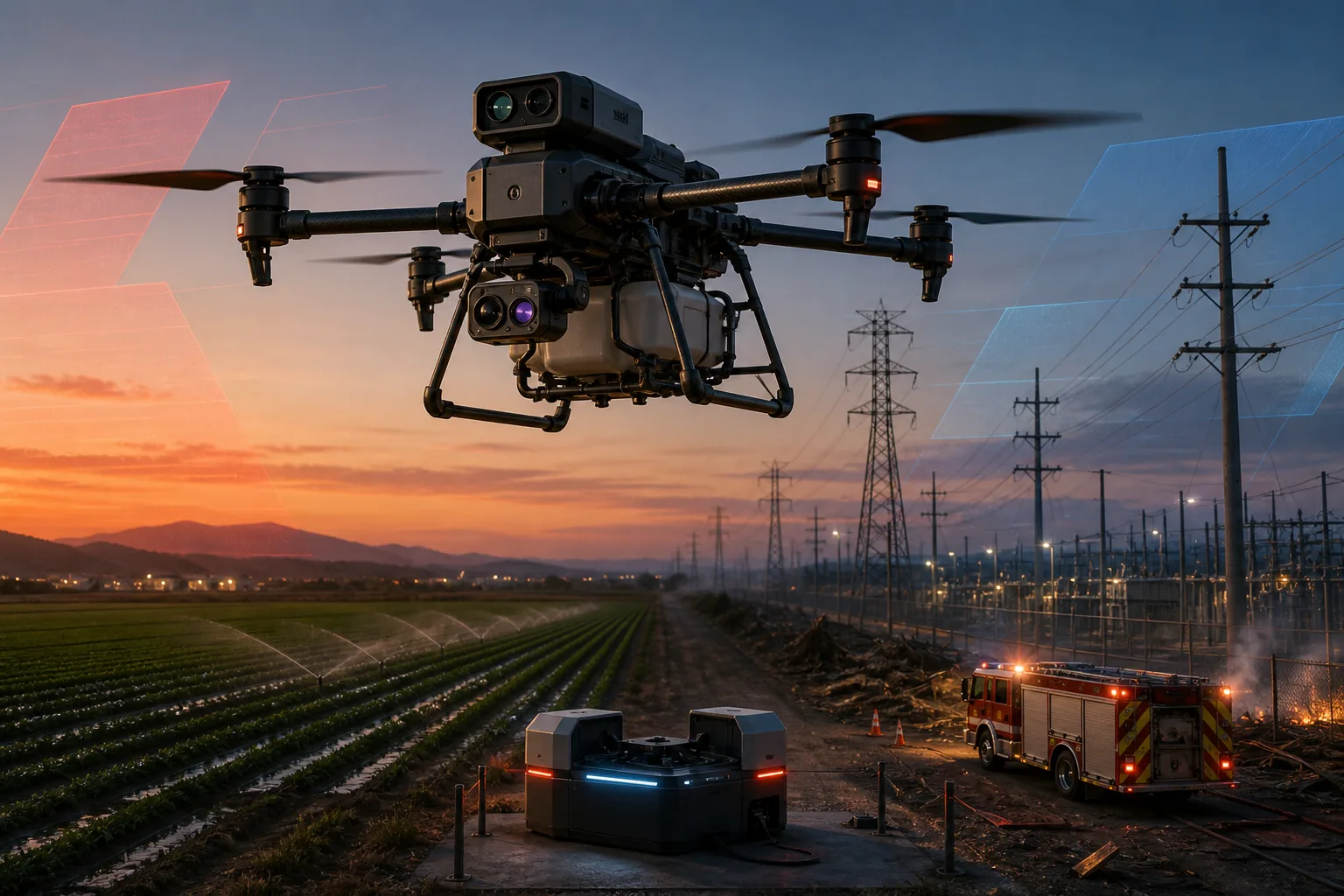
When a Thermal Camera Becomes “Military-Grade”: The FCC’s DJI Drone Fight Is Really About Working Robots
A proposed FCC restriction on previously authorized foreign-produced drones puts LiDAR, thermal imaging and autonomous docks at the center of a broader argument about dual-use robotics.

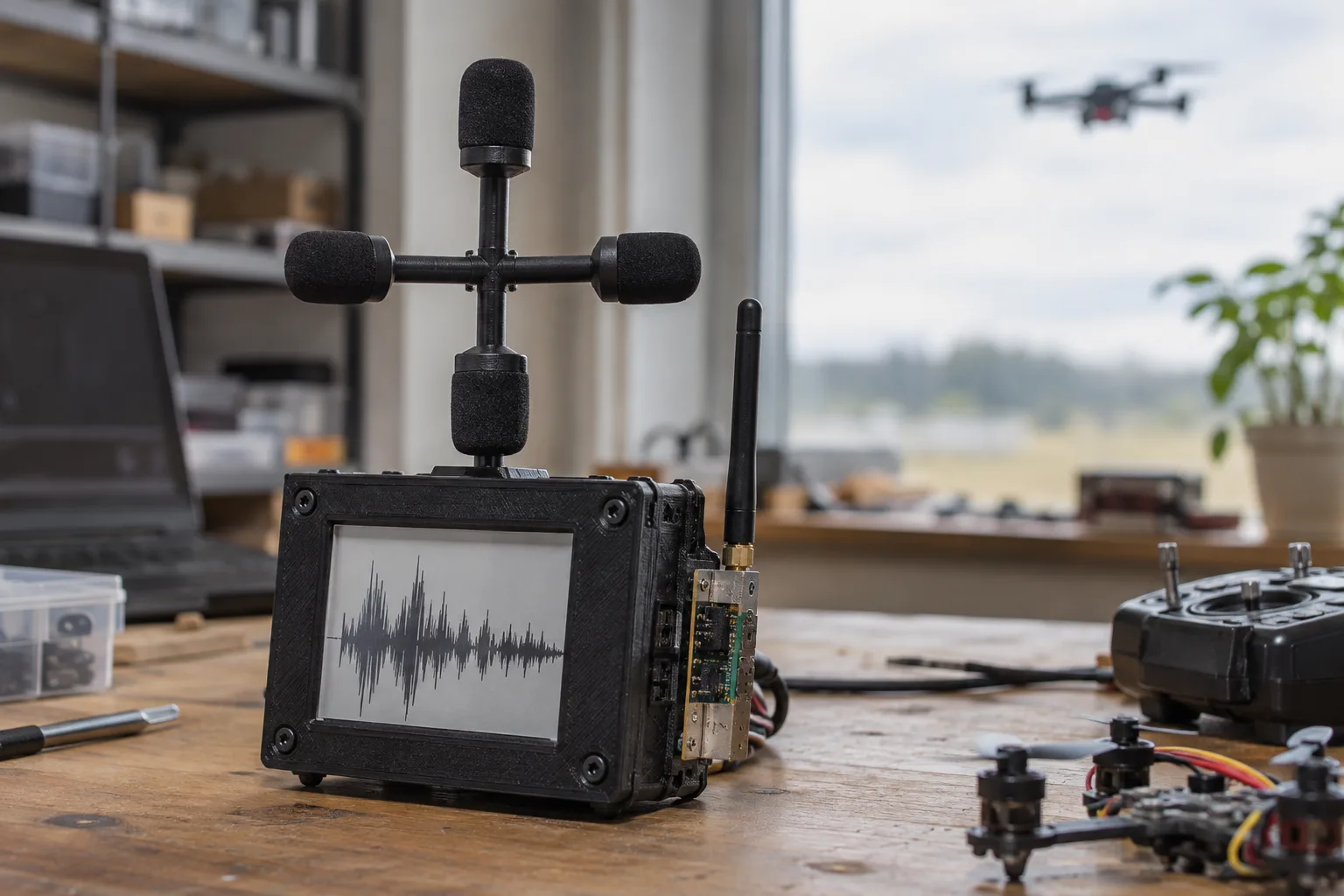
VolAnti Brings Open-Source Acoustic Detection to Fibre-Optic FPV Drones
VolAnti is a compact ESP32-S3 detector that listens for rotor harmonics instead of radio emissions. Its early test is promising, but the project is best understood as a transparent warning device—not a finished counter-drone system.

The travel gadget worth buying in 2026 is a better USB-C charging kit
A practical buyer guide to chargers, cables, power banks and adapters that keep the rest of your devices alive.

Comments
Sign in to comment.
No comments yet.