Robotics is still waiting for reliability, not another demo video
Physical AI has better models, cheaper developer robots and stronger industrial demand. The missing breakthrough is not spectacle — it is dependable work in messy real environments.
Robotics has plenty of impressive videos in 2026. Google DeepMind is pushing whole-body robotics models, Mistral is testing language-guided navigation, Unitree has become a public-market reference point for humanoids, and Pollen Robotics with Hugging Face is selling a $399 open-source biped duck for developers and classrooms. The harder question is not whether robots can look impressive. It is whether physical AI can become reliably useful outside controlled demos.
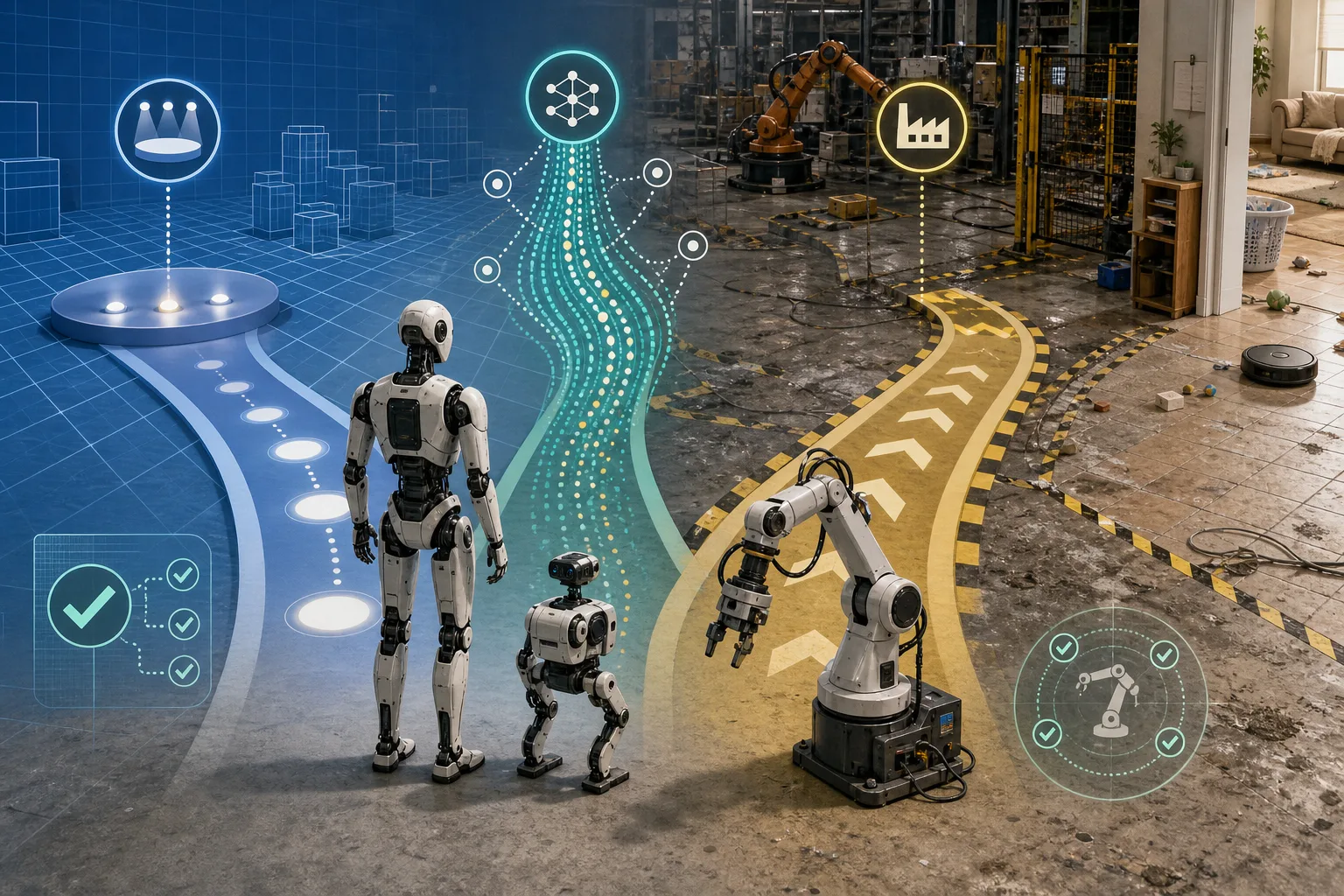
That is why the phrase “GPT-2 era” has been resonating around robotics. In a late-August TechCrunch piece about robot brain builders, Harry Mellsop of Antioch used the phrase to describe a field that is visibly progressing but has not yet reached its broad breakthrough product moment. Foxglove CEO Adrian Macneil offered a different analogy: robotics may not get one clean ChatGPT moment at all, but something closer to an Apple II or IBM PC moment, when useful machines and developer tools begin to spread before the mass market fully understands what category has arrived.
The distinction matters. Text AI scaled quickly because the internet provided enormous training data, software failures usually do not break physical objects, and a better model can be deployed globally overnight. Robots live in the physical world. They fall, collide, jam, miss grasps, drain batteries, require sensors and actuators, need maintenance, and must recover safely when reality differs from simulation. A chatbot with an 80% answer rate may still be useful. A warehouse robot or home assistant that completes a task 80% of the time may be a liability.
The bottleneck is not only intelligence
The robotics debate is often framed as “when will the brain be good enough?” That framing is too narrow. A robot’s intelligence is inseparable from its body, sensors, grippers, batteries, compute, safety envelope and deployment environment. A navigation model trained for one camera, height, field of view and floor texture does not automatically become a competent warehouse picker. A dexterous model that works on a lab table does not automatically handle crumpled packaging, reflective metal, wet floors, poor lighting and impatient humans.
TechCrunch’s reporting captured the tension between brain-first and co-design strategies. Wayve’s Alex Kendall argued that it is too early to commit to one robotics hardware platform. Genesis AI’s Théophile Gervet argued that a pure brain strategy is also premature because embodiment still matters. That disagreement is healthy. It means the industry has moved beyond asking whether large models can help robots and into the messier question of how model, data and hardware should evolve together.
Data is the most stubborn part. Autonomous vehicles advanced partly because human-driven cars can collect huge volumes of relevant driving data. General-purpose manipulation is harder. There is no web-scale public corpus of humans safely loading dishwashers, opening doors, sorting unknown objects, picking fragile items and recovering from mistakes from every useful camera angle and robot body. Simulation helps, but sim-to-real transfer remains a technical and economic problem, not a solved detail.
What the frontier demos show
Google DeepMind’s Gemini Robotics 2 is an important signal because it extends the vision-language-action robotics agenda toward whole-body control, dexterity, multi-robot collaboration and embodied reasoning. DeepMind says the system includes a VLA model for motor control, Gemini Robotics ER 2 for embodied reasoning, and Gemini Robotics On-Device 2 for local robotic devices. It also emphasizes safety benchmarks and adaptation to new robot embodiments with relatively small amounts of additional data.
That is real progress. It suggests robotics models are becoming better at connecting instructions, perception and physical action. It also shows how early the market still is. Some components are in public-facing developer environments, while VLA and on-device models are available to early-access partners. The difference between research capability, partner preview and broadly deployable product is not a footnote. It is the difference between a promising platform and something a factory manager can buy with uptime expectations.
Mistral’s Robostral Navigate is another useful example. Mistral describes it as an 8B navigation model using a single RGB camera, without LiDAR or depth sensors, and reports 76.6% success on R2R-CE validation unseen. That is interesting because navigation is a commercial path into service robots, delivery systems and indoor autonomy. It also highlights the metric problem: a strong benchmark result is not the same as reliable operation in a hospital corridor, hotel, warehouse or apartment building. The closer a robot gets to people, the more “usually works” becomes inadequate.
Microduck is not just a cute robot
Microduck, the small biped from Pollen Robotics and Hugging Face, is easy to dismiss as a charming developer toy. That would miss its importance. The project is inexpensive by robotics standards, about 25 cm tall, under 800 grams, available for preorder at $399 before taxes and shipping, and ships with trained moves. Pollen says it provides an SDK, simulation and reinforcement-learning stack, with repositories on GitHub under Apache-2.0.
The Hacker News discussion around Microduck was large because developers see a different kind of promise there. A safe, low-cost, hackable robot can put embodied AI experimentation into classrooms, maker spaces and small labs. It cannot replace an industrial arm or a warehouse robot. It can, however, create a broader community of people who understand policies, simulation, batteries, sensors, gait, recovery and the annoyance of making a model work twice in a row on real hardware.
That may be closer to the Apple II analogy than the humanoid demo video. Robotics may need many small developer platforms before it has general-purpose household machines. Cheap hardware will not solve the data problem alone, but it can expand who produces experiments and who understands the gap between simulated success and physical reliability.
Humanoids still have to prove business value
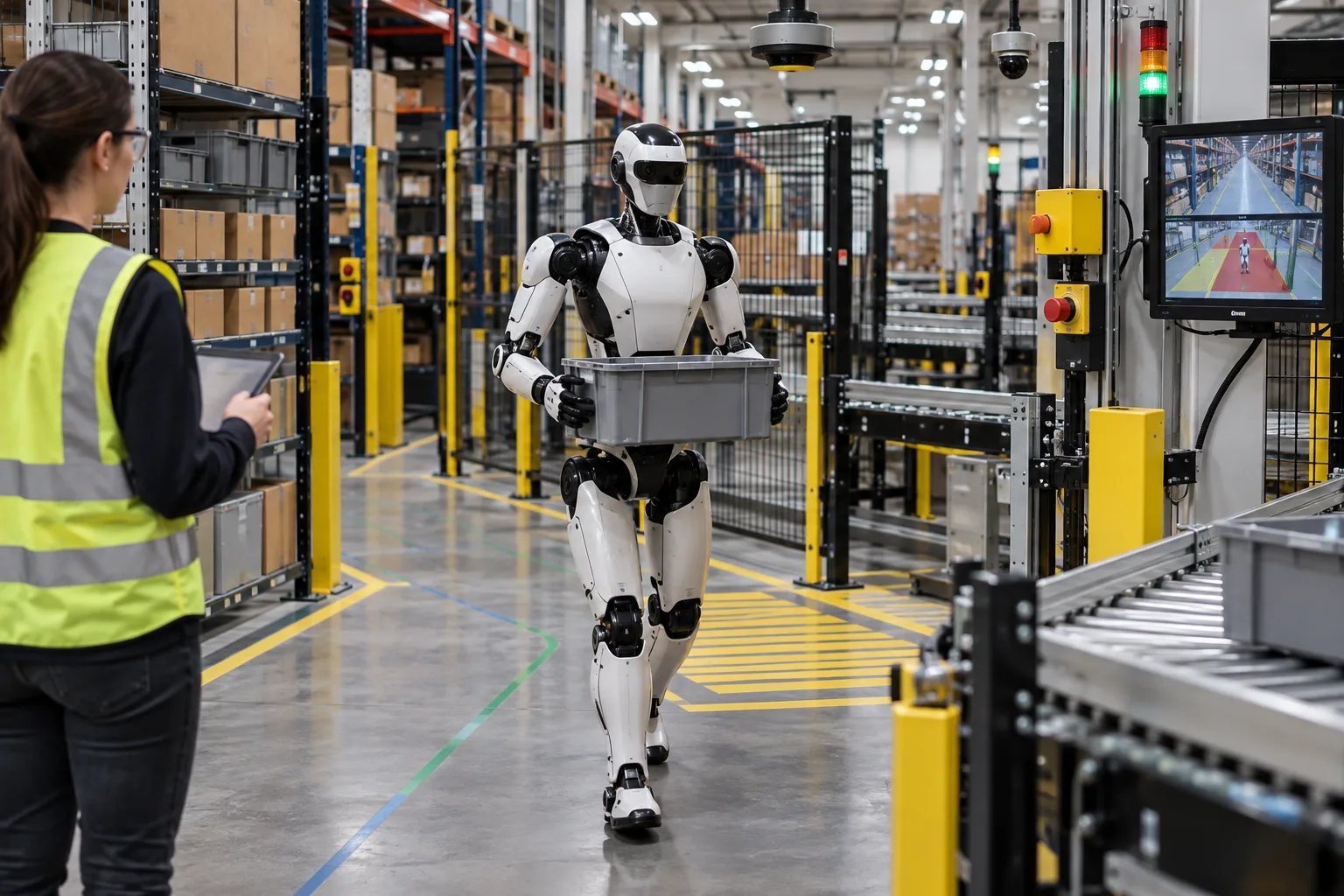
Humanoid robots attract attention because they fit human environments and investor narratives. Stairs, handles, shelves, tools and workstations were designed around bodies roughly shaped like ours. A general-purpose humanoid is therefore a powerful story: instead of rebuilding the world around robots, build robots that can use the world as it is.
The commercial proof is thinner. The Robot Report’s coverage of Unitree’s market moment shows why. Unitree’s IPO and share performance made it a reference point for affordable humanoids, and reported humanoid sales grew sharply from 2023 to 2025. But a large share of those sales went to universities and research institutions. That is not a failure; it is a sign of a market still heavy with research, pilots and platform buying rather than repeat industrial deployments.
Customers do not buy a humanoid because it looks general. They buy automation because it reliably solves an expensive problem. If a narrow machine loads trays, inspects parts, moves bins or cleans floors with high uptime and clear support costs, it may beat a humanoid that is more exciting but less dependable. The likely path is not humanoids versus vertical robots as a simple war. It is vertical deployments producing revenue, data and safety lessons while general platforms gradually improve.
The boring market is already buying robots
The contrast with industrial robotics is useful. A3 data reported by The Robot Report showed North American companies ordered 8,940 robots worth $622 million in Q2 2026, with units up 4.3% and revenue up 21.3% year over year. First-half orders reached 17,995 units worth $1.166 billion. Non-automotive customers accounted for 56% of Q2 units, showing diversification beyond the old automotive center of gravity.
These are not the flashiest robots, but they reveal what buyers reward: repeatability, uptime, integration, service, safety and return on investment. Electronics, life sciences, food, consumer goods, logistics and healthcare do not need a philosophical answer to general intelligence. They need automation that fits a task, survives the environment and can be supported by real operations teams.
That is the practical lesson for investors as well. The robotics companies that matter may not be the ones with the most cinematic humanoid videos. They may be the ones with data pipelines, deployment discipline, service models, safety certification, fleet monitoring and customers who reorder because the robot saved money.
How to read robotics demos in 2026
Start with the task. What exactly did the robot do, and how many times did it do it? Was the environment controlled? Were objects known in advance? Who reset the robot after failure? Was the demo sped up, edited or teleoperated? Did the robot recover from a mistake, or did the clip stop before recovery mattered?
Then ask about success rate in the real deployment domain. A benchmark can be useful, but customers need repeated performance under dust, glare, network outages, worn parts, changing layouts and human interruptions. For a home robot, safety and trust matter more than novelty. For a factory robot, uptime and maintenance beat charm. For a drone or autonomous vehicle, failure modes can become public-safety questions.
Ask what data the robot collects. Cameras in homes, warehouses and streets create privacy and security obligations. Ask how updates are validated. A software model update can change physical behavior. Ask how the system logs actions, detects uncertainty and hands off to a human. Ask whether a simpler conveyor, fixture, cobot, drone, AMR or inspection tool would solve the problem with less risk.
What comes before the robotics breakthrough
The next leap is likely to look less like one viral product and more like a pile of unglamorous improvements: better datasets, cheaper actuators, stronger simulation, easier policy training, safer recovery, robust perception in messy environments, clearer benchmarks, standard test protocols, better fleet telemetry and deployment teams that know how machines fail.
Open platforms matter here. Microduck-like systems can make robotics more accessible. Public benchmarks and reproducible training stacks can reduce the distance between labs and developers. But openness also has limits if the best data, models and deployment logs remain locked inside private fleets. The field needs both commercial investment and shared infrastructure.
The most useful mental model is patience without cynicism. Robotics is not failing because it lacks magic. It is hard because physical work is hard. The progress in Gemini Robotics 2, Robostral Navigate, Microduck and industrial demand is real. The hype becomes dangerous only when viewers mistake a successful clip for a reliable product.
The practical verdict
Robotics is not waiting for one perfect ChatGPT moment. It is building toward a world where enough robots are cheap, safe, programmable and dependable that developers and customers stop treating every successful demo as a surprise. That may arrive first through industrial automation, education platforms, narrow service robots and partner pilots, not through a general humanoid that suddenly does everything.
For buyers, the checklist is simple: define the job, demand real deployment metrics, price maintenance, inspect safety and privacy, ask who resets failures, and compare against narrower automation. For developers, the priority is data and reliability, not only larger models. For investors, the signal is repeat customers, not just social reach.
The robot industry is moving. It just has to become boringly reliable before it can become truly ordinary.
Related articles
Xiaomi-Robotics-1 tests whether household robots can finally scale
A 100,000-hour robot foundation model points beyond flashy demos, but the hard test is reliability in messy real homes.
Needle 2 puts a 14 MB action model near robots — and raises the safety bar
Cactus Compute’s tiny tool-calling model points to faster private control for devices, but physical robots need refusals, policies and confirmations as much as speed.
Agility’s October Pivot: Why Humanoid Robots Now Need a Safety Architecture Around the Machine
Agility’s new defense-policy role and its expanded safety partnership with FORT Robotics point to the same practical lesson: humanoid deployment will depend as much on external controls, operating procedures, and accountability as on the robot’s learned skills.
Qualcomm’s PickNik Deal Puts Open Robot Motion Planning at the Center of Physical AI
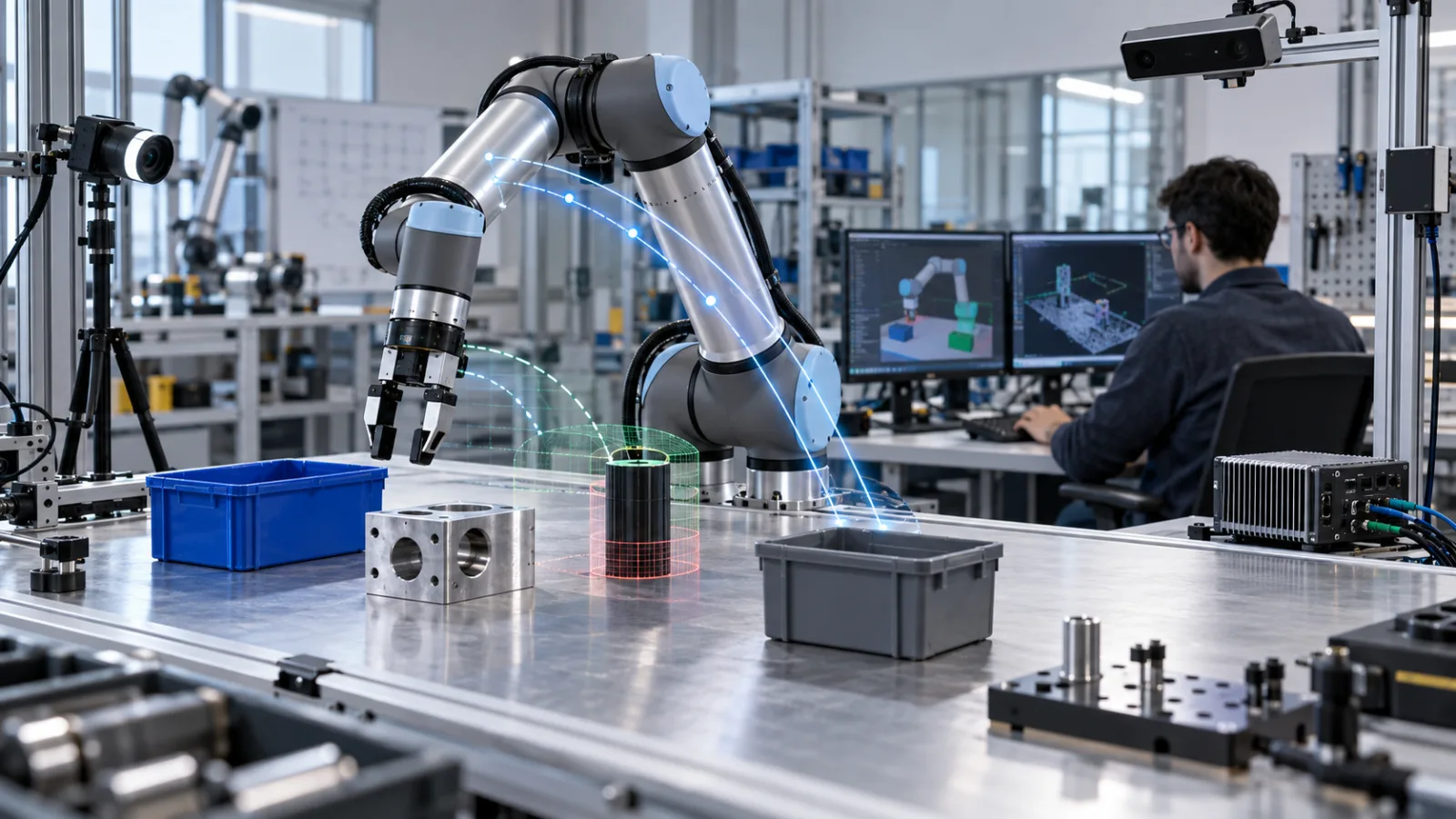
Qualcomm’s planned acquisition of PickNik is less about buying a robot than owning a critical layer beneath many of them. The outcome will depend on whether MoveIt can gain hardware acceleration without losing the openness that made it useful.
Comments
Sign in to comment.
No comments yet.