Gemini Robotics 2 is impressive, but physical AI still has to prove itself outside the demo
DeepMind’s new robotics models point toward more capable robot agents, but public access, safety, hardware and economics still separate the demo from deployment.
Google DeepMind's Gemini Robotics 2 announcement is easy to read as another "AI gets a body" moment. The videos show humanoids, dual-arm platforms and robot orchestration. A robot watches a scene, follows progress, adjusts when an object moves, and coordinates with another machine instead of simply replaying one motion.
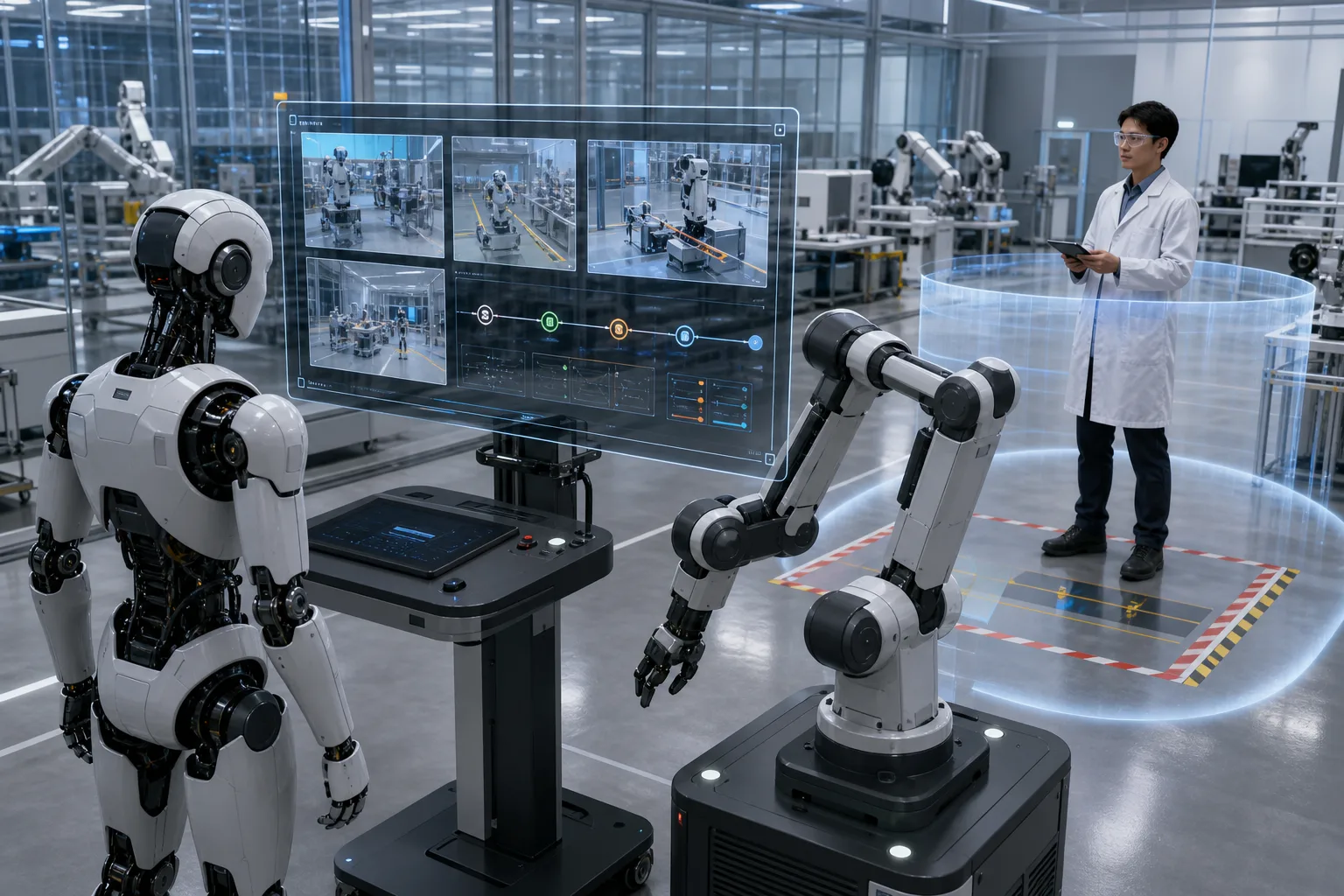
That is real robotics progress. It is also not the same as a robot you can buy for a home, a warehouse aisle, or an eldercare facility next quarter.
The careful reading matters because the launch sits at the center of the current robotics argument. One side sees general-purpose physical AI finally leaving research videos. The other sees controlled demos, limited access, slow motion, uncertain hardware economics and a safety problem much harder than chatbot moderation.
What Google actually announced
DeepMind describes Gemini Robotics 2 as a family of three models. Gemini Robotics 2 VLA is the vision-language-action model that turns visual and language input into robot actions. Gemini Robotics ER 2 is the embodied reasoning model that reads video, understands instructions, tracks progress and can call tools or robot APIs. Gemini Robotics On-Device 2 is a lower-latency VLA intended to run locally on a robot.
The access story is narrower than the videos suggest. Google says Gemini Robotics ER 2 is available to developers through the Gemini API and Google AI Studio, with endpoints such as gemini-robotics-er-2-preview and a streaming preview for the Live API. The VLA action model and the On-Device model are limited to early-access partners. Ars Technica made that point plainly: the release includes three models, but only one is publicly available right now.
That difference should shape expectations. Developers can experiment with embodied reasoning, video understanding and tool orchestration. They generally cannot download the full action stack that moved the showcased humanoid.
Why the demos still matter
The interesting part is not just that a humanoid moves. Boston Dynamics and others have shown striking movement for years. The more important claim is that the higher-level model can watch continuous video, understand what step a task is in, decide when to move on, and recover from small changes in the scene.
Google's developer material gives two useful numbers. For progress classification, Gemini Robotics ER 2 reaches 57.4% accuracy. For moment finding, it reports 91.3% accuracy and 0.96 seconds mean absolute distance. Those numbers point in opposite emotional directions. Moment finding looks useful. Progress classification at roughly 60% is better than earlier systems, but it is not a number you would trust alone around people, inventory or expensive equipment.
DeepMind also shows more than one body. The announcement mentions Apptronik's Apollo 2 humanoid, Franka Duo-style bi-arm work, Boston Dynamics Spot-related API orchestration, dexterous manipulation and multi-robot collaboration. The point is not one magic robot. The point is a stack where an embodied reasoning model can sit above robot bodies, tools and lower-level controllers.
That architecture is more plausible than the cartoon version of "an LLM directly drives every motor." In a practical robot, fast control loops still belong close to the hardware. The reasoning layer can decide that the part has rolled away, the container has moved, the gauge reading is uncertain, or the next step should pause. Then a VLA, controller, robot API or human operator handles execution.
The Hacker News reaction was a useful stress test
The Hacker News thread for the DeepMind post had 609 points and 515 comments when checked. That matters less as popularity than as a map of doubts.
Several commenters asked what robots like this can do outside a staged scene: turn awkward doorknobs, recover from falls, avoid bumping into furniture, deal with objects whose names and positions are ambiguous, and keep working when something simple goes wrong. Others focused on actuators and speed. Slow movement may be partly a safety choice, but slow robots make many useful jobs uneconomic. Fast robots, especially humanoids, raise a much sharper safety problem.
The home-robot debate was even more split. Some people said they would pay tens of thousands of dollars for a capable household assistant. Others argued that most home tasks do not need a humanoid at all. Floors can use dedicated cleaners. Deliveries can use storage systems. A specialized arm or mobile base may beat a human-shaped machine for many chores. One blunt objection was privacy: a robot in a home is a camera, microphone and moving machine in private space. If it needs cloud control, the trust bar gets higher.
There was also the familiar Google-platform worry. Some developers are reluctant to build long-term systems around a Google API because of past product shutdowns and support churn. That is not a robotics fact, but it is a deployment fact. Factories and warehouses do not want their operations tied to an interface that might be renamed, restricted or retired in two years.
Safety is the real test, not the video
DeepMind paired the release with ASIMOV-Agentic, a safety evaluation dataset and harness hosted on Hugging Face, plus a safety technical report. The benchmark covers safety tool calls, human safety monitoring, feasibility prediction, uncertainty and cases where an agent should ask for human intervention.
That framing is the right one. A robot mistake is not just a wrong paragraph. A humanoid can knock over a shelf, pinch a hand, damage a product, trip a person or make an emergency worse by moving when it should stop. The useful question is not "can the robot complete the chore in a video?" It is "does it know when not to act?"
The Ars Technica report emphasized the same point: Gemini Robotics ER 2 can detect when humans are nearby and trigger a safe stop. Hacker News commenters immediately noticed the tradeoff. If the robot stops whenever a person is close, then close-contact care, housework around children, restaurant service and collaborative assembly need a more subtle control layer than a simple safety bubble.
Benchmarks help, but they are not deployment. A factory pilot still needs physical guards, risk assessment, emergency stops, operator training, logging, maintenance plans and a clear handoff to humans. A home robot needs all of that plus privacy, consent and a way for a non-engineer to understand what the robot is doing.
Where this is likely to land first
The first useful deployments are probably not kitchens and laundry rooms. They are more likely to be controlled environments: labs, warehouses, inspection routes, facilities work, manufacturing cells and places where a robot can be supervised, geofenced and measured against a business case.
Businesses can justify an expensive robot if it saves labor on repetitive work, reduces injury, operates across shifts or handles tasks in spaces designed for humans. They can also tolerate a staged rollout: one process, one building, one safety case, one operations team. Homes are harder. They are cluttered, socially sensitive, full of pets and children, and financially unforgiving. A $20,000 home robot competes with appliances, cleaning services, family labor and simply doing nothing.
Humanoid form factors make sense when the environment is already built for humans: stairs, doors, shelves, carts, handles and tools. But humanoid shape is not automatically the best engineering answer. For many jobs, a wheeled base with one arm, a fixed robot arm, an automated mobile robot, a drone or a custom machine will be cheaper, safer and easier to maintain.
What to watch next
The next evidence will not be another polished demo. Watch for independent trials, partner pilots, public failure videos, maintenance data, task-level success rates, teleoperation disclosure, latency measurements, cost per hour and safety incidents. Watch whether developers can use ER 2 to build real robot agents through the Gemini API, or whether the meaningful capabilities remain behind partner access.
Also watch the on-device claim. Local robot intelligence matters because latency, connectivity and privacy all get worse when a robot depends on a remote model for decisions. If On-Device 2 can adapt to a new bi-arm robot with a few hours of data and fewer than 200 examples, as DeepMind says, that could matter a lot. But until outside teams can test it on messy hardware, it is a promising claim rather than an operational fact.
The honest read is balanced. Gemini Robotics 2 shows that robot reasoning is getting better: video understanding, progress tracking, tool orchestration, multi-robot coordination and safety-aware refusal are the right ingredients. It also shows how far the field still has to go. The brain is improving faster than the proof of everyday deployment.
That makes it worth covering. It does not make "physical AGI" a product category yet.
Related articles
Robotics is still waiting for reliability, not another demo video
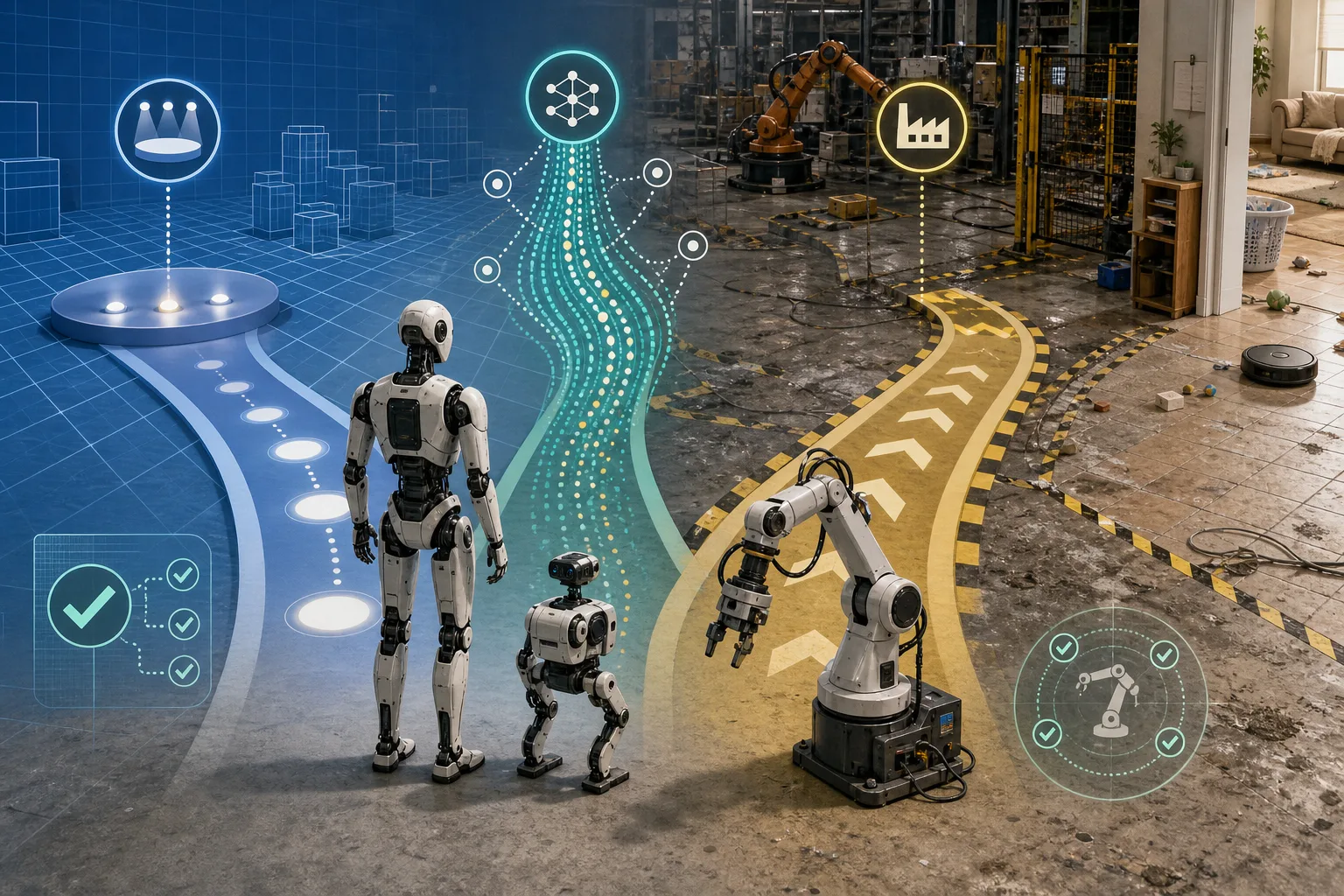
Physical AI has better models, cheaper developer robots and stronger industrial demand. The missing breakthrough is not spectacle — it is dependable work in messy real environments.
Before switching to Gemini for Home, treat it like a whole-home migration
Google’s smart-home AI assistant may make Nest speakers more useful, but the official no-return rule changes the risk. Check devices, people, routines, subscriptions and fallbacks before one click changes the voice layer of the whole home.
Робототехнике нужен не новый демо-ролик, а надёжность
Physical AI получает модели, дешёвые платформы и заказы, но настоящий рубеж — полезная работа в реальной среде, а не эффектное видео.
La robótica no necesita otro vídeo: necesita fiabilidad
La IA física tiene mejores modelos, robots de desarrollo baratos y demanda industrial. El salto pendiente es trabajar con fiabilidad en entornos reales.
Comments
Sign in to comment.
No comments yet.