Should You Buy During Amazon Prime Big Deal Days 2026? Check the Price History Before the Countdown Wins
Amazon’s October 6–7 sale can produce worthwhile discounts, but the Prime badge is not a buying recommendation. Here is how to decide whether an advertised deal beats the product’s normal price, a rival retailer, and the cost of waiting for November.

Amazon’s Prime Big Deal Days returns on October 6 and 7, 2026. It is a useful date to have on the calendar if you already need something, but it is a poor reason to start shopping. The event is designed to make a large catalog feel temporarily urgent: early offers are already appearing, countdowns will multiply, and percentage-off labels will compete for attention. None of those signals answers the question that matters: is this item unusually cheap for this exact model, in this exact condition, from this exact seller?
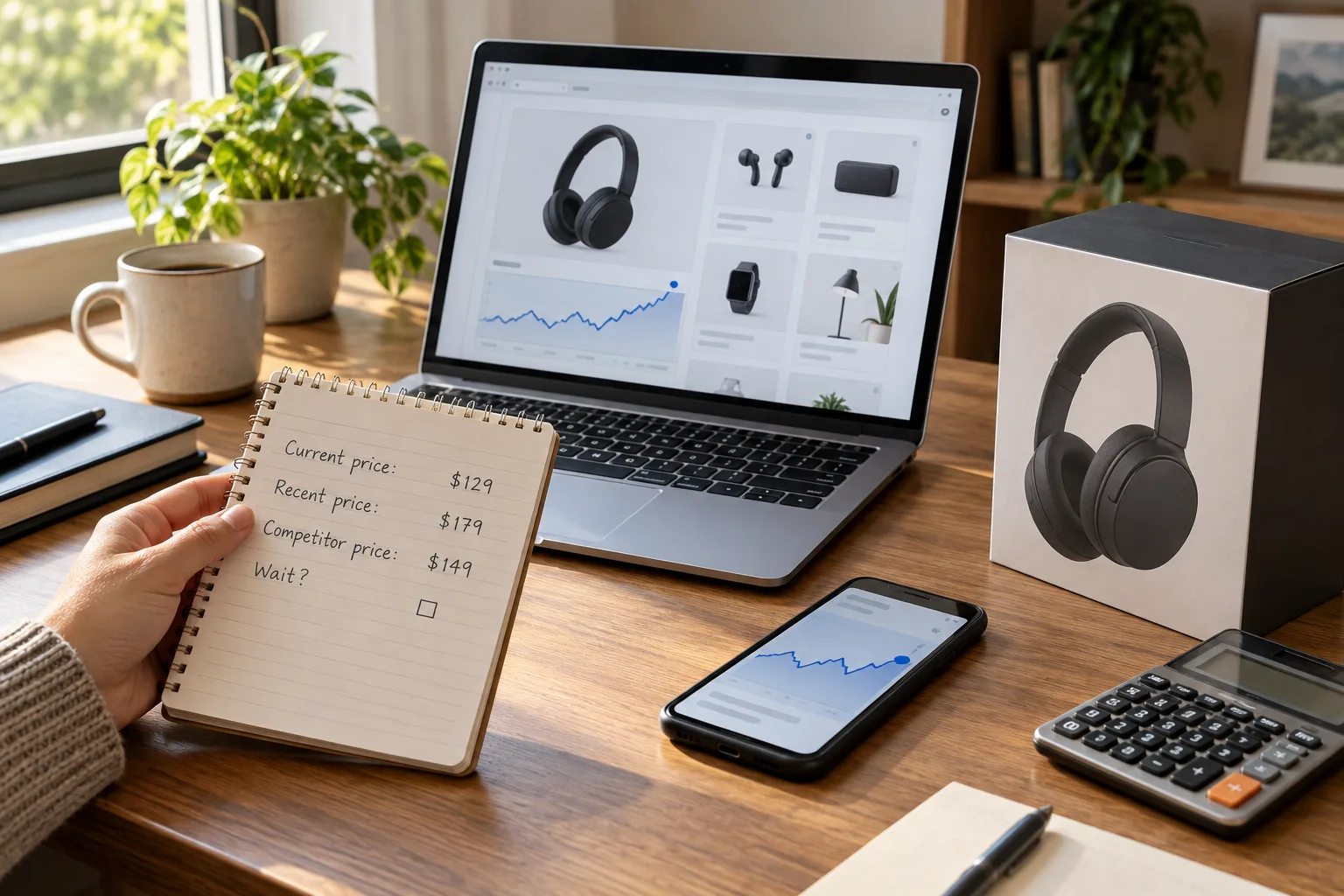
The short answer is conditional. Buy during the event when you have a specific need, have checked the item’s recent price history, and can verify that the total cost is lower than credible alternatives. Wait when the purchase is discretionary, the discount is calculated from a suspicious reference price, the listing is sold by an unfamiliar marketplace seller, or the product is likely to receive a larger November promotion.
Amazon says the 2026 event will run for 48 hours across more than 35 categories and will be reserved for Prime members. The company advertises fast, free delivery as part of the event, while the US Prime price is currently $14.99 per month or $139 per year; eligible customers can also use a 30-day trial. Those membership terms matter because a discount is not necessarily a saving if it requires joining for a purchase you would not otherwise make. Amazon’s announcement confirms the dates, access conditions, and current membership options.
The Prime badge is an event label, not a value judgment
A Prime Deal badge tells you that Amazon has placed a product inside the sale mechanism. It does not tell you that the item is at its lowest price, that the reference price is realistic, or that the product is the best version available. The same product may have sold for less during an ordinary weekend, during the summer Prime event, at another retailer, or through a manufacturer promotion.
This distinction is easy to lose because sale pages compress several different claims into one visual package: a crossed-out price, a percentage discount, a colored badge, a timer, and a message about limited stock. Treat those as separate pieces of information. The crossed-out number is a comparison point, not proof of what most shoppers recently paid. The percentage is only as meaningful as that comparison point. The timer tells you about the promotion’s schedule, not about the product’s quality or future price.
Price-tracking research from Thrifle illustrates why a large event should make shoppers more methodical, not less. Its analysis of more than 121,000 products during the 2026 summer Prime event found that most tracked products did not move during the event, while some became more expensive; a smaller group fell in price. In a separate review of promoted deals, the publication reported that many advertised prices had already been established before the event. The exact numbers come from an independent tracking project rather than Amazon’s own catalog data, so they should not be treated as a universal forecast for October. They do, however, support a sensible rule: do not infer a bargain from the sale label alone. Thrifle’s product-level analysis explains its methodology and limitations.
The first test: would you buy the item without the sale?
Before opening a deal page, write down the problem you are trying to solve. “I need a quiet vacuum for a small apartment” is a buying brief. “I want something from the electronics deals page” is not. A clear brief prevents the event from turning a modest need into a cart full of substitutes, accessories, and upgrades.
Ask four questions:
- What job must the product perform?
- What is the maximum total price, including accessories, delivery, tax, and any required subscription?
- What flaws would make you return it?
- How long can you wait?
If you cannot answer the first question, do not use a countdown to manufacture an answer. If you cannot name a maximum price, the percentage discount will become the budget. That is how a $40 saving can become a $160 purchase.
There is also a useful distinction between replacement and expansion. A failed router, an empty printer, or a winter coat needed for a trip can justify buying during a sale because delay has a cost. A second monitor, a more expensive set of earbuds, or a smart-home device added because it is “only” 35% off needs a higher standard. The event should reduce the cost of an existing decision, not create the decision.
The second test: compare the real price, not the advertised percentage
The relevant comparison is the amount you would have paid for the same item under normal conditions. Record the current price and compare it with several points:
- The product’s recent price history, preferably covering at least several months.
- The lowest credible price for the same model and capacity at a competing retailer.
- The price of the current generation’s direct predecessor, if the differences are not important to you.
- The likely cost of ownership, including subscriptions, consumables, proprietary chargers, filters, replacement parts, or extended warranty.
Use the exact model number. Marketplace listings often place similar products beside one another: a lower-capacity storage device, an older television size, a regional variant, a bundle with fewer accessories, or a renewed unit can look like the same deal in a search result. A comparison based only on a product name is not enough.
A simple calculation is more useful than the headline percentage:
real saving = normal recent price - today’s delivered price

first-year cost = delivered price + required extras + subscriptions

value of waiting = expected future saving - the cost of delaying the purchase
The third line is not a precise prediction. It is a reminder that time has value. If you need a laptop for work next week, waiting for a possible November discount may be irrational. If you are replacing a functioning television because a sale page made the upgrade look urgent, waiting costs almost nothing.
What the 2026 event is likely to be good for
Amazon’s event covers a broad range of products, but broad coverage does not mean every category has equal buying logic. The strongest candidates are usually products with stable model numbers, transparent specifications, frequent competition, and prices that can be tracked easily.
Routine replacement items
Batteries, storage cards, charging cables from reputable brands, replacement filters, basic kitchen equipment, and other items you already use can be sensible purchases when the price is genuinely below its normal range. The key is to avoid stockpiling beyond your realistic consumption. A discount on a consumable is not a saving if half the pack expires, the standard changes, or you buy a quantity that ties up money for months.
Check compatibility before ordering. Filters and printer supplies often have nearly identical names across generations. A product page may offer a cheaper multipack, but the apparent saving disappears if it does not fit the device you own.
Mature electronics with clear alternatives
Older headphones, monitors, tablets, routers, and streaming devices can become good buys when a new generation has made the previous one easier to find at a lower price. These products are safer than speculative launches because independent reviews and owner reports already reveal their weaknesses.
The qualification is important: “older” does not automatically mean “good value.” Check software support, battery condition, port standards, wireless compatibility, and repair or replacement-part availability. A cheap device that is already missing a necessary feature can be more expensive than a slightly newer model bought elsewhere.
Amazon hardware, with a privacy and ecosystem check
Kindle readers, Fire tablets, Echo speakers, Ring equipment, and other Amazon-linked products frequently receive prominent event pricing. These can make sense for someone already comfortable with the associated account, app, and cloud services. They are less obvious purchases for someone trying to keep devices independent of one company.
The purchase price is only one part of the decision. Review what data the device collects, which features require a subscription, how long software updates are likely to continue, and whether the product remains useful if you stop paying for the service. A discounted camera with a recording subscription can be more expensive over two years than a camera with a higher upfront price and no recurring charge.
Home appliances only after a specification check
Large appliances and small kitchen appliances can appear attractive during October sales, but the event is not a substitute for model research. Check dimensions, electrical requirements, warranty terms, noise measurements, replacement parts, and the return process for heavy or installed goods. A low online price loses its appeal if a return requires repacking a 70-pound appliance or paying for freight.
For an appliance, search the full model number rather than relying on the product title. Retailers sometimes receive exclusive variants with a different control panel, accessory package, or internal specification. “Exclusive” does not mean inferior, but it makes price comparison harder.
What deserves extra caution
Some categories are particularly easy to buy badly during a major sale.
Unknown-brand electronics
A large discount on a no-name charger, power bank, camera, security device, or smart plug is not necessarily a large saving. Assess electrical safety certifications, warranty support, firmware-update practices, app permissions, and the seller’s identity. Reviews can be difficult to interpret when several products share one listing or when older reviews describe a different version.
For anything connected to mains electricity, storing sensitive footage, or charging an expensive device, a discount should never outweigh uncertainty about safety and support.
Beauty, supplements, and health-adjacent products
Check expiration dates, storage requirements, manufacturer authorization, and the difference between “sold by Amazon,” “sold by the brand,” and “fulfilled by Amazon.” Fulfillment concerns shipping; it does not guarantee that the seller is the manufacturer or that every claim is reliable.
Be particularly skeptical of products that promise medical outcomes, rapid body changes, improved cognition, or protection from disease. A sale price does not strengthen the evidence behind a health claim.
Clothing and fit-dependent purchases
A low price is less useful when returning the item is likely. Read the actual garment measurements, not just the nominal size, and check whether the return policy covers the seller and category. Marketplace and international listings can have different rules from items sold directly by Amazon.
Furniture and oversized goods
Look beyond the product photograph. Verify dimensions in the room, material descriptions, assembly requirements, delivery method, damage procedures, and the cost of returning the item. A sale is not a bargain if the product cannot be returned without paying more than its value.
The seller and listing audit
Before checkout, inspect the “sold by” and “fulfilled by” lines. They answer different questions. The seller is the party offering the item; fulfillment describes who stores, packs, and ships it. A familiar brand name in the title does not prove that the seller is authorized.
Look for:
- An exact model number and manufacturer warranty.
- A seller with a long, credible history in the relevant category.
- A return policy that applies to this listing, not merely to Amazon purchases in general.
- Reviews that clearly belong to the same model and generation.
- Product photographs and specifications that agree with the manufacturer’s page.
- No unexplained mismatch between the title, bullet points, package contents, and technical specifications.
If the listing changes seller or condition when you select a color, size, storage tier, or bundle, repeat the audit. Variants can silently change the warranty, delivery date, and return terms.
Prime membership changes the arithmetic
For a single purchase, joining Prime solely to obtain a deal deserves a calculation. At $14.99 per month, the membership may be justified by the combined value of delivery, other planned purchases, streaming, reading, or household use. It is not automatically justified by a badge that saves $12 on an item you had not planned to buy.
The annual $139 option is cheaper than twelve monthly payments, but only if you will use Prime through the year. A trial can be useful when the terms suit you, but set a reminder before renewal and read the cancellation conditions. The least expensive membership is the one you actually intend to keep.
Also separate shipping value from discount value. Free delivery can be convenient, but the item may be available at a similar total price from a retailer that offers free shipping without a membership. If another seller charges $5 for delivery but sells the product $20 cheaper, Prime is not saving you money.
Should you wait for Black Friday?
October Prime Big Deal Days is close enough to the holiday season that waiting can be reasonable, but there is no universal rule that November will be cheaper. Some products hit their best price during an early event, then rise again. Others receive deeper discounts later, especially when retailers clear old inventory or respond to competing promotions. Popular products can also sell out or become difficult to obtain in the desired configuration.
Use a wait decision based on urgency and price history:
- Buy now if the product is already at or near its tracked low, you need it soon, and the return policy gives you a safe exit.
- Wait if the price is ordinary, the item is a discretionary upgrade, and you are willing to compare November offers.
- Buy from the retailer with the better total package if the price is close: a longer return window, stronger warranty, local pickup, or easier support can be worth more than a small discount.
Do not treat Black Friday as a promise. Treat it as an additional comparison point. A good October price remains good if it solves a real problem at a price you have already verified.
A practical checklist for October 6 and 7
Prepare a shortlist before the sale begins. Save the exact model numbers, your target prices, and the maximum price you will accept. If a product is not on the shortlist, add it only after answering the same questions as every planned purchase.
When the event starts:
- Confirm the model, condition, capacity, and included accessories.
- Check the seller and the applicable return policy.
- Compare the delivered price with at least one competing retailer.
- Review a price-history chart or other historical evidence.
- Add the cost of subscriptions, consumables, accessories, and membership.
- Read recent critical reviews for recurring faults, not only the average star rating.
- Decide whether you would still buy the item without the countdown timer.
Keep a screenshot or note of the price and terms if the purchase is expensive. Prices, sellers, and delivery estimates can change, and an accurate record makes customer support easier if the listing changes after checkout.
The verdict
Amazon Prime Big Deal Days 2026 is worth using as a shopping window, not as a shopping mission. It is most useful for planned replacements, mature products with transparent pricing, and items already on a researched list. It is least useful for impulse upgrades, unfamiliar electronics, subscription-dependent devices, and anything whose discount depends on an inflated “was” price.
The best purchase may be an October deal. It may also be a normal-price purchase from another retailer, a refurbished model with a trustworthy warranty, or no purchase at all. Start with the need, verify the historical price, audit the seller, and put the countdown in its proper place: it is a feature of the promotion, not evidence that the product belongs in your home.
Sources and further reading
- Amazon: Prime Big Deal Days returns October 6–7, 2026 — event dates, eligibility, categories, and membership pricing.
- Tom’s Guide: Amazon’s Prime Big Deal Days is official — current early-sale context and examples of products already being promoted.
- TechRadar: Early October Prime Day deals — reporting on early promotions and the timing of the event.
- Thrifle: We fact-checked Prime Day 2026 — independent price-history analysis and methodology.
- Wirecutter: How Wirecutter finds deals — editorial approach to price history, seller reliability, and deal evaluation.
- Consumer Reports: When are sales too good to be true? — broader consumer guidance on reference prices and sale claims.
Related articles
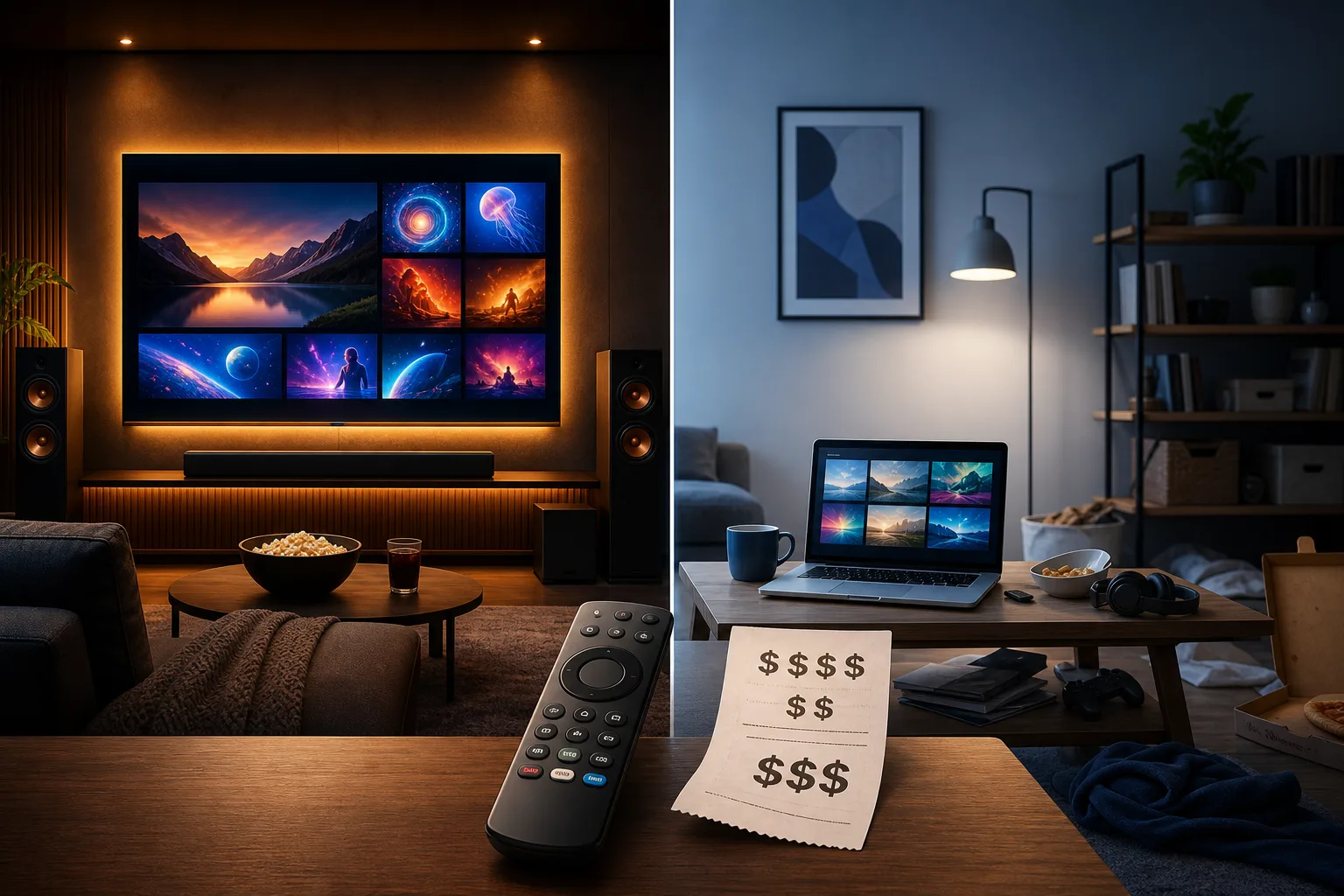
Should you pay for Prime Video Ultra?
Amazon’s $4.99 add-on removes most ads and puts 4K/UHD and Dolby Atmos behind a new tier. It is worth it for some home-theater users, not casual Prime viewers.
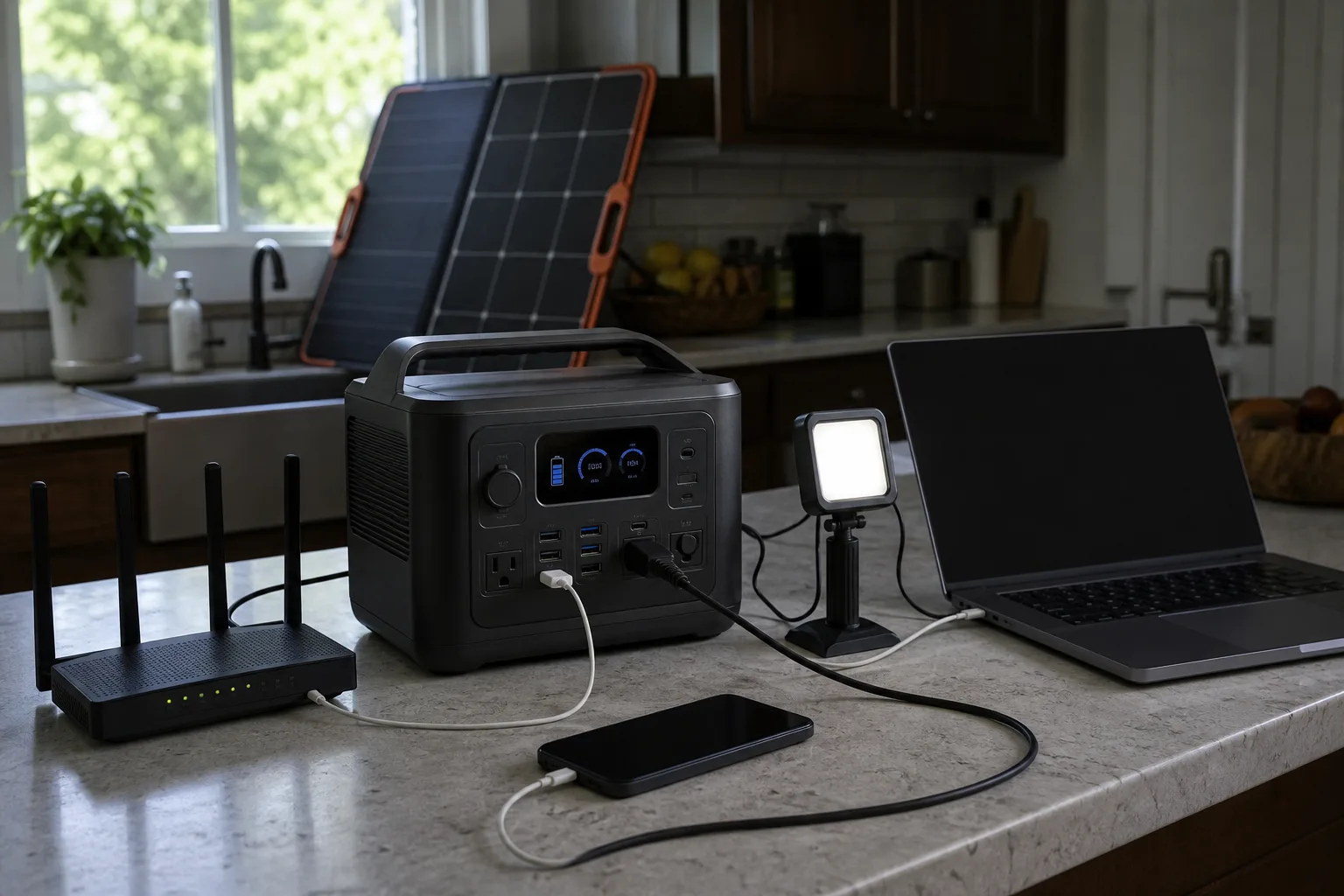
Should you buy a portable power station in 2026?
A practical verdict on portable power stations: when they help, when they disappoint, and what to check before spending money.
Should you buy a portable air conditioner in 2026?
A practical verdict on when a portable AC is a smart heat-wave backup and when it is just a loud compromise.


Back-to-school tablet for a child: the setup checklist before you buy
A calm, practical way to choose and prepare a child’s tablet, e-reader or shared device before school apps, travel and bedtime routines turn it into a daily argument.

Comments
Sign in to comment.
No comments yet.