Should You Buy the OPPO Find X10 on Launch Day? The Hardware Is Clear; the Regional Deal Is Not
OPPO’s Find X10 and Find X10 Pro Max arrive globally with unusually large batteries, 200MP camera systems, and ColorOS 17. The sensible choice depends less on the headline specifications than on your region’s price, battery capacity, warranty, and final configuration.

What OPPO is actually launching today
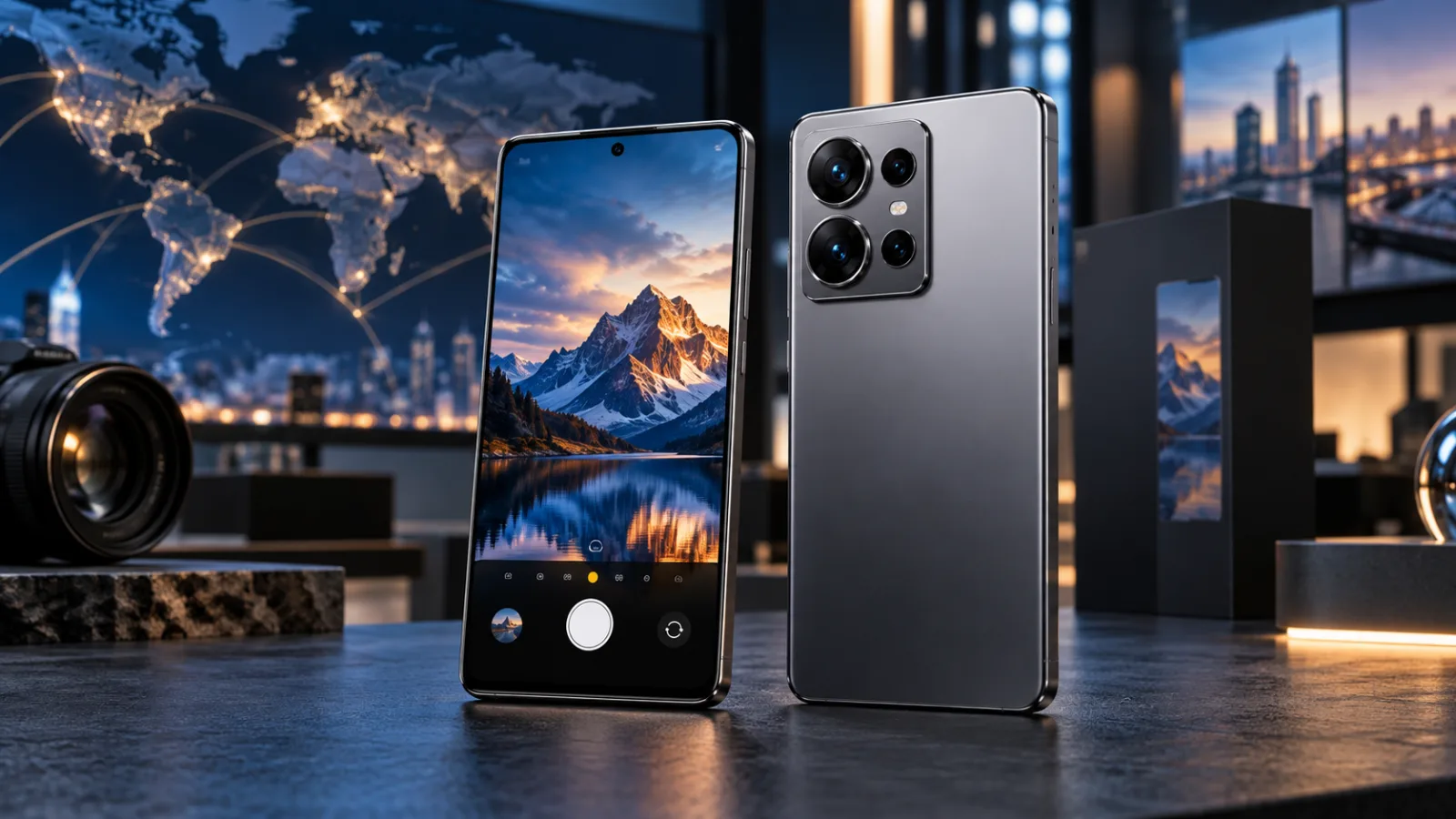
OPPO’s Find X10 series makes its global debut on October 21, with the Find X10 and Find X10 Pro Max positioned as premium phones built around three clear ideas: unusually large silicon-carbon batteries, Hasselblad-branded camera hardware, and ColorOS 17. The headline is straightforward. The buying decision is not. At launch, the essential distinction is between what OPPO has confirmed for the series and what belongs to a particular market, especially China. A specification that sounds universal in a presentation may still change by region, so the first question is not simply whether the phones look powerful. It is whether the version available to you is the version the headline describes.
The confirmed platform is high-end. OPPO says the Find X10 uses MediaTek’s Dimensity 9600M, while the Find X10 Pro Max uses the Dimensity 9600 Pro. Both models are presented with Hasselblad camera systems, but they are not identical: the Find X10 has a dual 200MP camera system, while the Pro Max is described as the first smartphone with a triple 200MP camera system. That gives the range a strong imaging focus, but it does not by itself establish that the larger model is the better buy. The exact price, configuration, and local support still determine whether the extra hardware makes sense.
ColorOS 17 is another part of the launch rather than a footnote. OPPO describes it as the latest version of its mobile operating system, with the Living Flow Design and AI Mind Pilot with Agent Mode. The software is therefore part of the product’s intended value: the Find X10 series is meant to combine flagship processing and camera hardware with a redesigned interface and system-level AI features. Those claims explain what OPPO is promising at launch, but they do not yet answer every practical question about everyday responsiveness, regional software behavior, or how useful the AI tools will be outside demonstrations.
Battery capacity is the most important qualification to the global headline. OPPO’s launch announcement describes both phones with an 8,000mAh silicon-carbon battery and says the series can deliver up to two days of typical use. The same announcement explicitly notes that capacity varies by market, with 7,150mAh batteries in selected markets. That is not a minor regional footnote. It means the capacity printed in a global announcement cannot be treated as proof of what every buyer will receive, particularly when battery life is one of the main reasons to consider this range.
The China-market specification page reinforces that point without replacing the global announcement. It lists the Find X10 with an 8,000mAh battery, MediaTek Dimensity 9600M, ColorOS 17, and camera hardware including 200MP main and telephoto sensors. It also lists several memory and storage combinations. Those details describe an official China configuration; they should not automatically be read as the specification of every international retail unit. The two sources can both be accurate while referring to phones sold under the same model name but with different regional arrangements.
That distinction matters because the Find X10 and Find X10 Pro Max are a series, not one interchangeable device. They use different named chipsets and different camera layouts, while battery capacity can vary according to market. A China specification cannot be assumed to describe a locally sold global model, and a global headline cannot be assumed to describe the unit offered by every retailer. The relevant object of comparison is the exact phone in the exact market, including its battery capacity, memory and storage tier, network compatibility, price, and warranty.
For launch-day buyers, the reliable conclusion is therefore narrower than the marketing headline. OPPO is launching a clearly specified premium series with powerful MediaTek platforms, Hasselblad-branded imaging, ColorOS 17, and batteries that are unusually large for flagship phones. But the launch does not make every regional version equivalent. Manufacturer claims establish the intended hardware and software package; they do not settle questions about camera processing, sustained performance, real-world endurance, or the consequences of importing a different model. Before ordering, the buyer needs to verify what the local listing actually contains.
The regional specification gap changes the buying decision
The most important launch-day detail is not the headline battery figure. It is whether that figure applies to the phone being sold in your market. OPPO’s global announcement presents the Find X10 series with unusually large silicon-carbon batteries, but it also notes that selected markets receive a 7,150mAh battery. That matters because the China-market Find X10 specification page lists an 8,000mAh battery. Both figures can be official at the same time, yet they describe different regional configurations.
This is the kind of difference that can disappear in a launch presentation and become decisive at checkout. A buyer comparing an imported Chinese Find X10 with a locally sold model may assume that the larger capacity, or the same overall hardware package, is available everywhere. The published specifications do not support that assumption. Before treating the Find X10 as a straightforward battery upgrade, check the exact capacity stated for the model number and market in which you intend to use it. The distinction is especially relevant if the global price appears close to the cost of importing a China-market device: the cheaper route may also be the one with a different battery configuration and a different support path.
The same caution applies to RAM and storage. The launch decision should be based on the complete regional configuration, not only the Find X10 name or the processor family. OPPO has confirmed the Dimensity 9600M for the Find X10 and the Dimensity 9600 Pro for the Find X10 Pro Max, but a processor designation does not establish the RAM, storage tier, or final retail bundle in every country. Those details affect the value calculation directly. A local version with less storage, a different memory configuration, or a different set of included accessories may not be comparable with an imported listing that uses a China-market specification sheet.
Pricing therefore needs to be read alongside configuration and purchase conditions. A launch price is meaningful only when you know which model it covers, what storage tier is included, whether launch gifts or trade-in benefits apply, and when the phone can actually be delivered. OPPO’s UK early-bird terms, for example, separate the deposit from the final payment. That structure makes an early reservation different from a completed purchase: the buyer must review the conditions for paying the balance, the applicable launch offer, and the point at which the order becomes subject to the retailer’s delivery and return rules.
Release timing can also differ by region. A global debut does not automatically mean identical availability, identical inventory, or identical configuration on the same day in every market. If a local store is taking reservations while an imported unit is already available, compare the certainty of the two offers rather than treating immediate availability as proof that the imported phone is the better deal. The relevant question is not simply which seller ships first. It is which seller clearly identifies the battery, RAM, storage, software region, warranty, and return process for the device being supplied.
Warranty is where a small price advantage can become a large practical difference. An official local unit has a clearer route for service under the market’s own sales terms. An imported Chinese model may instead leave the buyer dealing with the original seller or with cross-border arrangements, depending on the listing and the seller’s policy. The existence of a warranty claim on paper is not the same as having convenient local support. Check who is responsible for repairs, where the phone must be sent, who pays shipping, and whether the warranty follows the device or is limited to the original market.
Carrier compatibility deserves the same level of attention. A phone can work in general terms and still be a poor fit for a particular operator if the imported configuration does not match the bands or network features used locally. The Find X10’s regional identity is therefore not cosmetic. It can affect the battery you receive, the memory and storage choices offered, the price and timing of the sale, the warranty route, and the reliability of everyday network use. Verify carrier compatibility with the exact model number before importing; a broad product label is not enough.
A useful launch-day comparison looks like this:
| Check | Local official unit | Imported China-market unit |
|---|---|---|
| Battery | Confirm whether the market version is 7,150mAh or another stated capacity | Do not assume the China-market 8,000mAh specification applies to every global version |
| RAM and storage | Confirm the exact retail tier and included configuration | Match the seller’s model number against the China specification page |
| Price | Include launch gifts, trade-in terms, deposit rules, and final payment | Include shipping, taxes, seller fees, and the cost of handling a return |
| Warranty | Verify local service coverage and return terms | Verify who handles repairs and whether cross-border shipping is required |
| Network use | Check compatibility with local carriers | Check the exact imported model against local bands and operator requirements |
The conclusion at this stage is deliberately practical: an imported Find X10 is not automatically equivalent to a locally sold Find X10, even when the names and headline specifications look similar. The 8,000mAh China-market figure is a useful reference point, but the global announcement’s 7,150mAh note shows why regional verification is essential. Buy on the basis of the exact configuration and the complete ownership terms, not on the strongest number found in a launch announcement or an overseas listing.
Cameras, battery, and ColorOS 17: what matters beyond the numbers
The Find X10 series is easiest to misunderstand when its headline figures are treated as a verdict. A 200MP camera system suggests considerable potential, just as an unusually large battery suggests strong endurance, but neither number describes the complete experience. OPPO presents the camera hardware, silicon-carbon batteries, charging system, and ColorOS 17 as a coordinated premium package. Those claims make the phones worth examining; they do not establish how consistently the package performs in difficult light, under sustained workloads, or across the regional versions buyers will actually receive.
The camera question is therefore less “how many megapixels does it have?” than “how does the system behave when conditions are imperfect?” Find X10 has a dual 200MP camera system, while Find X10 Pro Max extends the idea to a triple 200MP arrangement. High resolution can preserve more detail when light and focus are favourable, but the result still depends on processing, exposure, autofocus, lens quality, and consistency between cameras. OPPO’s Hasselblad branding and LUMO imaging engine support the company’s aim of natural detail, colour, and tone; they are not independent proof that every mode will beat competing phones. Before paying a flagship price, look for side-by-side samples in low light, backlit scenes, with moving subjects, and at the zoom levels you use most often.
The battery proposition is more directly practical. OPPO pairs the large silicon-carbon cells with 80W wired charging and 50W wireless charging. That combination could reduce both the frequency of top-ups and the time spent waiting for one. However, endurance depends on display settings, mobile-network conditions, camera use, gaming, background activity, and the efficiency of the Dimensity platform. Capacity is a useful starting point, not an endurance test. The regional distinction is especially important: OPPO’s global announcement says selected markets receive 7,150mAh batteries, while the China specification lists an 8,000mAh Find X10 battery. Those are materially different bases for comparison, so the local product page matters more than a retailer’s copied headline specification.
The charging figures also need practical context. Fast wired charging is valuable when a short break can restore useful capacity, while wireless charging is convenient at a desk or bedside. The benefit depends on the charger supplied or available in the buyer’s market, the phone’s heat during charging, and whether the advertised speeds apply under the same conditions across regions. These features can make a large battery easier to live with, but they cannot substitute for measured battery life, charging tests, and thermal results from an independent review.
ColorOS 17 determines whether the hardware remains pleasant after the launch-day excitement fades. OPPO highlights its Living Flow design, system-level AI, and AI Mind Pilot’s Agent Mode, which can work with files and photos on the phone and coordinate multiple steps from a prompt. That could be useful for organising content or turning scattered information into an output, but its value depends on reliability, permissions, language support, and regional availability. OPPO itself notes that some AI experiences roll out gradually, have country-specific limits, or are unavailable in particular markets. A feature that looks impressive in a demonstration should not be treated as a central purchase reason until it works consistently in the buyer’s own region.
The same caution applies to OPPO’s claims about smoothness and efficiency. Improvements to rendering, resource scheduling, and multitasking may make ColorOS 17 feel more responsive, but manufacturer testing is not the same as long-term independent use. Reviewers should check app launch stability, background-app retention, animation behaviour, heat, and performance after sustained workloads. They should also distinguish a smooth interface from software that remains well supported and dependable over years of ownership.
That leaves several questions that launch specifications cannot answer: does the 200MP system deliver useful detail without unnatural sharpening; do the cameras remain consistent between lenses and in low light; how much of the large battery survives a demanding day; does 80W charging stay fast without excessive heat; and does AI Mind Pilot save meaningful time in ordinary workflows? The numbers give the Find X10 a strong starting case, but independent camera samples, battery tests, thermal measurements, and regional software checks should decide whether the advertised potential becomes a worthwhile premium purchase.
Who should buy now, who should wait, and what to verify
The right launch-day decision is less about whether the Find X10 series looks impressive on paper and more about whether the offer in front of you is complete. Buying promptly can make sense if OPPO’s official local price is competitive, the launch package includes useful gifts, a trade-in meaningfully lowers the cost, and the advertised configuration matches the one you actually want. Check the storage tier before paying: a lower-priced model with less storage may look attractive beside a higher-tier alternative, but the comparison is only fair when capacity, memory, and included accessories are considered together.
Battery capacity deserves the same scrutiny. OPPO’s global announcement does not make the headline 8,000mAh figure universal; it identifies 7,150mAh batteries in selected markets, while the official China specification page lists 8,000mAh for the Find X10. That is a material difference, not a footnote. Confirm the capacity for your exact regional model, along with the charging specification and the precise Find X10 or Find X10 Pro Max variant being sold. The large silicon-carbon battery, 80W wired charging, and 50W wireless charging are central parts of the appeal, so a regional compromise should be reflected in the price rather than discovered after purchase.
An official local unit is the safer choice for most buyers. It should provide a clearer warranty route, a simpler return process, and fewer questions about network compatibility. Before ordering, verify the supported bands for your carrier and country, especially if the phone is being sold through a marketplace rather than OPPO’s own channel. Also read the purchase terms carefully: an early-bird deposit, final-payment deadline, bundled gift, or trade-in condition can change the real value of a launch offer. The cheapest visible price is not necessarily the lowest total cost once shipping, taxes, warranty limitations, and difficult returns are included.
Importing a Chinese model is more defensible when the local version is substantially more expensive or unavailable, and when the buyer has checked every practical limitation in advance. The China specification is useful evidence of what the hardware family can offer, but it does not prove that an imported phone is equivalent to the official model in another market. Confirm network bands, storage and memory, software configuration, warranty coverage, return rights, and whether the seller will support a fault. A device that has the desired 8,000mAh battery but lacks dependable after-sales support may be a poor bargain for anyone who needs one reliable daily phone.
Waiting is the better option for buyers who care most about camera consistency, heat management, software longevity, or regional differences. OPPO is presenting Hasselblad-branded imaging, 200MP camera systems, ColorOS 17, and the AI Mind Pilot as major strengths, but manufacturer claims still need to be tested in ordinary use. Full reviews should establish how the cameras handle processing across lenses, whether the Dimensity 9600M and 9600 Pro maintain performance without uncomfortable thermals, and how the large battery behaves under demanding workloads. They should also clarify whether ColorOS 17’s promised smoothness and AI features are equally useful across regions and languages.
That makes the launch-day recommendation straightforward. Buy now when the local configuration is clearly identified, the price remains attractive after gifts and trade-in are counted, the battery capacity is confirmed, your carrier is supported, and the warranty and return terms are acceptable. Wait when the regional specifications are vague, the price depends on an uncertain promotion, or your decision depends on camera processing and long-term software behavior. The Find X10 series may be compelling hardware, but the sensible purchase is the verified regional package—not simply the specification sheet with the biggest numbers.
Related articles
Should You Buy the PocketBook Q? Wait for Real-World Tests
PocketBook’s €199 phone-shaped e-reader looks thoughtfully focused, but its narrow display, app limits and untested performance make waiting the prudent choice.

Should You Buy the Apple Watch Series 12? The Health Sensors Are New, but the Upgrade Case Is Narrow
Apple’s Series 12 adds higher-frequency heart sensing and a readiness score, but its everyday case remains familiar. Here is who should buy now, who should wait, and when an older or cheaper Apple Watch makes more sense.
Should You Buy the Valve Steam Frame? Only If Wireless PC VR Is Already Your Main Use Case
Valve’s new headset is not a cheap way into VR. It is a premium Steam-first device with excellent streaming promise, a young standalone library, short battery limits, and a reservation system that rewards patience.

Should You Buy the Samsung Galaxy S26 FE? Only at the Right Price
The Galaxy S26 FE offers a big 120Hz display, telephoto camera, wireless charging, IP68 protection, and long software support. Its familiar hardware and $699.99 starting price make the discount, storage choice, and alternatives more important than the new model number.
Comments
Sign in to comment.
No comments yet.