Marketplace bike helmets and brake pads: the checks that matter more than a familiar logo
A practical buyer guide for judging marketplace bicycle safety gear, from helmet compliance markings to suspiciously cheap branded brake pads, with clear points where a local bike shop is the safer alternative.

Why marketplace bike safety gear deserves a separate buying rule
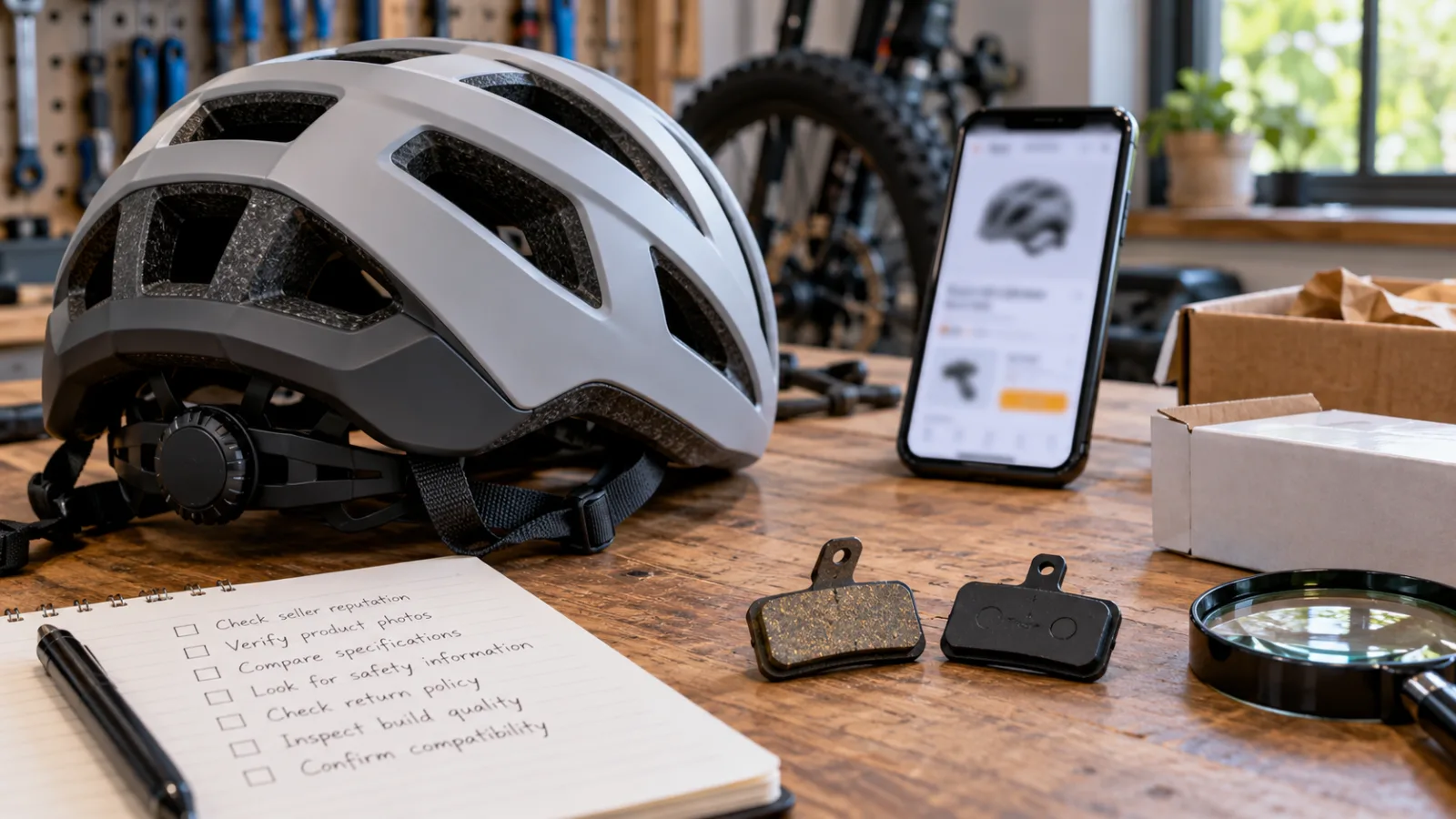
A bicycle helmet or a set of brake pads is not an ordinary marketplace purchase. If a cable, bottle cage or mudguard turns out to be disappointing, the consequence is usually inconvenience. Safety-critical equipment is different: a helmet is expected to manage impact energy in a crash, while brake pads must produce predictable friction when a rider needs to slow or stop. That difference changes the buying question. The relevant issue is not simply whether a listing carries a familiar logo, has attractive photographs or has collected a long row of positive ratings. It is whether the item can be identified, traced and trusted for the job it is supposed to do.
Recent official findings make that caution practical rather than theoretical. A coordinated European Union check of sport helmets found widespread concerns involving formal compliance or performance. In other words, a product can look like a normal piece of protective equipment and still fail to provide the level of assurance that a buyer reasonably expects from a compliant product. The finding does not mean that every helmet sold through a marketplace is unsafe, nor does it turn every low-cost product into a counterfeit. It does mean that a visible claim of testing is not, on its own, a substitute for checking what was tested, who made the item and for which market it was intended.
Brake pads present a related but slightly different problem. Shimano has warned about counterfeit disc-brake pads whose appearance can be almost indistinguishable from genuine products. That matters because the uncertainty is hidden inside a small consumable component: the packaging may resemble the original, the branding may appear correct and the pad may physically fit the caliper, yet those observations do not establish how its friction material will behave. A rider cannot confirm braking reliability from a logo or from a photograph on a product page. The same caution applies when a listing uses a brand name while providing no dependable route back to an authorised manufacturer or seller.
This is why marketplace safety gear deserves its own buying rule. For a non-critical accessory, a buyer may reasonably balance price, convenience and acceptable quality. For a helmet or brake pad, provenance becomes part of the product. The buyer needs enough information to connect the listing to a specific model, a real manufacturer and relevant compliance or compatibility information. There also needs to be a credible way to resolve a problem: a clear seller identity, a return path and packaging or documentation that can be compared with the manufacturer’s information. Without those links, the apparent saving is partly payment for accepting uncertainty.
The distinction is especially important because counterfeit and merely independent products are not the same thing. A product sold without a major brand name may be openly presented as an alternative, with its own manufacturer, model identification and stated specifications. A counterfeit product instead borrows the identity of another maker, making the buyer believe that the item has passed through the original company’s design, manufacturing and quality controls. Those are different risks and should not be judged by the same shortcut. The key warning sign is not only that a price is unusually low; it is that the listing makes a safety-relevant promise that cannot be verified.
A sensible first pass therefore starts before checkout. Treat the listing as an information claim that must be audited, not as a catalogue photograph that can be accepted at face value. Can the exact helmet model and size be identified? Does the page name a manufacturer and provide the warnings, fit guidance and market-specific standard information expected for protective equipment? For brake pads, does the product have a precise model code and a clear account of what is being sold, rather than a vague reference to compatibility with a famous brand? These questions do not prove performance, but they expose listings that offer too little information to support a responsible purchase.
The central rule is simple: a familiar logo is only one visible detail, and sometimes it is the detail most easily copied. What matters more is a chain of evidence from seller to manufacturer, from model identification to the relevant requirements, and from purchase to a usable return or complaint route. If that chain breaks at the point where a crash or hard stop would make the component matter, the buyer should treat the product as a high-uncertainty choice and consider whether the small saving justifies it.
How to audit a helmet listing before paying
Start with identity, not appearance. A marketplace helmet listing should name the manufacturer, give an exact model designation, and state the size or size range clearly enough for you to match the product you would receive. “Adult helmet,” “professional cycling helmet,” or a logo placed over a generic product photo is not an identification. Look for a model name or code that appears consistently in the listing, photographs, packaging information and, where available, the manufacturer’s own documentation. If the seller uses several names for what appears to be the same shell, or avoids giving a manufacturer identity, treat that uncertainty as a safety issue rather than a minor catalogue error.
The size information must also be usable. A listing should provide fit guidance rather than only a single circumference number, and it should explain how the adjustment system is intended to work. A helmet that cannot be adjusted securely, sits in the wrong position or leaves uncertainty about the correct size is not made safer by a low price or attractive design. Before paying, compare the stated measurements with the manufacturer’s guidance if that guidance can be found independently. If the seller supplies no meaningful fit instructions, ask how the helmet is supposed to be fitted and keep a record of the answer. An evasive response is useful evidence in itself.
Next, inspect the compliance information as a set of details, not as a single symbol. For a product sold into a particular destination market, the listing should identify the safety standard or regulatory framework it claims to meet, together with the manufacturer or responsible economic operator and the warnings or instructions expected for that market. A visible CE mark, a phrase such as “tested,” or a generic image of a certificate does not by itself establish that the exact helmet in the listing was assessed, that the documentation is genuine, or that the item supplied will match the description. The European Commission’s guidance on counterfeit goods is useful here: compare names, markings, packaging and documentation for inconsistencies instead of treating one familiar mark as proof of authenticity.
The same caution applies to US-bound purchases. The US Consumer Product Safety Commission’s bicycle-helmet guidance is aimed at the responsibilities surrounding helmets offered in the American market, and it highlights why a listing should be judged against the requirements for its destination rather than against a vague international claim. A seller who says that a helmet is “CE and CPSC approved” without identifying the model, responsible company or supporting information has not given you a meaningful basis for verification. Do not assume that a standard named in the title applies to every size, colour or version shown in the photographs.
A practical pre-purchase audit can be kept short:
- Exact product: Record the model name, model code, size, colour and version. Check that the same identity appears throughout the listing.
- Responsible manufacturer: Look for a real manufacturer or responsible business identity, not only a shop name, logo or marketplace username.
- Destination-market information: Confirm which market the helmet is intended for and which standard or compliance framework the seller claims it meets.
- Warnings and instructions: Check for readable safety warnings, fit guidance, adjustment instructions and care information. Missing or translated-as-an-afterthought instructions weaken confidence.
- Traceable evidence: Prefer documentation that identifies the exact model and manufacturer. A cropped certificate, stock image or generic test statement is not equivalent evidence.
- Return route: Confirm that the item can be returned if the received helmet differs from the listing or arrives without the promised markings and instructions.
Do not let the listing’s visual polish substitute for these checks. Product photographs can be copied, reused across different models or altered to show markings that are not present on the delivered item. Star ratings are evidence about a buyer’s shopping experience, not a test of impact performance. They may indicate that an item arrived quickly or looked like the photograph; they cannot show whether the helmet is correctly identified, whether its compliance claim applies to that exact product, or how it would perform in a crash. Reviews are more useful when they reveal concrete discrepancies—wrong model, missing labels, inconsistent sizing or different packaging—but even a large number of positive reviews cannot certify the shell.
Price is another warning signal, but not a verdict. A cheap helmet may be a legitimate alternative from a less familiar maker, while an expensive listing may still be misleading. The relevant question is whether the saving comes with a verifiable product identity and credible compliance information, or whether it is simply compensation for uncertainty. Be especially careful when a listing borrows the name or appearance of a known brand but omits the manufacturer’s exact model details. If you cannot establish what the helmet is, who made it, which market it is intended for and how it can be returned, the sensible decision is to stop before payment. A local bike shop or authorised seller may cost more, but it gives you a clearer opportunity to check fit, provenance and the documentation attached to the item you are actually buying.
How branded brake pads and cheap alternatives differ
Brake pads are a useful example of why a familiar logo is not, by itself, evidence of a safe purchase. A marketplace listing may show the name of a well-known manufacturer, a photograph of recognisable packaging and a price that appears unusually attractive. That combination can still leave the important questions unanswered: is the seller authorised, is the product genuinely the stated model, and can the material and manufacturing history be verified? Shimano’s warning about counterfeit disc brake pads is a reminder that fake products may be made to resemble genuine ones closely enough to confuse a buyer before installation. The relevant test is therefore provenance, not visual familiarity.
Start by separating two different situations. One is a branded pad advertised as an original product. The other is an openly sold unbranded or independent pad that does not claim to be made by Shimano or another established manufacturer. The first creates a counterfeit risk if the branding, packaging or model identification is false. The second may be a legitimate alternative, but its legitimacy does not automatically establish that it is suitable for a particular caliper, rotor, rider or use case. A listing should say clearly what the product is, rather than relying on a copied logo or vague language about “original quality”.
For branded pads, compare the complete product identity rather than only the brand name. Check the exact model code, the stated pad shape and the packaging shown in the listing. Look for consistency between the name in the title, the photographs, the description and the item supplied. Shimano’s counterfeit-product information is especially relevant here because it directs attention to the possibility that imitation pads can look nearly identical to genuine products. A model code that is missing, inconsistent or impossible to match to the manufacturer’s own information is a reason to stop, not an invitation to guess which version the seller meant.
Packaging can provide useful warning signs, but it cannot certify the friction compound or braking performance. Misspellings, blurred printing, inconsistent labels, implausible claims and changing photographs should be treated as evidence that the listing deserves further scrutiny. The European Commission’s general guidance on identifying fake goods likewise supports a broader approach: examine the seller, the description, the price and the product presentation together. A single apparently convincing detail should not outweigh several unresolved inconsistencies.
The same caution applies when riders report that a marketplace pad looked different, wore unusually or failed to inspire confidence. Online discussions, including reports of suspected fake pads bought through AliExpress, can help identify recurring warning patterns, but they do not turn a photograph or anecdote into a laboratory test. A pad may look correct and still have an unknown compound, backing plate or manufacturing quality. Conversely, an unfamiliar package is not conclusive proof that an openly sold alternative is defective. The practical conclusion is narrower and more useful: visual inspection can tell you when not to trust a product, but it cannot establish that the product will deliver reliable braking under load, heat or contamination.
That uncertainty matters most when the consequences of a mistake are high. Pads used in traffic, on mountain descents or on e-bikes deserve a higher purchasing threshold than a low-risk accessory. In those settings, a reputable local retailer or an authorised reseller is the sensible baseline because the buyer can confirm compatibility, ask where the part came from and retain a clearer route for returns or complaints. The extra cost is not simply payment for a logo; it buys a more credible chain of identification and a practical remedy if the part is wrong or suspect.
A cheap independent pad can therefore be considered only on its own terms: clear manufacturer identity, precise compatibility information, an honest description that does not borrow another brand’s authority, and a seller willing to stand behind the item. A suspiciously cheap “genuine” pad fails a different test. If the model code, packaging, seller or return path cannot be verified, do not install it merely because it fits the caliper or resembles the product in an official photograph. Once a safety-critical component is fitted, the saving has already become a poor trade for uncertainty.
Who can consider the marketplace option—and who should skip it
A marketplace purchase is easiest to justify when the item is convenient but not safety-critical: a bottle cage, mudguard, bell, cable end, storage pouch or another clearly identified accessory whose failure is unlikely to turn a crash or emergency stop into a worse event. Even then, the listing should describe the product accurately, show the dimensions or compatibility information, and offer a realistic way to return it. The lower price is not, by itself, evidence of a problem; it is simply not evidence that the product has been made, tested or supplied to the standard implied by the listing.
The decision changes for a helmet, disc-brake pad or other component whose performance depends on material quality, manufacturing consistency and traceable identification. For those products, the useful question is not whether a marketplace has many positive reviews or whether the photograph shows a familiar logo. It is whether the buyer can identify the exact model, connect it to a real manufacturer or responsible seller, and obtain a remedy if the item is wrong. A helmet with unclear sizing, incomplete warnings or uncertain compliance is not a bargain if it cannot be trusted to fit and protect as intended. A brake pad with uncertain origin is not a sensible experiment when it may be used in traffic, on a long descent or on an e-bike.
That does not mean every unbranded or independent product is counterfeit. A product openly sold under its own name, with a precise model description and an accountable seller, is a different proposition from a pad presented as a genuine branded replacement at an implausibly low price. The distinction is provenance. A buyer may decide that a clearly identified alternative is worth considering, but should not treat a logo, a stock photograph or a generic claim about testing as a substitute for information that can be checked.
A practical arrival check can prevent a questionable purchase from becoming a fitted one:
- Photograph the parcel, outer packaging, labels and any seals before discarding them. Keep the order record and listing screenshots as part of the same evidence.
- Compare the delivered item with the exact model, size, colour and compatibility details that were ordered. Look for inconsistent names, spelling, codes, markings or packaging rather than trying to judge quality from appearance alone.
- For a helmet, check that the size and fit guidance, manufacturer identity and required warnings are present and coherent. A visible compliance mark is worth checking against the destination market and the maker’s information; it is not proof by itself.
- For brake pads, compare the model code, backing plate, friction material description and packaging with information from the manufacturer or an authorised seller. Do not assume that a near-identical shape establishes compatibility or reliability.
- Do not install a suspect helmet or safety component simply to see whether it works. Ask the seller for clarification, use the platform’s return process, and preserve the packaging if the item appears misdescribed or unauthenticated.
Visual inspection has a limited role. It can reveal a missing label, a mismatch or a suspiciously poor package, but it cannot establish how a helmet will perform in an impact or how a brake pad will behave as it heats, wears and encounters water or dirt. Rider reports about suspected counterfeit pads can help a buyer recognise recurring warning signs, yet an online discussion cannot certify a particular item. The same caution applies to star ratings: reviewers may have received different batches, may not have tested the product in demanding conditions, or may simply be unable to distinguish a convincing imitation from the genuine part.
The safest baseline for crash-critical equipment is a local bike shop or an authorised reseller that can identify the item, confirm fit and compatibility, and provide a return path backed by an identifiable business. That route may cost more than a marketplace listing, but it also reduces the uncertainty that the listing price hides. A shop cannot make every product perfect, yet it gives the buyer somewhere accountable to take a sizing problem, a model mismatch or a suspected counterfeit before the part is relied upon.
A marketplace option is therefore most defensible when the item is non-critical, the description is precise, the seller is identifiable and the buyer can return it without difficulty. For helmets, brake pads and comparable safety equipment, skip the purchase when the model cannot be verified, the compliance or warning information is vague, the branding appears inconsistent, or the saving is small relative to the consequences of being wrong. If provenance and recourse are uncertain, the apparent discount is paying the buyer in uncertainty rather than saving money.
Related articles
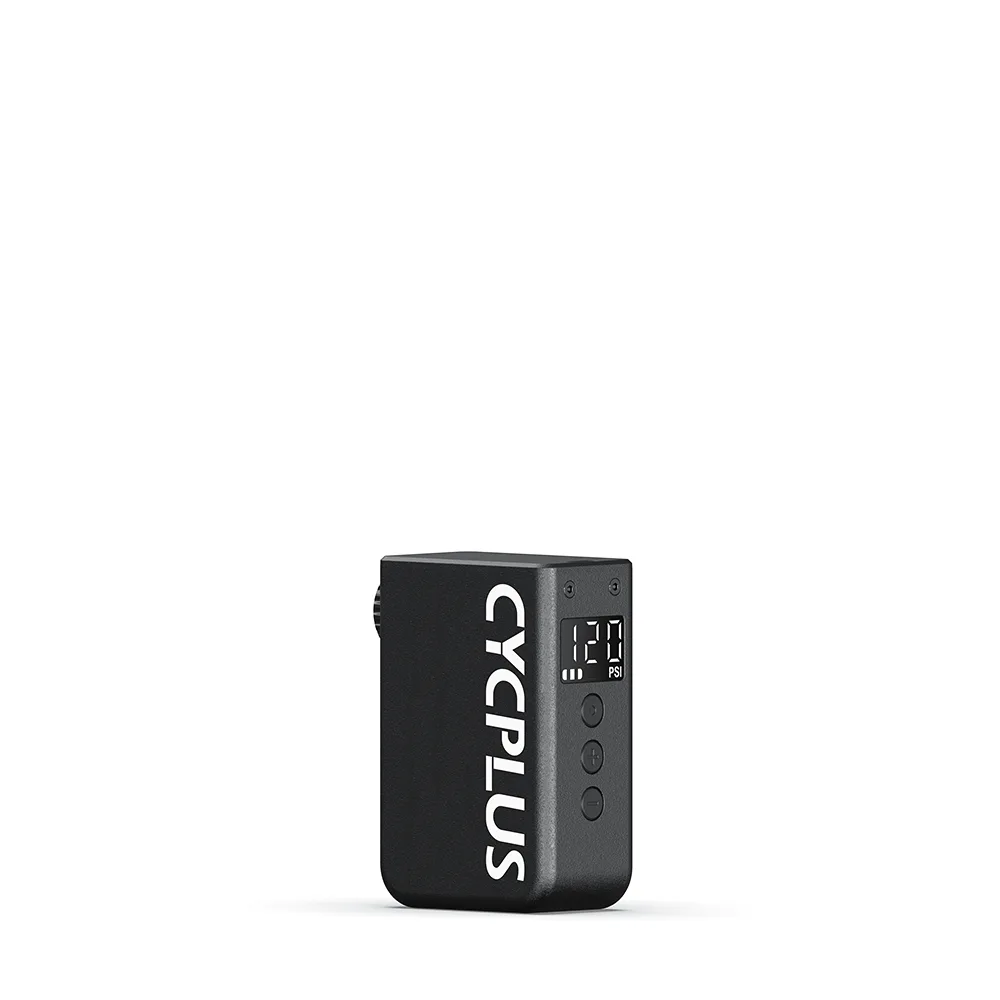
Tiny electric bike pumps from AliExpress: useful ride backup or rechargeable gimmick?
A practical buyer check for 120–150 PSI mini inflators, with valve, battery, heat and backup-plan caveats before you trust one on a ride.
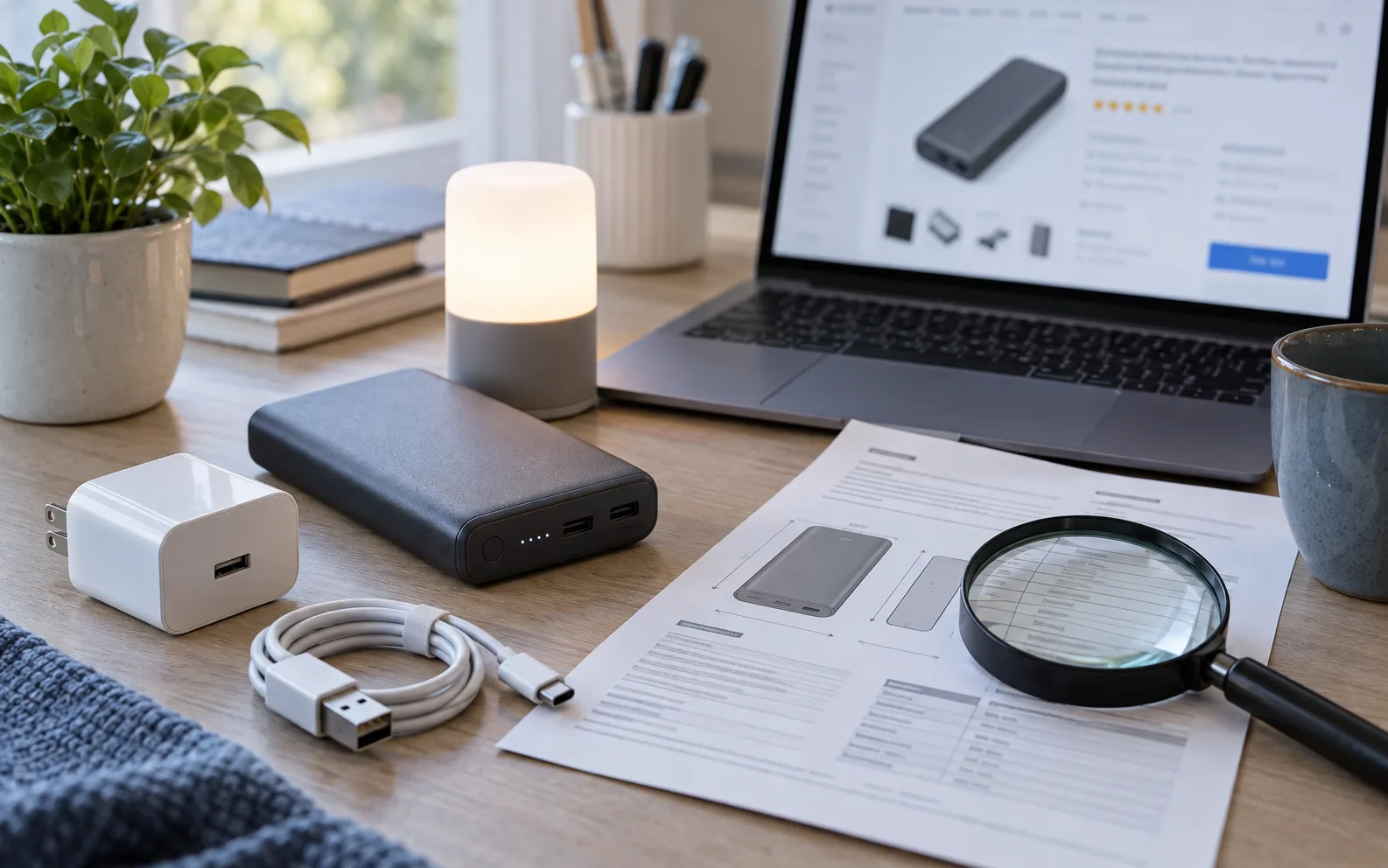
After AliExpress’s €550 Million Fine: How to Check a Marketplace Gadget Before You Buy
A marketplace listing can look polished and still leave the important safety questions unanswered. Here is a practical pre-purchase check for chargers, batteries, lights and other electronics, using recent regulator findings as context.
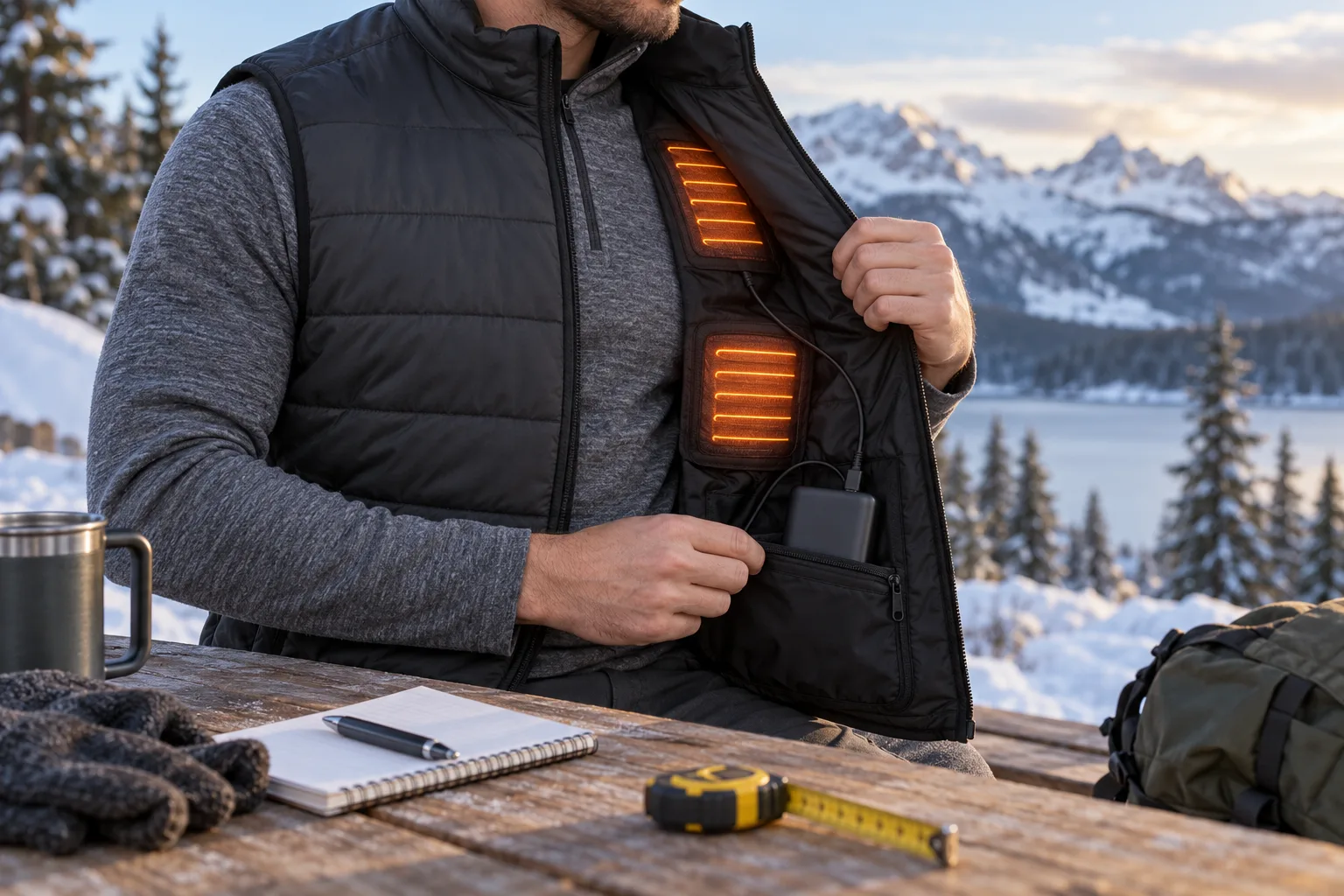
Marketplace Heated Vests: How to Check Battery Compatibility, Heat Claims and Safety Before Buying
Heated vests are appearing in October marketplace winter promotions, but the useful question is not how many heating zones a listing claims. Check the power system, runtime math, construction and safety evidence before trusting the price.
USB-C cables with a watt display: useful marketplace tool or false confidence?
A small screen can reveal charging behaviour, but it cannot certify a cable or turn a charging lead into a high-speed data cable.
Comments
Sign in to comment.
No comments yet.