Sunscreen over makeup on a budget: what to reapply, what to skip, and why SPF powder is not enough
A practical format-by-format guide to sunscreen touch-ups that protects the budget as well as the makeup bag.

A midday sunscreen touch-up over makeup is not a luxury-routine puzzle. It is a practical problem: a good morning layer gets thinner through sweat, rubbing, blotting, mask straps, phone screens and ordinary touching. The budget answer is not to buy every SPF powder, setting spray and cushion compact that appears in beauty content. The better answer is to know which step carries the protection, which formats are only helpers, and where hats, shade and sunglasses save more money than another branded refill.
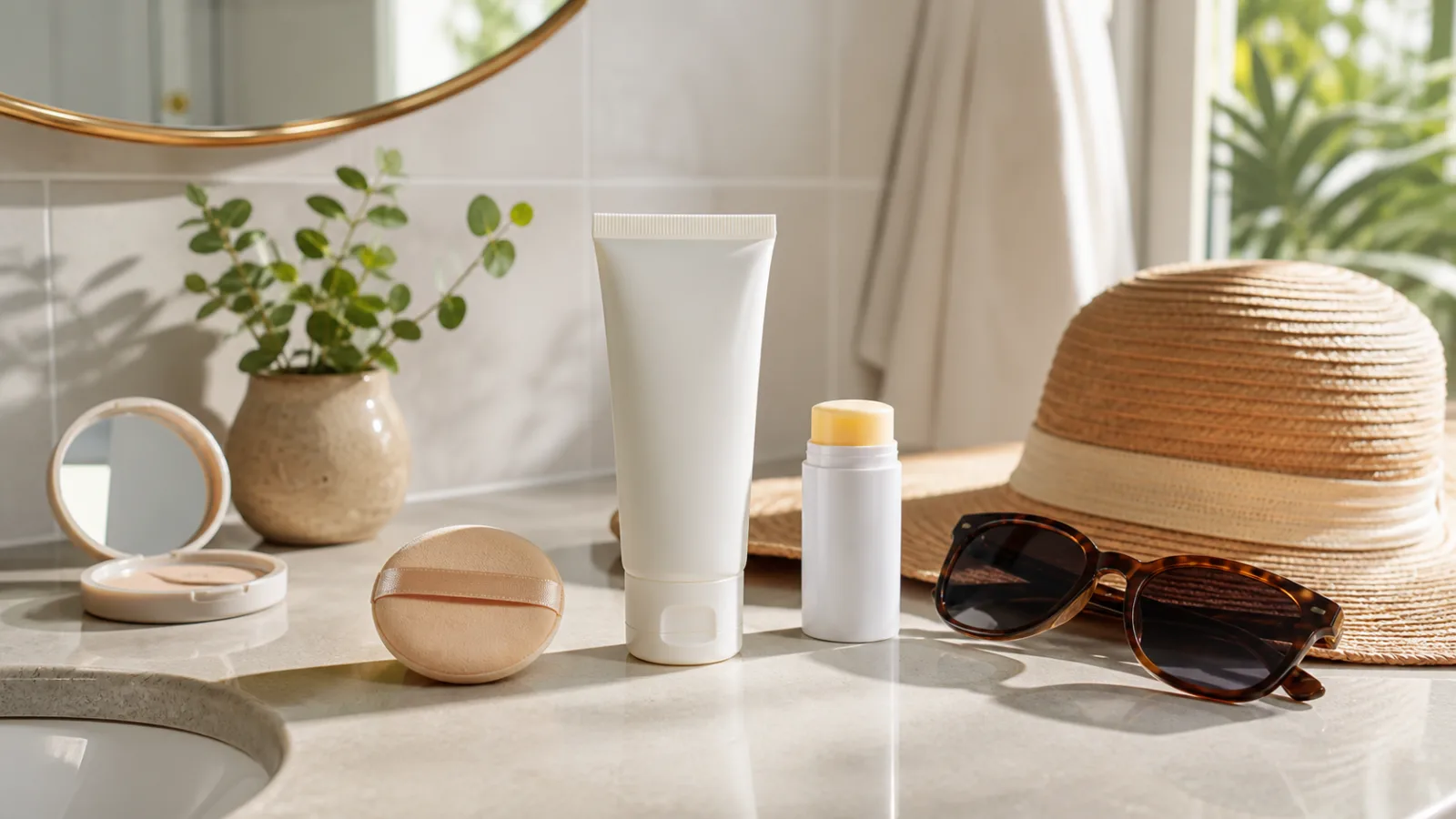
Start with the layer that matters most
The most defensible routine begins before foundation, tint or powder. Apply a real sunscreen as its own layer, in a quantity you can actually tolerate, and let it settle before makeup. Public guidance from the American Academy of Dermatology is consistent on the basics: choose a sunscreen labeled broad spectrum, use SPF 30 or higher, and choose water resistance when sweating or getting wet is likely. The NHS gives the same practical warning in different words: sunscreen should not be the only sun-protection measure, and people often apply too little.
That point matters for budgets because makeup with SPF is usually a bonus, not the foundation of a sun plan. A skin tint, foundation, primer or powder may carry an SPF number, but the tested protection assumes a lab amount spread evenly. Most people use makeup much more thinly, avoid the hairline or eyelids, and blend unevenly around the nose and jaw. Buying SPF makeup can be pleasant if you already like the product, but it should not replace a comfortable standalone sunscreen.
A higher starting SPF can also give some real-world margin. Cosmetic chemist Michelle Wong of Lab Muffin Beauty Science has noted that a stronger starting layer can be useful when some product is rubbed off during the day. That does not mean SPF 50 is magic or that it cancels the need to reapply in continuing sun. It means the morning purchase that deserves the most attention is still the sunscreen you will use generously, not the trendiest touch-up accessory.
Reapplication is about enough product, not the prettiest format
The hard truth behind over-makeup SPF is simple: protection depends on amount and coverage. A format that looks invisible after two seconds may look invisible because almost nothing reached the skin. A format that disturbs blush slightly may still be more useful if it places a meaningful layer where the sun hits. The right choice is therefore a trade-off between reliability, cost per use, finish and how much makeup disruption you can accept.
For daily city exposure, many people do not need a perfect studio-makeup solution. They need a repeatable routine for lunch walks, commutes, errands, outdoor seating or school pickup. If you are indoors away from windows most of the day, your touch-up need is different from a beach day or a long outdoor shift. The article is not medical advice, but the product-selection rule is sensible: match the effort to your exposure, and combine sunscreen with physical protection whenever the UV risk is meaningful.
Lotion or fluid: least glamorous, often most economical
A regular face sunscreen lotion, fluid or gel-cream is usually the best value because the bottle contains enough product for real application. It is also the format most likely to let you control quantity. The downside is obvious: rubbing lotion directly over base makeup can move foundation, blush and concealer. That inconvenience is why many people buy powders and sprays. Still, if cost and dependable coverage are the priorities, a familiar lotion remains the benchmark.
The budget technique is to treat sunscreen as the touch-up base and makeup as the part that can be repaired. Blot oil first, press sunscreen on with clean fingers or a sponge instead of dragging it, wait briefly, then repair concealer, powder or blush only where necessary. This is not as fast as misting a spray in a taxi, but it uses a product you may already own and avoids buying several separate SPF cosmetics that run out quickly.
A thin serum-like sunscreen can work better over makeup than a heavy cream, but texture should not become a luxury chase. A cheap product that pills, stings eyes or leaves a gray cast will not be used properly. A mid-priced but comfortable broad-spectrum SPF 30, SPF 50 or SPF 50+ that you use daily can be cheaper in practice than a drawer of disliked bargains and fashionable compacts.
Stick sunscreens: useful for high points, not automatic full-face coverage
A sunscreen stick is convenient because it is portable, low-spill and easy to use on the bridge of the nose, cheekbones, forehead, ears or hands. It can be a smart budget add-on if you spend time outside and hate carrying liquid. It is also useful for re-coating exposed high points that receive a lot of sun.
The limitation is amount. A couple of stylish swipes over powder are unlikely to equal a full application. Sticks can also drag makeup, collect pigment on the stick surface and miss curved areas unless you overlap passes. If you choose one, use many passes, wipe the surface when needed, and understand that it is strongest as a targeted tool. For a whole face, a stick may require more product and time than expected.
Cushion or sponge method: a budget hack if you keep it clean
A cushion compact or reusable makeup sponge can make fluid sunscreen less destructive over makeup. Instead of rubbing, you press product onto the face in thin layers. This can preserve more base makeup and help avoid streaks. It is not a special sunscreen category; it is an application method.
The cost check is hygiene and waste. Disposable puffs, branded SPF cushions and refill compacts can become expensive. A washable sponge or clean puff with your existing sunscreen may be cheaper, but it needs regular washing and drying. Do not leave a damp, sunscreen-soaked sponge in a warm bag for days. The method is useful only if the routine stays clean and simple enough to repeat.
Sprays and mists: convenient, but easy to under-apply
Sunscreen sprays are attractive because they promise speed and minimal makeup disturbance. They can help when a lotion touch-up is unrealistic, but they are not an invisible force field. Public-health guidance generally emphasizes liberal application and reapplication; a light mist that mostly floats away, lands in hair or sits unevenly on powder is not the same as a measured layer.
If you use a spray, apply enough to visibly wet the area, avoid inhaling it, keep it out of eyes and mouth, and follow the product directions. Many sprays work better when they are spread or patted after application, which partially removes the fantasy of a zero-touch finish. Indoors, spray overspray can also be annoying on mirrors, clothing and floors. The budget question is whether the can disappears quickly because you need much more product than social-media demonstrations suggest.
A spray may still be reasonable as a backup for moments when the alternative is no reapplication at all. It is weaker when marketed as the main way to maintain a perfect face of makeup through long sun exposure. Think of it as a compromise, not a loophole in sunscreen physics.
SPF powder: good shine control, poor main plan
Powder SPF is the easiest product to oversell. It looks elegant, mattifies shine and does not feel like sunscreen. For oily skin, it can make a midday face more comfortable. The problem is that powders are difficult to apply in the quantity needed for their labeled SPF. Lab Muffin’s 2026 sunscreen-over-makeup explainer is especially useful here: powder sunscreens can be expensive and hard to apply at a protective amount, and other formats are generally more reliable for meaningful reapplication.
This does not make SPF powder useless. It can be a supplement on top of a proper morning sunscreen. It can reduce shine after a lotion touch-up. It can be convenient for a short incidental exposure when a better method is not possible. But a few quick brush strokes should not be treated as a full replacement for sunscreen, especially for prolonged outdoor time.
The budget verdict is blunt: if money is tight, do not make SPF powder your only reapplication product. Buy powder because you like the finish, not because you expect it to carry the entire protection job.
Do not ignore hats, shade and sunglasses
The cheapest sunscreen upgrade may not be another cosmetic product. The NHS explicitly says sunscreen should not be the only sun-protection measure; clothing and shade still matter. Cancer Council Australia recommends combining sunscreen with other protections when UV levels are high, and its practical message is that the best sunscreen is one people will use consistently and correctly.
A hat can protect the scalp, forehead and eye area without pilling under foundation. Sunglasses reduce squinting and protect an area where many people dislike applying thick product. Shade lowers the amount of direct UV your sunscreen has to handle. None of these replaces sunscreen on exposed skin, but they make a budget routine more forgiving. They also help people who cannot reapply perfectly over makeup every two hours during a real workday.
A budget decision tree
If you can buy only one SPF item, buy a comfortable standalone broad-spectrum sunscreen rated SPF 30 or higher; SPF 50 or SPF 50+ is a sensible choice if you like the texture and can use enough. Use it before makeup as the main layer. If the product is water resistant, remember that water resistance is time-limited; AAD guidance describes water-resistant sunscreens as lasting either 40 or 80 minutes while swimming or sweating before reapplication is needed.
If you can buy one touch-up helper, choose based on your actual obstacle. If your obstacle is makeup movement, try pressing the same sunscreen with a sponge. If your obstacle is portability, a stick may help on high points. If your obstacle is shine, powder can sit at the end of the routine, but not as the only plan. If your obstacle is time, a spray is a compromise that requires enough product and careful use.
If you are mostly indoors, do not let beauty marketing shame you into carrying four SPF formats. Reapply when exposure continues, after sweating, rubbing or toweling, or before a meaningful outdoor interval. If you are outdoors for hours, prioritize a proper sunscreen layer, physical protection and realistic reapplication over preserving makeup perfectly.
What to skip when money is tight
Skip SPF foundation if you would not buy the foundation without the SPF label. Skip powder SPF as the main product if the price per gram is high and you know you will only dust it on lightly. Skip prestige sunscreen mists that advertise luxury finish but give vague instructions about amount. Skip duplicate products that solve the same problem while your baseline sunscreen still pills or stings.
Spend instead on one face sunscreen that you enjoy enough to use liberally, plus a low-cost method to reapply it. A simple sponge, blotting paper, a washable puff, a hat or sunglasses can be more useful than a product with more elegant packaging. The goal is not a perfect beauty shelf. The goal is a routine that survives real life.
Bottom line
For reapplying sunscreen over makeup, the most reliable budget hierarchy is clear. A proper morning sunscreen layer comes first. Lotion or fluid reapplied carefully is the value benchmark. Sticks and sponge methods can make touch-ups more portable or makeup-friendly. Sprays are convenient compromises that need generous, careful use. SPF powders are best treated as finish helpers, not the backbone of protection.
The smartest purchase is not the newest SPF gimmick. It is the product and method you will use in a sufficient amount, often enough for your exposure, while using shade, hats and sunglasses to reduce the burden on your face makeup.
Related articles
How to Try Fall Fragrance and Scented Body Care on a Budget Without Irritating Your Skin
Fall fragrance is moving into body washes, lotions and affordable mists. The smart budget move is not buying every scent; it is choosing where fragrance belongs in your routine and where fragrance-free still wins.
The Skin-Barrier Reset Is Trending: How to Build a Useful Budget Routine Without Buying Every Repair Product
Barrier care is having a moment, but the most useful version is less glamorous: a gentle cleanser, a well-chosen moisturizer, sensible sunscreen and fewer experiments. Here is how to read the labels, compare prices and know when a viral repair claim is doing too much work.

Beef tallow for your face: budget moisturizer or overpriced viral balm?
A practical ingredient check for anyone tempted by tallow balm, with cheaper occlusive and moisturizer comparisons before you spend.
PDRN “salmon DNA” serums: smart budget skin care or expensive repair hype?
A practical label-reading guide to the 2026 PDRN trend, with the science kept separate from cosmetic marketing and budget priorities.
Comments
Sign in to comment.
No comments yet.