U.S. Flight Disruption on November 14, 2026: A Budget Recovery Plan for Rebooking Without Panic
The FAA ground stop has been lifted, but aircraft and crews are still out of position. Here is how to decide between waiting, rebooking, rail, bus, or cancelling without turning one disruption into an expensive trip.

A nationwide FAA ground stop disrupted U.S. air travel after a communications problem affected multiple Air Route Traffic Control Centers on November 13. The stop has since been cancelled, but that does not mean the timetable has returned to normal: aircraft, pilots and cabin crews may still be in the wrong cities, and airports must work through the backlog.
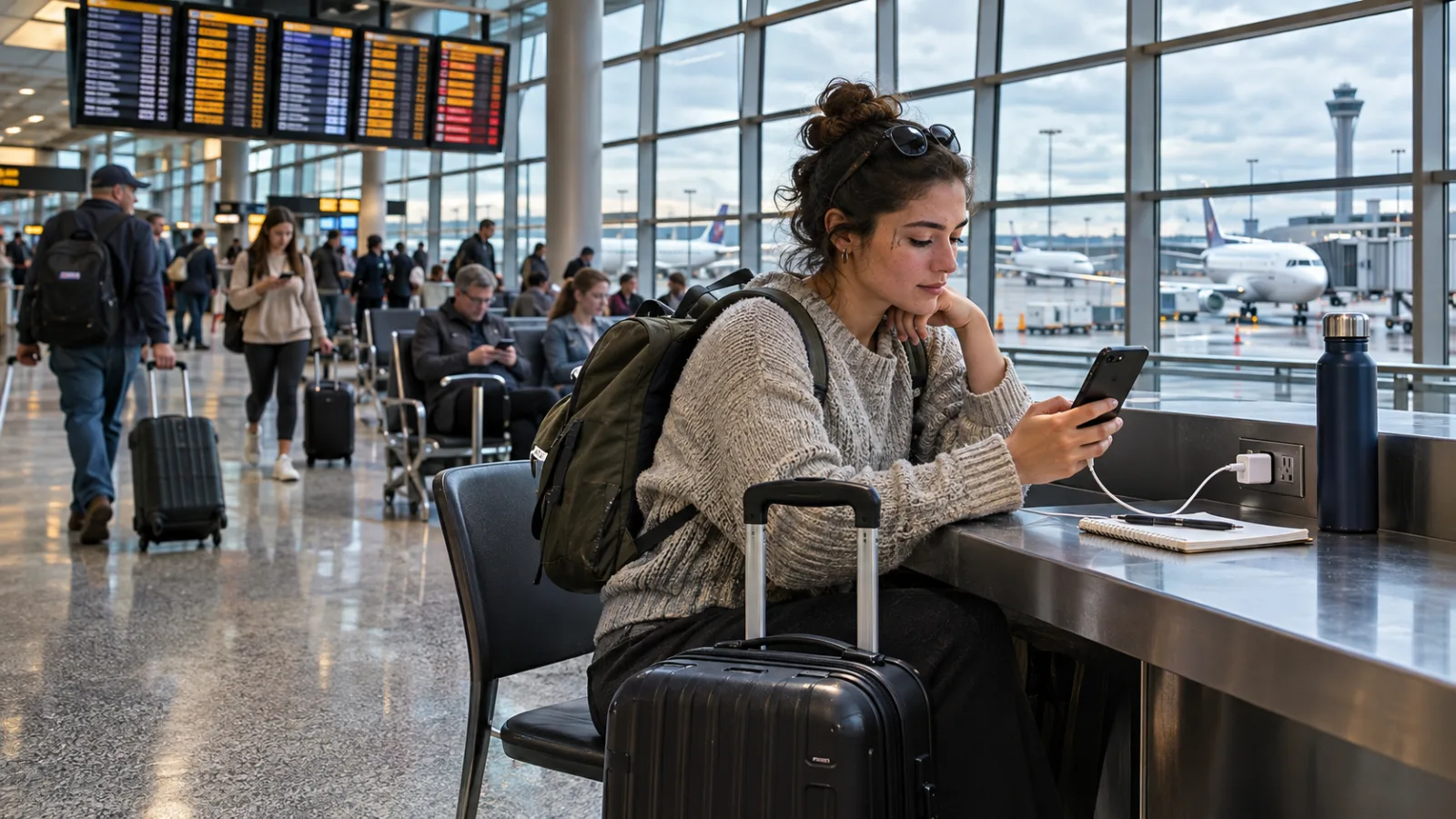
For a budget traveler, the expensive mistake is often not the original cancellation. It is buying the first replacement flight, losing a prepaid hotel night, paying for an airport transfer that is no longer useful, and then discovering that the new itinerary has the same operational weakness. The practical response is to price the whole recovery before pressing “buy.”
This guide is for travelers departing from, arriving at, or connecting through the United States on November 14 and the following few days. The operational picture is changing quickly, so check your airline and airport again immediately before leaving for the airport.
What has happened and what “recovery” means
The Federal Aviation Administration’s initial statement said the nationwide ground stop followed communication issues affecting multiple air-route traffic-control centers. The FAA’s air-traffic advisories then recorded a series of airport-level ground stops and ground-delay programs at major hubs including Atlanta, Chicago O’Hare, Dallas–Fort Worth, Los Angeles, Newark, San Diego, Seattle and San Francisco. A later FAA advisory recorded the nationwide stop as cancelled at 01:19 UTC on November 14.
That sequence matters because a system can be technically open while still operating badly. When departures stop, an airline may have an aircraft in Dallas that should have been in Philadelphia, a crew that has reached its legal duty limit, or a connecting passenger who can no longer make the second sector. The first flights to move are not necessarily the flights that make the network useful again.
Euronews, citing FlightAware and airline statements, reported more than 8,860 cancellations connected with Friday’s disruption and around 2,650 additional cancellations already recorded on Saturday morning. Those totals are system-wide snapshots, not a prediction for your individual flight. They do explain why a normal-looking booking screen can conceal a fragile itinerary.
The right question is therefore not “Is the ground stop over?” It is: “Can this particular aircraft, crew and connection operate at a time that still works for the rest of my trip?”
First decision: wait, rebook, or cancel?
Use three numbers before you compare replacement fares:
- the latest time you can arrive and still use the trip;
- the maximum additional amount you can afford to spend;
- the value of the bookings you would lose by arriving late.
Suppose your weekend hotel is non-refundable, your event begins at 6 p.m., and the only replacement flight lands at midnight. A $240 ticket may be cheaper than a $500 ticket that gets you there on time, but it is not automatically the better choice if both make the hotel and event unusable. Conversely, a $700 same-day replacement may be irrational if the airline can move you tomorrow without a change fee and the accommodation can be shifted for $40.
Make a quick comparison with this formula:
true recovery cost = new transport
                  + extra airport or station transfers
                  + added meals and lodging
                  + lost prepaid bookings
                  - refundable amounts
                  - airline waiver value
Do not count a travel credit as cash unless you already know you will use it. Do not count a refund before the airline confirms that the ticket qualifies and shows how it will be issued.
Wait when the original ticket is still useful
Waiting is reasonable when the flight is still operating, the airline has an aircraft and crew assigned, and you have enough flexibility to absorb a delay. It is more attractive when your destination is close to the origin’s airport, your hotel allows a late check-in, and the route is a nonstop rather than a connection through another congested hub.
Check the flight number in the airline app and on the airport’s own departures page. A generic “on time” label is not a guarantee; aircraft rotations can change after you leave home. Look for the inbound aircraft if the airline exposes that information, but treat it as an indication rather than proof.
Waiting becomes dangerous when the itinerary has a short connection, a final flight of the day, a separate ticket, or a prepaid transfer that stops operating at night. In those cases, a delay can turn into a missed-connection cost even if the first flight eventually departs.
Rebook when the waiver protects your cash
Airline waivers are usually more valuable than a speculative cheap fare. American’s current alert for the FAA disruption covers eligible travel on November 13–14, allows travel through November 17, and states that the change fee is waived for qualifying tickets, including Basic Economy, subject to the listed booking and route conditions. United lists a nationwide ATC-outage waiver with impacted travel dates of November 13–14 and waiver code 7JC9H.
The exact conditions differ by airline. Check the carrier that issued the ticket, not only the operating carrier. Read the permitted travel dates, whether a fare difference still applies, whether the origin and destination must remain unchanged, and the deadline for making the change. A “free change” can still produce a large fare difference if the replacement flight is in a higher inventory bucket.
Try the airline’s website or app before calling. Save a screenshot of the waiver and the original itinerary. If the site displays a fare difference that conflicts with the published waiver, do not assume that the airport desk will fix it instantly; document the error and ask the airline for a reprice or a documented exception.
Cancel when the trip no longer works
If the airline cancels your flight or makes a significant change and you do not accept the alternative, U.S. Department of Transportation guidance says you may be entitled to a refund rather than a voucher or credit. The department explains that the responsible party can depend on who was the merchant of record: an online travel agency may handle the airfare refund, while the airline generally handles optional-service refunds such as baggage fees.
Do not voluntarily cancel a disrupted reservation before you understand the airline’s options. “Cancel” can mean accepting a credit under ordinary fare rules, while rejecting an airline-initiated cancellation may preserve a cash-refund right. Ask the airline or booking agent to identify the action being applied to the ticket and keep the confirmation.
A refund is not the same as compensation for every extra expense. Meals, hotels, ground transport and a missed event may be treated differently depending on the cause of the disruption and the carrier’s customer-service policy. Keep itemised receipts, but do not build your budget on reimbursement that has not been promised in writing.
How to find a cheaper replacement without creating two separate trips
Search in layers. Begin with the same airport and the same destination. Then test nearby airports only if the ground transfer is realistic and the airline can protect the full itinerary.
For a domestic trip, compare:
- the airline’s protected rebooking;
- a nonstop from another airport in the same metropolitan area;
- a train or intercity bus from the departure city;
- a train or bus to a nearby destination airport;
- postponing the entire trip and refunding the original ticket.
The order is deliberate. A separate low-cost ticket may look cheap but leaves you responsible for the connection. If you must self-connect, allow a long buffer, collect checked baggage, and avoid making the second ticket the last departure of the day. A low fare is not a saving if a late first leg makes the second ticket worthless.
Nearby airports need a complete price. Add the fare from the origin to the alternative airport, parking or public transport, baggage, seat fees, and the transfer from the arrival airport. In the New York area, for example, changing between JFK, LaGuardia and Newark can require more time and money than the map suggests. The Port Authority’s November 13–19 advisory also warns of construction and service changes and says the JFK AirTrain will have a full overnight suspension from late Monday into early Tuesday, with shuttle buses provided. That is relevant if a replacement flight creates an overnight airport transfer.
If you use a bus or train, verify the operator’s live schedule and cancellation terms. Rail or coach can be a sensible substitute on a corridor with frequent departures, but it is not a universal escape from a nationwide aviation disruption. A 16-hour bus may be cheaper than a last-minute flight but still destroy a two-night trip. Price the time as well as the ticket.
A realistic budget for the recovery
Avoid publishing or trusting one “replacement fare” as if it were guaranteed. Prices are moving, and the cheapest inventory may disappear while you are comparing options. Instead, set a ceiling for each recovery pattern.
Same-day flight recovery
Budget for the replacement fare or fare difference, transport to the airport, baggage and seats, food during the wait, and one contingency night if the new flight is delayed. For a short domestic break, a useful test is whether the new transport and incidentals remain below the value of the nights and activities you can actually use. If not, the financially cleaner choice may be postponement.
Next-day protected rebooking
This is often the lowest-risk option when the airline will move you without a change fee. Add one hotel night, meals, a new airport transfer, and any lost reservation. Ask the airline whether it will provide accommodation or meal assistance, but treat that as a policy question rather than a guaranteed entitlement. Do not book an expensive airport hotel until you know whether the airline has already arranged one or whether a cheaper refundable property is available.
Ground alternative
For rail or coach, add the origin transfer, station or terminal transfer at the destination, a meal budget, and the cost of getting to the first usable night of accommodation. A train to a nearby city can work if the destination has frequent local transport. It can fail if the final leg requires a taxi after public transit has stopped.
Full cancellation
Calculate refundable airfare, refundable hotel nights, event or attraction refunds, insurance coverage, and the cost of a future trip. This option can be cheaper than forcing a disrupted weekend to happen. If you cancel, save confirmation numbers for every refund request and note the date, channel and agent who accepted it.
The connection rules that protect a small budget
The safest recovery itinerary is usually the one with the fewest moving parts. Prefer a nonstop over a connection, a protected single ticket over two separate tickets, and a daytime arrival over the final flight into a city.
If you must connect, avoid a short domestic connection at a major hub while the network is recovering. A two-hour connection can be technically legal and still be poor value if the first flight arrives at a remote gate, baggage is delayed, or the connecting departure is waiting for an aircraft arriving from another disrupted airport.
Do not check a bag for a fragile self-connection unless the savings are substantial and you have time to collect and re-check it. A carry-on-only plan may save the trip, but it must comply with the airline’s size and weight limits. Do not rely on an unconfirmed gate, a social-media post, or a third-party tracker when the airline has not accepted the itinerary.
For overnight connections, verify whether you are legally permitted to enter the transit country, whether you need a transit visa, and whether you must collect your baggage. A cheaper routing through another country is not a budget option if a missing entry document causes a denied boarding or an airport hotel bill.
What to do at the airport
Before leaving home, take screenshots of the booking, waiver, boarding pass and any hotel deadline. Download the airline app, charge your phone, and keep the payment card used for the ticket available. Check the flight status again before paying for a taxi or train.
At the airport, go to the airline first if the itinerary is cancelled or the app cannot complete the change. Ask for a specific routing and write down the agent’s name or interaction number. If you buy an independent replacement, do so only after deciding what will happen to the original ticket. Holding two live reservations can create a refund problem and may cause a no-show on the original booking.
If your checked bag is already accepted, do not leave the airport without confirming where it is going. A cancelled passenger may need to collect it, or the airline may reroute it separately. Keep receipts for essential purchases, but avoid large discretionary spending while the carrier has not confirmed reimbursement.
At a U.S. airport, identification rules also matter. The Port Authority’s advisory reminds passengers that a non-REAL-ID state identification is not accepted at TSA checkpoints unless the traveler uses an accepted alternative or the TSA’s ConfirmID process. A passport is an accepted alternative, but do not turn up without checking the current TSA instructions if your ID situation is unusual.
When to travel again
For a trip already in progress, the best departure is not always the earliest available seat. On November 14, the network is still absorbing Friday’s cancellations, so a later departure with a confirmed aircraft and a direct route may be safer than an early connection through a hub with repeated ground-delay programs.
For a new trip booked after the disruption, leave a buffer around the date-sensitive part of the itinerary. Do not schedule a non-refundable tour, cruise, permit or final intercity connection immediately after a flight when losing that reservation would exceed the savings from the cheaper ticket. If the event is fixed, arrive the day before; if the flight is fixed and the hotel is flexible, choose a refundable room.
This is also a poor moment to plan a complicated mileage run or multi-airport self-connection merely because a search engine shows a low fare. Normal schedules may return faster than expected, but the cost of being wrong is unusually high while crews and aircraft are being repositioned.
A compact decision checklist
Use this sequence before you spend more money:
- Confirm the flight status with the airline and airport, including the inbound aircraft where available.
- Read the airline’s disruption waiver and record its deadline, eligible dates and fare-difference rules.
- Decide the latest arrival that still makes the trip worthwhile.
- Price the airline’s protected option, a nearby-airport option, ground transport and cancellation.
- Add bags, seats, transfers, food, lodging and lost reservations to every comparison.
- Avoid separate tickets unless the buffer is large and the saving survives a missed connection.
- Keep evidence of cancellations, waiver terms, receipts and refund requests.
- Recheck the itinerary before leaving for the airport.
The ground stop may be over, but the budget problem remains a recovery problem. Protect the value of the trip first, use the airline’s waiver before paying a panic fare, and choose the itinerary with the fewest ways to fail.
Related articles
Thanksgiving 2026 Travel Costs: How to Choose Between Driving, Flying and Moving Your Dates
Thanksgiving travel is forecast to remain near record levels while average domestic round-trip flights reach about $800. This practical budget guide compares transport, timing, traffic risk and refund protections for the November 24–30 travel window.


GNSS Daily Briefing - October 23, 2026
NavIC NVS-03, Sweden's anti-jamming GPS order, near-instant centimetre precision and resilient aviation navigation.


Hyundai’s Atlas strike is really about who writes the rules for humanoid robots
The Ulsan walkouts are formally about wages, but Atlas turns them into an early test of how factories should negotiate humanoid automation before it is fully mature.


NASA’s X-59 Moves Quiet Supersonic Flight From Promise to Public Test
NASA’s X-59 has entered a sustained flight-test phase aimed at answering a practical question: can supersonic travel be made quiet enough for communities and measurable enough for regulators?

Comments
Sign in to comment.
No comments yet.