Little Giant Rapid-Lock Ladder Recall: How to Identify Yours and Keep It Out of Service Safely
A November 2026 recall covers about 3.66 million Little Giant ladders whose Rapid Locks can allow sudden retraction. Here is how to check the model, understand the QC-sticker exception, and follow the approved remedy without improvising a ladder repair.

What the recall covers and why it matters
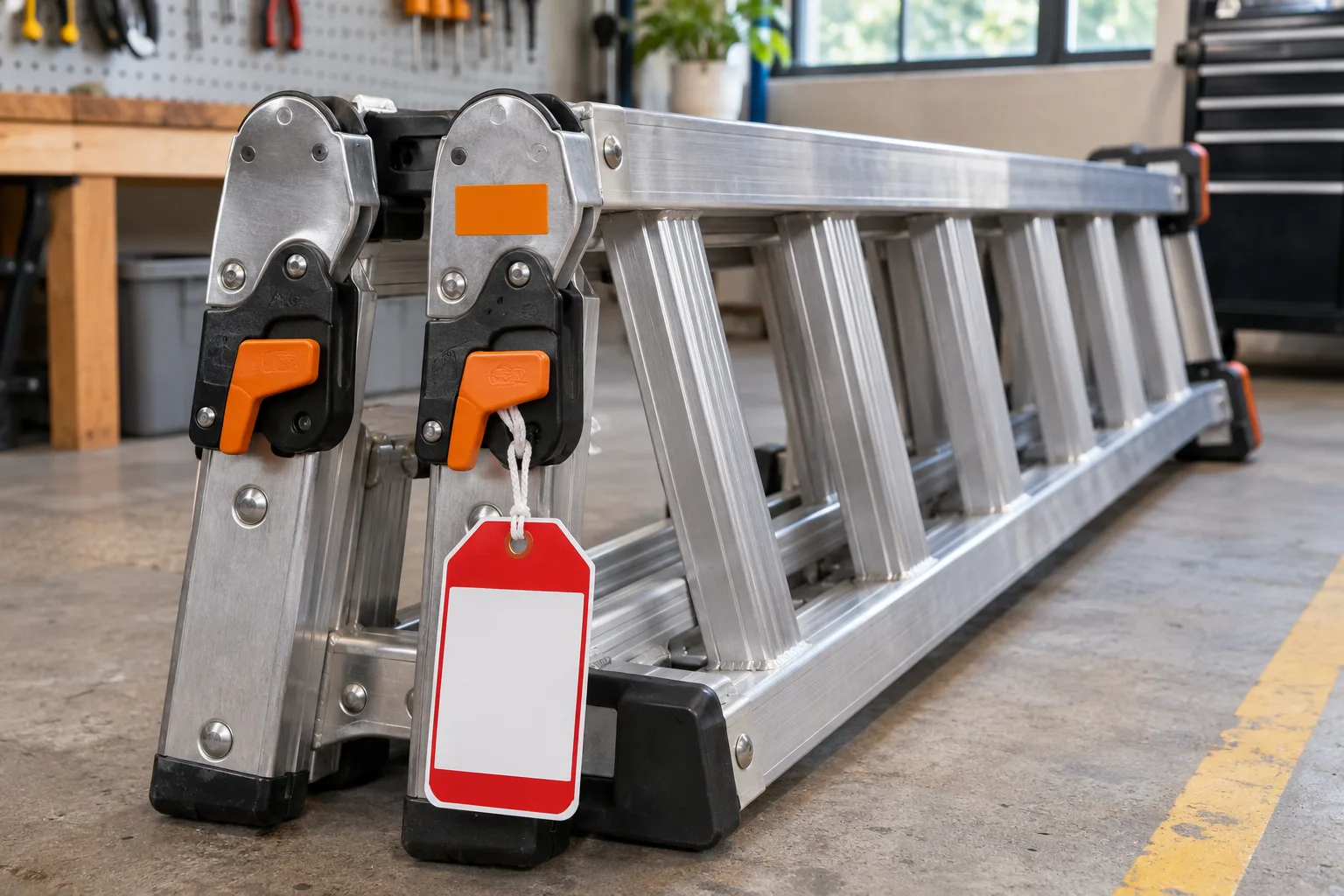
On November 5, 2026, the U.S. Consumer Product Safety Commission announced a recall involving about 3,662,000 Little Giant ladders equipped with Rapid Locks. The recall concerns a specific failure mode: a Rapid Lock may not be fully engaged, allowing the ladder section to retract suddenly. On a multi-position ladder, that movement can change the support beneath a user without warning and create a serious fall hazard. The practical implication is immediate: an owner who suspects that a ladder is included should keep it out of service while checking the recall information. This is not a routine adjustment, a normal maintenance question or a situation where the ladder should be tested by climbing it.
The reported history explains why the stop-use approach matters. The recall notice identifies 25 reports of ladder retractions and 19 injuries, including three reported head injuries. Those figures describe reported incidents associated with the recalled ladders; they are not a reason to assume that every Rapid-Lock ladder will fail, but they are enough to make an uncertain ladder a safety issue rather than a minor equipment concern. A lock that appears to move normally during a quick inspection may still be unsafe if it has not engaged as intended, and a ground-level visual check cannot justify putting weight on a ladder whose recall status has not been established.
The central question at this stage is not whether the ladder looks worn or whether it has been used recently. It is whether the specific ladder falls within the recall and, if so, whether the manufacturer’s approved remedy has been completed. The affected equipment is identified by its brand, model information and Rapid-Lock design, so the owner should preserve those details and consult the official recall instructions before doing anything else with the ladder. Until its status is clear, the safest handling is to prevent use by anyone in the household, workplace or job area.
That distinction matters because ladder safety decisions are often made when a task needs to be done: a ladder is taken from storage, opened and judged by appearance. In this case, that sequence is unsafe. A recalled or potentially recalled ladder should not be opened for a load test, climbed to see whether both locks hold, or placed in a work position to compare its behavior with another ladder. The reported hazard is sudden retraction when a lock is not fully engaged, so applying body weight as an informal test would introduce the very fall exposure the recall is intended to prevent.
For owners, the first response can remain simple. Set the ladder aside, make sure other people know it is not available for use, and identify the model from the ground. Do not treat the absence of visible damage as proof that the ladder is safe, and do not treat a recently completed job without incident as proof that its locks are working correctly. The issue described in the recall is the possibility that a lock is not fully engaged, which may not be resolved by ordinary visual familiarity or by continuing to use the ladder cautiously.
The next step is a controlled identification check using the information on the ladder and the manufacturer’s recall guidance. That check should happen before climbing, loading or repositioning the equipment for work. If the owner cannot confidently establish that the ladder is outside the recall, the prudent choice is to leave it out of service and verify its status through Little Giant’s official recall information. The recall’s scale and injury reports make that preliminary check a safety stop, not a suggestion to continue using the ladder until a convenient time to investigate.
How to check the ladder without climbing it
Start the identification process from the ground. Do not open the ladder, climb it, extend it under load, or deliberately cycle the locking mechanism to see whether it works. First, look along the side rail for the Little Giant name and the model name or other identifying information. Use a stable position that lets you read the markings without leaning the ladder against an unsafe surface or reaching around its sections. If the label is dirty or difficult to read, clean only what is necessary to make the existing information visible; the goal is identification, not a functional test.
Next, look at both ladder legs for the Rapid Lock hardware. The locks may be black or orange, so color alone does not establish whether the ladder is included. The relevant combination is the manufacturer, the model information on the side rail, and the presence of Rapid Locks on both sides. Compare the model name with the 11 model families identified in the recall notice. Because several Little Giant ladders can look similar while having different model designations, do not rely on the overall shape, finish, size, or a familiar product nickname. Read the model information directly from the ladder and compare it with the official CPSC notice or Little Giant’s recall information.
There is also an exception that must be checked carefully. Look above a Rapid Lock for an orange, rectangular QC sticker. The CPSC notice excludes ladders bearing that QC sticker from the recall. That exclusion means the sticker is an important part of the identification process, but it does not make it sensible to ignore unclear or conflicting information. Check whether the sticker is actually present above the Rapid Lock and whether the model details can still be read. Do not treat a faded mark, a different label, or a sticker in another location as an automatic match for the QC-sticker exception.
A practical ground-level sequence is therefore: read the Little Giant and model information on the side rail; identify the Rapid Locks on both ladder legs; compare the model with the 11 named model families in the recall notice; then check for the orange rectangular QC sticker above a Rapid Lock. Record the information or photograph the labels from a safe position if that will help when consulting the official recall page. If any part of the identification is uncertain, leave the ladder where it cannot be used accidentally and verify the details through Little Giant’s official recall information.
The important boundary is that identification should not become an experiment. A lock that appears to engage while the ladder is empty may not provide the assurance needed for a person’s weight, and a user cannot safely resolve uncertainty by climbing a few steps or applying force to the sections. The recall concerns the possibility that a Rapid Lock may not be fully engaged and may allow sudden retraction. For that reason, an uncertain owner should treat the ladder as unverified and keep it out of service while seeking confirmation. This is especially important when the model marking is incomplete, the Rapid Lock color is unclear, or the QC sticker cannot be confidently located.
Use the CPSC recall notice and Little Giant’s official recall page together when the markings are difficult to interpret. The manufacturer’s page is the appropriate place to confirm the current identification and remedy information for a particular ladder. If the model appears to match a named family but the QC-sticker status is unclear, do not decide that the ladder is safe based on appearance or past use. Keep it grounded, prevent others from picking it up, and obtain a clear answer before it is returned to service.
The approved remedy and what not to improvise
If the ladder appears to be included in the recall, the next step is not to adjust the Rapid Lock, climb it to see whether it holds, or attempt a repair from memory. Keep the ladder out of service and use Little Giant’s official recall process to request the repair kit. The kit is the manufacturer’s approved route for addressing the recalled lock condition, and its instructions should be followed as supplied. The warning labels included with the remedy should also be applied exactly as directed so that the ladder’s status remains clear to anyone who may encounter it later.
That approach matters because a Rapid Lock that appears to engage is not necessarily safe to rely on under a person’s weight. The reported hazard involves sudden retraction when a lock is not fully engaged. A quick visual check or a temporary adjustment cannot establish that the mechanism has been restored to the condition required for use. Until the manufacturer’s process is complete, the ladder should remain isolated from normal work and household storage where someone might pick it up without knowing that it is affected.
The recall guidance also calls for checking lock engagement before every use and for lubrication as part of the specified process. Those instructions should be treated as a sequence, not as permission to substitute a preferred lubricant, skip a step, or create a different maintenance routine. Follow the supplied directions for the repair kit and warning labels, then perform the required engagement check before the ladder is returned to service. If a lock still fails after the specified process, stop there and contact Little Giant for evaluation. The manufacturer’s recall information provides replacement or refund options in qualifying cases, so a continuing problem should be handled through that route rather than through further experimentation.
Several seemingly practical fixes are inappropriate for a recalled locking mechanism. Do not drill into the rails, bend the lock or surrounding metal, or replace lock components with hardware-store parts. Do not remove a safety interlock because it makes the ladder easier to open, and do not secure a moving part with wire, tape, a bolt, or another improvised restraint. Such changes can alter how the two ladder legs, locks and position controls work together. They may also conceal the original defect from the manufacturer and leave the next user with no reliable way to know what has been changed.
The same caution applies to a ladder that has already been modified before the recall check. An owner should not assume that an earlier repair, adjustment or replacement part has resolved the issue simply because the ladder opens and closes. If the model is uncertain, the lock does not behave as expected, or the ladder cannot be brought through the official remedy as instructed, keep it out of service and ask Little Giant to evaluate it. The goal is not merely to make the mechanism move; it is to establish that the recalled ladder has received the approved remedy and can be used under the manufacturer’s instructions.
A simple handoff record can help prevent an accidental return to use. Mark the ladder with the supplied warning information, place it where children, visitors and other workers will not mistake it for an available ladder, and tell anyone who normally uses it that it is unavailable. Once the repair kit has been applied, retain the instructions and confirm the locks engage as directed before the first use and before each later use. If any lock slips, retracts unexpectedly or fails the check, stop using the ladder again and contact the manufacturer instead of making another adjustment yourself.
This is the point where do-it-yourself troubleshooting ends. A recalled ladder is safety equipment with a failure mode tied directly to the support of the climber. The approved repair kit, the manufacturer’s instructions and the manufacturer’s evaluation process provide the relevant path; improvised hardware and informal tests do not. Keeping that boundary clear protects the person who owns the ladder and anyone else who might later depend on it.
Safe storage, inspection and the point where DIY ends
Once a ladder may be included in the Rapid Lock recall, the safest next step is to make sure nobody can use it by accident. Do not leave it leaning in a hallway, beside a workbench, or in a place where another person could pick it up without seeing the warning. Attach a clear “Do not use” label, or isolate the ladder in a location reserved for equipment awaiting inspection or repair. If the ladder is shared by a household, workplace or crew, tell the people who might otherwise assume that it is available.
Use this short sequence to keep the ladder controlled while you verify its status:
- Take it out of service immediately. Do not climb it, open it under load, or use it for a quick check. A ladder that appears stable on the ground can still present a fall hazard if a locking component retracts unexpectedly.
- Mark and isolate it. Place a visible warning on the ladder and keep it away from active work areas, access routes and other equipment that is ready for use. If several ladders are stored together, separate the suspected ladder so its status is unmistakable.
- Inspect from the ground only. Look at the side rails, rungs, feet, locking components and identification markings without climbing or placing weight on the ladder. The ground-level check is for identification and condition reporting, not for proving that the ladder can safely support a person.
- Use the manufacturer’s process. Do not return the ladder to service until the approved remedy has been completed according to the supplied instructions. If a lock still does not function as directed, contact Little Giant for evaluation rather than attempting another repair.
This is also the point where a homeowner’s DIY troubleshooting should end. Do not drill into the ladder, bend or reshape a rail, substitute hardware-store parts for a lock component, remove a safety interlock, or rely on a homemade fastener. Such changes can alter how the ladder carries a load and can make the condition harder for the manufacturer to evaluate. A repair that looks simple from the outside is not a safe substitute for the recall kit, the manufacturer’s instructions or an evaluation by Little Giant.
The same rule applies to any ladder that is visibly damaged or has a malfunctioning locking mechanism: remove it from service and have it evaluated by the manufacturer or a qualified professional. Do not put it back into circulation merely because it stands upright, because one side appears to lock, or because it has not failed during an unloaded test. A ladder’s safety depends on its components working together when a person is using it, and a ground-level visual check cannot replace the approved remedy.
If a replacement ladder is needed, inspect it before use. Check that the rungs are sound, the rails are not damaged, the feet are present and in usable condition, and the locking components engage as intended. Follow the ladder’s instructions and check the locking points before each use. When climbing, face the ladder and maintain a handhold. These basic habits do not make a recalled ladder safe; they are the minimum checks for a ladder that has been cleared for use and is in service.
The practical dividing line is clear: storage, labeling and a ground-level identification check are reasonable steps for the owner, but a failed or recalled locking system is not a casual repair project. Keep the ladder isolated until Little Giant’s remedy is complete, or until the manufacturer or a qualified professional has evaluated the problem and given the appropriate next step.
Related articles

How to Try Fall Fragrance and Scented Body Care on a Budget Without Irritating Your Skin
Fall fragrance is moving into body washes, lotions and affordable mists. The smart budget move is not buying every scent; it is choosing where fragrance belongs in your routine and where fragrance-free still wins.


Fridge ratatouille: the easy one-pot dinner for too many zucchini and tomatoes
A practical 45-minute vegetable pot that rescues softening summer produce and turns it into dinner, leftovers and sauce.


Small Dogs Are Not Just Smaller Dogs: The Health Checks Owners Should Move Higher Up the List
A new 2026 report draws attention to the different risks carried by dogs under 25 pounds. Here is how owners can turn that information into sensible dental, mobility, feeding, urinary and aging habits without treating a report as a diagnosis.


git-annex and the new dependency question: can open source avoid AI-generated code?
Joey Hess spent about 100 hours trying to keep git-annex buildable without LLM-generated dependencies. The result is not a purity tale, but a practical warning about provenance, maintainability, and trust in modern open-source supply chains.

Comments
Sign in to comment.
No comments yet.