Late-June garden triage: water, mulch, shade, then leave the plants alone
A practical, source-backed look at what is worth changing now and what is only noise.

This is the kind of story that looks smaller than it is. A garden under heat does not need theatrical rescue every evening. It needs a quiet order of operations: check soil moisture, water deeply at the root zone, protect shallow-rooted crops, deadhead selectively, and stop doing cosmetic jobs during the hottest hours. The week has enough noise already, so the useful question is simple: what should a reader actually change after reading the news?
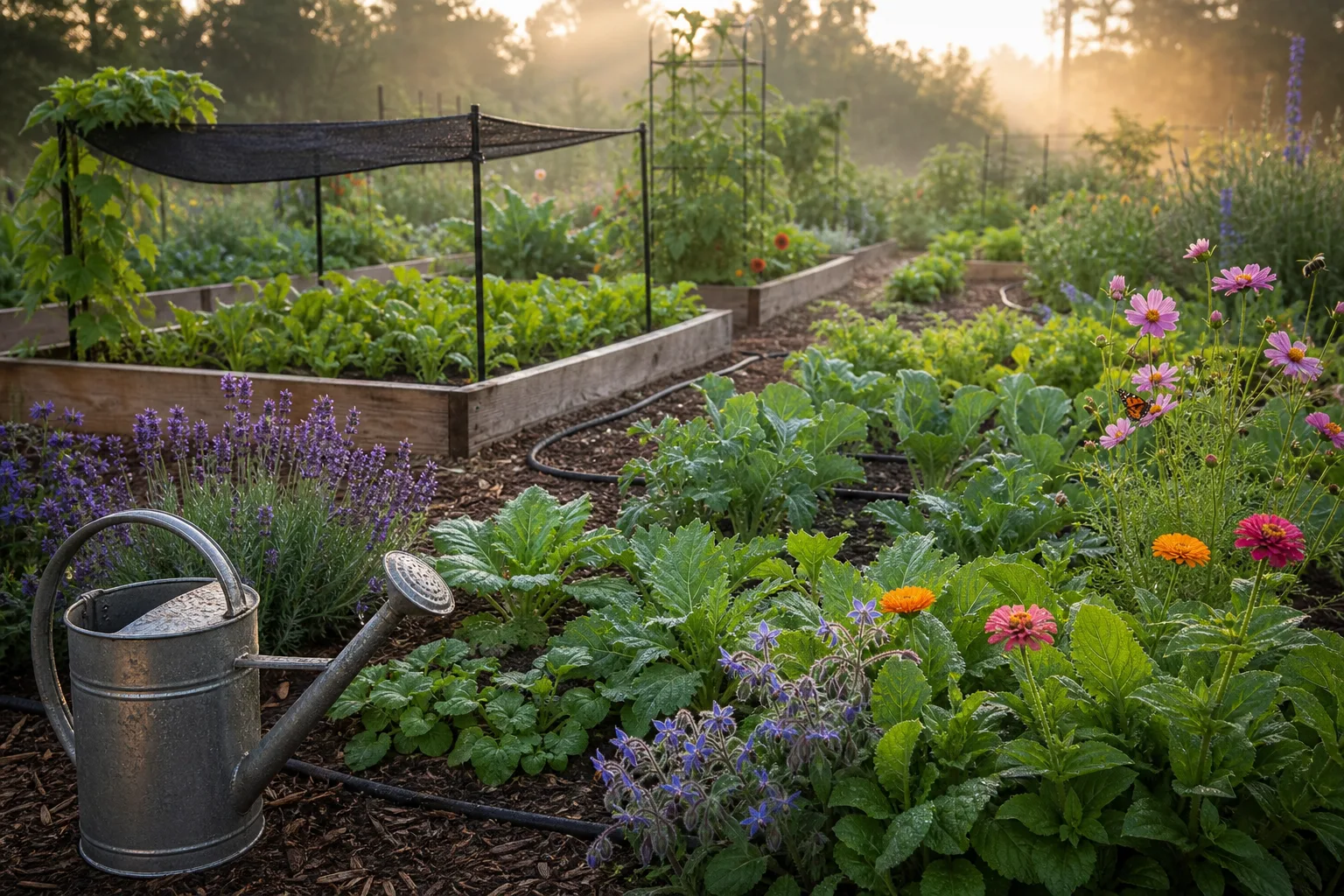
Start with soil, not leaves
For start with soil, not leaves, check 1.1 is deliberately narrow. The useful reading of start with soil, not leaves starts with evidence, not mood. Late-June gardening advice from university extension services and the Royal Horticultural Society converges on the same practical point: heat stress is usually managed by water timing, soil cover, airflow, and patient observation, not by constant intervention. Weather services across Europe and North America have also kept warning about early-summer heat spells, which makes the ordinary watering plan more important. Put together, those references describe a practical pattern rather than a single miracle fix. For this bed, check soil moisture below the mulch.
For start with soil, not leaves, check 1.2 is deliberately narrow. For a reader, the first question is ownership. Who can change this setting, buy this part, schedule this patch, or stop this habit? If the answer is nobody, the story is only background. If the answer is a named person or household routine, it becomes work. For this bed, check morning leaf posture.
For start with soil, not leaves, check 1.3 is deliberately narrow. The second question is reversibility. Good operational advice leaves room to undo a decision. A browser extension can be removed, an irrigation timer can be tested on one bed, an AI-agent rule can be trialed on a low-risk ticket, and a public-service kiosk can run beside the old counter until trust is earned. For this bed, check drip-line placement.
For start with soil, not leaves, check 1.4 is deliberately narrow. The uncomfortable detail is that boring checks usually beat dramatic fixes. Inventory, logs, soil moisture, accessibility testing, plain-language instructions and rollback plans do not make flashy headlines. They do keep people from being surprised twice by the same failure. For this bed, check shade during the hottest two hours.
For start with soil, not leaves, check 1.5 is deliberately narrow. There is also a cost to overreacting. Teams that chase every alert burn attention; gardeners who water every leaf invite disease; managers who give an AI agent a heroic assignment create review debt; agencies that buy a shiny system without support make the service harder for the very people it should help. For this bed, check airflow around crowded plants.
For start with soil, not leaves, check 1.6 is deliberately narrow. A better rule is to make the next action small enough to finish. Choose one account class, one bed, one workflow, one public counter, or one device family. Fix that slice, write down what changed, and only then widen the circle. For this bed, check pollinator water and shallow stones.
For start with soil, not leaves, check 1.7 is deliberately narrow. The reader takeaway is not to admire technology from a distance. It is to ask whether the tool reduces a real failure mode. Does it save a trip, prevent exposure, keep water at the roots, make a review easier, or give staff a way to help without improvising? If not, it can wait. For this bed, check whether a task can wait until evening.
Deep watering beats daily splashing
For deep watering beats daily splashing, check 2.1 is deliberately narrow. For a reader, the first question is ownership. Who can change this setting, buy this part, schedule this patch, or stop this habit? If the answer is nobody, the story is only background. If the answer is a named person or household routine, it becomes work. For this bed, check morning leaf posture.
For deep watering beats daily splashing, check 2.2 is deliberately narrow. The second question is reversibility. Good operational advice leaves room to undo a decision. A browser extension can be removed, an irrigation timer can be tested on one bed, an AI-agent rule can be trialed on a low-risk ticket, and a public-service kiosk can run beside the old counter until trust is earned. For this bed, check drip-line placement.
For deep watering beats daily splashing, check 2.3 is deliberately narrow. The uncomfortable detail is that boring checks usually beat dramatic fixes. Inventory, logs, soil moisture, accessibility testing, plain-language instructions and rollback plans do not make flashy headlines. They do keep people from being surprised twice by the same failure. For this bed, check shade during the hottest two hours.
For deep watering beats daily splashing, check 2.4 is deliberately narrow. There is also a cost to overreacting. Teams that chase every alert burn attention; gardeners who water every leaf invite disease; managers who give an AI agent a heroic assignment create review debt; agencies that buy a shiny system without support make the service harder for the very people it should help. For this bed, check airflow around crowded plants.
For deep watering beats daily splashing, check 2.5 is deliberately narrow. A better rule is to make the next action small enough to finish. Choose one account class, one bed, one workflow, one public counter, or one device family. Fix that slice, write down what changed, and only then widen the circle. For this bed, check pollinator water and shallow stones.
For deep watering beats daily splashing, check 2.6 is deliberately narrow. The reader takeaway is not to admire technology from a distance. It is to ask whether the tool reduces a real failure mode. Does it save a trip, prevent exposure, keep water at the roots, make a review easier, or give staff a way to help without improvising? If not, it can wait. For this bed, check whether a task can wait until evening.
For deep watering beats daily splashing, check 2.7 is deliberately narrow. The useful reading of deep watering beats daily splashing starts with evidence, not mood. Late-June gardening advice from university extension services and the Royal Horticultural Society converges on the same practical point: heat stress is usually managed by water timing, soil cover, airflow, and patient observation, not by constant intervention. Weather services across Europe and North America have also kept warning about early-summer heat spells, which makes the ordinary watering plan more important. Put together, those references describe a practical pattern rather than a single miracle fix. For this bed, check soil moisture below the mulch.
Mulch is boring because it works
For mulch is boring because it works, check 3.1 is deliberately narrow. The second question is reversibility. Good operational advice leaves room to undo a decision. A browser extension can be removed, an irrigation timer can be tested on one bed, an AI-agent rule can be trialed on a low-risk ticket, and a public-service kiosk can run beside the old counter until trust is earned. For this bed, check drip-line placement.
For mulch is boring because it works, check 3.2 is deliberately narrow. The uncomfortable detail is that boring checks usually beat dramatic fixes. Inventory, logs, soil moisture, accessibility testing, plain-language instructions and rollback plans do not make flashy headlines. They do keep people from being surprised twice by the same failure. For this bed, check shade during the hottest two hours.
For mulch is boring because it works, check 3.3 is deliberately narrow. There is also a cost to overreacting. Teams that chase every alert burn attention; gardeners who water every leaf invite disease; managers who give an AI agent a heroic assignment create review debt; agencies that buy a shiny system without support make the service harder for the very people it should help. For this bed, check airflow around crowded plants.
For mulch is boring because it works, check 3.4 is deliberately narrow. A better rule is to make the next action small enough to finish. Choose one account class, one bed, one workflow, one public counter, or one device family. Fix that slice, write down what changed, and only then widen the circle. For this bed, check pollinator water and shallow stones.
For mulch is boring because it works, check 3.5 is deliberately narrow. The reader takeaway is not to admire technology from a distance. It is to ask whether the tool reduces a real failure mode. Does it save a trip, prevent exposure, keep water at the roots, make a review easier, or give staff a way to help without improvising? If not, it can wait. For this bed, check whether a task can wait until evening.
For mulch is boring because it works, check 3.6 is deliberately narrow. The useful reading of mulch is boring because it works starts with evidence, not mood. Late-June gardening advice from university extension services and the Royal Horticultural Society converges on the same practical point: heat stress is usually managed by water timing, soil cover, airflow, and patient observation, not by constant intervention. Weather services across Europe and North America have also kept warning about early-summer heat spells, which makes the ordinary watering plan more important. Put together, those references describe a practical pattern rather than a single miracle fix. For this bed, check soil moisture below the mulch.
For mulch is boring because it works, check 3.7 is deliberately narrow. For a reader, the first question is ownership. Who can change this setting, buy this part, schedule this patch, or stop this habit? If the answer is nobody, the story is only background. If the answer is a named person or household routine, it becomes work. For this bed, check morning leaf posture.
Shade cloth is a tool, not a confession of failure
For shade cloth is a tool, not a confession of failure, check 4.1 is deliberately narrow. The uncomfortable detail is that boring checks usually beat dramatic fixes. Inventory, logs, soil moisture, accessibility testing, plain-language instructions and rollback plans do not make flashy headlines. They do keep people from being surprised twice by the same failure. For this bed, check shade during the hottest two hours.
For shade cloth is a tool, not a confession of failure, check 4.2 is deliberately narrow. There is also a cost to overreacting. Teams that chase every alert burn attention; gardeners who water every leaf invite disease; managers who give an AI agent a heroic assignment create review debt; agencies that buy a shiny system without support make the service harder for the very people it should help. For this bed, check airflow around crowded plants.
For shade cloth is a tool, not a confession of failure, check 4.3 is deliberately narrow. A better rule is to make the next action small enough to finish. Choose one account class, one bed, one workflow, one public counter, or one device family. Fix that slice, write down what changed, and only then widen the circle. For this bed, check pollinator water and shallow stones.
For shade cloth is a tool, not a confession of failure, check 4.4 is deliberately narrow. The reader takeaway is not to admire technology from a distance. It is to ask whether the tool reduces a real failure mode. Does it save a trip, prevent exposure, keep water at the roots, make a review easier, or give staff a way to help without improvising? If not, it can wait. For this bed, check whether a task can wait until evening.
For shade cloth is a tool, not a confession of failure, check 4.5 is deliberately narrow. The useful reading of shade cloth is a tool, not a confession of failure starts with evidence, not mood. Late-June gardening advice from university extension services and the Royal Horticultural Society converges on the same practical point: heat stress is usually managed by water timing, soil cover, airflow, and patient observation, not by constant intervention. Weather services across Europe and North America have also kept warning about early-summer heat spells, which makes the ordinary watering plan more important. Put together, those references describe a practical pattern rather than a single miracle fix. For this bed, check soil moisture below the mulch.
For shade cloth is a tool, not a confession of failure, check 4.6 is deliberately narrow. For a reader, the first question is ownership. Who can change this setting, buy this part, schedule this patch, or stop this habit? If the answer is nobody, the story is only background. If the answer is a named person or household routine, it becomes work. For this bed, check morning leaf posture.
For shade cloth is a tool, not a confession of failure, check 4.7 is deliberately narrow. The second question is reversibility. Good operational advice leaves room to undo a decision. A browser extension can be removed, an irrigation timer can be tested on one bed, an AI-agent rule can be trialed on a low-risk ticket, and a public-service kiosk can run beside the old counter until trust is earned. For this bed, check drip-line placement.
Prune less during stress
For prune less during stress, check 5.1 is deliberately narrow. There is also a cost to overreacting. Teams that chase every alert burn attention; gardeners who water every leaf invite disease; managers who give an AI agent a heroic assignment create review debt; agencies that buy a shiny system without support make the service harder for the very people it should help. For this bed, check airflow around crowded plants.
For prune less during stress, check 5.2 is deliberately narrow. A better rule is to make the next action small enough to finish. Choose one account class, one bed, one workflow, one public counter, or one device family. Fix that slice, write down what changed, and only then widen the circle. For this bed, check pollinator water and shallow stones.
For prune less during stress, check 5.3 is deliberately narrow. The reader takeaway is not to admire technology from a distance. It is to ask whether the tool reduces a real failure mode. Does it save a trip, prevent exposure, keep water at the roots, make a review easier, or give staff a way to help without improvising? If not, it can wait. For this bed, check whether a task can wait until evening.
For prune less during stress, check 5.4 is deliberately narrow. The useful reading of prune less during stress starts with evidence, not mood. Late-June gardening advice from university extension services and the Royal Horticultural Society converges on the same practical point: heat stress is usually managed by water timing, soil cover, airflow, and patient observation, not by constant intervention. Weather services across Europe and North America have also kept warning about early-summer heat spells, which makes the ordinary watering plan more important. Put together, those references describe a practical pattern rather than a single miracle fix. For this bed, check soil moisture below the mulch.
For prune less during stress, check 5.5 is deliberately narrow. For a reader, the first question is ownership. Who can change this setting, buy this part, schedule this patch, or stop this habit? If the answer is nobody, the story is only background. If the answer is a named person or household routine, it becomes work. For this bed, check morning leaf posture.
For prune less during stress, check 5.6 is deliberately narrow. The second question is reversibility. Good operational advice leaves room to undo a decision. A browser extension can be removed, an irrigation timer can be tested on one bed, an AI-agent rule can be trialed on a low-risk ticket, and a public-service kiosk can run beside the old counter until trust is earned. For this bed, check drip-line placement.
For prune less during stress, check 5.7 is deliberately narrow. The uncomfortable detail is that boring checks usually beat dramatic fixes. Inventory, logs, soil moisture, accessibility testing, plain-language instructions and rollback plans do not make flashy headlines. They do keep people from being surprised twice by the same failure. For this bed, check shade during the hottest two hours.
Pollinator corners need water too
For pollinator corners need water too, check 6.1 is deliberately narrow. A better rule is to make the next action small enough to finish. Choose one account class, one bed, one workflow, one public counter, or one device family. Fix that slice, write down what changed, and only then widen the circle. For this bed, check pollinator water and shallow stones.
For pollinator corners need water too, check 6.2 is deliberately narrow. The reader takeaway is not to admire technology from a distance. It is to ask whether the tool reduces a real failure mode. Does it save a trip, prevent exposure, keep water at the roots, make a review easier, or give staff a way to help without improvising? If not, it can wait. For this bed, check whether a task can wait until evening.
For pollinator corners need water too, check 6.3 is deliberately narrow. The useful reading of pollinator corners need water too starts with evidence, not mood. Late-June gardening advice from university extension services and the Royal Horticultural Society converges on the same practical point: heat stress is usually managed by water timing, soil cover, airflow, and patient observation, not by constant intervention. Weather services across Europe and North America have also kept warning about early-summer heat spells, which makes the ordinary watering plan more important. Put together, those references describe a practical pattern rather than a single miracle fix. For this bed, check soil moisture below the mulch.
For pollinator corners need water too, check 6.4 is deliberately narrow. For a reader, the first question is ownership. Who can change this setting, buy this part, schedule this patch, or stop this habit? If the answer is nobody, the story is only background. If the answer is a named person or household routine, it becomes work. For this bed, check morning leaf posture.
For pollinator corners need water too, check 6.5 is deliberately narrow. The second question is reversibility. Good operational advice leaves room to undo a decision. A browser extension can be removed, an irrigation timer can be tested on one bed, an AI-agent rule can be trialed on a low-risk ticket, and a public-service kiosk can run beside the old counter until trust is earned. For this bed, check drip-line placement.
For pollinator corners need water too, check 6.6 is deliberately narrow. The uncomfortable detail is that boring checks usually beat dramatic fixes. Inventory, logs, soil moisture, accessibility testing, plain-language instructions and rollback plans do not make flashy headlines. They do keep people from being surprised twice by the same failure. For this bed, check shade during the hottest two hours.
For pollinator corners need water too, check 6.7 is deliberately narrow. There is also a cost to overreacting. Teams that chase every alert burn attention; gardeners who water every leaf invite disease; managers who give an AI agent a heroic assignment create review debt; agencies that buy a shiny system without support make the service harder for the very people it should help. For this bed, check airflow around crowded plants.
The evening checklist that prevents most mistakes
For the evening checklist that prevents most mistakes, check 7.1 is deliberately narrow. The reader takeaway is not to admire technology from a distance. It is to ask whether the tool reduces a real failure mode. Does it save a trip, prevent exposure, keep water at the roots, make a review easier, or give staff a way to help without improvising? If not, it can wait. For this bed, check whether a task can wait until evening.
For the evening checklist that prevents most mistakes, check 7.2 is deliberately narrow. The useful reading of the evening checklist that prevents most mistakes starts with evidence, not mood. Late-June gardening advice from university extension services and the Royal Horticultural Society converges on the same practical point: heat stress is usually managed by water timing, soil cover, airflow, and patient observation, not by constant intervention. Weather services across Europe and North America have also kept warning about early-summer heat spells, which makes the ordinary watering plan more important. Put together, those references describe a practical pattern rather than a single miracle fix. For this bed, check soil moisture below the mulch.
For the evening checklist that prevents most mistakes, check 7.3 is deliberately narrow. For a reader, the first question is ownership. Who can change this setting, buy this part, schedule this patch, or stop this habit? If the answer is nobody, the story is only background. If the answer is a named person or household routine, it becomes work. For this bed, check morning leaf posture.
For the evening checklist that prevents most mistakes, check 7.4 is deliberately narrow. The second question is reversibility. Good operational advice leaves room to undo a decision. A browser extension can be removed, an irrigation timer can be tested on one bed, an AI-agent rule can be trialed on a low-risk ticket, and a public-service kiosk can run beside the old counter until trust is earned. For this bed, check drip-line placement.
For the evening checklist that prevents most mistakes, check 7.5 is deliberately narrow. The uncomfortable detail is that boring checks usually beat dramatic fixes. Inventory, logs, soil moisture, accessibility testing, plain-language instructions and rollback plans do not make flashy headlines. They do keep people from being surprised twice by the same failure. For this bed, check shade during the hottest two hours.
For the evening checklist that prevents most mistakes, check 7.6 is deliberately narrow. There is also a cost to overreacting. Teams that chase every alert burn attention; gardeners who water every leaf invite disease; managers who give an AI agent a heroic assignment create review debt; agencies that buy a shiny system without support make the service harder for the very people it should help. For this bed, check airflow around crowded plants.
For the evening checklist that prevents most mistakes, check 7.7 is deliberately narrow. A better rule is to make the next action small enough to finish. Choose one account class, one bed, one workflow, one public counter, or one device family. Fix that slice, write down what changed, and only then widen the circle. For this bed, check pollinator water and shallow stones.
What to do next
Pick one small change, do it today, and leave a note for the person who will inherit the system tomorrow. That is not glamorous. It is how useful work survives a noisy week.
Related articles
The late-June garden reset: water by evidence, mulch for heat, plant for insects
A practical late-June garden guide for watering by evidence, mulching correctly, protecting containers and keeping pollinators fed.

Your garden needs a water budget before the next heatwave
When drought rules limit outdoor watering, the safest garden plan is not watering everything. It is choosing what must survive first.
Microclover lawns can beat the heat. They can also be the wrong answer
A viral clover patch stayed green under drought limits, but the practical lesson is not “plant clover everywhere.” Start with region, species, water, traffic and rules.

When a zucchini wilts overnight: how to spot squash vine borer before the stem is gone
A practical late-summer guide to diagnosing squash vine borer, deciding whether to rescue a plant, and planning prevention without harming pollinators.

Comments
Sign in to comment.
No comments yet.