Jumping worms make plant swaps and compost a garden biosecurity problem
Late summer is the season to spot invasive jumping worms, but the real work is deciding what soil, mulch and plants should not move.

Late summer is when an awkward garden problem becomes visible. A gardener lifts mulch, turns compost or divides a perennial and sees thin worms thrashing hard enough to look like they are jumping. The soil around them may crumble into dry, granular pellets that people often compare with coffee grounds. That small scene now matters beyond one bed, because invasive jumping worms turn ordinary garden habits into biosecurity decisions: sharing plants, moving compost, buying mulch and cleaning tools.
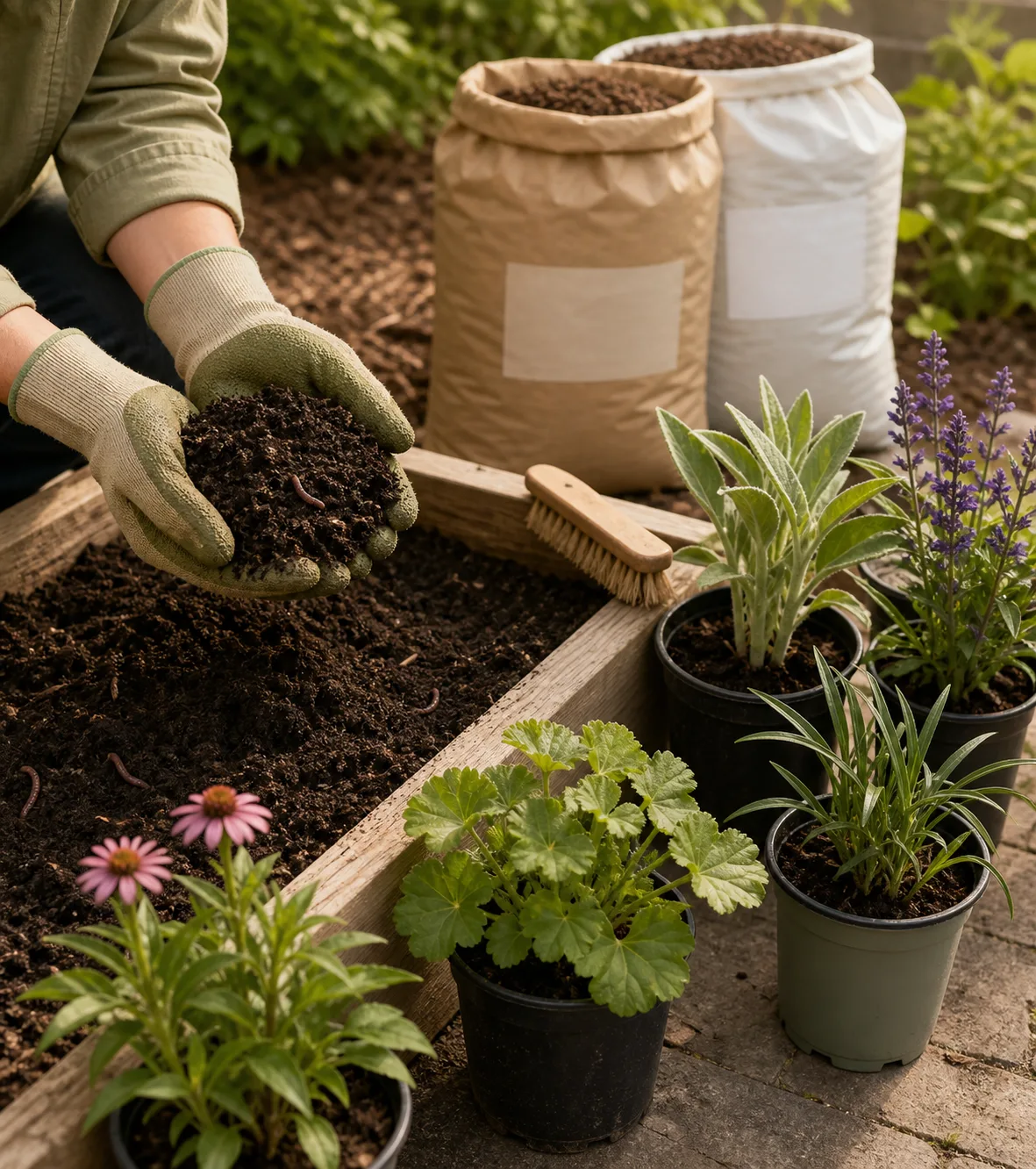
This is a good Garden and Yard story precisely because it is practical. The answer is not to fear every earthworm or to stop gardening with neighbors. The answer is to understand which material moves risk. University extension services in Minnesota, Illinois, Wisconsin and other states describe jumping worms as invasive earthworms, commonly in Amynthas and Metaphire groups, that live near the surface and spread through soil, potted plants, mulch, compost, equipment and bait worms. In late August, adults are easier to notice, while cocoons may already be present in soil.
Why the timing matters
Jumping worms are easiest for many gardeners to spot from mid-summer until frost. University of Minnesota Extension says they hatch in late spring in the top few inches of soil, grow through summer and begin laying eggs in August. University of Illinois Extension describes adults as active from mid-summer to the first hard freezes and warns that the tiny eggs are not visible to the naked eye. That combination makes late summer plant swaps and fall transplanting risky if soil is moved casually.
The topic returned to public attention in 2026 because local reporting and social discussions turned a technical invasive-species issue into a household garden dilemma. WVIK and Harvest Public Media described jumping worms as a cryptic invader that has been found across nearly 40 U.S. states, including a recent Colorado detection. Yahoo Lifestyle picked up a Reddit case where a gardener already working on restoration found Asian jumping worms and described the emotional exhaustion of facing another invasive problem.
Those social posts should not be treated as scientific evidence by themselves. They are useful as a signal of what people are asking: Can I use my compost? Should I cancel a plant swap? Can I give divisions to a neighbor? Is there a safe treatment? The factual base should remain extension guidance and university research.
What jumping worms are
The phrase “jumping worm” usually refers to invasive earthworms such as Amynthas spp. and related Metaphire spp., originally from East Asia. They are also called Asian jumping worms, snake worms, crazy worms or Alabama jumpers in some garden and bait contexts. Names vary, and the exact species can matter for regulators, but the garden-level risk is similar: they live in the organic layer and upper soil rather than behaving like the familiar deep-burrowing earthworms many gardeners learned to welcome.
Identification starts with behavior. These worms can thrash, flip, wriggle in an S-shape and shed their tail when handled. Their clitellum, the pale band near the head end of a mature worm, is smooth, light-colored and wraps fully around the body instead of appearing as a raised saddle. Gardeners should avoid relying on one sign from a blurry photo. Behavior, band shape, location in the soil and the coffee-ground surface together make a stronger case.
The bigger mental shift is that “earthworm” does not automatically mean “healthy soil.” In forests and many garden situations, these invasive worms consume leaf litter and organic material faster than the ecosystem can rebuild it. That can change moisture, nutrients, seedling habitat and the physical structure of the top layer.
What they do to soil
The most visible symptom is crumbly, granular soil that looks like spent coffee grounds. It may feel loose at the surface but less supportive for roots. Plants can become weak, especially shallow-rooted perennials, seedlings and native understory plants that depend on a stable organic layer. Water can move differently through the bed, and the soil may lose the sponge-like quality gardeners try to build with compost and leaf mold.
University and extension materials describe wider ecological effects as well: reduced leaf litter, changes to soil microbes, stress on small plants and disruption of habitat for invertebrates. WVIK's reporting also connected the problem to forest floors and ground-nesting birds. For a home gardener, the immediate issue may be a perennial bed that suddenly behaves poorly. For a restoration project, the issue is larger: the living layer that supports native plants can be consumed from underneath.
That is why adding more organic matter is not always the obvious fix. Mulch and compost are valuable in normal garden management, but in an infested area they can also feed a surface-dwelling population. The point is not to stop mulching everywhere. It is to know where material comes from, where it goes, and whether it may carry cocoons.
How they spread
Jumping worms spread because gardeners move the things they live in. Soil attached to perennial divisions, nursery pots, compost, mulch, leaf litter, wood chips, equipment, shoes, tires and fishing bait can all carry risk. Adults are obvious when present; cocoons are the harder problem because they are small, durable and easy to miss.
This changes the etiquette of generous gardening. A clump of daylilies, hosta or native perennials may look like a gift, but if it carries soil from an infested bed it may also carry cocoons. A community plant sale may be well intentioned and still become a distribution network. A load of cheap mulch may be convenient and still deserve questions about source and treatment.
Good biosecurity does not require accusing neighbors or nurseries. It requires new habits: ask where compost and mulch came from, inspect pots before planting, avoid moving soil from suspicious beds, wash roots when sharing divisions if the plant tolerates it, clean tools between sites, and keep suspect material on the property rather than sending it to another garden.
How to check a suspicious bed
Start with observation. Look under mulch, in compost edges, around potted plants recently set into beds, along paths after rain and in the top few inches of soil. Take photos of the worm, the clitellum and the soil texture. Local extension services, Master Gardener programs or invasive-species reporting systems may be able to help with identification depending on region.
Illinois Extension describes a mustard test used to irritate worms and bring them to the surface: mix one gallon of water with one third cup of ground yellow mustard seed and pour it slowly over a small test area. For metric readers, that is roughly 3.8 liters of water with about 80 milliliters of ground mustard seed. The test is for detection, not treatment. It may bring worms up, but it does not sanitize the soil.
If you find adults, many extension recommendations say to bag them and leave the sealed bag in the sun before disposal, following local rules. Do not toss suspect worms, soil or bait into woods, compost piles, vacant lots or waterways. The boring rule is the important one: once you suspect jumping worms, stop moving material until you know what you are dealing with.
What not to promise
There is no simple, research-backed garden cure that reliably removes jumping worms from an established bed. Minnesota Extension warns that there are no proven research-based tools for full control in gardens and no approved pesticides for controlling earthworms in yards and gardens. That matters because online discussions often jump to diatomaceous earth, fertilizers, insecticides, tea-seed products or other home remedies.
A product is not legal or safe for a use just because it affects worms in a story or a video. Pesticide labels and regional rules matter. Some ideas may be researched in limited settings, but a homeowner article should not turn them into instructions. A false sense of control can make spread worse if people treat a bed casually after applying an unverified material.
Heat is more promising for contained material, but it is not magic. University of Wisconsin–Madison reported laboratory work showing that heat around 40°C / 104°F and above for three days killed cocoons. That helps explain why heat-treated compost or controlled solarization of small batches may be useful. It does not mean the entire garden can be solved by leaving soil in the sun for an afternoon.
Late-summer checklist
Inspect compost, mulch edges and perennial divisions before moving them. If soil has the coffee-ground texture or worms thrash strongly when disturbed, pause sharing from that area. Do not bring suspect compost to a community pile or give potted plants with the original soil attached.
For plant swaps, consider a bare-root standard for divisions that tolerate it. Wash roots, discard soil on the property where it came from, and pot the plant in clean medium. Label the rule as courtesy, not accusation. The goal is to protect the receiving garden and the reputation of the plant exchange.
When buying plants, look at the pot surface and ask suppliers how they manage soil, mulch and incoming stock. For compost and mulch, prefer sources that can explain treatment and handling. Clean shovels, trowels, boots and wheelbarrows before moving between gardens, community plots or restoration sites.
If your region asks for reports, submit a clear photo and location through the recommended channel such as an extension program, invasive-species database or community science platform. iNaturalist observations are useful signals, but official local guidance should decide what to do next.
A better garden culture
Jumping worms force a change in garden manners. The old culture celebrated sharing soil-rich divisions, homemade compost and free mulch. The new culture can still be generous, but it needs sanitation. Sharing a plant bare-root, cleaning tools before volunteering at a restoration site, or declining to give away soil from a suspect bed is not unfriendly. It is responsible gardening.
The point is not to make gardeners afraid of the ground. It is to make them precise about movement. Soil is not just dirt; it can be a vehicle for seeds, pathogens, pests and cocoons. Once that idea becomes normal, the community becomes a detection network rather than a spread network.
The practical late-summer message is simple: look before you move material, ask before you buy, clean before you travel, and be honest before you share. With jumping worms, prevention is not a weak answer. It is the main tool gardeners actually have.
Related articles

Atlas’s New Hand Makes Humanoid Robotics a Factory Product Problem
Boston Dynamics’ four-finger Atlas hand is less about looking human and more about surviving tools, shifts, repairs and safety audits. That makes it a useful signal for where humanoid robots are actually headed.


Why Calm Comes Before Commands: A Practical Foundation for Teaching Dogs to Settle
A dog that can sit on cue may still be unable to cope with guests, a busy pavement or a waiting room. Teaching calm, engagement and simple learning mechanics gives everyday training a stronger foundation.


Movement videos for kids: how to use them without confusing screen time with active play
A new GoNoodle challenge puts movement videos back in the parenting news. Here is what these short routines can realistically do, where they fall short, and how to choose a safe, age-appropriate setup at home.


Stanford’s quantum-acoustics experiment catches a single sound quantum making its jump
A chip-scale resonator and superconducting qubit let physicists watch a phonon change energy state in real time. The result is a measurement advance, not a finished quantum computer, but it gives sound-based systems a new way to expose errors and sense tiny signals.

Comments
Sign in to comment.
No comments yet.