An AI-Guided Formulation Keeps mRNA Vaccine Particles Stable Through Heat — So the Cold Chain May Become Less Fragile
MIT researchers used a small-data machine-learning system to tune the additives around mRNA-carrying lipid nanoparticles. In mice, a vacuum-dried formulation retained activity after a year at room temperature or two months at 37°C, but it is still a preclinical result.

A vaccine can be biologically excellent and still be difficult to deliver. If it needs deep refrigeration, every handoff matters: the manufacturer, the carrier, the clinic, the temporary storage unit and the last few hours before an injection. A temperature excursion can turn an expensive dose into waste, even when the product looks perfectly normal.

That logistical problem is especially important for messenger RNA vaccines. The RNA molecule is fragile, and the lipid nanoparticles used to protect it and carry it into cells have their own stability limits. Current mRNA products therefore depend on tightly controlled storage and transport. The U.S. Centers for Disease Control and Prevention says storage and handling are essential for preserving potency, preventing unnecessary revaccination and minimizing wasted supply; its updated guidance also warns providers not to use products kept outside recommended temperatures unless public-health authorities or the manufacturer confirm that they remain safe and effective (CDC storage and handling guidance).
A study published on September 28, 2026, in Nature Biotechnology describes a way to make one of the most difficult parts of the problem more tractable. MIT researchers used a data-efficient machine-learning algorithm to select combinations and ratios of approved excipients — the sugars, salts and polymers added to a formulation — around mRNA-containing lipid nanoparticles. After vacuum drying, one formulation remained stable at room temperature for up to a year and at 37°C, roughly 98°F, for two months. In mice, the stored material produced immune responses comparable to a fresh formulation modeled on the original Moderna vaccine.
That is useful progress. It is not the arrival of a shelf-stable vaccine in pharmacies, and it does not mean that any mRNA vaccine can now be left in a hot room. The work is best understood as a formulation and development advance: a way to search a large chemical design space more intelligently, followed by an animal result that justifies further testing.
The bottleneck is the delivery particle, not only the RNA
Messenger RNA is an instruction rather than a conventional drug molecule. Once it enters suitable cells, it can tell them to make a target protein, allowing the immune system to learn what to recognize. But unprotected RNA is quickly degraded and has difficulty crossing cell membranes. Lipid nanoparticles, usually made from several lipid components, provide a temporary protective vehicle.
That vehicle has to perform several jobs at once. It must hold the RNA during storage, protect it from chemical and physical damage, release it under the right conditions, and help deliver the payload into cells after injection. A change that improves one property can harm another. More protection during storage is not automatically better if the particle becomes less effective at releasing RNA in the body.
Heat accelerates many of the processes that can reduce performance. Water content, oxidation, hydrolysis, aggregation and changes in the physical state of the particle can all matter. Drying can slow some reactions, but drying a complex nanoparticle formulation without damaging its structure is itself a technical challenge. The answer is therefore not simply “add a preservative” or “turn up the temperature.” It is a balance among ingredients, proportions, drying conditions, packaging and the specific RNA payload.
The practical consequence is that cold storage becomes part of the product’s design. For a well-resourced health system, that can mean dedicated freezers, calibrated monitoring devices, backup power and carefully managed transport. For a campaign that must reach remote clinics or temporary vaccination sites, it can mean fewer places where a dose can safely wait. Reducing the severity of that requirement would not solve every distribution problem, but it could remove one particularly brittle link.
What the MIT team changed
The researchers wanted to improve formulations related to the lipid nanoparticles used in the Moderna and Pfizer-BioNTech COVID-19 vaccines, rather than starting with a completely different delivery platform. That choice matters. A formulation that is stable only because it uses an unfamiliar particle may still face a long path through manufacturing, toxicology and regulatory evaluation. Working with a platform that resembles an established vaccine system can make the eventual development questions more recognizable, although it does not remove them.
The team first evaluated nearly 50 FDA-approved excipients. Each candidate was incorporated into a lipid nanoparticle and tested for its ability to preserve delivery of mRNA encoding firefly luciferase. Cells receiving effective particles produced light, giving the researchers a measurable readout of whether the mRNA remained functional.
That initial screening reduced a broad list to five promising excipients. The machine-learning system then proposed ratios to test. The researchers ran a small batch of experiments, returned the results to the algorithm and used the updated predictions to select the next combinations. This is a form of iterative experimental design: the software does not replace the lab work; it chooses which lab work is most informative.
MIT reports that the group reached a promising formulation after several rounds over a few weeks. Before using the algorithm, the researchers had spent months trying combinations without reaching their target level of stability. The value of the model was its ability to learn from a small number of measurements rather than requiring an exhaustive screen of every possible mixture.
That distinction is important. “AI-designed” can suggest that a system independently invented a vaccine. That is not what happened here. The biological target, nanoparticle platform, candidate ingredients, experiments, quality measurements and animal tests remained human-designed and laboratory-based. The algorithm served as a guide for navigating a constrained formulation problem.
The reported storage result
For the main test, the researchers packaged COVID-19 mRNA antigens in the selected lipid nanoparticles and used vacuum drying to produce a solid, more storage-tolerant material. They then stored it at room temperature for one year or at 37°C for two months.
When the stored material was administered to mice, it generated immune responses equivalent to those produced by mice receiving a comparable fresh formulation. The researchers also prepared solid microneedle patches containing a SARS-CoV-2 antigen. The patches produced an immune response similar to that of the injectable RNA formulation in the animal experiments.
The study further reports that the approach could be adapted to another lipid nanoparticle formulation resembling the system used by Pfizer-BioNTech. The ingredients were the same as in the team’s Moderna-like formulation but used in a different ratio. That result supports the idea that the method is not tied to one exact particle recipe, although each formulation still needs its own validation.
The temperatures are more meaningful than a vague claim of “room-temperature stability.” Twenty-five degrees Celsius and 37°C create different stresses, and a formulation that survives a controlled test at one temperature may behave differently during repeated heating and cooling, exposure to humidity, vibration, light or a long transport route. The paper’s result is valuable precisely because it specifies a defined time-temperature test. It should not be stretched into a promise that the finished product is safe under all real-world conditions.
Why this could matter outside COVID-19
The most immediate benefit would be logistical. A less demanding product could be easier to move through places without ultra-cold equipment, reduce losses after accidental temperature excursions and simplify temporary vaccination sites. The advantage would be greatest where electricity is unreliable, distances are long or health workers must carry supplies beyond conventional cold-chain infrastructure.
The same formulation logic could also matter for vaccines against diseases that have not yet reached large-scale deployment. A new vaccine is not useful if it can be manufactured but cannot be stored and delivered where cases occur. Heat tolerance could allow developers to consider more delivery routes and more flexible campaign designs earlier in development.
The researchers also point to microneedle patches. A patch with dissolving or solid microneedles could potentially simplify administration, reduce the need for trained injectors and make self-administration or community distribution easier. Those benefits are plausible development goals, not established clinical outcomes from this study. A patch has to meet its own requirements for dose uniformity, skin penetration, tolerability, manufacturing quality and safe disposal.
The approach may extend beyond vaccines. mRNA and other nucleic-acid therapeutics also need delivery vehicles, and some controlled-release particles or solid drug products require stability at higher temperatures. A data-efficient method for optimizing excipients could be useful whenever the number of possible formulations is large but each experiment is costly or slow.
Still, the relevant unit of success is not the nanoparticle by itself. It is the complete product: a particular RNA sequence, a particular particle composition, a particular drying process, a particular vial or patch, and a validated shelf-life claim. One successful formulation does not automatically transfer to every payload.
What the study has not shown
The largest limitation is that the evidence is preclinical. The immune-response comparison was performed in mice, not in people. The result does not establish human safety, clinical protection, dose requirements, adverse-event rates or the durability of protection. It also does not show that a heat-stable formulation will behave identically in infants, older adults, immunocompromised people or other groups whose responses can differ from those of laboratory animals.
The study does not establish a commercial shelf life. Controlled storage for one year at room temperature and two months at 37°C is not the same as a regulatory stability package. Developers normally need data across multiple lots, longer observation periods, packaging configurations, manufacturing scales and transport conditions. They also need to define acceptable potency limits and show that the product remains within them through the stated expiration date.
The formulation was vacuum-dried. That creates an additional manufacturing step. A product that works in a research laboratory must be made consistently in larger batches, filled into suitable containers, protected from moisture and reconstituted or used in a way that preserves its performance. Scaling can change mixing, drying and particle properties. It can also alter cost, throughput and quality-control requirements.
The study’s target is stability, but stability is only one part of a vaccine’s quality profile. Researchers must also monitor particle size, encapsulation, release behavior, RNA integrity, impurities, sterility, potency and the possibility that the excipients or the drying process change how the body reacts. A formulation that retains a strong laboratory signal may still fail for a different reason during later development.
There is a second conceptual limit: “room temperature” is not a universal environment. Temperatures inside a warehouse, a vehicle, a clinic and a sealed package can vary substantially. Humidity and sunlight may matter. Repeated temperature cycling may be more damaging than a single period at a stable temperature. The eventual product label would need to describe specific conditions, not an informal permission to ignore storage requirements.
Cold-chain relief would still require cold-chain discipline today
Until a heat-stable product is licensed and its storage instructions are officially changed, existing vaccine guidance remains in force. CDC guidance tells providers to follow product-specific instructions and not to use doses held outside recommended temperatures unless the manufacturer or public-health authorities confirm their status. A research result cannot override the label on an approved vaccine.
That caution is not a contradiction of the good news. It is the reason the advance could become useful. Reliable distribution depends on measured conditions, validated containers and clear rules. If a future mRNA product can tolerate a wider range, that range will need to be demonstrated and documented rather than inferred from a promising paper.
The economic case will also need testing. Fewer freezer hours and less specialized transport could reduce costs, but vacuum drying, moisture-resistant packaging, quality testing and patch manufacturing may add new expenses. The best product will not necessarily be the one with the highest temperature limit. It may be the one that reduces total system complexity while preserving potency and making administration easier.
Access questions matter as well. A formulation that can survive heat is not automatically available to the communities that would benefit most. Manufacturing capacity, intellectual property, procurement contracts, local regulatory review, trained staff and financing all shape whether a technical improvement becomes a public-health improvement.
The useful lesson about AI in drug development
The striking part of this study is not that a model produced an answer from nothing. It is that a small-data algorithm helped researchers decide what to test next in a problem where brute force is expensive. Formulation development often involves combinations of materials whose effects are nonlinear. Testing everything can take months, and many experiments may reveal little. A model that learns quickly from carefully chosen measurements can make the search more efficient.
That is a grounded role for machine learning. The algorithm did not remove the need for physical experiments, animal studies, manufacturing controls or clinical trials. Instead, it helped concentrate experimental effort on more promising regions of the design space. The result was a better candidate, not a completed medicine.
This distinction will become increasingly important as AI is used for biological design. A prediction is valuable only when the underlying measurement is meaningful and the predicted formulation survives tests outside the data used to train the model. Small datasets can be an advantage when experiments are expensive, but they can also make models sensitive to missing variables and measurement noise. The team’s iterative loop works because predictions are repeatedly checked against laboratory results.
For this particular application, the workflow also offers a practical form of auditability. Researchers can record the starting candidates, the measurements, the model’s proposals, the experiments selected and the reason a formulation advanced. That record does not guarantee that a product will work, but it makes the development path easier to inspect than a claim that an opaque system simply “discovered” a stable vaccine.
What to watch next
The next milestones are fairly concrete. Researchers will need to test more RNA payloads, compare more storage and transport conditions, examine additional nanoparticle recipes and reproduce the results at larger manufacturing scales. They will also need to show that the dried material can be packaged, transported and administered consistently.
For microneedle patches, the questions include dose accuracy, skin delivery, local reactions, user acceptance and manufacturing yield. For injectable products, the questions include reconstitution, sterility, container closure and whether the heat-stable formulation changes biodistribution or immune response. For both, clinical studies must establish safety and effectiveness in people.
Regulators and manufacturers will also look for a clear relationship between the laboratory readouts and real product quality. The luciferase assay is useful for screening because it measures whether cells receive functional mRNA, but it is not itself a clinical endpoint. Immune responses in mice are encouraging, but they are not a substitute for human trial results.
If those steps succeed, the benefit may appear in unglamorous places: fewer discarded doses, simpler transport planning, more flexible outreach clinics and a wider range of settings in which an RNA vaccine can be used. That is a better way to describe the advance than saying it has “ended the cold chain.” It has shown a credible route for making one part of the chain less demanding.
The real progress is therefore twofold. The formulation retained vaccine activity under heat conditions that are difficult for current mRNA products, and a small-data algorithm helped researchers find the formulation without testing every possible mixture. Both results remain early. Together, they make a practical development problem — keeping fragile biological medicines usable outside ideal storage conditions — more measurable and more open to engineering.
Related articles
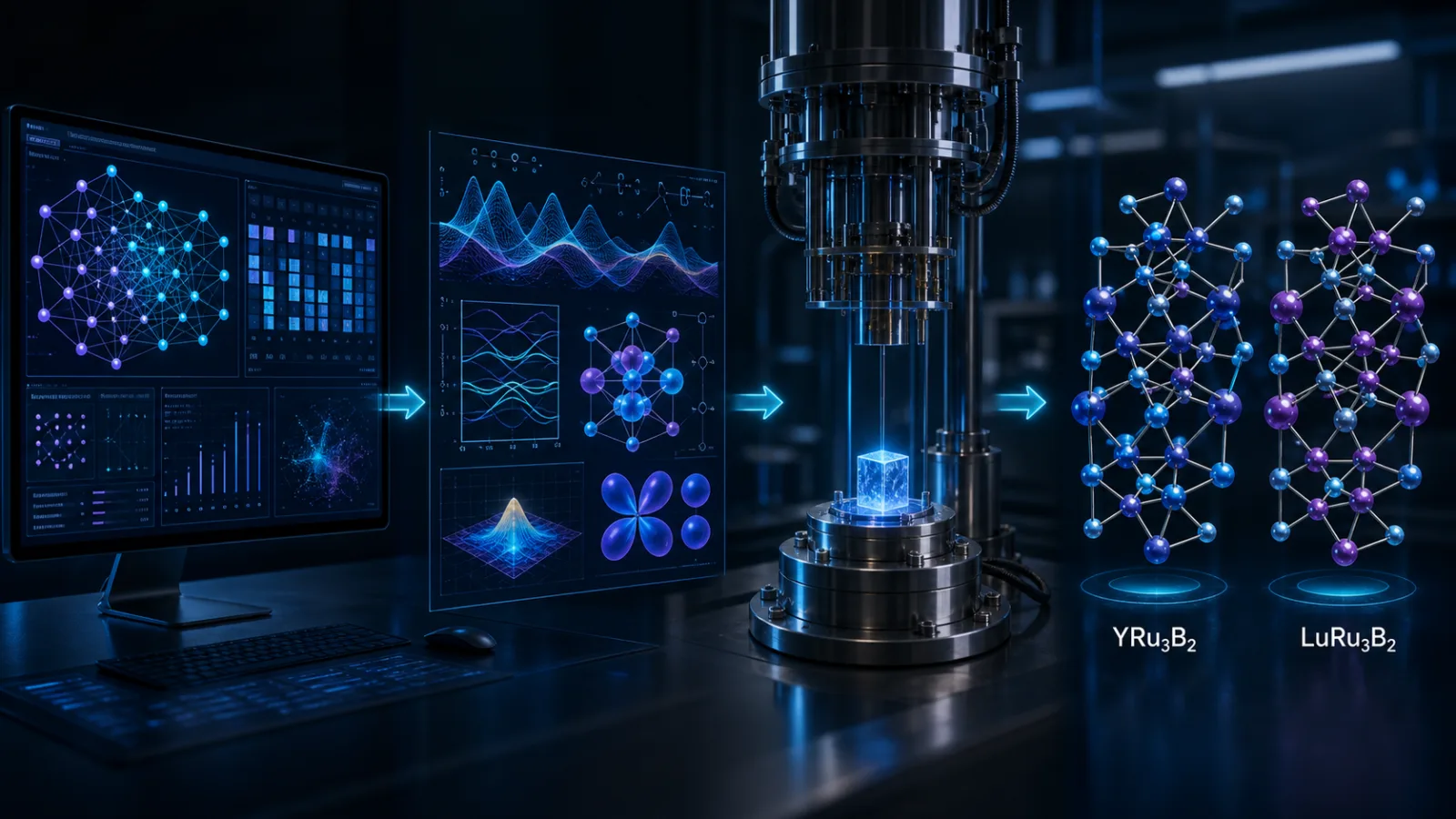
AI did not find a miracle superconductor. It found something more useful
SuperC's new YRu3B2 and LuRu3B2 materials are not room-temperature breakthroughs, but they show how machine learning can make materials discovery less random.

CloudWatch Omni makes AI observability an operations and governance problem
AWS has made CloudWatch Omni generally available as a shared observability layer for applications and AI agents. The important change is not another dashboard: it is the attempt to connect agent quality, tool use, application health, and infrastructure evidence in one operational record.


Gemini 3.8 Live Makes Voice Agents More Useful—and More Operationally Demanding
Google’s Gemini 3.8 Live brings background tool calls, live visual input and native speech-to-speech interaction to voice agents. The practical question is no longer whether it can talk, but whether a team can control latency, permissions, data retention and failure recovery.


The September Android Drop’s Most Useful Changes Are a New Memory for Your Stuff and a Better Way to Read in Motion
Google’s September Android Drop adds remembered items to Find Hub, Motion Assist for passengers, Guided Vision, and new Messages tools. Here is what each feature does, which phones need Android 16 or 17, and what to check before trusting it.

Comments
Sign in to comment.
No comments yet.