A Small Drone Can Sample Microplastics 100 Metres Above the Ground
A proof-of-concept study gives atmospheric scientists a practical way to collect and identify airborne microplastics at different heights, including in remote places where fixed monitoring stations are difficult to use.

A small uncrewed aircraft has carried a particle sampler to 100 metres above the ground and brought back evidence of airborne microplastics. The result is not a pollution alarm or a new health test. It is a measurement breakthrough: researchers now have a relatively flexible way to ask where plastic particles are in the lower atmosphere, how their concentration changes with height, and how far they may travel.
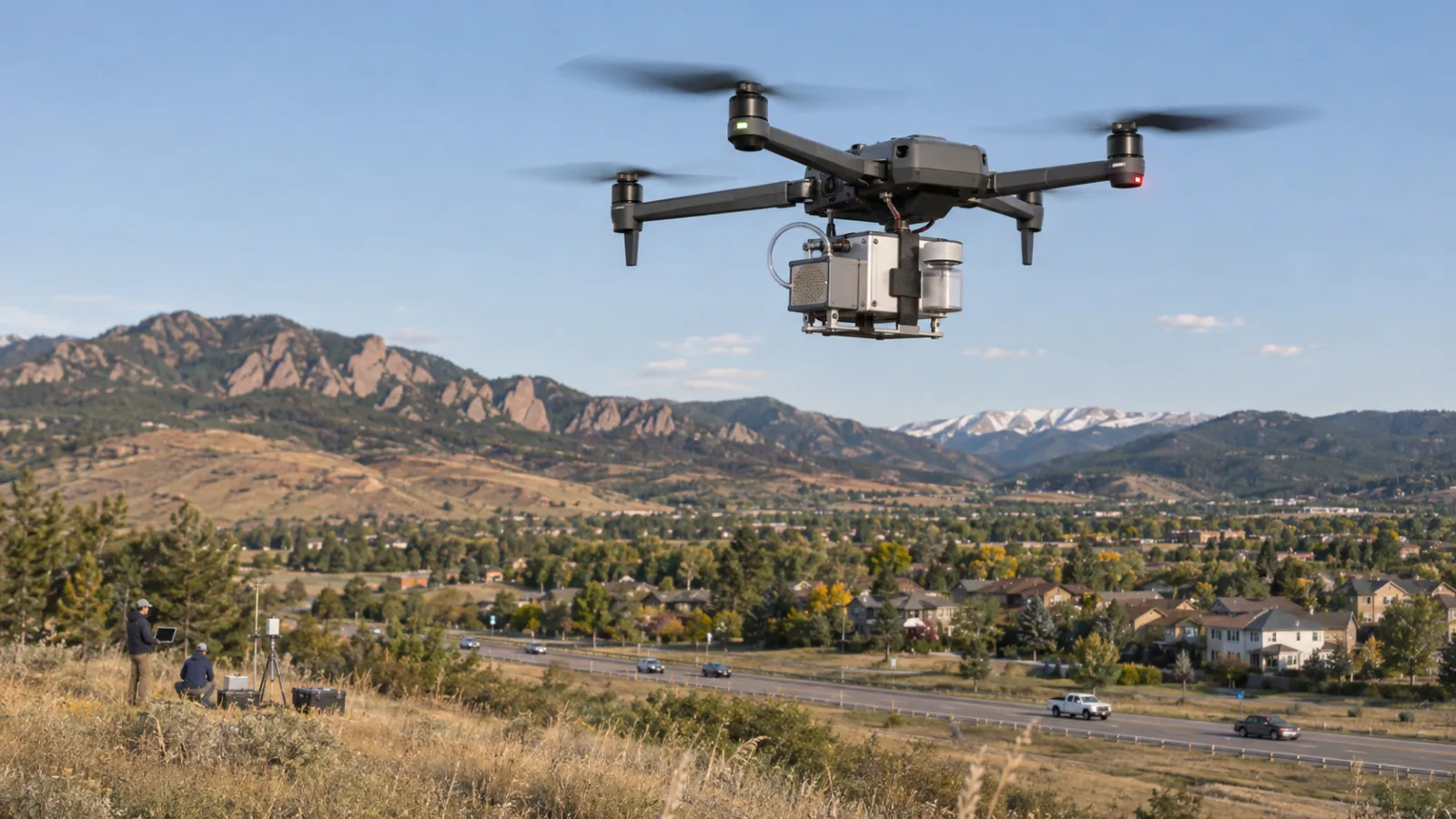
The study, led by researchers associated with the Cooperative Institute for Research in Environmental Sciences at the University of Colorado Boulder, used a compact uncrewed aerial system, an environmental cyclone sampler, optical microscopy and Raman microscopy. The flights took place in Colorado in fall 2024, but the peer-reviewed work was reported in Scientific Reports and highlighted by Brookhaven National Laboratory on November 6, 2026.
That timing matters because atmospheric microplastics are still one of the least measured parts of the plastic cycle. Scientists have found plastic particles in water, soil, snow, sea ice, household dust and biological samples. Yet the air between those places is much harder to monitor. A rooftop sampler records what reaches one location. A ship samples a narrow path at the ocean surface. A research aircraft is powerful but expensive. A small drone can be sent to a chosen altitude, flown near a source or remote landscape, and used repeatedly with much less logistical overhead.
The measurement problem is vertical
Most environmental sampling is tied to a surface. That is understandable: instruments can be installed on a building, a mast, a ship or the ground, and technicians can service them without aviation equipment. But airborne particles do not remain at one height. Wind, turbulence, road traffic, thermal convection, sea spray and rain can lift, mix, transport and remove them.
For microplastics, the missing dimension is especially important. A particle measured at ground level may have been recently resuspended from a road or soil surface. A particle detected higher in the boundary layer may be moving away from its source. A sample over the ocean may include plastic emitted by waves, transported from land, or deposited from higher air. Without measurements at different heights, it is difficult to separate local contamination from regional transport.
The new method is designed around that problem. Rather than treating the atmosphere as a single box, it allows researchers to collect air samples at a specified point in the lower atmosphere. In the Colorado demonstration, the aircraft operated at roughly 80 to 100 metres above ground level. The team reported spectroscopically confirmed microplastics at 100 metres.
This does not mean that the atmosphere contains a uniform layer of plastic at that altitude. It means that particles were captured and identified there during the particular flights and conditions tested. The distinction is essential. A proof-of-concept measurement shows that the method works; it does not yet establish a global concentration, a typical vertical profile or a long-term trend.
How the drone sampler worked
The researchers adapted an environmental cyclone sampler, a device commonly used for aerosol collection. Air is drawn through the instrument and forced into a curved flow. Particles are separated from the air by their inertia and collected for later analysis. The instrument was modified so that it could be mounted on a small uncrewed aircraft without exceeding the aircraft's practical flight limits.
The target particles were in the micrometre range. The sampler was intended to collect particles from about 1 to 10 micrometres, although the study's confirmed microplastic fraction was reported for the 3–10 micrometre range after the samples had been processed and screened. A micrometre is one thousandth of a millimetre, so these particles are far smaller than the plastic fragments people usually notice.
The engineering constraint was not simply weight. Atmospheric microplastics occur at low concentrations, so the sampler needed to process enough air to collect a useful number of particles. At the same time, a small multicopter has limited battery capacity and a short practical flight window. The team reported flight times of around 25 minutes. Every design choice therefore involved a compromise between airflow, power consumption, aircraft stability, sampling time and contamination control.
After landing, the samples were pre-processed to separate suspected plastic particles from organic material and other airborne debris. Optical microscopy helped researchers locate and classify particles by appearance. Raman microscopy then provided a chemical signature that could be compared with known polymers. The study also used automated spectral analysis through OpenSpecy.
That sequence is more important than the drone itself. A photograph of a fibre or fragment cannot reliably establish its composition. Fibres, soot, mineral grains and biological material can look similar at small scales. Chemical identification is needed to distinguish plastic from non-plastic particles, and blank correction is needed because airborne sampling can be contaminated by fibres from clothing, equipment or the laboratory.
What the Colorado flights found
The team sampled above two Colorado locations with substantial human activity. One site was near a heavily trafficked highway in Erie. The other was in a residential area associated with a landfill in Arvada. These were sensible places for a first field test because they offered plausible sources of airborne particles while remaining accessible for repeated operations and equipment checks.
The researchers found that spectroscopically confirmed microplastics accounted for a mean of 13.8 ± 1.8 percent of the blank-corrected, morphologically selected airborne-particle counts in the 3–10 micrometre size range. That number describes the study's selected particle population; it is not a percentage of all particles in the atmosphere, and it should not be read as a direct measure of the mass of plastic in the air.
The samples were dominated by hetero-aggregates. These are clusters in which plastic is mixed with other environmental material rather than appearing as a clean, isolated polymer fragment. Their presence is consistent with particles generated or resuspended near areas of intense human activity, including roads. It also makes the measurement harder, because an aggregate can have a different aerodynamic behaviour from a single plastic particle of the same material.
The central result was methodological: the team successfully used a small uncrewed aircraft and a cyclone sampler to collect atmospheric microplastics at altitude and identify them afterward. The fieldwork suggests that a drone can fill a gap between ground-based sampling and large research aircraft.
The method also establishes a way to compare locations vertically. A future campaign could sample near the surface, at several heights within the atmospheric boundary layer, and perhaps above it. Researchers could then combine particle identity with wind direction, humidity, temperature and back-trajectory modelling to estimate whether particles are local, transported from a city, lifted from soil or introduced through sea spray.
Why height changes the scientific question
A ground station can tell scientists what is deposited or suspended near one place. A vertical series can begin to describe movement. That difference is the practical value of the work.
Suppose a road-adjacent sample contains many tyre-related particles at one metre but far fewer at 100 metres. That pattern would suggest strong local resuspension with limited vertical mixing under those conditions. If comparable particles appear at several heights and downwind locations, the evidence for atmospheric transport becomes stronger. If a remote Arctic site shows particles at multiple levels, researchers can investigate whether they arrived through long-range circulation rather than from a nearby source.
These questions are not academic details. They determine which interventions could work. If most contamination is repeatedly lifted from roads, road-dust control, tyre-wear reduction and traffic engineering may matter. If a landfill or industrial site contributes distinctive particles, local containment and monitoring could be evaluated. If ocean spray is a significant source in coastal regions, plastic entering the marine environment becomes part of an atmospheric problem as well as a water-pollution problem.
The method may also help improve atmospheric models. NOAA's Air Resources Laboratory has noted that microplastics are small and light enough to be transported by air, but that observations and models remain limited. Transport models can estimate where an air parcel travelled, yet those estimates are only as useful as the measurements used to constrain them. Drone-based samples could provide observations between the surface and the altitude of conventional aircraft campaigns.
The study is therefore best understood as an instrument for building better evidence. It does not remove microplastics, predict an individual's exposure or identify a single global source. It makes a previously awkward measurement more accessible.
The health question needs restraint
Airborne microplastics naturally raise concerns about inhalation. People are exposed to particles through several environmental pathways, and plastic fibres and fragments have been reported in indoor and outdoor air. The World Health Organization has reviewed exposure through food, water and air and has emphasized that important uncertainties remain, including the toxicity of different particle sizes, polymers, additives, surface chemicals and biological material carried on particles.
The Colorado study does not establish a health risk from the particles it detected. It did not follow people, measure doses in lungs or compare health outcomes. It also sampled near selected Colorado sites during a limited field campaign, not across seasons or continents. The scientifically responsible conclusion is narrower: the work shows that airborne microplastics can be collected and chemically identified at 100 metres under field conditions, creating a better basis for future exposure studies.
Particle size matters. A 3–10 micrometre particle behaves differently from a larger fragment, and it may be transported, inhaled or deposited differently. Polymer type matters too. A plastic particle is not a single chemical substance in the way that the word can imply; products contain additives, pigments, fillers and weathered surfaces. Aggregated particles may carry biological or mineral material. These variables make it premature to convert one field measurement into a simple statement about danger.
The wider environmental effects are also unsettled. Atmospheric plastics can be transported and deposited far from their source, but the quantity, lifetime and atmospheric behaviour of different particles remain poorly constrained. A 2023 update from the United Nations Environment Programme's Environmental Effects Assessment Panel noted that atmospheric microplastics are expected to make up a small fraction of total aerosol mass, while also emphasizing the lack of observations needed to test current interpretations. More measurements are needed before scientists can reliably estimate their effect on clouds, radiation, chemistry or climate processes.
What the method still cannot do
The drone system has several limits that will shape the next stage of research.
First, a short flight samples a small volume of air. Low concentrations mean that a negative result may indicate that too little air was processed, not that plastic was absent. Longer flights are not always the answer because battery use, wind, temperature and aircraft safety constrain operations. Larger aircraft could carry more sampling capacity, but that would reduce some of the simplicity that makes small UAS attractive.
Second, contamination control is demanding. Plastic fibres are common in laboratories, clothing and sampling equipment. The study used blanks and correction procedures, but no method can simply assume that every detected fibre came from the atmosphere. Future campaigns will need standardized blanks, clean handling protocols, inter-laboratory comparisons and shared reporting rules.
Third, the sampler's size range is not the whole microplastic problem. Nanoplastics and particles below the instrument's efficient collection range may behave differently and require other analytical methods. Larger fibres may also be undercounted or collected with different efficiency. A result for 3–10 micrometre particles cannot be generalized to every particle commonly called a microplastic.
Fourth, the Colorado locations were selected for a proof of concept, not for a representative estimate of global background air. The flights took place in fall 2024, and atmospheric concentrations can change with wind, humidity, traffic, precipitation, surface conditions and season. The reported percentage should therefore be treated as a site- and method-specific observation.
Finally, detecting a polymer does not automatically reveal its origin. A road, landfill, building material, textile, agricultural surface or distant source may produce chemically similar particles. Source attribution will require particle shape, polymer composition, additives, meteorological data, land-use information and transport modelling used together.
The next useful experiment is a network
The most valuable follow-up would not be one dramatic flight. It would be a coordinated set of measurements using the same sampling and analysis procedures at different environments.
A campaign could begin with paired observations: ground level and several drone altitudes at the same site, repeated under different wind conditions. Roadside, urban, rural, coastal and remote sites could then be compared. The same samples should be processed with shared blanks and quality-control standards so that a reported particle count means the same thing from one location to another.
Remote environments are an especially strong use case. Fixed infrastructure is expensive in the Arctic, over open water and in mountainous regions. A small aircraft could sample the marine boundary layer, air above snow or ice, and air downwind of suspected sources. It could also carry meteorological sensors, allowing researchers to connect particle observations with boundary-layer structure and air-mass movement.
The approach could complement, rather than replace, conventional monitoring. Ground stations are better for long time series. Ships and aircraft can cover larger regions or higher altitudes. Satellites cannot directly identify individual micrometre-scale plastic particles in ordinary monitoring conditions, but satellite observations can provide weather, land-surface and ocean context. A useful atmospheric plastic programme would combine these tools instead of treating the drone as a universal substitute.
There is also an open-data opportunity. The paper's value would increase if future studies publish particle-level information, polymer categories, blank results, sampling volumes, flight paths, meteorological conditions and analysis thresholds in comparable formats. That would allow independent researchers to test transport models and identify why concentrations differ between studies.
What counts as good news here
The good news is not that plastic pollution has become harmless. It is that a stubborn measurement problem has acquired a workable engineering solution.
Atmospheric microplastics are difficult to sample because the particles are small, concentrations are low, sources are mixed and the air is constantly moving. The Colorado work addresses one part of that difficulty by putting a sampler where the atmosphere can be measured rather than inferred from the ground. The method produced evidence at 100 metres, used chemical confirmation instead of visual guesses, and was compact enough to be carried by a small uncrewed aircraft.
That is the kind of progress environmental science needs: a narrower claim, a better instrument and a clear list of unanswered questions. The next test is whether the method can be standardized, repeated in different environments and connected to actual source and transport estimates. If it can, researchers will be better positioned to determine where airborne plastic comes from, where it goes, and which interventions reduce it.
For now, the most defensible conclusion is modest but useful. A small drone can make the lower atmosphere easier to sample for microplastics. That does not solve the pollution problem. It gives scientists a better chance of measuring the problem accurately enough to solve the right part of it.
Related articles
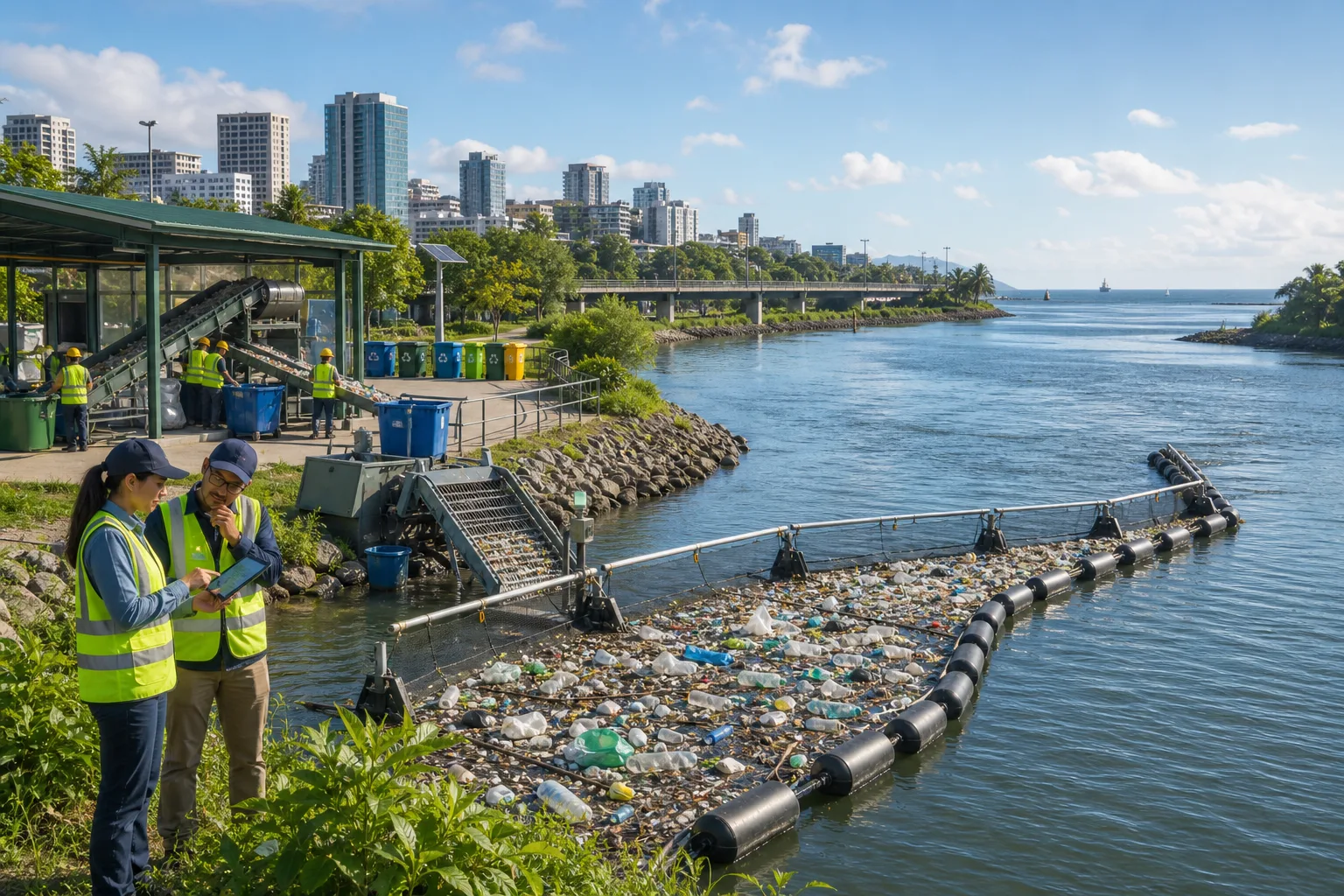
The Ocean Cleanup lesson: good technology gets better when it listens to evidence
The Ocean Cleanup did not make ocean plastic simple, and that may be its most useful lesson. Real environmental technology has to combine ambition with ecology, local waste systems, river prevention, transparent data and the humility to change course.

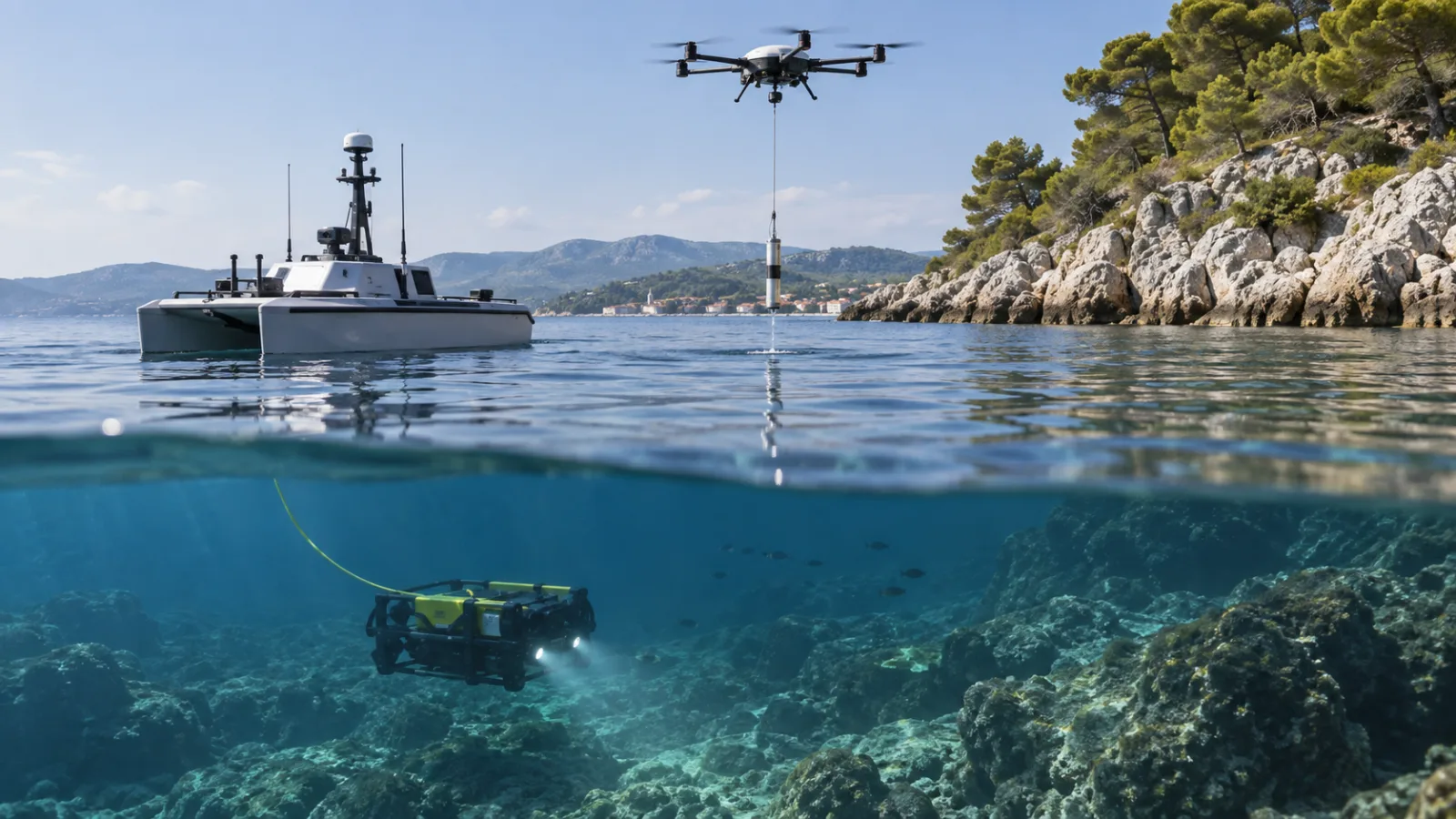
An Adriatic Robot-Drone Convoy Tests What Maritime Autonomy Needs Beyond a Single Vessel
A Croatian demonstration on 12 September links an autonomous surface vessel, an aerial sampling drone and a remotely operated underwater vehicle. Its real significance is the coordination problem: useful maritime autonomy depends on communication, handoffs and safe fallback behavior.

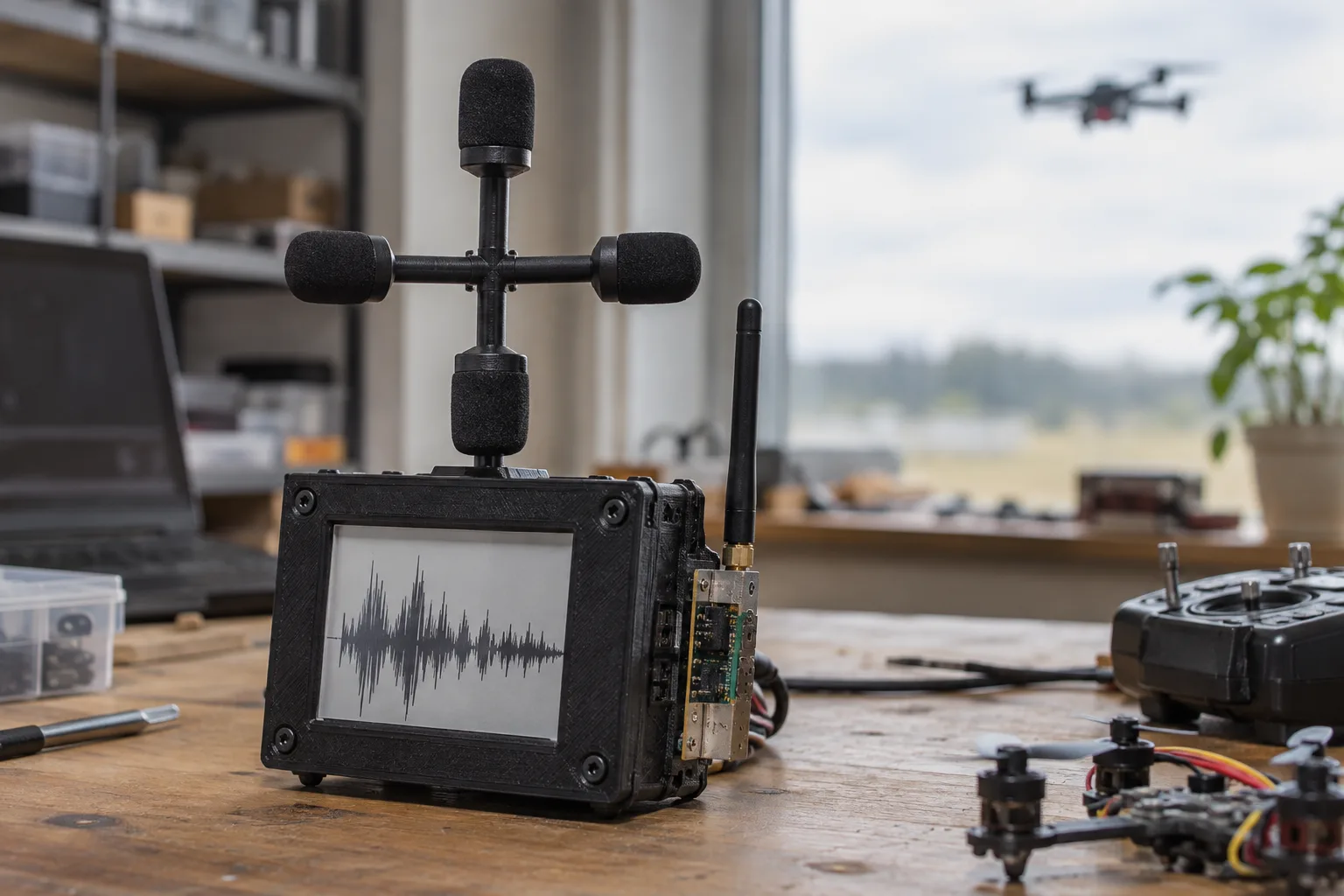
VolAnti Brings Open-Source Acoustic Detection to Fibre-Optic FPV Drones
VolAnti is a compact ESP32-S3 detector that listens for rotor harmonics instead of radio emissions. Its early test is promising, but the project is best understood as a transparent warning device—not a finished counter-drone system.
MIT’s SANDO Drone Planner Makes a Narrow Safety Guarantee Matter
MIT’s SANDO planner is a serious step toward safer drone navigation in unknown, changing spaces. Its real importance lies in the assumptions it makes explicit—and in the operational problems a theorem cannot solve.
Comments
Sign in to comment.
No comments yet.