OpenCode and the open-source coding-agent wave after Copilot billing shock
OpenCode is not just another repo to star. It shows why coding agents are becoming developer infrastructure, with more control and more responsibility.

The open-source coding-agent moment is not happening because developers suddenly discovered that terminals are cool again. It is happening because the closed tools changed the bill.
GitHub’s April announcement put the shift plainly: from June 1, Copilot usage moves to GitHub AI Credits, calculated from token consumption, including input, output and cached tokens. The base Copilot plan prices stay familiar, but long, multi-step agent sessions now have a different economic shape. The official GitHub Community discussion has hundreds of comments and replies. Developers are not arguing about a cosmetic pricing tweak. They are arguing about whether the next layer of programming tools should feel like an IDE feature, a metered cloud workload, or infrastructure they can run and budget themselves.
That is why OpenCode is getting so much attention. The project calls itself an open-source AI coding agent for the terminal, IDE or desktop. Its site advertises LSP support, multi-session work, share links, access to more than 75 model providers, local models, and login paths for GitHub Copilot and ChatGPT Plus/Pro. GitHub’s API redirects the old sst/opencode path to anomalyco/opencode, where the repository showed about 186,000 stars, 23,000 forks, an MIT license, thousands of open issues and a release published on July 14, 2026. Hacker News had already put OpenCode through the usual stress test: a large thread with more than a thousand points and hundreds of comments, full of people comparing it with Claude Code, Aider, Cline and their own messy workflows.
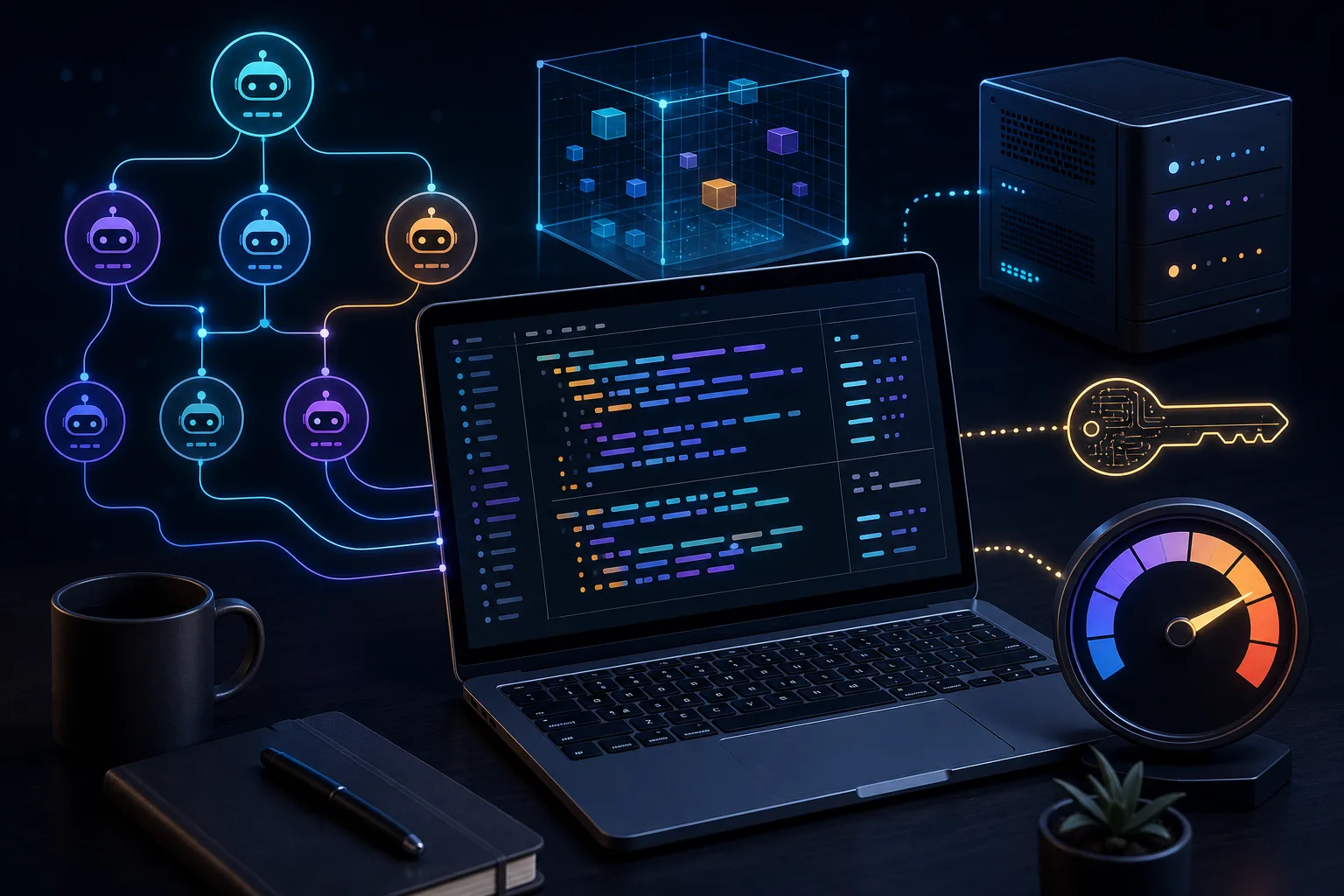
The tempting headline is “OpenCode is the Copilot alternative.” That is too neat. The better read is this: open-source agents are becoming a new category of developer infrastructure. They can reduce lock-in, let teams bring their own keys or local models, and make the agent harness inspectable. They also move more responsibility onto the developer. You get more freedom, but you also inherit the cost model, the security model, the update cadence and the blast radius.
Why Copilot billing pushed people to look around
GitHub’s Copilot announcement is careful, and the rationale is understandable. Copilot is no longer just autocomplete in the editor. GitHub describes a move toward an agentic platform that can run long coding sessions, work across repositories and consume far more model compute than old inline suggestions. If a tool starts acting more like a cloud worker than a text-completion feature, the old flat-fee assumptions become harder for the vendor.
For developers and engineering managers, though, token-based billing changes the daily psychology. A predictable subscription becomes a budget-management problem. Input tokens matter. Output tokens matter. Cached tokens may matter. Model choice matters. A single “please refactor this service” request can become a chain of repository reads, tool calls, explanations, rewrites and tests. That is exactly what makes agents useful, and exactly what makes the bill harder to reason about.
This does not mean Copilot became bad overnight. Copilot still has the advantage of polish, Microsoft/GitHub integration, admin controls and a familiar procurement path. Many teams will keep paying for that because the support story matters. But the pricing shift gives a practical reason to ask a question that open-source projects have been preparing to answer: what if the agent runner is not the product you rent, but a layer you control?
What OpenCode is actually offering
OpenCode’s appeal is not one single feature. It is the combination of a recognizable agent interface and a less locked-down model story.
The official site describes an agent that can work in the terminal, IDE or desktop. It says the tool is LSP-enabled, supports multiple sessions, can share sessions, and can use any model through more than 75 LLM providers. The docs and site also point to local model use, which matters for teams experimenting with Ollama, vLLM, llama.cpp or private inference servers. Its “privacy first” language says the service does not store code or context data. That should be treated as the project’s claim, not as a substitute for an audit, but it tells you how OpenCode wants to be judged.
The repository metrics explain why the project cannot be dismissed as a weekend toy. The canonical GitHub path resolves to anomalyco/opencode; the API snapshot showed MIT licensing, very large star and fork counts, recent updates and a latest release tagged v1.18.1 on July 14. The release itself was a small desktop settings bugfix, which is almost more revealing than a dramatic feature launch. Mature developer tools live on small fixes: spacing, provider panels, platform quirks, dependency churn, broken auth flows.
OpenCode also sits in a crowded field. Aider remains a strong terminal pair-programming tool. Continue is an open-source coding agent and IDE-oriented assistant. Cline and Roo Code put agent workflows inside VS Code-style environments. Tabby focuses on self-hosted AI coding assistance. Juggler, which appeared on Hacker News as an open-source GUI coding agent on July 12, shows that new entrants are still arriving. The category is no longer “one project versus Copilot.” It is a menu of harnesses, interfaces and trust models.
What open source fixes, and what it does not
Open source fixes one major problem: inspectability. You can read the code. You can pin a version. You can file an issue, patch behavior, fork the project or run it against your own provider. If an agent sends context somewhere unexpected, hard-codes a default model, or changes permission behavior, the community has at least a path to inspect and challenge it.
That is a real advantage over black-box assistants. It is also not magic. Most developers do not audit every dependency they install, and most teams will not read every line of an agent that can touch a repository, run commands and talk to model providers. Open source gives you the right to audit. It does not perform the audit for you.
The Hacker News conversation around OpenCode reflects that tension. Some developers praise it as a practical replacement for Claude Code or Aider in real work. Others worry about telemetry, default cloud behavior, security posture, permissions, Windows and Wayland bugs, resource use, and a release pace that can feel too fast for production. Those are not anti-open-source complaints. They are exactly the questions a serious team should ask before giving a tool broad access to code.
The lesson is simple and uncomfortable: a transparent agent can still be dangerous if you run it casually. A proprietary agent can still be useful if it has good admin controls. The useful split is not open versus closed. It is audited versus unaudited, sandboxed versus trusted, budgeted versus surprise-billed.
The new stack: model, harness, permissions and budget
AI coding tools used to be easy to describe: install an extension, accept or reject suggestions. Agents break that simplicity. A serious setup now has at least four layers.
First is the model. You might use a vendor API, a Copilot login, a ChatGPT plan, a local model, or a private inference endpoint. Each choice changes latency, cost, code exposure and quality. A cheap local model may be enough for small edits, search, explanation and test scaffolding. A stronger cloud model may still be better for architectural changes or hard debugging.
Second is the harness. OpenCode, Aider, Continue, Cline, Roo Code and Tabby do not merely “call a model.” They decide how repository context is selected, how files are edited, how tools are executed, how diffs are shown, how sessions are stored, and how much agency the model gets. Two tools using the same model can behave very differently.
Third is the permission boundary. Can the agent run shell commands? Can it write outside the working tree? Can it access the network? Can it see .env files? Can it read your SSH config? Can it open the browser or call MCP tools? The more powerful the agent, the more important those boundaries become.
Fourth is the budget layer. Usage-based billing makes this obvious, but the same issue exists with direct API keys. You need spending caps, per-project keys, model routing, logs and a way to answer “what did that task cost?” without reading a month-end invoice like a crime scene.
Open-source agents shine when you treat those layers as engineering choices. They disappoint when you expect them to hide the choices.
Where OpenCode makes sense first
OpenCode is worth trying if you already live in a terminal and want model choice. It is especially attractive for developers who want to compare providers, use local models for lower-risk tasks, or keep a coding-agent workflow outside a single vendor’s IDE bundle.
A solo developer can get value quickly: open a repository, give the agent a constrained task, inspect the diff, run tests, repeat. If the work is boring and bounded, such as refactoring a module, adding tests around an existing function, explaining a legacy file or wiring a small CLI option, an agent harness can save time without asking you to reorganize the whole workflow.
Small teams should be more deliberate. OpenCode may be a good fit for a pilot, but not as an ungoverned team-wide install. Start with non-sensitive repositories, separate API keys, no production secrets, a clean worktree and a rule that every agent change goes through normal review. If the tool is promising, write down the policy before expanding it: allowed models, allowed commands, allowed repositories, spending caps and version pinning.
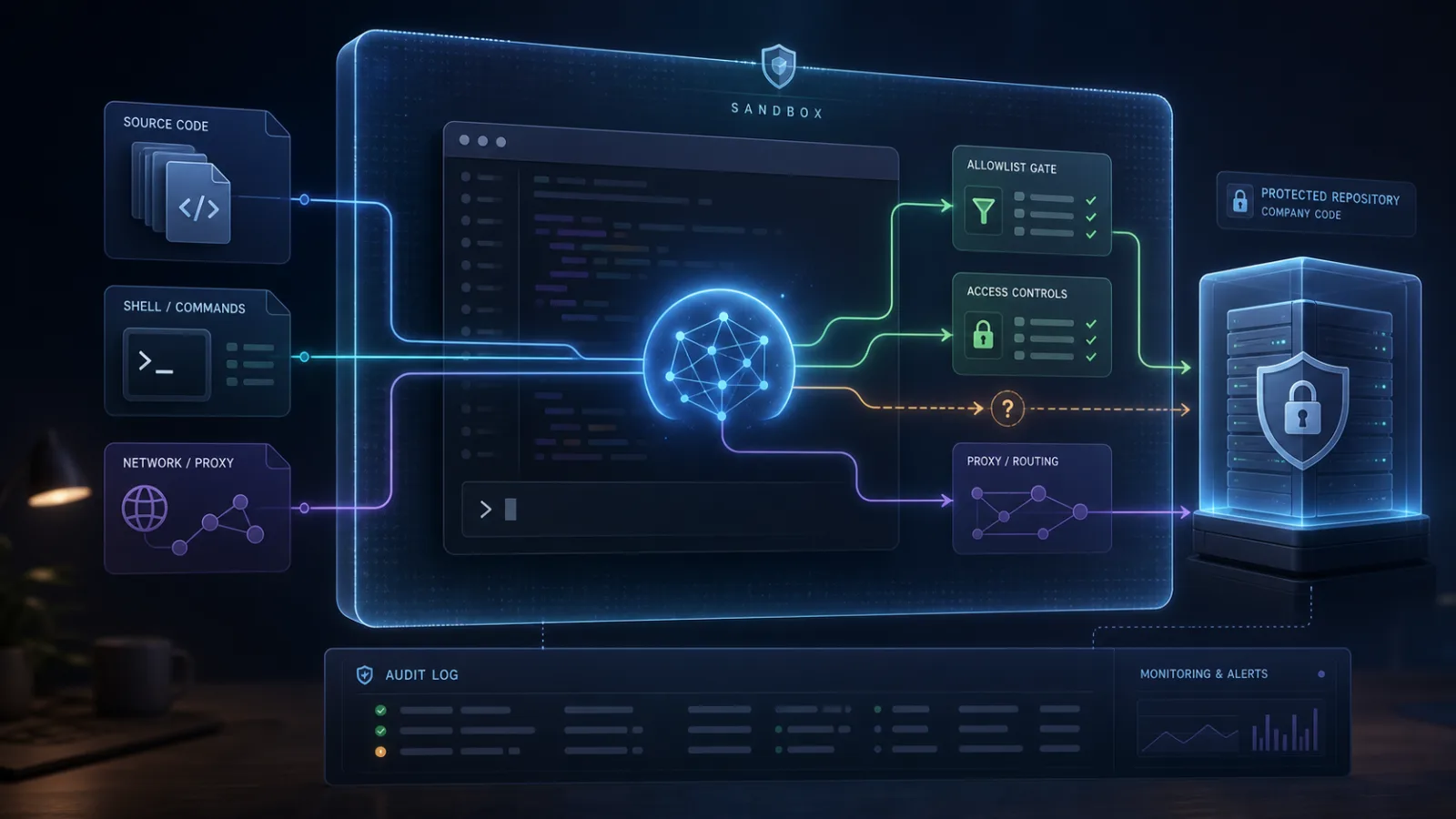
Security-sensitive teams should be even stricter. The right question is not “is OpenCode open source?” The right question is “what can this agent read, execute and exfiltrate in our environment?” If the answer is “the same things as a senior engineer’s laptop,” then you need laptop-grade controls: containers or VMs, no-egress modes where possible, secret scanning, audit logs, narrow tokens and a way to reproduce agent actions.
Where Aider, Continue, Cline, Roo Code and Tabby fit
OpenCode is not the only open-source answer, and it may not be the right one for every team.
Aider is strongest when you want a terminal pair programmer with a mature command-line workflow. It has been around long enough that many developers understand its strengths and limitations. It is a good comparison point for anyone testing OpenCode, because both can live close to Git and the shell.
Continue is closer to the IDE assistant lane. If your team cares about editor integration, inline assistance and a more familiar developer experience, it belongs on the shortlist. Its Apache-2.0 license and active repository make it relevant for teams that want something inspectable without moving entirely into a terminal agent.
Cline and Roo Code sit in the VS Code agent world. They are useful for developers who want the agent inside the editor, with a clearer relationship to files, tasks and visible approvals. That editor-native approach can feel safer to some users and too magical to others. Test it against real tasks, not screenshots.
Tabby is different because self-hosting is the point. It is more about building your own coding-assistant backend than replacing every agent workflow. For companies that cannot send code to arbitrary external providers, a self-hosted assistant can be the first acceptable step, even if it is less agentic than OpenCode or Cline.
The practical move is to run a bake-off. Pick three real tasks: one test-writing task, one refactor, one bug investigation. Run the same tasks through OpenCode, Aider and one IDE-based agent. Measure the diff quality, test pass rate, setup pain, token spend, context mistakes and how often the human had to intervene. That beats arguing from star counts.
The security checklist before you try one
Do not install an AI coding agent into your main work environment and hand it the keys on day one. Treat it like a privileged dev tool.
Use a fresh worktree or disposable clone. Start inside a container or VM if the repository has secrets, deployment scripts or production access. Remove .env files and credentials. Use a separate model API key with a hard spending cap. If the tool supports provider-specific configuration, make the default model explicit rather than relying on whatever the tool chooses.
Check network behavior. An open-source project can say it does not store code or context, and that may be true, but the model provider still receives prompts unless you are using a local model or private endpoint. If the team’s policy says source code cannot leave the network, a public API key is not a loophole. Use a local model, a private gateway or do not use the agent on that repository.
Inspect commands before they run. Agents are useful because they can call tools; that is also why they can break things. Prefer approval modes that show shell commands, file writes and diffs. Block destructive commands unless they are part of the task. Do not let an agent run package-manager scripts from an untrusted repository without isolation.
Review the Git diff like you would review a junior developer’s first PR in a risky codebase. Tests are necessary, but not enough. Look for changed security assumptions, widened permissions, subtle dependency changes, generated config, hidden network calls and “helpful” rewrites outside the requested scope.
Pin versions for serious work. A fast-moving agent can improve quickly, but production workflows need repeatability. If yesterday’s behavior is materially different from today’s, your team needs a changelog habit and a rollback path.
The cost checklist before you switch
Open-source agents do not automatically make AI coding cheap. They make the cost structure more visible and more configurable.
Compare the full bill, not just subscription labels. Copilot may look expensive after the move to credits, but direct API use can also add up if your agent sends large repository context, asks for verbose reasoning, retries failed edits or uses expensive models for routine tasks. Local models reduce provider bills but add hardware, maintenance and quality trade-offs.
Track input, output and cached tokens. The GitHub billing change made those words visible, but the same logic applies everywhere. A coding agent that reads half the repository for every small task is expensive no matter whose logo is on the invoice.
Use smaller models where they are good enough. Not every task needs the strongest model. File search, test scaffolding, documentation cleanup and simple mechanical edits may work on cheaper models. Hard debugging and cross-module design may still justify a stronger one.
Measure time, not only tokens. A slow local model that saves no human time is not cheaper. A paid cloud model that finishes a safe, reviewable refactor in minutes may be worth it. The right metric is not “free software versus paid service.” It is cost per accepted, reviewed, working change.
What to watch next
The category is moving quickly. OpenCode’s high issue count and rapid updates are both a strength and a warning. They show a live project with real users. They also mean platform bugs, provider changes and behavior shifts are part of the deal.
Watch the boring parts. Does the project document telemetry clearly? Does it make network destinations obvious? Does it support sandboxing or recommend it honestly? Does it let teams pin models and providers? Does it expose cost logs? Does it handle Windows, Linux desktop environments and remote development without brittle hacks? Does it document risky permissions in plain language?
Also watch governance. Licenses matter. OpenCode is MIT. Aider, Continue, Cline and Roo Code show Apache-2.0 in the current API snapshots. Tabby’s repository reported a non-standard license field in the API snapshot, so buyers should read the repository license directly before building policy around it. If a tool becomes critical to your workflow, the license, maintainer bus factor, release process and plugin ecosystem matter as much as the demo.
The newest GUI agents, including Juggler’s Show HN appearance, suggest that the next competition will not be “agent or no agent.” It will be which interface makes agency understandable. The winning tools will not just write code. They will show what they read, what they plan to change, what they spent, what they executed and what the human still must verify.
Verdict: try them, but do not treat them like extensions
Open-source coding agents are absolutely worth trying now. OpenCode in particular deserves attention because it packages the right set of pressures: model choice, local model support, terminal and IDE workflows, a large community and a direct answer to closed-tool lock-in.
But the freedom is not free. If you move from Copilot or Claude Code to OpenCode, Aider, Continue, Cline or Roo Code, you are not escaping governance. You are moving governance closer to your own team. That can be good. It can also expose how little governance existed before.
For a curious solo developer, the right move is to test OpenCode on a non-critical repository this week. For a team, the right move is a controlled pilot: three tools, three real tasks, separate keys, spending caps, sandboxing, version pins and normal code review. If the agent passes that boring test, keep going.
The open-source agent wave is not just a reaction to Copilot billing. It is a sign that AI coding is becoming infrastructure. Infrastructure should be inspectable, replaceable and budgeted. It should also be locked down before it starts editing your production code.
Related articles
Rowboat shows where open-source AI work apps are heading
The local-first AI coworker drew Hacker News attention because it turns the next open-source fight into a trust question: who controls work memory?


Claude Code's hidden check is a trust test for AI coding agents
A hidden Claude Code detection experiment shows why terminal AI agents need the controls of software supply chain tools, not the trust model of chatbots.

Choosing an e-ink tablet as a sunlight SSH terminal for AI-agent work
A practical buyer guide for running the real work on a server while using an e-ink or reflective tablet outdoors as a cool, readable SSH terminal.

The hidden token tax of AI coding agents
A viral Claude Code versus OpenCode measurement is less about picking a winner and more about making AI development cost visible before it surprises teams.

Comments
Sign in to comment.
No comments yet.