No-pull harness or better training? What actually helps a dog that drags on the leash
A practical owner’s guide to leash-pulling, harness choice, calm training habits and the red flags that belong with a veterinarian, not a stronger piece of gear.

Many owners reach the same frustrating point: the dog explodes toward the grass, another dog, a person with a sandwich or the gate to the park, and the human at the other end of the leash starts shopping for a miracle harness. A better harness can make walks safer and more manageable, especially if the current collar presses on the neck, but gear is not the whole answer. Pulling usually improves when equipment, route choice and reward-based training all point in the same direction.
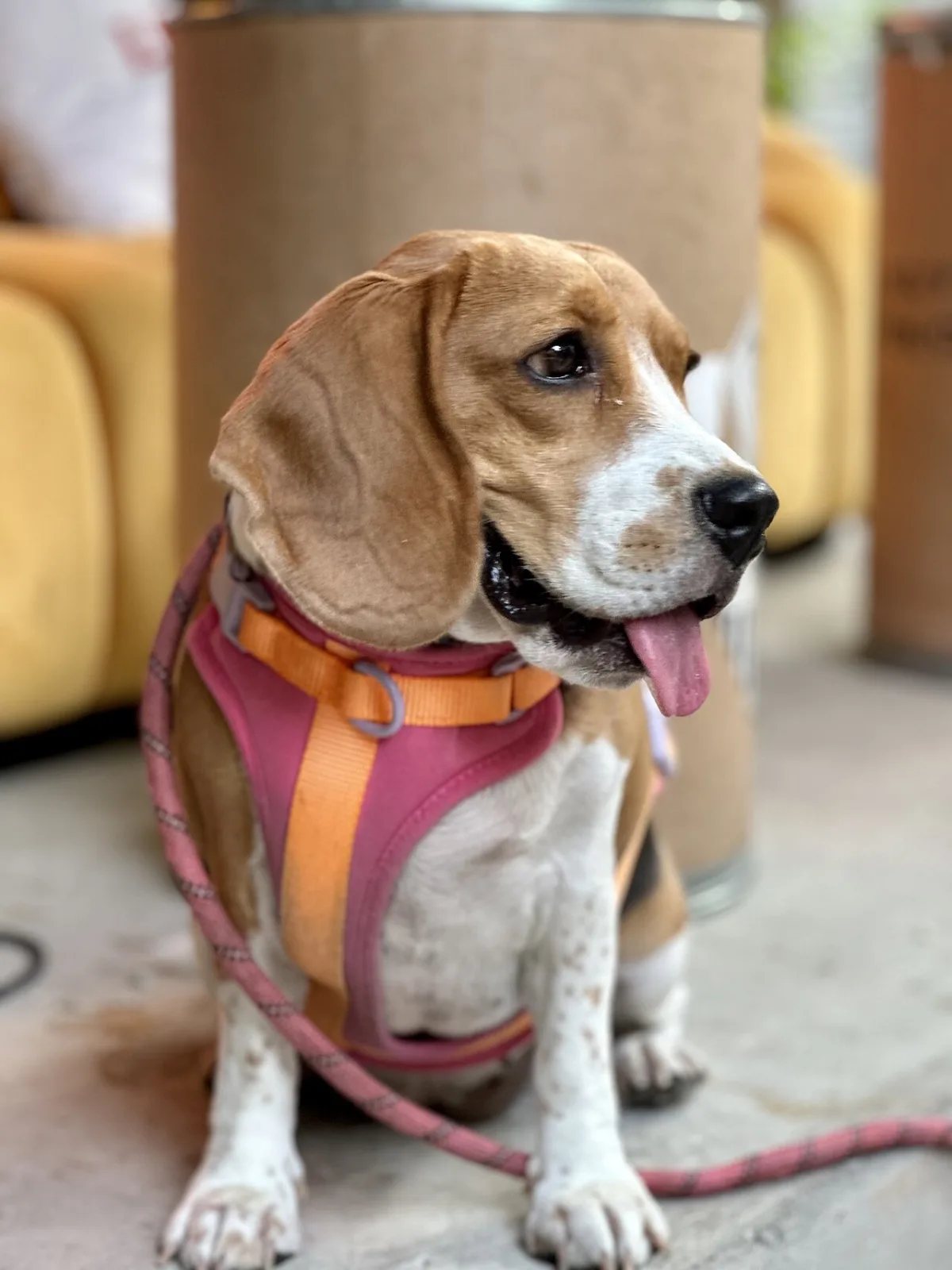
The useful question is not “Which product stops pulling?” It is “Why is my dog pulling in this moment, and what can I change so a loose leash works for both of us?” Sometimes the reason is simple learning: the dog has discovered that dragging forward makes smells, greetings and doorways arrive faster. Sometimes it is excitement, fear, frustration, too much distance from the owner, too little practice in quiet places, or equipment that pinches and makes the dog fight the walk. And sometimes a sudden change is not a training problem at all. Repeated coughing or gagging, labored breathing, collapse, limping, pain, heat stress, sudden exercise intolerance, sudden reluctance to walk, not eating or drinking, poisoning, injury or any worrying persistent change should be discussed promptly with a veterinarian.
Start by separating manners from welfare
A dog that has always pulled, especially on the first ten minutes of a walk, is often showing a predictable habit. The leash becomes tight, the owner keeps moving, and the dog learns that pressure is part of walking. A dog that suddenly begins to lag, cough, choke, panic, limp, swing the head away from the collar, freeze when the harness appears, or refuse a route that used to be normal is telling you something different. That second picture deserves a welfare check before you change products or push through another session.
This distinction matters because owners can accidentally treat discomfort as stubbornness. A flat collar may be perfectly reasonable for identification and for calm dogs, but a strong puller on a neck collar can put pressure where many owners would rather not put it: throat, neck and airway. Small dogs, dogs with short muzzles, older dogs and dogs with known neck or respiratory concerns deserve extra caution. A body harness can reduce direct neck pressure, yet a poorly fitted harness can rub behind the front legs, sit too high on the throat, restrict the shoulder or let an anxious dog back out of it.
Recent veterinary and engineering research has treated leash pulling as more than a comedy of bad manners. Studies comparing collar and harness restraint, and newer work measuring pulling forces and effects on the handler’s movement, reinforce a practical point: a pulling dog creates real forces for both animal and human. That does not mean one harness design is a universal cure. It means the problem is worth solving thoughtfully, with comfort and safety in view.
What each piece of gear can and cannot do
A flat collar is useful for ID tags and for dogs that already walk calmly. It is not a great primary control point for a dog that hits the end of the leash at speed. If a collar is used, it should fit safely, not ride over the jaw, and not become the place where the owner repeatedly jerks the dog back. Pulling on a collar is also a reason to re-check whether the dog’s daily walk is too exciting, too long, too crowded or too under-trained for the current skill level.
A back-clip harness moves pressure from the neck to the body. That is often more comfortable, and it can be a good everyday choice for small dogs, puppies and dogs whose owners want the leash away from the throat. The limitation is obvious once you watch a strong dog lean into one: a back clip can give the dog a stable way to pull forward. It protects the neck better than a collar, but it rarely teaches polite walking by itself.
A front-clip harness attaches the leash at the chest. When the dog surges, the attachment can make it easier to turn the dog slightly back toward the handler rather than letting the dog power straight ahead. Many “no-pull” harnesses use this idea, sometimes with both front and back attachment points. For some teams, this is enough to make training possible because the owner can stay balanced and reward the dog at the right moment. For others, the dog adapts and still pulls. The harness has changed the mechanics; it has not changed the lesson unless the owner rewards the desired behavior.
A dual-clip setup, with one line to the front and one to the back or a double-ended leash, can give extra control for large dogs when used gently. It is not a license to steer the dog like luggage. The goal is still a slack leash and a dog who understands where reinforcement happens. If handling two points makes the owner tense, tangled or more likely to yank, a simpler setup plus a trainer may be safer.
A head halter can help some handlers manage a strong dog, but it needs careful positive acclimation. Dogs often dislike sudden pressure on the face. A head halter should never be used for leash corrections, sharp turns or long-line running because twisting the neck can be dangerous. If you choose one, introduce it indoors with treats, keep sessions short, and learn how to use it from a qualified trainer rather than treating it as an instant fix.
Prong, choke and shock-style tools should not be the ordinary owner’s shortcut. Professional veterinary behavior organizations emphasize humane, reward-based training as the default and warn that punishment-based methods can carry welfare and behavior risks. A dog that lunges, panics or is too strong to hold safely needs a plan, distance from triggers and qualified help, not a stronger punishment device bought in frustration.
Fit matters before brand names
Product reviews can be useful because they show owners what features to compare: sturdy hardware, washable materials, broad adjustment range, metal leash rings, visible stitching, reflective trim, replacement parts and whether the harness lets the shoulders move freely. But a highly rated harness still fails if it is the wrong shape for your dog. Deep-chested dogs, barrel-shaped dogs, narrow puppies and short-legged breeds can need different cuts.
Measure the dog’s girth at the widest part of the rib cage and compare it with the maker’s chart, not with the dog’s weight alone. Adjust the neck and chest straps so the harness is secure without pressing the throat. Check the armpit area: if a strap rubs there, a longer walk can create soreness. Watch the shoulders from the side. If the front strap sits across the moving point of the shoulder, the dog may shorten the stride or change gait. That is a reason to try a different cut.
Do a two-finger comfort check, but do not rely on that rule alone. A harness can pass the two-finger test and still rotate, gape or rub. After the first few walks, look for hair loss, redness, damp irritated skin, scratching at the harness, freezing when it appears, reluctance to lower the head through the opening, or a dog that suddenly walks oddly. Those signs do not prove an injury, but they do mean the setup is not working.
Escape risk also matters. Some dogs back out of harnesses when startled. If your dog is new, nervous or shaped in a way that makes escaping easy, use a backup connection to a flat collar or a martingale-style safety collar fitted for safety, and avoid busy roads while testing gear. The backup is not for pulling the dog by the neck; it is a second attachment if the harness slips.
Train the walk you want, not the pull you hate
Loose-leash walking is a learned skill. Many dogs are not being defiant; they are walking at a different natural speed and chasing information with their nose. The owner’s job is to make the easy choice clear: staying near the human or keeping slack in the leash makes good things happen. Pulling makes forward motion pause.
Start somewhere boring. A hallway, driveway, quiet courtyard or empty parking edge gives the dog a chance to notice food, praise and movement with fewer distractions. Reward when the leash is slack, when the dog glances back, or when the dog arrives near your leg without being dragged there. Use small treats if the dog likes food, but also use real-life rewards: permission to sniff a tree, move toward a smell, cross to the grass, or greet only when calm and appropriate.
When the leash tightens, avoid the dramatic yank. Stop, wait for the dog to soften back, or turn calmly and walk a few steps the other way. The message is simple: tight leash does not deliver the target. As soon as the leash loosens, move again and reward. At first this can feel slow. That is normal. You are changing a habit that may have been reinforced hundreds of times.
Keep early sessions short enough to win. Ten good minutes may teach more than forty minutes of wrestling. If the dog pulls hard for the first block because leaving home is too exciting, spend two minutes practicing at the doorway, in front of the building or beside the car before the real walk begins. If the dog becomes frantic near other dogs, increase distance. Crossing the street before the explosion is not failure; it is management that keeps the dog able to learn.
Sniffing is not the enemy. For many dogs it is the main reason the walk matters. Use sniff breaks as rewards: a short stretch of polite leash work earns “go sniff.” This helps owners avoid the joyless version of training where the dog is expected to heel for an entire walk. Ordinary family walks can include both manners and freedom, as long as the owner chooses where each mode is safe.
Why pulling returns after the first good harness walk
A new harness often helps for a day because it feels different and interrupts the old pattern. Then the dog learns how the new equipment works. This is why owners report that every product helps briefly and then stops. The harness did not fail; it was asked to do the job of a training plan.
Make a simple rule for two weeks. Choose the same equipment, the same leash length and the same response to pulling. Reward generously in easy places. Pause or change direction when the leash tightens. Add distractions gradually. If different family members walk the dog, agree on the same cues and rules. One person allowing dragging to every smell while another person tries to train polite walking makes progress much harder.
Also check the dog’s needs outside leash skills. A young dog who spends the day under-stimulated may be too explosive for a neat sidewalk lesson at 6 p.m. Food puzzles, scent games at home, decompression walks in quieter places, and a few minutes of training before the busiest route can lower the temperature. A fearful or reactive dog may need distance and behavior help, not more street exposure.
When to call a professional
A qualified force-free trainer can watch timing, fit, route choice and body language in a way an article cannot. Consider help if the dog is large enough to pull someone over, if the owner is avoiding walks, if the dog lunges at people or dogs, if fear is increasing, or if several weeks of consistent practice bring no improvement. For severe anxiety, aggression, compulsive behavior or sudden behavior change, a veterinary behavior professional or veterinarian should be part of the plan.
Avoid anyone who promises instant obedience through pain, intimidation or dominance language. The goal is not to win a fight with the dog. The goal is a walk where the dog is comfortable, the owner is safe and the leash becomes information rather than conflict.
A calm owner checklist
Before buying another harness, ask five questions. Does the current gear avoid throat pressure and allow free shoulder movement? Is it secure enough that the dog cannot slip out? Have you practiced in a boring place before expecting success on a busy sidewalk? Do you reward slack leash moments more often than you complain about pulling? Has anything changed suddenly that could point to pain, breathing discomfort, fear or illness?
If the answers show a normal training gap, choose comfortable equipment and practice consistently. If the answers show coughing, gagging, labored breathing, collapse, limping, sudden reluctance to walk, sudden exercise intolerance, pain, not eating or drinking, injury, possible poisoning or any persistent worrying change, contact a veterinarian promptly. A harness can make a walk easier; it cannot diagnose what is happening inside a dog.
Credit for image: Slyronit, Wikimedia Commons, CC BY-SA 4.0.
Related articles
Pet Toy Safety After the 2026 Warning: How to Spot Choking, Swallowing and Dental Risks
A practical toy-safety audit for dogs and cats: match the item to the way your pet plays, supervise the first sessions, retire damaged toys early and know which signs need veterinary advice.
New World Screwworm and Pets: What Outdoor Owners Should Check and When to Call the Vet
The New World screwworm outbreak is mainly a regional animal-health concern, not a reason for every owner to panic. Here is how to check wounds, think about travel, avoid unsafe home treatments, and recognize when veterinary help is needed.

Should you buy Cursor after the cost-visibility backlash? Only if you can measure it
Cursor remains useful, but the latest Usage page controversy shows why AI coding subscriptions need buyer-grade cost controls before a team rolls them out.


Kimi K3 Is a Router Test, Not a Drop-In Claude Replacement
Moonshot’s new 2.8T model gives AI teams leverage, but the real decision is cost per completed task, data policy, routing, and whether the promised weights become usable.

Comments
Sign in to comment.
No comments yet.