Pet Toy Safety After the 2026 Warning: How to Spot Choking, Swallowing and Dental Risks
A practical toy-safety audit for dogs and cats: match the item to the way your pet plays, supervise the first sessions, retire damaged toys early and know which signs need veterinary advice.

A toy can be a useful way to give a dog or cat something appropriate to do. It can also become a choking hazard, a swallowed foreign object, a source of broken teeth, or a source of conflict between pets. The practical question is not whether a product is labelled “indestructible.” It is whether this particular animal can use it safely, in this particular home, with a realistic level of supervision.
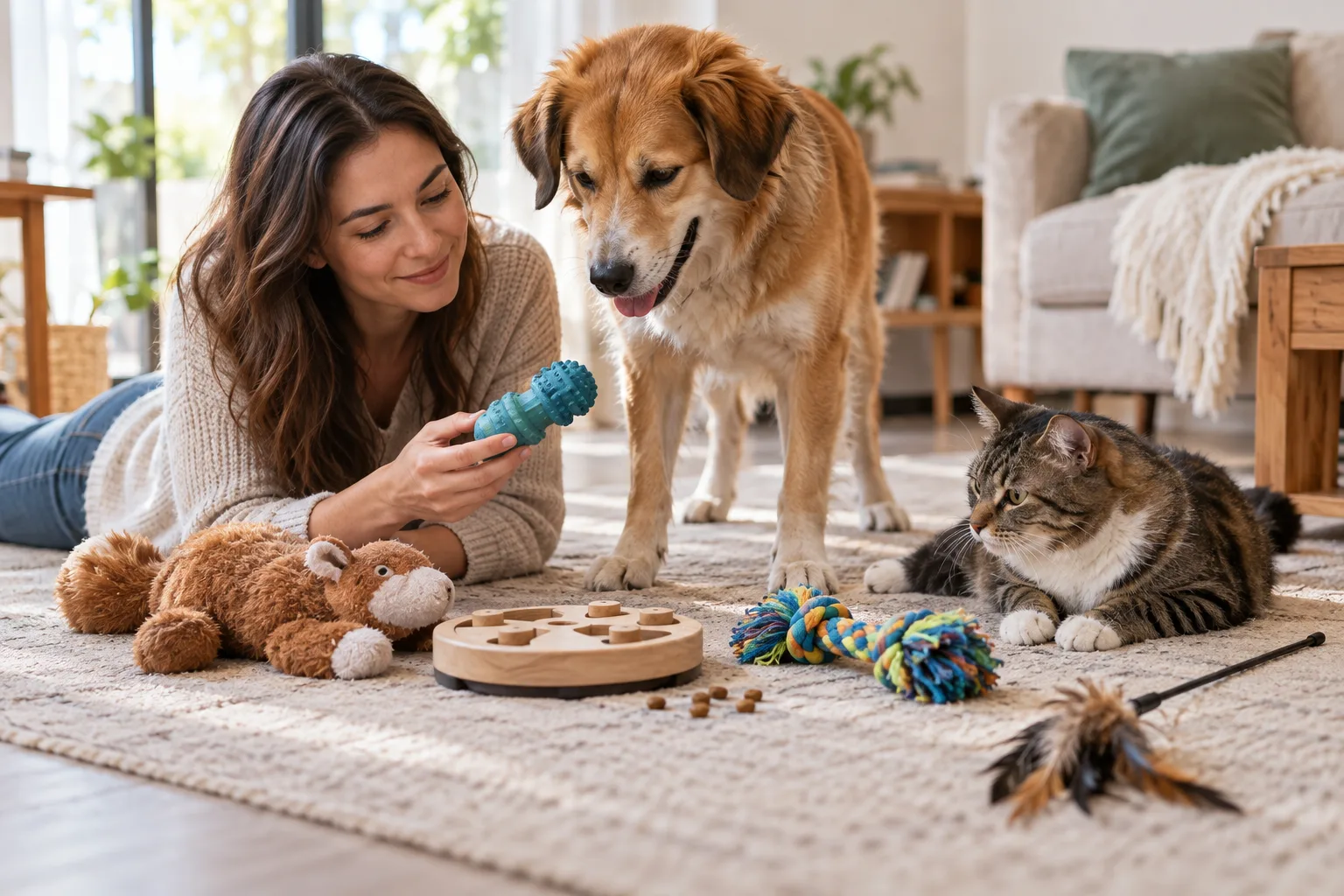
A September 2026 report from the Center for Pet Safety has put renewed attention on toy-related injuries. The report describes toys as the leading manufactured product category in the incidents submitted to the organization and argues that the market lacks a consistent system for testing, recalls, and injury reporting. That is an important consumer-safety signal, but it is not a reason to throw away every toy or assume that one brand is safe for every animal. It is a reason to inspect toys as equipment, watch how an individual pet uses them, and retire them before damage turns into a swallowed fragment.
Why the label is a poor safety test
Pet toys are sold for very different jobs. A soft toy for carrying, a food puzzle, a rubber item for chewing, a tug toy and a cat wand do not face the same risks. “Tough,” “natural” and “heavy duty” are marketing descriptions, not guarantees that a toy will resist a particular animal’s teeth or that pieces cannot be swallowed.
Dogs vary enormously in how they play. One may mouth a rubber toy gently; another may immediately target seams, squeakers and edges. A puppy may dismantle fabric because chewing is rewarding. A strong adult dog may compress a hard toy until it cracks. A small dog can still swallow a surprisingly large fragment if it breaks off at the right angle. Cats bring different hazards: long strings, ribbons and elastic attachments can be pulled off and swallowed, while a wand toy left out can become a tangle or strangulation risk.
A product that lasts six months for one household may last six minutes for another. The relevant test is the animal’s observed use, not the product photograph or a review from a different pet.
The five-minute toy audit
Before giving a new toy to a pet, check its size, construction and likely failure points.
Size. A toy should not be small enough to fit entirely in the animal’s mouth. For dogs, a ball that can be swallowed or wedged behind the teeth is a high-risk choice even if it is sold as a fetch toy. “Large enough” depends on the dog’s jaw, bite style and ability to compress the material, so use the manufacturer’s size guidance only as a starting point. For cats, inspect whether a small bell, plastic part, feather shaft or elastic loop can be detached and swallowed.
Attachments. Remove or avoid loose eyes, beads, plastic noses, ribbons, strings, bells and small squeakers when the pet is likely to chew rather than carry. A cat wand can be excellent interactive equipment while a person is holding it and a dangerous object when left on the floor. Put it away after play. Do not leave string, yarn or ribbon available as an unsupervised “toy.”
Material and hardness. A toy that is extremely hard can damage teeth. Veterinary guidance commonly uses a simple practical check: if a chew cannot be indented at all with a fingernail, treat it cautiously rather than assuming that harder means safer. Bones, antlers, hooves, hard nylon and similarly rigid chews can fracture teeth, and fragments can become choking or obstruction hazards. Softer is not automatically safe either; soft rubber, foam and fabric can be torn into pieces.
Seams and edges. Run your fingers over the toy. Look for stitching that is already loose, a seam that opens under modest pressure, sharp moulding lines, cracked rubber and parts that can be twisted free. If the toy contains stuffing, ask what happens when the outer layer fails. Stuffing is not food, and a pet that likes to shred may ingest it.
The pet’s history. A toy that is reasonable for a careful carrier may be unsuitable for a shredder. Consider previous behaviour: has the animal swallowed socks, chewed foam, dismantled beds or guarded food-filled items? That history should influence the level of supervision and the kinds of products offered.
Supervision is an active job
Watching a pet with a toy does not mean glancing over occasionally while working in another room. In the first sessions, observe what the animal actually does. Does the dog retrieve, lick and roll the toy, or immediately bite one seam? Does the cat bat the toy with controlled paws, or chew the cord? Does a food puzzle encourage calm foraging, or does the pet attack it hard enough to break pieces off?
Supervision should change the plan. If a pet starts stripping fabric, stop the session and remove the toy. If a dog is biting through a rubber item and producing chunks, do not wait for the item to become visibly tiny. If a cat catches a string and begins chewing it, end the game and store the toy out of reach. The goal is not to teach an animal to “be careful” with a failing product. The goal is to prevent access to the failure.
Food-filled toys need extra attention in multi-pet homes. A puzzle or chew can be enriching, but it may also become a valuable resource that another animal approaches. Separate pets with a door, gate or enough space to eat and play without interference. Take the item away when the food is gone if the remaining shell is being chewed apart. Behaviour around a toy can be different when another pet, child or person comes near it; do not force an animal to surrender a high-value item by grabbing it.
Retire toys on evidence, not on a schedule
There is no universal replacement interval. Inspect toys at the start of play and after use. Retirement signs include:
- stuffing showing through a tear;
- a frayed rope with strands coming loose;
- a squeaker, bell or other component becoming accessible;
- a rubber toy with deep cracks, missing pieces or a sticky, degraded surface;
- a ball that has become small enough to lodge in the mouth;
- sharp edges after a toy has been bitten or broken;
- a food puzzle that no longer stays intact;
- a wand, elastic or cord that has stretched, snapped or tangled.
Washable toys should be cleaned according to the maker’s instructions and dried fully. Cleaning does not restore a cracked surface or make an exposed filling safe. Keep a small number of toys in use and rotate them if that helps maintain interest, but rotation is not a substitute for inspection. A toy stored in a cupboard can still degrade, especially if it is exposed to heat, moisture or cleaning chemicals.
Do not assume that a familiar toy is safe forever. Some pets become more destructive with age, after a change in routine, or when a toy’s surface changes. A product that was safe when new may become unsafe after months of chewing.
Match the activity to the animal
A safer toy choice begins with the behaviour you want to support.
For a dog who needs to sniff and forage, a sturdy food puzzle used at an appropriate difficulty may provide more useful work than a toy intended for intense chewing. Start with an easy version so the dog learns how the object works. If the dog becomes frustrated, bites the container or guards it, simplify the activity and ask a veterinarian or qualified behaviour professional for help with the guarding concern.
For a dog who enjoys retrieving, choose a fetch item that is easy to see and too large to swallow. Check it after every energetic session, especially when playing on rough ground. Avoid throwing objects that are so hard they can damage teeth, and do not use sticks as a default fetch toy: they can splinter or injure the mouth and throat.
For a dog who enjoys tug, use a purpose-made tug item while holding one end. Keep hands, clothing and children’s toys out of the game. Stop if the dog is tearing off fibres or becoming unable to release the toy calmly. Tug itself is not automatically a cause of aggression, but excitement, competition and poor handling can make an interaction unsafe.
For a cat who stalks and pounces, interactive wand play can provide movement and choice when a person controls the toy. Let the cat catch it sometimes, then end the session by putting the wand away. Offer separate objects for solo batting, but avoid leaving string, thread, ribbon or elastic accessible. Many cats also benefit from boxes, paper bags with handles removed, stable scratchers and climbing or hiding spaces; enrichment does not need to be a complicated gadget.
For a puppy or kitten, choose items that tolerate chewing without small detachable parts and keep sessions short. Teething or juvenile curiosity can make an animal investigate everything with its mouth. A toy should not be used to occupy a young pet unsupervised simply because it is labelled for that age group.
Hard chews, squeakers and “indestructible” products
Hard chews deserve a separate decision because the main risk may be dental damage rather than swallowing. If a product cannot give at all, it may be too hard for the animal’s teeth. A broken tooth can be painful even when a pet continues eating and playing, and owners may not notice the problem immediately. A veterinary examination is appropriate for pain, reluctance to chew, dropping food, pawing at the mouth, facial swelling or a sudden change in eating behaviour.
Squeakers are not poisonous simply because they squeak, but they become a problem when a dog opens the toy and swallows one. Some dogs are particularly motivated to find the noise-making part. With those dogs, a squeaker-free toy or a toy used only for short, supervised sessions may be a better choice. Never put the squeaker back into a toy and return it to a pet.
Rope toys can be useful for interactive play, but loose strands are a reason to remove them. Long fibres can be swallowed and may tangle in the digestive tract. If a pet has swallowed string, do not pull on material protruding from the mouth or rear without veterinary advice; pulling can cause injury if the material is caught internally. Contact a veterinarian promptly for guidance.
What to do if a piece is missing
First, remove the toy and identify what may be gone. Check the floor, bedding and nearby rubbish, but do not spend hours searching while the pet may have swallowed a dangerous piece. Note the material, approximate size, when it was last intact and the animal’s weight, age and species. Contact a veterinarian or an appropriate animal poison or emergency service if the material could obstruct the airway or digestive tract, is sharp, or may contain a toxic substance.
Do not induce vomiting or give home remedies unless a veterinarian specifically directs you. Some objects are more damaging when brought back up, and a home intervention can delay useful care. A veterinarian may decide that monitoring is reasonable or may recommend an examination and imaging; the correct choice depends on the object and the animal.
Choking is an immediate emergency. Signs can include severe distress, difficulty breathing, frantic behaviour, blue or grey gums, collapse or inability to make normal sounds. Seek emergency veterinary help while following professional instructions. Do not put your fingers deep into a conscious animal’s mouth, because you can be bitten or push an object farther down. If the animal is breathing but may have swallowed a fragment, it still needs prompt professional advice rather than a wait-and-see assumption.
A gastrointestinal obstruction may not be obvious at first. Vomiting, repeated retching, drooling, loss of appetite, unusual tiredness, abdominal pain, diarrhoea, constipation or a sudden change in behaviour after possible ingestion are reasons to contact a veterinarian. These signs are not a diagnosis; they are warning signals that an examination may be needed. Breathing trouble, collapse, severe pain, poisoning, injury or rapidly worsening symptoms should be treated as urgent.
Cats need particular caution with string-like items. A cat may swallow thread, ribbon or yarn while playing, and an end may remain hidden. If you see string coming from the mouth or rear, do not pull it. Call a veterinarian for immediate advice.
Make the home safer around toys
Toy safety is also a storage problem. Keep wand toys, spare parts, ribbons, packaging, plastic film and damaged items in a closed container. Dispose of broken toys in a bin the pet cannot open. A dog that searches rubbish may find the missing squeaker or a chewed piece later. Keep children’s small construction parts, craft supplies and hair accessories separate from pet areas; animals do not distinguish between a pet product and an object that happens to be chewable.
Check the play area for secondary hazards. A toy can become trapped under furniture, caught around a leg, or carried onto stairs. A ball thrown near a pool, road or balcony creates risks unrelated to the product itself. Cats can become entangled in loops and cords around furniture. Supervision includes the surroundings, not just the object.
When buying online, treat five-star reviews as reports of satisfaction, not safety testing. Look for clear dimensions, material information, care instructions and a realistic description of the intended activity. Be cautious when a product uses safety language without explaining how the claim was assessed. Keep the packaging and receipt for a new item until you know how your pet uses it. If a product fails unusually quickly, photograph the damage and report the incident to the seller or manufacturer; reporting may help identify patterns that individual owners cannot see.
A calmer way to choose the next toy
The useful response to new toy-safety warnings is a small change in routine:
- Choose a toy for a specific activity rather than for a vague promise of being tough.
- Select a size that cannot be swallowed or lodged in the mouth.
- Remove loose attachments and avoid string-like items for unsupervised use.
- Watch the first sessions closely and learn how this individual pet attacks, carries or shreds the product.
- Inspect before and after play, then retire the toy at the first meaningful damage.
- Keep interactive toys stored away and separate pets when food or guarding is involved.
- Call a veterinarian for possible ingestion, choking, breathing difficulty, pain, repeated vomiting, not eating, collapse or any worrying sudden change.
A toy is successful when it gives an animal an appropriate outlet without creating a new hazard. Sometimes the best choice is a simple object used with a person for a few minutes. Sometimes it is a food puzzle, a cardboard box, a scratcher or a sniffing game. The safest option is the one that fits the pet’s body, habits and environment—and that the owner is prepared to inspect, supervise and replace.
Related articles
The dog keeps chewing everything: safe enrichment ideas and when to call the vet
A practical owner guide to matching puzzle toys, chews and routines to the dog in front of you without missing anxiety or medical red flags.
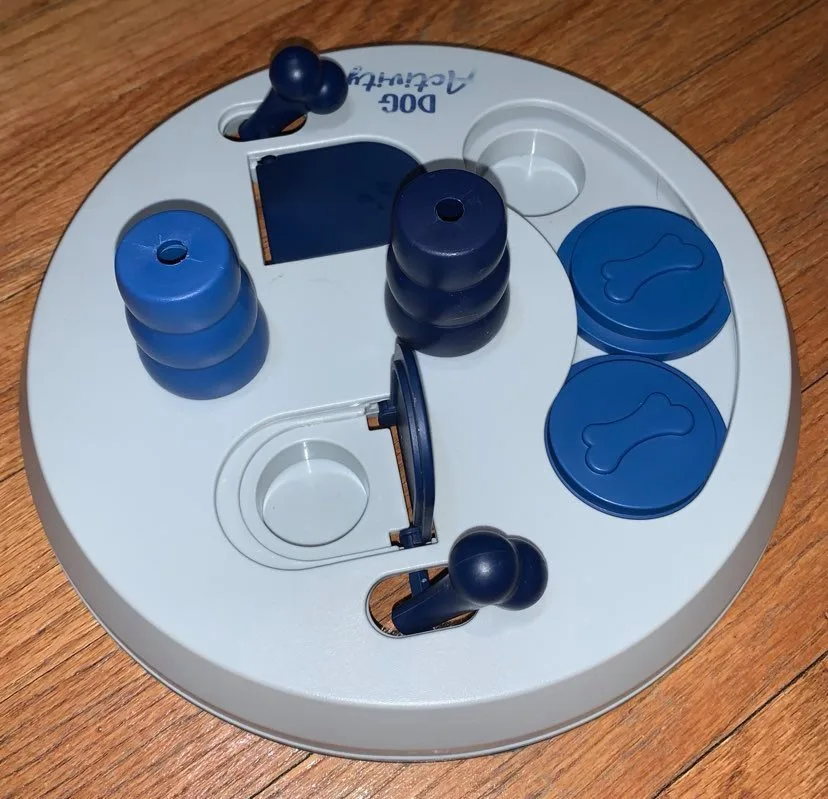
Too hot for the usual dog walk? Paw protection, cooling products and warning signs
A practical summer walk plan for ordinary dog owners: cooler timing, safer surfaces, water, cautious gear choices and the symptoms that mean calling a veterinarian.

The cat scratches the sofa: choose the right post, place it well and know when to worry
A practical owner guide to normal feline scratching, furniture protection, humane redirection and the red flags that belong with a veterinarian rather than another gadget.

Should you buy Microduck? The $399 robot duck is a project, not a pet
Microduck is cute, open and unusually affordable for robotics. That does not make it an impulse buy: preorder it only if you want a tiny lab.

Comments
Sign in to comment.
No comments yet.