The September 2026 Pet-Food Recall Check: How to Audit Supplements, Raw Food and Kitchen Habits
Two recent FDA-listed recalls show why a pet-food safety check must include supplements, frozen raw food, lot codes and household hygiene—not just the main bag of kibble.

A pet-food recall is easy to miss when the product is not the animal’s main meal. A jar of calming powder may sit beside the treats, a frozen food bag may be buried at the back of the freezer, and a topper may be used only once or twice a week. That is why a sensible recall check has to cover supplements, treats, toppers and raw products as well as ordinary canned food and kibble.
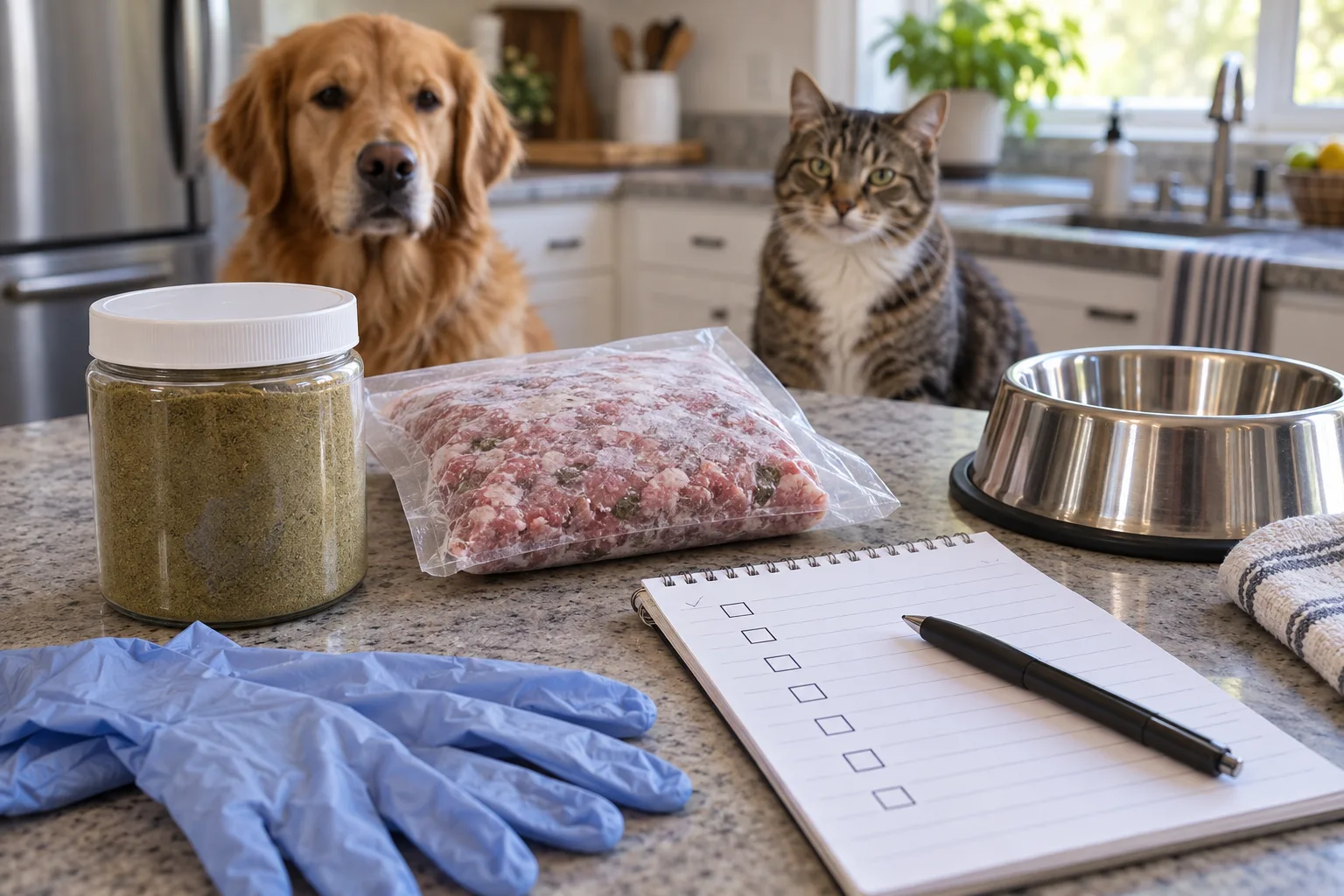
The U.S. Food and Drug Administration’s animal-food recall list currently includes a September recall of two Fi supplements for dogs because of possible Salmonella contamination, along with an August recall of two Northwest Naturals frozen raw products after testing found Salmonella and/or Listeria monocytogenes. These are separate recalls with different products and lot codes. They are not evidence that every product from either brand is unsafe, and they do not justify throwing away an entire food category. They do justify checking what is in your home, how it is stored and what has touched it.
This guide explains what owners should do with the affected products, how to perform a useful household audit, why a pet can appear well while still spreading contamination, and which signs should prompt a call to a veterinarian. It is general safety information, not a diagnosis or a replacement for veterinary advice.
What the recent recalls actually involve
The FDA’s animal-food recall table lists Fi supplements for dogs as a September 8, 2026 posting. The company announcement is dated September 3, and the FDA page notes that the company name was corrected on September 18. The reason given is potential Salmonella contamination linked to an ingredient supplied to Fi’s manufacturer.
The affected products are: Fi Calming supplement for Dogs, 180 g, lot 26118, UPC 850064800111; and Fi 8-in-1 Formula supplement for Dogs, 180 g, lot 26159, UPC 850055111684. The FDA says the products were distributed directly to consumers and through Amazon and Chewy. The recall applies to the listed products and lots, not automatically to every Fi item in a household.
The FDA advises owners who bought either affected lot to stop using it, keep the container tightly sealed and dispose of it in the trash. The agency also provides Fi’s contact details for questions and says adverse events or quality problems can be reported through its animal-reporting program. If you still have the package, photograph the front label and lot number before disposing of it. That makes it easier to answer questions from the seller, manufacturer or veterinarian.
The Northwest Naturals recall is different. It covers Northwest Naturals Frozen Chicken Recipe for cats and as a protein topper for dogs, in a 2-pound bag, lot B-5, best-by 01/26/2028, UPC 087316384956. It also covers Northwest Naturals Frozen Raw Diet for Dogs Chicken Recipe, in a 6-pound bag, lot B-19, best-by 01/25/2028, UPC 087316380392. The FDA says 53 cases of the cat product and 19 cases of the dog product were recalled. The cat product tested positive for Salmonella; the dog product tested positive for Listeria monocytogenes and Salmonella.
The products were distributed to retail stores nationwide. The FDA notice says no illnesses had been reported in connection with that recall at the time of publication. It also instructs owners to stop feeding the listed lots and return unused product to the place of purchase for a refund. Because the food is raw and frozen, a quick glance at the brand name is not enough: the lot, product description, size and best-by date all matter.
First step: check every feeding product, not just the food bowl
Start by making a short inventory. Look in the pantry, freezer, refrigerator, treat drawer, travel bag, training pouch, supplement cabinet and any automatic feeder or food-storage bin. Include products used by a dog walker, sitter or family member if they are stored in your home.
Write down four details for each item:
- brand and exact product name;
- form and size, such as powder, can, frozen bag or freeze-dried pieces;
- lot number, batch code or best-by date;
- where it was purchased and whether it is still sealed.
For a recall, “I use that brand” is not a sufficient match. A brand can sell multiple formulas made at different facilities or with different ingredients. A notice may name one flavor, one package size or one lot while leaving other products unaffected. Compare the physical label with the official notice line by line. If the label is damaged or the code is unreadable, keep the product isolated and contact the manufacturer or retailer for help rather than guessing.
Do not rely on a marketplace listing, a social-media post or a screenshot that does not show the lot details. Product pages can remain online after a recall, and old posts can mix an earlier notice with a later update. The FDA’s Recalls & Withdrawals page is the best starting point for U.S. notices, but owners should also check the manufacturer’s recall page and the retailer’s notification. People outside the United States should use their national food-safety or veterinary authority as well as the company’s local notice, because distribution and product names can differ by country.
What to do if you have an affected Fi supplement
Stop giving it. Do not use a small amount to “finish the jar,” mix it into food, or give it to another animal. A supplement is still an ingestible product, and moving it to a different household only moves the risk. Keep the container closed until it goes into a covered trash bin. Wash your hands after handling it, especially if powder has spilled on the lid, counter or scoop.
If the supplement was kept in a shared storage bin, clean the bin according to its material and the cleaner’s label. A reusable scoop that touched the product should be washed with hot, soapy water. If the product was mixed into a bowl, wash the bowl before it is used again. Wipe nearby surfaces if there is visible residue.
Record whether your dog consumed the product, approximately when, and whether more than one animal had access to it. Do not try to calculate risk from the amount consumed or decide that a symptom is definitely caused by the supplement. Those judgments belong with a veterinarian. The useful information for a veterinary practice is the product name, lot, timing and observed changes.
The FDA notice lists lethargy, diarrhea or bloody diarrhea, fever, vomiting, decreased appetite and abdominal pain among possible signs in pets with Salmonella infection. These signs can have many other causes, so they are not a diagnosis. A dog that has eaten an affected product and develops concerning symptoms should be discussed with a veterinarian. Seek prompt professional advice for severe or persistent vomiting or diarrhea, blood, marked weakness, breathing trouble, collapse, signs of pain, refusal to eat or drink, or a sudden deterioration.
A dog can also carry Salmonella without looking ill. That is why handwashing and cleaning matter even when the animal seems normal. Wash your hands after handling the recalled container, the dog’s food and water bowls, saliva-covered toys, vomit or feces. If someone in the household is pregnant, very young, older or immunocompromised, be especially careful about who handles the product and cleans contaminated areas.
What to do if you have an affected Northwest Naturals product
Stop feeding the matching lot immediately. Keep the bag sealed and separated from human food and other pet food while you confirm the return or disposal instructions. Do not rinse raw food down a sink. Contact the retailer or Northwest Naturals about the refund, following the recall notice’s instructions.
If the package leaked, thawed or touched other items in the freezer, treat the surrounding surfaces as potentially contaminated. Put on disposable gloves if available, place the recalled package in a leakproof bag, and wash your hands after removing it. Clean the shelf, drawer or container that held it. Wash bowls, knives, cutting boards, measuring cups, feeding mats and countertops that contacted the product. Use cleaning and disinfecting products only as directed on their labels, and keep pets away from wet disinfectant and cleaned surfaces until they are safe to use.
Do not assume that freezing made the food safe. The CDC says freezing, freeze-drying and dehydration can reduce the number of germs but do not kill every germ that may be present in raw animal protein. The FDA also warns that raw pet food is more likely than processed pet food to contain harmful bacteria such as Salmonella and Listeria monocytogenes. The recent Northwest Naturals notice is a practical reminder of that distinction: a product can look normal, remain frozen and still require careful handling.
If the same freezer holds human food, inspect the packaging of nearby items. A sealed, undamaged package is different from a leaking or visibly contaminated one, but do not taste or salvage food that has been exposed to raw pet food. When in doubt, consult local food-safety guidance. Keep the pet-food area separate from food preparation areas when possible.
The raw-food question is broader than one recall
A recall is about a named product and lot. It does not prove that every raw product is contaminated, just as an absence of a recall does not guarantee that every package is free of germs. That distinction matters because owners often make one of two mistakes: treating a recall as proof that all raw feeding is automatically dangerous, or treating an unlisted product as guaranteed safe. Neither is a careful reading of the evidence.
The CDC does not recommend feeding raw pet food or treats to dogs and cats. Its explanation is straightforward: raw animal protein may contain germs, and dogs and cats can become sick or pass those germs into the household. The CDC also notes that raw foods can include frozen, freeze-dried and dehydrated products, not only meat served fresh from a refrigerator.
Raw is not a synonym for complete, balanced or healthier. Cooked and raw diets can both be nutritionally adequate or inadequate, depending on formulation and feeding pattern. A product used as a topper is not automatically a complete diet, and a product marketed as “natural” does not remove the need to check its nutritional suitability. If raw food is the main diet, discuss the plan with a veterinarian or veterinary nutritionist, especially for a puppy, kitten, growing animal, animal with an existing health condition or animal with a weakened immune system.
This is also where behavior and medicine need to be separated. A pet may refuse a food because of texture, smell, temperature, routine or preference. A pet may also stop eating because it feels unwell. Owners should not use a food-preference explanation to dismiss sudden appetite loss, repeated vomiting, diarrhea, pain, unusual quietness or a marked change in behavior. The practical approach is to note the change and contact a veterinarian when it persists or comes with warning signs.
A safer feeding routine for ordinary households
You do not need a laboratory or a separate room to improve food safety. A few repeatable habits reduce the chance of spreading contamination.
Wash your hands with soap and water before and after handling pet food, treats and supplements. The FDA recommends washing for at least 20 seconds. Hand sanitizer can be useful when soap and water are unavailable, but it is not a substitute for washing after handling raw food or visibly dirty items.
Use a dedicated scoop or measuring cup. Do not use the pet’s bowl as a scoop, because the bowl may carry saliva, food residue and environmental contamination. Wash wet-food bowls after every use. The CDC’s cleaning guidance recommends cleaning bowls after every use for wet food and at least daily for dry food and water, with more frequent cleaning when a pet is ill or raw food is involved.
Keep dry food in its original bag when possible. The original packaging carries the lot code and product information needed for a recall. If you use a storage container, keep the bag or photograph the label before discarding it, and wash and dry the container between bags rather than continuously topping up old food. A clean container cannot compensate for losing the product’s traceability.
Refrigerate opened canned or pouched food promptly and follow the label’s storage instructions. Keep dry food cool and dry. Thaw raw food in the refrigerator, in a sealed container and away from human food. Throw away leftovers that have been at room temperature rather than returning them to the freezer or mixing them into the next meal.
Keep feeding equipment out of food-preparation areas when practical. If a bowl or mat must be washed indoors, use a designated sink or clean the area thoroughly afterward. Do not let children handle recalled products or raw food. Avoid allowing a pet that has just eaten raw food to lick faces or open wounds, and wash hands after touching the animal’s mouth or feeding equipment.
How to read a recall notice without overreacting
A recall notice usually answers five questions: what product is affected, which lot or date is affected, why it was recalled, where it was distributed and what owners should do. Read those fields in that order.
The reason can change the practical response. A possible pathogen contamination emphasizes stopping use and preventing cross-contamination. A foreign-material recall may make packaging, lot matching and observation for injury especially important. A nutrient-level recall may require a different conversation with a veterinarian, particularly if the food was a sole diet or fed to a young animal. The owner’s job is not to translate the recall into a diagnosis. It is to stop exposure, preserve accurate information and seek professional advice when needed.
The absence of reported illness also needs careful interpretation. In the Northwest Naturals notice, the FDA reported no illnesses at the time of publication. That does not mean an owner should continue feeding the recalled lot. It means the public notice had not identified illnesses then. Similarly, a pet that appears well after eating a recalled product should still be monitored and the product removed.
Do not confuse a company announcement date with the date an agency posts or updates a notice. The Fi page shows a company announcement on September 3, an FDA publication date of September 8 and a later correction to the company name. Dates and details can be updated, so check the live official notice if a saved screenshot conflicts with the current page.
When to call the veterinarian
Contact a veterinarian if your pet has eaten a recalled product and then develops vomiting, diarrhea, bloody stool, fever, unusual tiredness, reduced appetite, abdominal discomfort or another sudden change. Also call if symptoms are persistent, worsening or occurring in a puppy, kitten, older animal or pet with other health concerns.
Do not give human anti-diarrheal medicine, leftover antibiotics or another medication unless a veterinarian specifically tells you to do so. Do not force food or water into an animal that is repeatedly vomiting or having difficulty swallowing. The safest information to provide is the exact product, lot number, amount if known, time of exposure, other foods or supplements and a timeline of symptoms.
For the people in the household, Salmonella can cause nausea, vomiting, diarrhea, abdominal cramps and fever. Listeria can be especially serious for pregnant people, newborns, older adults and people with weakened immune systems. Anyone who becomes ill after handling a recalled product should contact a healthcare provider and mention the possible exposure. The owner’s medical care and the pet’s veterinary care are separate decisions; one should not be delayed while waiting to see what happens with the other.
A ten-minute recall audit to repeat monthly
Once a month, choose a regular day to inspect your pet supplies. Check the pantry, freezer, refrigerator, treat containers and supplement drawer. Photograph labels before opening a new bag or jar, record the product and lot in a note on your phone, and remove anything past its use-by date or stored in damaged packaging.
Look at the FDA animal-food recall page and the manufacturer’s notice. If you use raw products, include treats and toppers in the check. Ask anyone else who feeds your pet to tell you about products purchased separately. A recall plan fails when the main owner checks the pantry but a sitter continues using a recalled supplement from a travel bag.
Keep a simple emergency record with your veterinarian’s phone number, the pet’s current food, recent supplements and any known sensitivities or health conditions. This is not a reason to change food repeatedly or stockpile multiple replacement diets. Sudden diet changes can cause digestive upset, and animals with prescribed diets may need a veterinarian’s help before a substitute is chosen. If a recalled food is part of a medically important feeding plan, ask the veterinary practice what replacement is appropriate.
The most useful lesson from the September recalls is not that owners should fear every new pet product. It is that traceability and hygiene are part of routine care. Check the exact lot. Keep the original label. Separate recalled items. Clean the surfaces that touched them. Watch the animal without trying to diagnose it. Call a veterinarian for worrying or persistent symptoms. Those habits protect pets and people more reliably than a confident guess based on a brand name or a product’s marketing language.
Related articles
Pet Toy Safety After the 2026 Warning: How to Spot Choking, Swallowing and Dental Risks
A practical toy-safety audit for dogs and cats: match the item to the way your pet plays, supervise the first sessions, retire damaged toys early and know which signs need veterinary advice.
New World Screwworm and Pets: What Outdoor Owners Should Check and When to Call the Vet
The New World screwworm outbreak is mainly a regional animal-health concern, not a reason for every owner to panic. Here is how to check wounds, think about travel, avoid unsafe home treatments, and recognize when veterinary help is needed.

Nantucket and Martha’s Vineyard Ferry Plans for September 24–27: How to Handle the Nor’easter Without Wasting Your Budget
A September nor’easter is disrupting ferry plans for Nantucket and Martha’s Vineyard. Here is how to check cancellations, protect reservations, reach the terminals without overspending and decide whether to delay an island weekend.


Typed AI Decisions Could Improve Smart-Home Automation, but They Still Need Hard Limits
TypeSafe’s new Jev model points to a narrower kind of smart-home AI: systems that choose among predefined outcomes instead of improvising control. That could help with comfort automations, provided local policy, manual overrides, and safety checks remain in charge.
Comments
Sign in to comment.
No comments yet.