Too hot for the usual dog walk? Paw protection, cooling products and warning signs
A practical summer walk plan for ordinary dog owners: cooler timing, safer surfaces, water, cautious gear choices and the symptoms that mean calling a veterinarian.

August heat turns an ordinary dog walk into a judgment call. Your dog may still expect the familiar loop, you may still need a toilet break before work, and the pavement may look harmless even when it is storing hours of sun. The safest answer is not simply to cancel every walk or buy one miracle product. It is to change the plan before your dog is struggling: pick cooler hours, choose kinder surfaces, shorten the route, carry water, use cooling gear as support rather than permission to overdo it, and take red flags seriously.
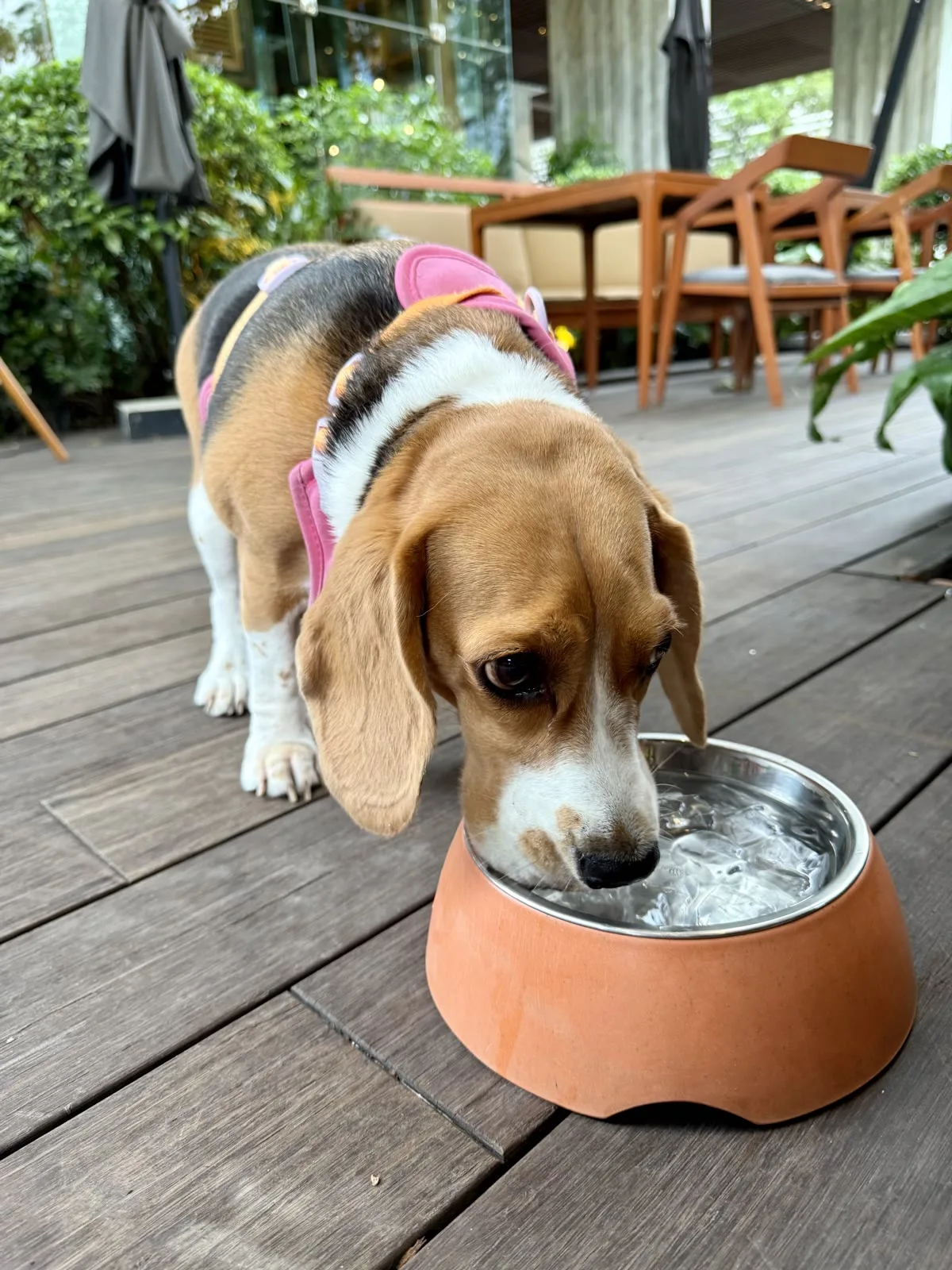
Veterinary and welfare organisations are consistent on the basics. The AVMA, ASPCA and Humane Society all stress shade, fresh water, limiting exercise in hot weather and avoiding hot asphalt that can burn paws. The RSPCA’s heatstroke guidance explains the larger risk: dogs rely heavily on panting and can get into trouble when they cannot reduce body temperature fast enough. Product reviews and owner discussions are useful for seeing what people are trying this summer — cooling mats, booties, portable bottles and indoor games — but safety claims should come back to veterinary sources, not marketing or one forum story.
Start with the walk, not the gadget
Before looking at booties or cooling vests, ask what job the walk is doing today. A toilet break, a slow sniff around the block and a long exercise session are not the same thing. On a very hot afternoon, the long exercise session is often the first piece to move indoors or to the early morning. A dog can still have structure without completing the usual mileage at the worst hour of the day.
The simplest hierarchy is timing, surface, intensity and backup plan. Go early or late when the ground has cooled. Stay in shade where possible. Choose grass, dirt paths or sheltered park edges instead of black asphalt and concrete. Make the outing a short sniff walk, not a forced march. Pause while the dog still looks comfortable, not after the tongue is hanging low and the dog is pulling toward shade. If the route includes unavoidable pavement, make that section brief and give the dog a cooler place to stand before and after it.
Air temperature alone is a poor guide. Direct sun, humidity, lack of wind, dark pavement, a dog’s age and fitness, coat, body shape and medical history all change the risk. A breezy morning on a shaded path is different from the same number on a still car park. Do not treat any single thermometer reading as a guarantee. Treat the whole scene as information.
A useful owner habit is to check the surface with your own hand or bare skin for several seconds. If you cannot comfortably keep contact, your dog’s paws should not be expected to handle a normal walk there. This is not a laboratory test and it does not replace judgment, but it reminds you that the dog is not walking on the air temperature. If the surface is questionable, switch to shade or grass, carry the dog only if that is safe for both of you, or postpone the route.
Read refusal as information
A dog that slows down, lies down, lifts paws, pulls toward shade, licks feet or refuses to continue is not being “stubborn” in a way that needs punishment. Heat, hot ground, fatigue, anxiety, pain, poor conditioning or illness can all produce similar behaviour. The practical response is to stop asking for more, move to a cooler and safer place, offer water, and shorten the plan.
This distinction matters because training advice and medical caution overlap on hot days. If a dog freezes when you put on new booties in the hallway, that may be a training and acclimation issue. If the same dog stops on hot pavement, pants harder than usual and lifts a foot, the priority is comfort and safety, not obedience. Owners often want a simple label, but “won’t walk” is a signal, not a diagnosis.
Watch your own expectations too. Many dogs follow routine so strongly that they will start the usual route even when the conditions are poor. Others will chase a ball until they are past sensible limits. Do not outsource the decision to enthusiasm. Heat-safety planning is one of the moments when the human has to be the boring adult.
Paw protection: useful, limited and trainable
Hot pavement can injure paws, and paw protection can help in the right situation. The key phrase is “right situation.” Booties should fit securely without rubbing, allow normal movement, and be introduced gradually indoors and on short, pleasant outings before they are needed in difficult conditions. If the first bootie experience is a rushed emergency on a baking sidewalk, many dogs will hop, freeze or try to remove them.
Start with one or two minutes, treats, calm praise and a surface the dog already likes. Build up slowly. Check for rubbing between toes, twisting fabric, trapped grit and dampness. A boot that protects against heat but causes sores is not solving the owner’s problem. Dogs with sensitive skin, existing paw injuries or persistent licking need veterinary advice rather than a shopping list.
Booties are not a license for a long walk in dangerous heat. They may protect the pads from brief contact with a hot or rough surface, but they do not cool the dog’s body. In fact, they can tempt an owner to stay out longer because the paw problem feels “handled.” The better use is limited: cross the unavoidable pavement, reach a shaded path, protect feet on rough ground, then keep the session short.
Paw waxes and balms are sometimes marketed as pavement protection. They may help with moisture or minor friction for some dogs, depending on the product, but they should not be treated as a heat shield. If the ground is hot enough to worry you, a smear of product is not enough reason to continue the normal route.
Cooling mats, vests and fans are aids, not permission slips
Cooling products are best understood as comfort tools. A cooling mat or bed can give a dog a pleasant resting place after a short outing or during a warm afternoon at home. A fan can help air movement in a safe indoor space. A shaded water stop, portable bowl or bottle may matter more than any fashionable accessory. These are practical supports, not medical treatment and not proof that outdoor heat is safe.
Read product instructions. Some mats contain gel and should be supervised if your dog chews. Some vests and bandanas need correct wetting, wringing or re-wetting; used badly, they can become warm, heavy or uncomfortable. A product that works for one coat type and one climate may be disappointing in humid heat or on a dog that hates wearing gear. The dog’s behaviour is the review that matters most.
Avoid the “stacking gadgets” trap. Booties plus a vest plus a cooling mat at home can still be a bad plan if the walk happens at noon on sun-baked asphalt. Think of gear as reducing friction in a safer plan, not as converting an unsafe plan into a safe one. The core decisions remain timing, route, surface, pace and stopping early.
Portable water is the least glamorous item and often the most useful. Offer water before the dog is desperate. Carry enough for delays. Use a bowl or bottle your dog will actually drink from, and practise with it before a trip. Some dogs refuse unfamiliar travel bottles when excited or stressed; discovering that on a hot path is poor planning.
Replace the missed long walk with mental work
Owners of energetic dogs often worry that a shorter walk will produce chaos at home. Sometimes it will, especially for young dogs and breeds selected for work. But heat is a good reason to separate physical distance from enrichment. A fifteen-minute sniff walk in shade plus two or three short indoor sessions can be more sensible than one overheated march.
Try scent games, scatter feeding, food puzzles, calm trick refreshers, mat training, hide-and-seek with a toy, gentle tug in a cool room, or a few minutes of loose-leash practice in a hallway. Keep sessions short and successful. Mental work is not a moral consolation prize; for many dogs it is tiring in a different and useful way.
Do not use indoor exercise to ignore illness. A dog that is suddenly lethargic, painful, coughing, breathing oddly, vomiting, refusing food or water, or behaving very differently needs veterinary guidance. Enrichment is a routine-management tool for a basically well dog on a hot day, not a substitute for care when something is wrong.
A simple heat-day walk checklist
Before leaving, ask five questions. Is the ground comfortable enough for paws? Is there shade for most of the route? Do I have water and a way to offer it? Can I turn this into a short sniff outing instead of exercise? What is my indoor backup if the dog is still energetic? If any answer is weak, change the plan before stepping outside.
During the walk, make the dog’s comfort the agenda. Let sniffing replace speed. Choose the shady side of the street. Cross exposed pavement quickly without dawdling. Take small breaks before the dog demands them. End while the dog still seems normal. The successful hot-day walk is often the one that feels almost too short.
After the walk, check paws casually when the dog is calm. Look for obvious tenderness, excessive licking, limping, damaged pads, trapped debris or new reluctance to stand. Do not poke or peel injured skin. If you see pain, burns, wounds, persistent lameness or worrying changes, contact a veterinarian.
Red flags: when this stops being a routine problem
General guidance cannot diagnose your dog. It can tell you when not to troubleshoot with products. Seek veterinary help promptly for heavy or abnormal panting, difficulty breathing, collapse, weakness, disorientation, seizures, repeated vomiting or diarrhoea, excessive drooling, painful paws, suspected burns, injury, poisoning concern, sudden behaviour change, not eating or drinking, or any symptom that is severe, unusual or persistent.
If a dog appears distressed by heat, stop activity, move away from sun and hot surfaces, and contact a veterinarian or emergency clinic for advice. Do not try to solve a potentially serious heat problem with a cooling mat, internet remedy, medication suggestion or another walk to “see if it improves.”
What to buy, if anything
Start with the low-tech kit: a water bottle, a bowl the dog accepts, a leash setup that lets you choose shade without pulling, and perhaps a light mat for resting in a cool place at home. Add booties only if your routes truly require them and you have time to train the dog. Consider a cooling vest or mat as a comfort accessory after reading instructions and watching your individual dog.
A good product is boring in the best way: easy to clean, hard for your dog to destroy, comfortable enough to use repeatedly, and suited to your real routine. A bad product is one that lets you ignore the conditions. No gear should make you feel safe about long exercise on hot pavement.
The owner’s job in summer is not to preserve the usual walk at all costs. It is to preserve the dog’s welfare while keeping enough routine, toileting and enrichment for the household to function. On hot days, that usually means shorter outdoor sessions, cooler surfaces, water, shade, indoor mental work and a low threshold for veterinary advice when the dog seems unwell.
Related articles
The cat wants the sink, not the bowl: water-station fixes and when to worry
A practical reset for bowl placement, fountain choices, cleaning habits and the red flags that belong with a veterinarian, not a shopping cart.

Beef tallow for your face: budget moisturizer or overpriced viral balm?
A practical ingredient check for anyone tempted by tallow balm, with cheaper occlusive and moisturizer comparisons before you spend.

The late-June garden reset: water by evidence, mulch for heat, plant for insects
A practical late-June garden guide for watering by evidence, mulching correctly, protecting containers and keeping pollinators fed.


Choosing an e-ink tablet as a sunlight SSH terminal for AI-agent work
A practical buyer guide for running the real work on a server while using an e-ink or reflective tablet outdoors as a cool, readable SSH terminal.
Comments
Sign in to comment.
No comments yet.