Robots improve fastest where the floor plan is honest
Recent ROS and navigation releases are a reminder that deployment depends less on spectacle than on maps, safety margins, update discipline and boring operational habits.

The useful story here is smaller than the headline cycle and more useful than it looks. robotics progress is getting practical: the strongest signal is not a flashy demo but the discipline around packages, maps, fleets, safety zones and boring recovery procedures. The names in the source trail are familiar, but the pattern matters more than any single version number.

What the release notes really say
The verified source notes are concrete: ROS Lyrical Luth Patch Release 1 was published on GitHub on 2026-06-23 as binary packages, with maintainers warning users to keep systems up to date and to ignore GitHub auto-generated source links. That kind of detail is easy to skip because it does not look dramatic. It is exactly the sort of detail that decides whether a tool survives contact with real users.
In the what the release notes really say section, the useful lens is robots rather than general technology excitement. This part should change one reader behavior: delay a risky rollout, check a log setting, document a fallback, or ask whether the maintainer story is clear enough for daily use. The answer may be dull, but durable systems are usually made from dull answers.
For the section on what the release notes really say, ownership is the second test. If nobody can name who owns this specific risk, the update is already less safe than it looks. Put the affected service, device or workflow on one line, name the watcher, define the signal that proves this part still works, and decide what happens if that signal goes quiet. In this context, the release note becomes an operating habit rather than trivia.
Why small fixes matter
A project, product or deployment earns trust when the maintenance trail is readable. Dates, version numbers, scopes and caveats let a reader judge the work without guessing. When notes hide behind vague language, the operator inherits the risk.
In the why small fixes matter section, the useful lens is robots rather than general technology excitement. This part should change one reader behavior: delay a risky rollout, check a log setting, document a fallback, or ask whether the maintainer story is clear enough for daily use. The answer may be dull, but durable systems are usually made from dull answers.
For the section on why small fixes matter, ownership is the second test. If nobody can name who owns this specific risk, the update is already less safe than it looks. Put the affected service, device or workflow on one line, name the watcher, define the signal that proves this part still works, and decide what happens if that signal goes quiet. In this context, the release note becomes an operating habit rather than trivia.
The practical risk
The practical question is simple: what breaks, who notices, and how quickly can someone fix it? A release that closes a logging leak or corrects a data edge case may matter more than a flashy feature if it protects the workflow people already rely on.
In the the practical risk section, the useful lens is robots rather than general technology excitement. This part should change one reader behavior: delay a risky rollout, check a log setting, document a fallback, or ask whether the maintainer story is clear enough for daily use. The answer may be dull, but durable systems are usually made from dull answers.
For the section on the practical risk, ownership is the second test. If nobody can name who owns this specific risk, the update is already less safe than it looks. Put the affected service, device or workflow on one line, name the watcher, define the signal that proves this part still works, and decide what happens if that signal goes quiet. In this context, the release note becomes an operating habit rather than trivia.
How to read the signal
Readers should treat each update as a maintenance signal. Look for bug classes, not just bug counts. Integration fixes point to boundary problems. Credential fixes point to trust boundaries. Navigation and automation fixes point to places where the physical world refuses to behave like a demo.
In the how to read the signal section, the useful lens is robots rather than general technology excitement. This part should change one reader behavior: delay a risky rollout, check a log setting, document a fallback, or ask whether the maintainer story is clear enough for daily use. The answer may be dull, but durable systems are usually made from dull answers.
For the section on how to read the signal, ownership is the second test. If nobody can name who owns this specific risk, the update is already less safe than it looks. Put the affected service, device or workflow on one line, name the watcher, define the signal that proves this part still works, and decide what happens if that signal goes quiet. In this context, the release note becomes an operating habit rather than trivia.
What teams should check
The decision process should be plain. Test the upgrade in a small environment. Read the rollback notes. Check whether the project explains affected versions. Watch issue trackers for repeated complaints. Do not confuse a busy changelog with a healthy project, but do not ignore careful maintenance either.
In the what teams should check section, the useful lens is robots rather than general technology excitement. This part should change one reader behavior: delay a risky rollout, check a log setting, document a fallback, or ask whether the maintainer story is clear enough for daily use. The answer may be dull, but durable systems are usually made from dull answers.
For the section on what teams should check, ownership is the second test. If nobody can name who owns this specific risk, the update is already less safe than it looks. Put the affected service, device or workflow on one line, name the watcher, define the signal that proves this part still works, and decide what happens if that signal goes quiet. In this context, the release note becomes an operating habit rather than trivia.
Where buyers get fooled
There is a trap in treating all small releases as noise. Many teams learn about project quality only after a bad update, a broken integration or a quiet security exposure. A calmer habit is to read a few source notes every week and build a feel for which maintainers communicate clearly.
In the where buyers get fooled section, the useful lens is robots rather than general technology excitement. This part should change one reader behavior: delay a risky rollout, check a log setting, document a fallback, or ask whether the maintainer story is clear enough for daily use. The answer may be dull, but durable systems are usually made from dull answers.
For the section on where buyers get fooled, ownership is the second test. If nobody can name who owns this specific risk, the update is already less safe than it looks. Put the affected service, device or workflow on one line, name the watcher, define the signal that proves this part still works, and decide what happens if that signal goes quiet. In this context, the release note becomes an operating habit rather than trivia.
The boring checklist
For individual users, the useful move is boring: back up, update deliberately, and keep one path back. For teams, the move is to assign ownership. Someone should know which systems depend on the release and which alarms would fire if the update went wrong.
In the the boring checklist section, the useful lens is robots rather than general technology excitement. This part should change one reader behavior: delay a risky rollout, check a log setting, document a fallback, or ask whether the maintainer story is clear enough for daily use. The answer may be dull, but durable systems are usually made from dull answers.
For the section on the boring checklist, ownership is the second test. If nobody can name who owns this specific risk, the update is already less safe than it looks. Put the affected service, device or workflow on one line, name the watcher, define the signal that proves this part still works, and decide what happens if that signal goes quiet. In this context, the release note becomes an operating habit rather than trivia.
What is still uncertain
The uncertainty is real. A release note is not a full audit, and a GitHub tag does not prove the absence of hidden defects. Still, public maintenance records are better than marketing claims. They show what maintainers noticed, what they fixed, and how much context they gave users.
In the what is still uncertain section, the useful lens is robots rather than general technology excitement. This part should change one reader behavior: delay a risky rollout, check a log setting, document a fallback, or ask whether the maintainer story is clear enough for daily use. The answer may be dull, but durable systems are usually made from dull answers.
For the section on what is still uncertain, ownership is the second test. If nobody can name who owns this specific risk, the update is already less safe than it looks. Put the affected service, device or workflow on one line, name the watcher, define the signal that proves this part still works, and decide what happens if that signal goes quiet. In this context, the release note becomes an operating habit rather than trivia.
A better way to decide
My rule of thumb is to reward clarity. If a project tells me what changed, why it changed, and what I should watch after upgrading, it has earned more trust than a project that only promises momentum. Boring candor beats polished excitement.
In the a better way to decide section, the useful lens is robots rather than general technology excitement. This part should change one reader behavior: delay a risky rollout, check a log setting, document a fallback, or ask whether the maintainer story is clear enough for daily use. The answer may be dull, but durable systems are usually made from dull answers.
For the section on a better way to decide, ownership is the second test. If nobody can name who owns this specific risk, the update is already less safe than it looks. Put the affected service, device or workflow on one line, name the watcher, define the signal that proves this part still works, and decide what happens if that signal goes quiet. In this context, the release note becomes an operating habit rather than trivia.
The takeaway
The reader takeaway is not to chase every update on day one. It is to read releases as evidence. Over time, the small notes reveal whether the system is maturing, drifting, or surviving through luck.
In the the takeaway section, the useful lens is robots rather than general technology excitement. This part should change one reader behavior: delay a risky rollout, check a log setting, document a fallback, or ask whether the maintainer story is clear enough for daily use. The answer may be dull, but durable systems are usually made from dull answers.
For the section on the takeaway, ownership is the second test. If nobody can name who owns this specific risk, the update is already less safe than it looks. Put the affected service, device or workflow on one line, name the watcher, define the signal that proves this part still works, and decide what happens if that signal goes quiet. In this context, the release note becomes an operating habit rather than trivia.
Related articles
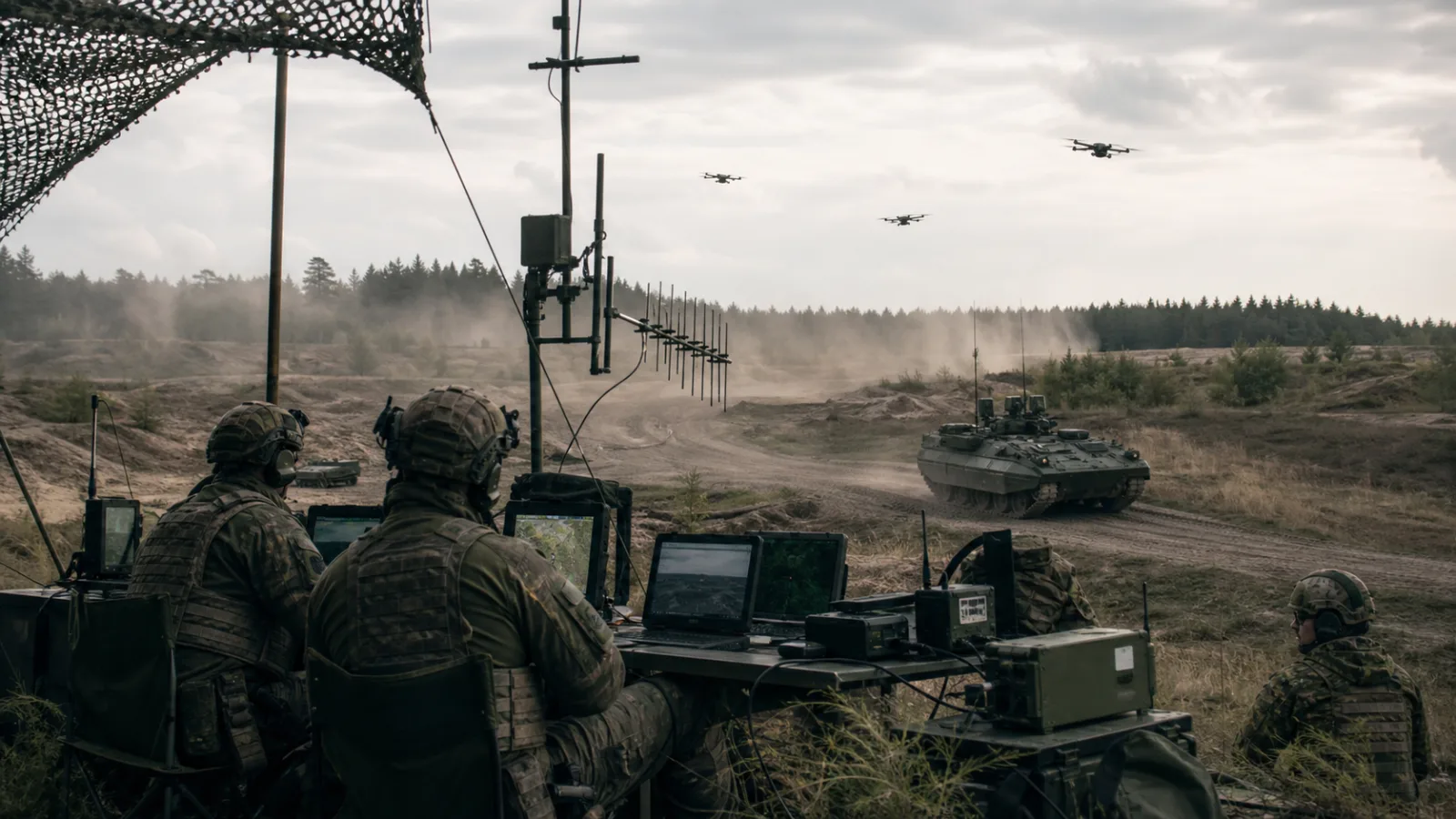
Drones did not kill the tank; they changed the robotics around it
Combined Resolve and Aurora 26 show why small drones, operators and fast feedback loops now matter as much as heavy machines.
Service robots are leaving the demo stage slowly
A grounded look at why mobile robots in kitchens, warehouses, and public spaces are improving through narrower jobs rather than grand promises.

Isaac 1 shows the uncomfortable middle stage of home robots
Weave’s $7,999 home robot is compelling because it targets laundry and tidying, but its remote-assistance model makes privacy, trust and service economics the real test.

FailureSpot targets the missing safety layer in vision-language-action robots
A new preprint treats robot failure as a moment to detect, not merely a verdict at the end of a task. Its approach uses action patterns and selective timestamp labels to help VLA systems recognize when a manipulation run has begun to drift.

Comments
Sign in to comment.
No comments yet.