Robotaxis are now a fight over who writes the rules of the street
Uber, Waymo, Tesla, New Jersey and NHTSA are turning autonomous taxis from a technology rollout into a public-policy test for cities.

Robotaxis are no longer just a robotics demo. They are becoming a fight over who gets to write the rules of the street.
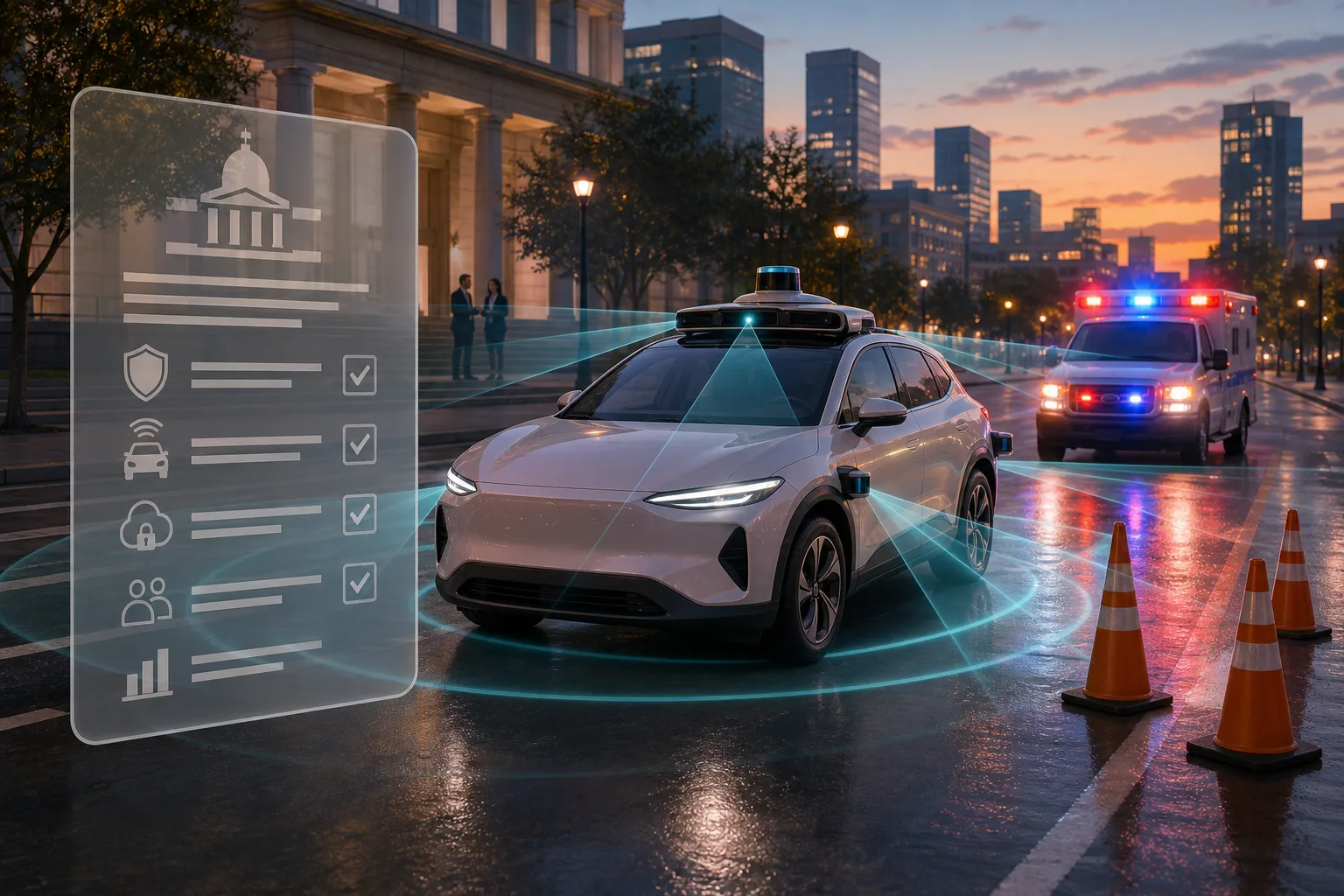
The past week made that clear. In Washington, D.C., Uber and Waymo are arguing over a bill that would allow commercial driverless operations. In New Jersey, lawmakers are considering a pilot program that would require fully autonomous vehicles to use cameras plus two other sensing technologies, a rule that would collide with Tesla's camera-only robotaxi approach. And at the federal level, NHTSA has warned driverless-vehicle developers that blocking police, ambulances or firefighters is not a rare edge case. The agency called it a functional insufficiency.
Taken separately, these look like local policy fights. Together, they mark a new phase for autonomous vehicles. The question is no longer only whether a robot can drive. It is who gets to decide when a robot is allowed into a city, what hardware it must carry, how it behaves around emergency services, what it pays for public infrastructure, and whether old ride-hailing platforms keep control of the market.
Washington turns robotaxis into a platform fight
A proposed D.C. bill would update the district's 2012 Autonomous Vehicle Act and create a path for driverless testing and commercial driverless operations. TechCrunch reported that the draft would give the District Department of Transportation authority to issue permits to AV developers that meet requirements such as liability insurance, crash reporting and fees.
The numbers matter because they show this is not a simple green light. TechCrunch reported a minimum of $5 million in liability insurance, crash reporting within eight or 72 hours depending on the vehicle type, a $0.15-per-mile vehicle-miles-traveled tax, a $1 million application fee and a $5 million non-refundable permit fee after approval. Half of the mileage-tax revenue would go to public transit, with the rest supporting education and workforce development for ride-share and taxi drivers at risk of displacement.
Uber opposes the bill in its current form. Its argument is that robotaxis should not be allowed to create a closed first-party market where a company like Waymo operates its own vehicles, app and customer relationship. Uber wants what it calls a hybrid network: riders should be able to choose between human-driven and driverless rides inside a ride-hailing platform.
Waymo, which already partners with Uber in some markets, sees that differently. According to TechCrunch and WIRED, Waymo does not support rules that force AV operators into a particular network type. The company wants AV services to be able to operate directly, not only through an incumbent ride-hailing intermediary.
That is the core business fight. Uber wants to be the marketplace for human and robot rides. Waymo wants the freedom to be a robotaxi operator in its own right.
The New Jersey proposal moves the fight into hardware
New Jersey's S1677 is a different kind of argument. The Verge reported that the bill would create a three-year pilot program for fully autonomous vehicles and require companies to use cameras plus two other sensing technologies, most commonly lidar and radar. It would also require supervised testing miles and state authorization before fully driverless commercial service.
If enacted as described, New Jersey would become the first state to encode a hardware requirement for fully autonomous vehicles. The practical effect would be obvious: Tesla's current camera-only Robotaxi architecture would not qualify unless Tesla changed the hardware or the bill changed.
The bill's sponsor, state Sen. Andrew Zwicker, told The Verge, "This is not anti-Tesla. I'm pro-New Jersey safety." He also said his office received roughly 4,000 emails in a day after Tesla urged owners to push back. That reaction matters. Robotaxi policy is no longer confined to transport committees and engineering panels. It now mobilizes brand communities and voters.
There is a serious policy question underneath the Tesla argument. Should a state specify sensors, or should it specify safety outcomes and let companies choose the stack? Sensor-fusion advocates argue that cameras, radar and lidar each fail differently, so redundancy is prudent in dense, complex roads. Camera-only advocates argue that mandates freeze today's assumptions into law and may block cheaper approaches that could eventually prove safe.
Both concerns are real. A city is not obligated to be a proving ground for every low-cost architecture. But a law that names the hardware too tightly can age badly.
Uber's 85 percent idea shows the labor problem
WIRED reported that an Uber lobbyist circulated language in New Jersey that would require driverless ride-hailing platforms to have human drivers serve 85 percent of rides for three years. Uber said it was trying to address labor opposition and avoid monopolies. Critics see a different motive: a rule like that would make it difficult for a pure robotaxi operator to enter the market without going through an existing platform.
This is where the debate gets uncomfortable. Human drivers do face real displacement risk. Cities and states should not pretend the labor impact is imaginary. But a rule that locks most rides to human drivers can also become market protection dressed as transition policy.
The better question is not whether drivers deserve protection. They do. The question is whether protection should come through training funds, transition payments, operating fees and labor standards, or through rules that make autonomous competitors dependent on the companies they might disrupt.
NHTSA says emergency scenes are not edge cases
The federal signal may be the most important for robotics teams. TechCrunch reported on NHTSA's July 8 letter to driverless ADS developers. The agency said it had identified a clear pattern of driverless AVs interfering with law enforcement and other first responders, including vehicles entering active emergency scenes, blocking ambulances or firefighters, or failing to respond to flashing lights, flares, smoke, fire and traffic cones.
NHTSA's wording was blunt. The inability to detect and respond appropriately to those situations is a functional insufficiency. Emergency scenes are not rare edge cases.
That phrase should change how companies talk about autonomy. A robotaxi that drives well on a normal street but freezes around a fire truck is not almost finished. It is missing a public-infrastructure skill. Cities run on exceptions: roadwork, detours, emergency vehicles, police direction, crowds, flooding, parades, bad weather, temporary signs. A deployment plan that treats those as afterthoughts is not a city plan.
NHTSA did not name specific companies in the letter. TechCrunch noted that the context points toward robotaxi operators, and Waymo declined to comment. The important part is the standard: autonomous vehicles need to show that they can coexist with emergency response, not merely avoid ordinary collisions.
This is regulation as robotics infrastructure
Robotaxi companies often frame regulation as friction. Sometimes it is. Bad law can protect incumbents, freeze hardware choices and delay useful mobility. But good regulation is also part of the robotics stack.
A city needs to know how many vehicles will cruise empty, where they can stop, how they report crashes, how they pay for road use, how they handle disabled passengers, what happens when they block an ambulance, and who answers the phone when a vehicle is stuck in an intersection. Those questions are not anti-robot. They are the operating system of public roads.
The D.C. proposal tries to price road use and fund transit and workforce transition. The New Jersey bill tries to set a safety floor through sensor redundancy. NHTSA is pushing the industry to treat first responders as a core requirement. Each approach has flaws. Each also points to the same reality: autonomy leaves the lab through permits, taxes, insurance, crash reports and public-safety procedures.
Who wins depends on the model
If D.C. adopts rules friendly to direct AV operators, Waymo and similar companies gain a clearer route to market. If the district or states require hybrid networks, Uber and Lyft keep a central role even as vehicles become driverless.
If New Jersey passes a sensor mandate, Waymo and Zoox-style sensor fusion looks validated by law, while Tesla's camera-first approach faces a legal barrier. If lawmakers shift to performance rules instead, Tesla gains room to argue that measured safety matters more than hardware design.
Drivers and unions face a different calculation. A slow rollout may protect income in the short term. But if the rules mainly preserve platform control, workers may still lose leverage later, only after the market structure is already set.
Passengers also have mixed interests. Robotaxis could improve late-night mobility, reduce some crashes and serve people who cannot drive. They could also worsen congestion, fail disabled riders who need physical assistance, or leave neighborhoods underserved if deployment follows only profitable demand.
Emergency services have the clearest demand: do not get in the way. That sounds simple until a robot must read smoke, cones, hand signals, sirens, blocked lanes and human improvisation at once.
The next breakthrough may be legal, not technical
Robotaxi progress is still about sensors, maps, machine learning, remote assistance and fleet operations. But the bottleneck is moving. The next expansion may depend less on a neural network benchmark and more on whether a city council trusts the operator, whether a state accepts its sensor stack, whether federal regulators believe it can handle emergency scenes, and whether labor groups believe the transition is fair.
That does not make the technology less impressive. It makes the product more real.
A robotaxi is not just a car without a driver. It is a participant in public infrastructure. Once it reaches that stage, the rulebook is not a side document. It is part of the machine.
Related articles
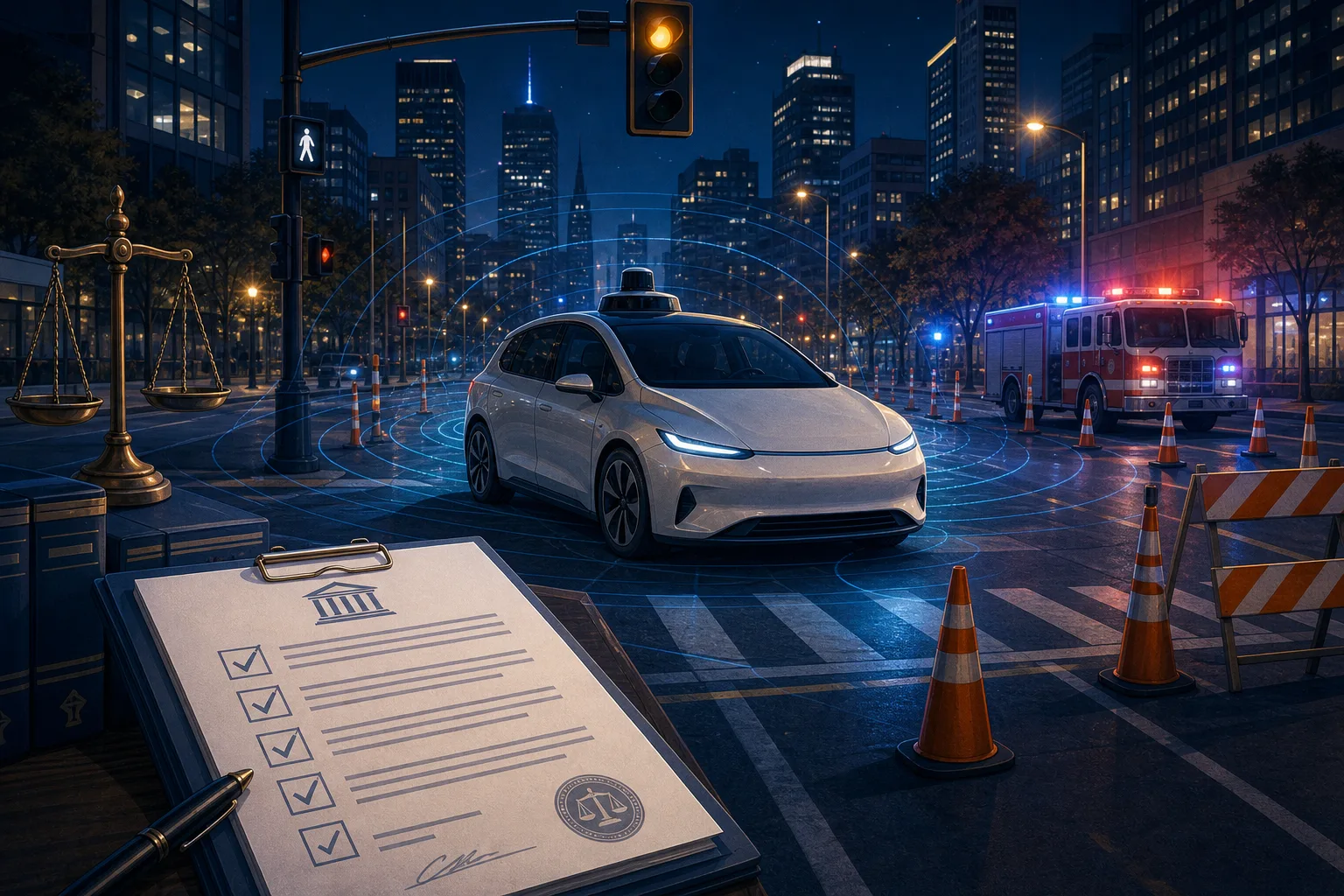
Robotaxis are now a fight over city rules, not just AI
Uber, Waymo, Tesla and regulators are turning autonomous taxis into a policy battle over sensors, labor, emergency response and who controls the ride market.
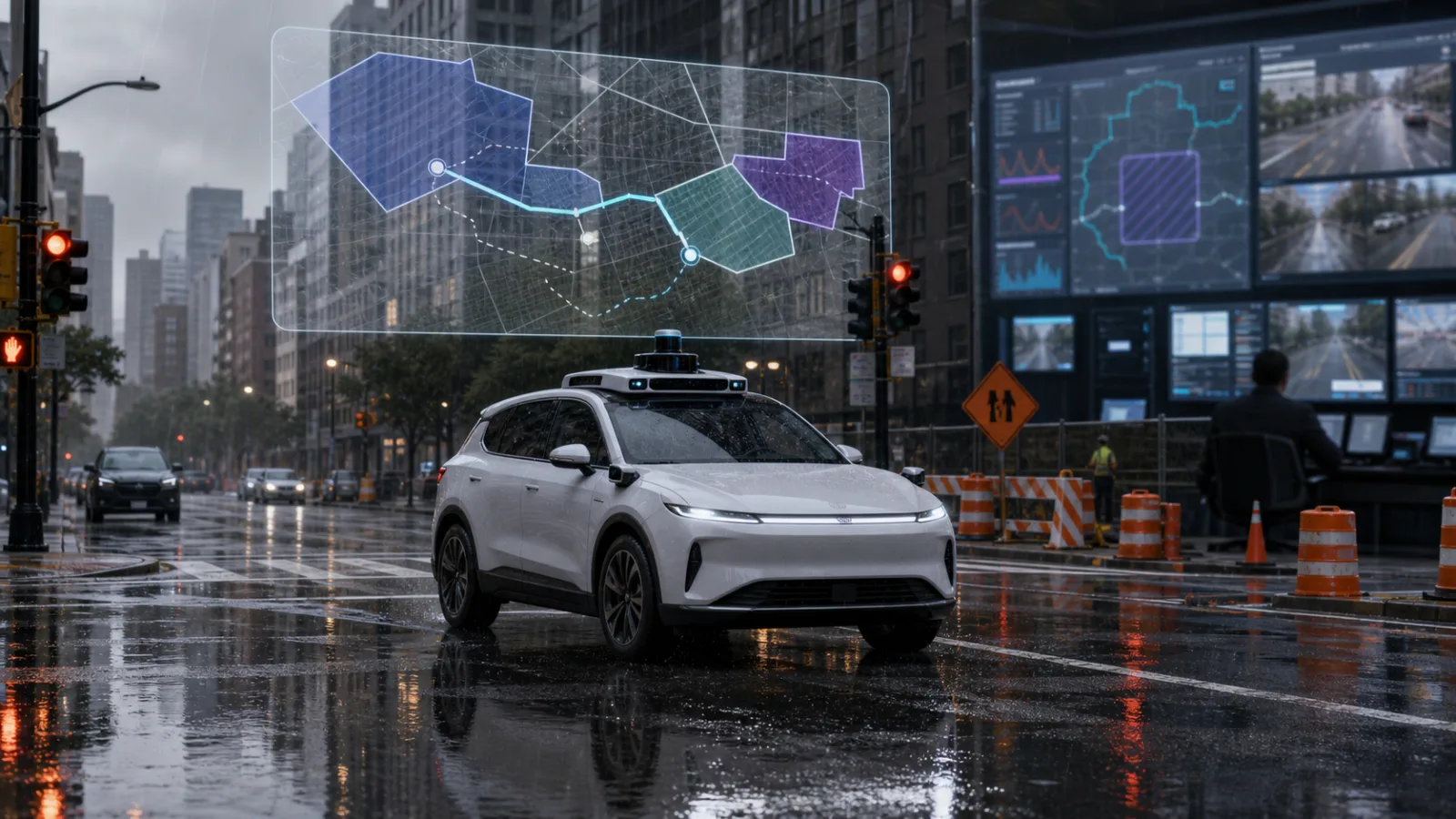
A robotaxi map is not a service
Tesla’s Miami geofence and Waymo’s standing-water recall show that the real robotaxi race is no longer about drawing bigger maps. It is about proving the operating domain.
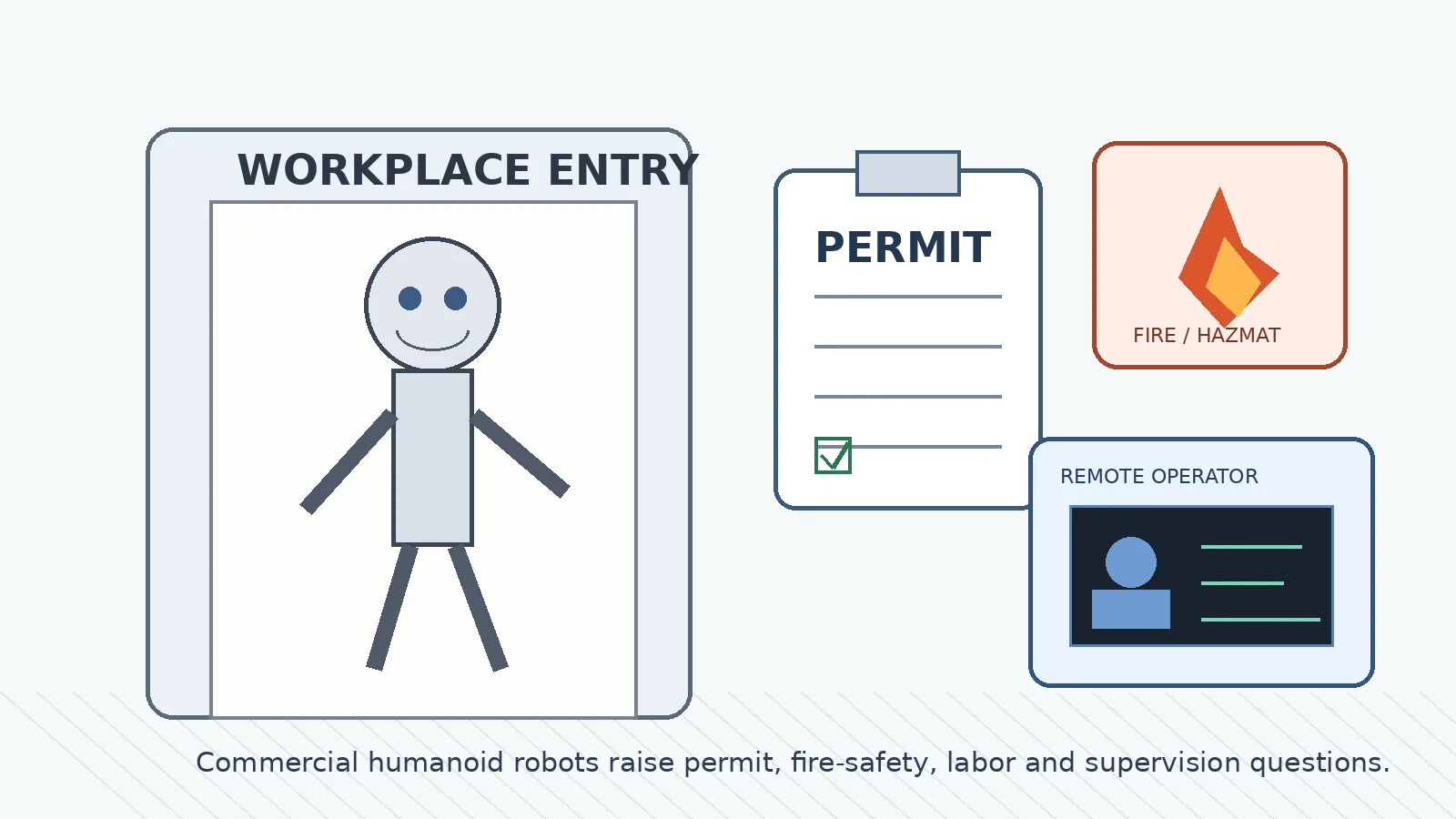
San Mateo’s humanoid robot permit push tests the rules for physical AI
A Silicon Valley county is not banning humanoid robots; it is asking what permits, fire rules, supervision and labor disclosures must exist before commercial deployment.
Robotaxis at the school gate: what the Waymo probe really tests
NHTSA’s redacted Waymo file turns a low-speed Santa Monica collision into a bigger question about robotaxi caution and public evidence.
Comments
Sign in to comment.
No comments yet.