Your robot vacuum is only as safe as its cloud rules
A Shark robot vacuum disclosure shows why smart-home privacy depends on vendor cloud access controls, not only on firmware updates at home.

A robot vacuum is supposed to be one of the least dramatic smart-home devices. It bumps around, maps rooms, returns to its dock and makes a chore disappear. The recent Shark robot vacuum disclosure is a useful reminder that the quietest appliance in the house can still be part of a much larger cloud system: certificates, MQTT topics, AWS IoT policies, mobile apps, maps, camera streams and vendor remediation that the owner cannot see from the kitchen.
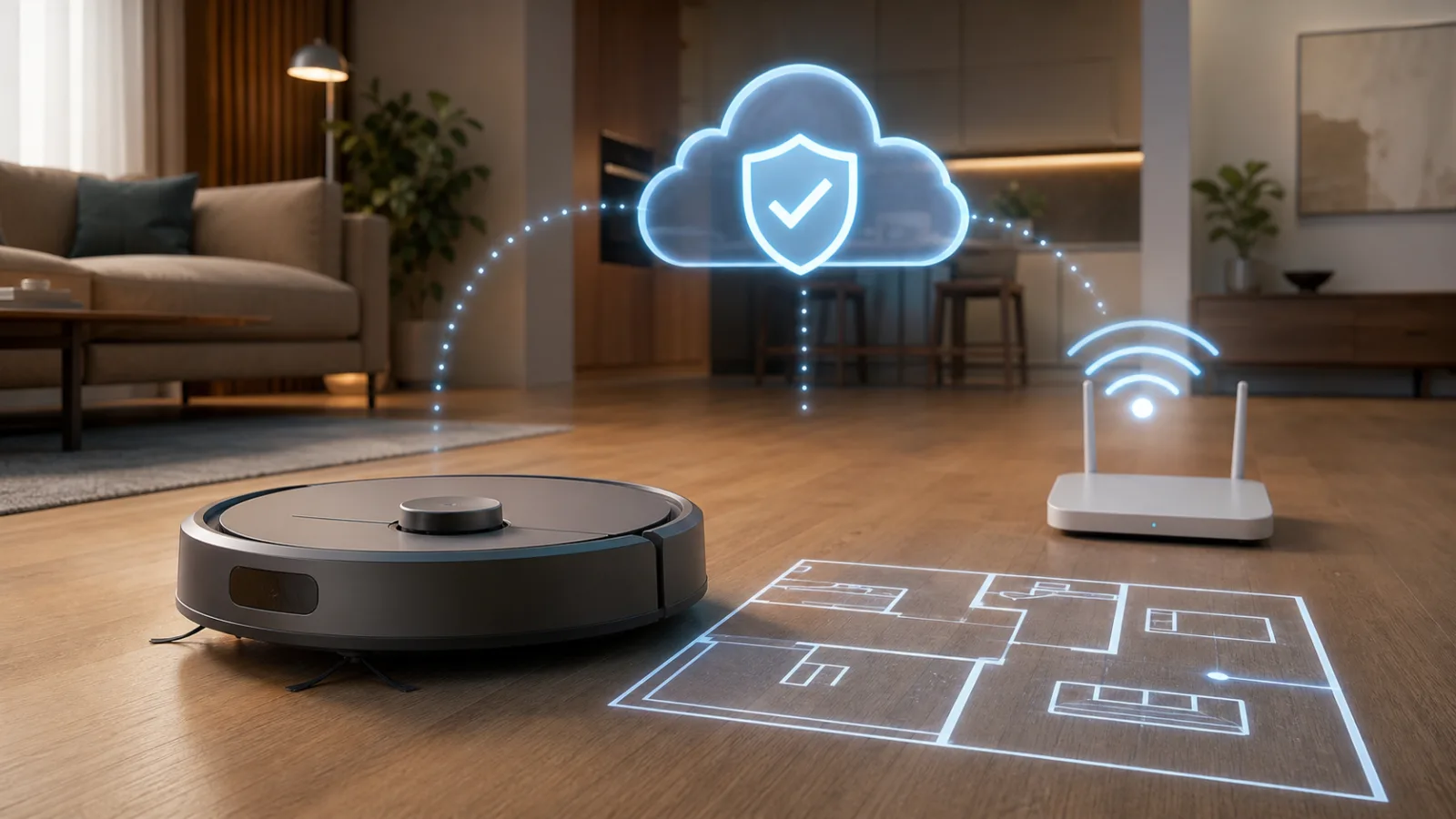
Security researcher tokay0 published a technical write-up on July 13 about Shark robot vacuums. The post says a certificate and private key extracted from one Shark RV2320EDUS vacuum could be used against other Shark devices in the same AWS region because the cloud policy was not scoped tightly enough to that one device. The researcher says the path made it possible to publish AWS IoT shadow commands, run code, pull a live camera feed, drive the robot, read stored home-map files and access a Wi-Fi PSK kept in plaintext on the device.
The important consumer point is not that every owner should panic or throw away a vacuum. The original post now carries a note saying SharkNinja says the vulnerability was patched on July 20. The important point is that the fix appears to be a cloud-side trust and access-control issue, not a visible button in the app that a normal owner can press. A robot may be sitting on your floor, but much of its security boundary can live in infrastructure you never configured.
What was actually claimed
The write-up describes a common IoT architecture. The vacuum authenticates to an AWS IoT endpoint with mutual TLS, uses device certificates, and communicates through MQTT topics and AWS IoT shadows. In a well-scoped design, a certificate for one device should be allowed to talk only to that device's own topics and state. AWS's own Device Defender documentation warns that overly permissive IoT policies can let a compromised certificate read or modify shadows, jobs or messages across a broad set of devices.
According to tokay0, the certificate from the RV2320EDUS test unit was too powerful. It could subscribe and publish outside its own serial-number namespace. The researcher then bought a second model, AV1102ARUS, and says the first vacuum's certificate could operate on the second vacuum when both were in the same AWS region. That is why the story matters beyond a single teardown: the reported weak point was not a cracked app password, but cloud authorization that trusted a device credential too broadly.
The claimed capabilities were unusually intimate for a home appliance. The researcher says he could pull a live camera feed while the vacuum was moving, remotely drive motors, access house maps and find the Wi-Fi pre-shared key in plaintext on the vacuum's filesystem. Several security outlets, including The Hacker News, Malwarebytes, Tom's Hardware and Digital Trends, repeated the same core risks while adding consumer context. The numbers should be read carefully: tokay0 says that during a 24-hour scan in one AWS region he observed 10,536,535 messages, 1,517,605 unique serial numbers and 673,816 devices that emitted an Exec_Response. That is not a count of hacked homes; it is a researcher-reported measure of exposed surface and command-handler responses.
The part smart-home buyers usually cannot inspect
Most smart-home advice still focuses on local hygiene: change default passwords, update firmware, use a guest network, avoid suspicious apps. Those steps matter, but they do not fully address this case. If the vendor's cloud policy allows one certificate to address other devices, the owner has little visibility and very limited direct control. You cannot open the mobile app and inspect AWS IoT topic permissions. You cannot tell whether certificates were rotated, whether policies were narrowed, or how many models were covered by a server-side fix unless the vendor explains it.
That is why the public communication matters. SharkNinja's statement, quoted by outlets after the researcher updated the post, says the company is aware of the report and has completely addressed the identified vulnerability. It also says the company takes privacy and data security seriously. That is reassuring only up to a point. The missing pieces are the operational details consumers and enterprise-style smart-home managers would want: affected models, remediation date, whether certificates were revoked or reissued, whether all regions were corrected, whether owners need to update an app or firmware, and whether any customer data was accessed.
A normal household does not need a forensic report for every appliance bug. But when a device may include a camera, home maps and Wi-Fi credentials, a short advisory is useful. It tells owners what changed and what they can do. It also gives future buyers a signal: this manufacturer does or does not treat security disclosure as part of product support.
Does this mean robot vacuums are unsafe?
No. A robot vacuum can still be a very reasonable smart-home device, especially if it saves time, reduces dust and works reliably. The lesson is more specific: features that feel convenient are also data pathways. Camera-based navigation can improve obstacle avoidance, but it creates a video sensor inside the home. Mapping helps room-by-room cleaning, but it creates a floor plan. Cloud scheduling and remote control are convenient, but they require account, app and infrastructure trust. A vacuum that only cleans on a local schedule has a smaller privacy surface than a camera-equipped model that streams data through a vendor service.
Buyers should also avoid treating brand reputation as a substitute for architecture. SharkNinja is not uniquely exposed to this class of problem. IoT fleets often depend on certificate provisioning, cloud brokers, device shadows, mobile APIs and policy templates. A small mistake in the policy layer can be more serious than an ordinary local bug because it scales across devices. The home device becomes the visible part of a much larger identity system.
The practical question is not "should every smart-home product be offline?" It is "does this product need the cloud features it asks for?" Some households genuinely benefit from remote cleaning starts, camera obstacle recognition, multi-floor maps and integration with voice assistants. Others mainly need scheduled cleaning. If the cloud feature is not valuable to you, it is reasonable to buy simpler hardware or disable optional data features where the product allows it.
What owners can do now
If you own a Shark robot vacuum, start with the boring steps because they are the ones most likely to be correct. Open the app and check for firmware or app updates. Look for any SharkNinja support notice connected to robot vacuums, cloud security or privacy. If the device has camera features, review whether they are enabled and whether you actually use them. If the app allows map deletion, room-history deletion or privacy settings, review those too.
If you are especially concerned, temporarily disconnect the vacuum from Wi-Fi until clearer guidance appears or until you decide the convenience is worth the residual risk. That will usually break app control, schedules, maps and remote features, so it is not a universal recommendation. Changing the home Wi-Fi password is a heavier step. It is sensible if you believe your particular device may have been exposed before the patch and if the vacuum stored the PSK, but it also means reconnecting every trusted device. Do not do it as theatre; do it as part of a deliberate reset.
Network segmentation is the most useful long-term habit. Put IoT appliances on a guest network, IoT SSID or VLAN that cannot freely reach laptops, NAS devices, work machines and security cameras. Many consumer routers now offer a guest network with client isolation; more advanced routers let you build a dedicated IoT network. Segmentation would not fix a vendor cloud authorization flaw, but it limits what a compromised appliance can see locally and makes the next incident less consequential.
Finally, treat maps and camera access as data, not decoration. If a vacuum stores a detailed map of your rooms, that is sensitive household information. If it has a camera, it belongs in the same mental category as other indoor cameras: useful, but worth placing and configuring thoughtfully. Do not run camera-equipped robots in rooms where you would never install a security camera.
A buying checklist for the next robot vacuum
Before buying, ask whether you need a camera at all. LiDAR and non-camera navigation may still create maps, but they remove one particularly sensitive sensor. Check whether the robot can work on a local schedule if the cloud service is down, whether maps can be deleted, whether the manufacturer has a vulnerability disclosure policy, and whether it has a track record of publishing clear advisories. A security page is not proof of perfect security, but silence is not a feature.
Read reviews for reliability, cleaning performance and repairability, but add a privacy pass. Does the app require broad permissions? Does it push account creation for basic cleaning? Are maps, photos or video clips stored remotely? Are replacement parts and firmware updates likely to continue for several years? Does the product still clean well if you decline optional cloud features? These questions are more useful than asking whether a device is generically "secure."
For many apartments and houses, the best smart-home product is the one that solves the chore with the least infrastructure. If a simpler robot cleans well without a camera, that may be the smarter purchase. If a more advanced robot's camera and cloud features are genuinely useful, buy it with open eyes: separate the network, keep the app updated, review privacy settings and watch how the vendor responds when researchers report problems.
The broader smart-home lesson
The Shark story is uncomfortable because it moves responsibility away from the owner. The owner did not misconfigure AWS IoT. The owner did not choose an MQTT topic policy. The owner cannot rotate the manufacturer's fleet certificates. Yet the owner lives with the camera, the map and the Wi-Fi password inside the home. That asymmetry is becoming normal as appliances become connected services.
A smarter home should not require every resident to become a cloud security engineer. But it does require a more realistic trust model. Firmware matters, app permissions matter, router hygiene matters — and vendor cloud rules matter just as much. When the cloud rules are wrong, a robot vacuum stops being only a cleaning tool. It becomes a camera on wheels whose real lock may be far away from the front door.
Related articles
When the cloud controls the air conditioner: the LG ThinQ smart-home lesson
A fresh LG ThinQ disruption shows why smart appliances should stay controllable when the vendor cloud slows down, blocks automation, or disappears.
A smart feeder should not wait for the cloud
The Petlibro outage is a calm reminder to test local schedules, manual controls and backup bowls before a connected device becomes part of a critical home routine.
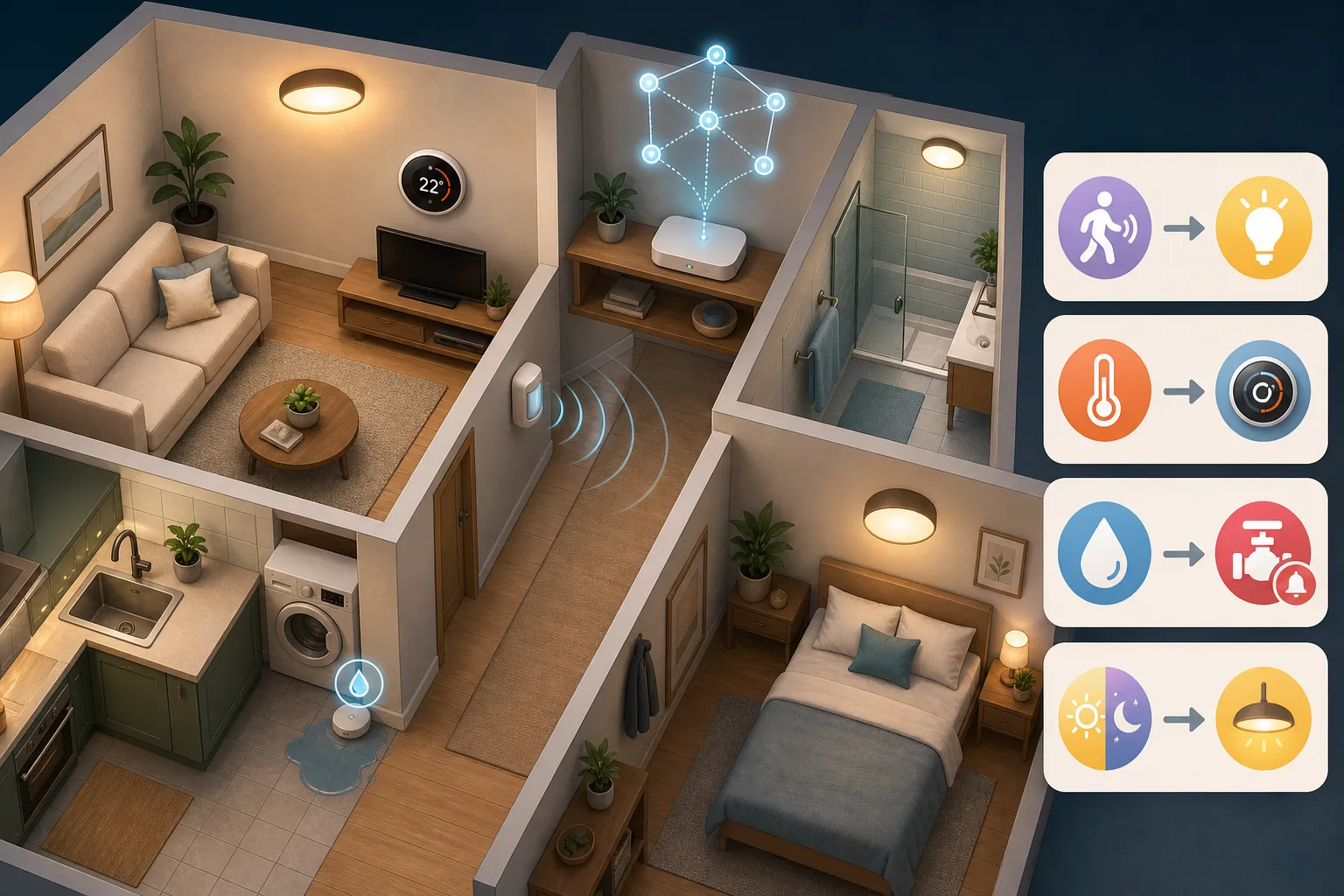
Home Assistant 2026.7 makes automations feel less like homework
Home Assistant’s July release makes automations easier to start, but the useful smart home still needs backups, testing and honest Matter troubleshooting.
Do not throw out Zigbee yet: what Matter over Thread tests mean at home
New practical tests and user reports show Zigbee can still feel faster for lights and sensors, while Matter over Thread is a future-facing choice that needs careful setup.
Comments
Sign in to comment.
No comments yet.