The FCC’s D2D Satellite Proposal Is a Mesh and Microwave Issue, Not Just a Phone Story
The FCC’s new D2D satellite NPRM focuses on 2.4 and 5.8 GHz Part 15 operation. For hams, mesh builders and microwave experimenters, the useful response is measured data, not panic.
The current amateur-radio chatter around spectrum has two threads running at once. One is the long-running U.S. antenna-restriction fight, revived this week in a Reddit discussion about H.R. 1094 and HOA limits. The other is more technical and more immediate for builders: the FCC’s 2026 direct-to-device satellite rulemaking, formally titled Unleashing Unlicensed Spectrum for Direct-to-Device.
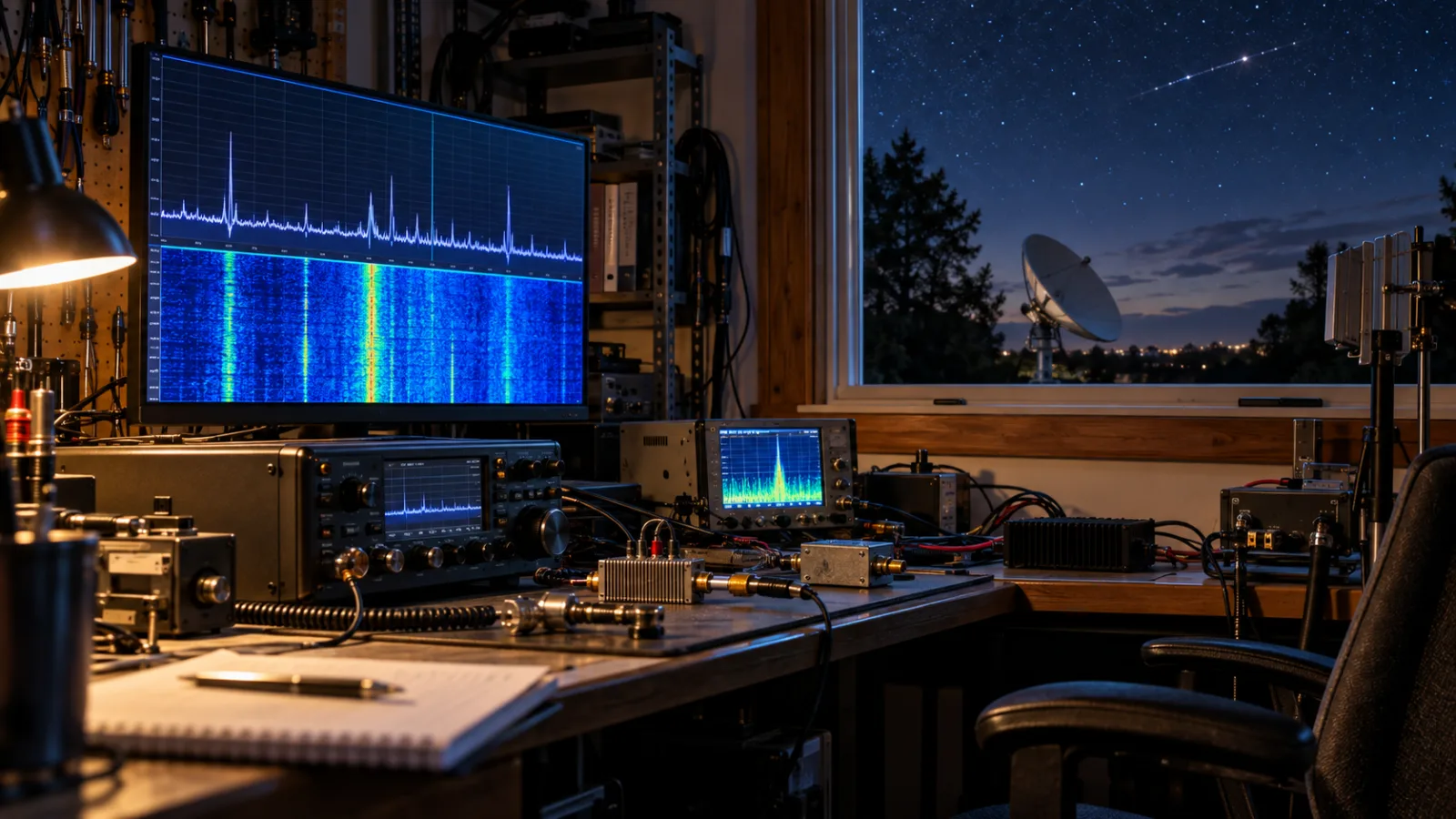
This article is about the second thread. It is not a sky-is-falling notice, and it is not a reason to stop building 2.4 GHz mesh nodes, 5.8 GHz links, microwave beacons, LoRa telemetry, SDR receivers or amateur-satellite gear. The useful takeaway is narrower: the FCC is asking whether ordinary Part 15-style devices should be allowed to communicate with satellites in bands where many hams already build, listen, measure noise and share spectrum. If operators want the record to reflect what actually happens on the bands, now is the moment to document it cleanly.
The Federal Register notice was published on September 8, 2026. The underlying NPRM was adopted on August 6 and released on August 7. Comments are due November 9, 2026, and reply comments are due December 7, 2026. That gives clubs, microwave groups, mesh-network maintainers and satellite operators enough time to do better than general objections. A waterfall image, a before-and-after noise survey, a map of a working Part 97 or Part 15 network, and a short explanation of why a local path matters will carry more weight than a dramatic forum post.
What the FCC is actually proposing
The proposal is about direct-to-device satellite connectivity using bands already familiar to unlicensed-device users. The FCC says it is exploring whether certain unlicensed devices should be able to communicate with satellites on a non-interference basis, and whether the rules should add satellite allocations or licensing mechanisms that let those links happen without requiring every end user to file a satellite application.
The two named bands in the proposal are 2400-2483.5 MHz and 5725-5850 MHz. Those are not obscure slices of spectrum. The first overlaps the 13 cm amateur allocation used by microwave operators, amateur satellites, broadband hamnet work, Wi-Fi-adjacent experimentation and a great deal of consumer gear. The second sits inside the 5 cm amateur allocation used by microwave links, high-speed multimedia radio, weak-signal work, and plenty of unlicensed networking.
A newcomer-friendly translation: Part 15 is the U.S. rule framework for many low-power unlicensed transmitters, including Wi-Fi-like and spread-spectrum devices. Part 97 is the amateur-radio service. A device can be legal under Part 15 without the operator holding an amateur license, but it normally has no right to protection from interference and must obey certification and technical limits. A Part 97 station has different privileges and responsibilities, including station identification and no encryption for normal amateur communications. Mixing the two casually is where many homebrew projects get into trouble.
The FCC is not proposing, at this stage, to raise the existing Part 15 maximum power or antenna-gain limits for Earth-to-space transmissions. That detail matters. The agency is asking whether Part 15-certified terrestrial devices operating in 2400-2483.5 MHz or 5725-5850 MHz should be permitted to communicate with satellites in the Earth-to-space direction under the same technical requirements that already apply to those intentional radiators. For satellite-to-Earth operation, the FCC is asking broader questions about technical limits, including whether 5725-5850 MHz or other suitable bands could be used for downlinks.
That is why the proposal deserves attention without being misread. It is not a final order. It is not a blanket authorization for high-power space transmitters over your mesh node. It is a request for a technical record: what limits, coordination methods, certifications and interference protections would make sense if D2D satellite service is added to already crowded unlicensed bands.
Why hams should care even if this is Part 15
A common mistake in spectrum debates is to treat Part 15 and Part 97 as separate planets. On paper they are different services. On the bench and on the antenna mast, they often share the same feedlines, filters, LNAs, surplus dishes, Wi-Fi chipsets, SDRs and test equipment. The 2.4 GHz and 5.8 GHz ranges are exactly where amateur experimenters often learn practical RF engineering because hardware is cheap and the microwave techniques are visible.
The FCC proposal repeatedly frames the new use as non-interference and unprotected. That sounds reassuring, but it does not answer every practical question. A single compliant transmitter may be harmless; a dense population of satellite-capable devices with new traffic patterns may change the aggregate noise floor. A satellite downlink may be weak at a single receiver; a constellation with repeated passes may create a pattern that a fixed station sees often. A rural 5.8 GHz amateur link that works because the local noise floor is low may be more sensitive to small changes than an urban Wi-Fi device that is already living in a noisy band.
The amateur service also carries a useful measurement culture. Hams routinely compare antennas, log signal reports, track propagation, build preamps, recognize receiver overload, and notice when a band’s character changes. That is exactly the kind of practical observation regulators do not get from marketing decks. But it only helps if it is specific. A statement that 2.4 GHz is already busy tells the FCC very little. A statement that a club maintains a 13 cm receive site at a given general location, sees a normal noise floor of a measured level on a defined antenna and receiver, and relies on that path for scheduled experiments is more useful.
There is also a jurisdiction warning. This article reads the U.S. FCC proceeding. Amateur allocations, satellite rules, equipment authorization and unlicensed-device limits vary by country. A project that is acceptable under FCC Part 15 may not be legal under CE/RED rules in Europe, ISED rules in Canada, or another administration’s amateur regulations. Do not use a U.S. rulemaking as permission to transmit elsewhere.
The 2.4 GHz question: crowded, useful and technically fragile
The 2400-2483.5 MHz range is familiar because almost everyone has used it, even without realizing it. Wi-Fi, Bluetooth, Zigbee-style links, microwave ovens, RC gear, telemetry boards and many proprietary devices live there. Hams also have amateur and amateur-satellite activity in the broader 13 cm neighborhood, and U.S. amateurs must pay attention to sharing rules. The current 47 CFR 97.303 frequency-sharing section notes, among other sharing obligations, that amateur stations receiving in 2400-2450 MHz must accept interference from ISM equipment.
That acceptance of ISM noise is not new. Any serious 2.4 GHz operator already knows the band is a compromise. The question is whether satellite integration changes the pattern enough that the FCC should write additional safeguards into the framework. The NPRM itself raises questions about radio astronomy, frequency stability, duty cycle, maximum bandwidth and contention-based protocols. Those are not decorative questions. They are the engineering knobs that determine whether a new service coexists politely or just adds another always-on layer.
For amateur-satellite operators, the specific concern is not only local Wi-Fi-like interference. It is the precedent of treating bands with amateur-satellite use as convenient expansion room for commercial space systems. The ARRL’s regulatory page provides recent context: on April 21, 2026, the FCC granted AST SpaceMobile limited authorization, outside the United States, to use five 50 kHz channels in the 430-440 MHz secondary amateur band for emergency telemetry, tracking and control. That was a different band and a different authorization, but it explains why satellite-adjacent spectrum proposals now get attention quickly in ham circles.
For 2.4 GHz homebrewers, the practical response is to know what service you are operating under. If your node is a certified Part 15 device running within its approved configuration, treat it as Part 15. If you modify firmware, add amplifiers, change antennas beyond the certified conditions, or carry amateur traffic under Part 97, the legal analysis changes. A ham license is not a magic converter that makes every imported RF board legal on every frequency. It gives privileges inside amateur allocations when the station complies with Part 97, and it brings amateur obligations with it.
The 5.8 GHz question: quiet paths are the resource
The 5725-5850 MHz range is attractive because it supports small antennas, directional links and high data rates. The FCC notice says the shorter wavelength at 5.8 GHz could allow smaller, more directional satellite antennas, potentially limiting the satellite beam footprint on Earth. That is a sensible engineering point. It is also exactly why local operators should describe real receiving conditions rather than arguing only from allocation tables.
A 5.8 GHz link budget can look generous until the path is wet, misaligned, obstructed by foliage, or operating close to the receiver’s practical sensitivity. Many amateur and community mesh systems are built around directional antennas and careful siting rather than brute power. In those systems, the value of the band is not just the allowed wattage. It is the ability to find a clean channel, aim a dish, and build a stable path that stays boring month after month.
The current Part 15 spread-spectrum and digital-modulation rules in 47 CFR 15.247 are already full of coexistence assumptions: hopping-channel counts, dwell-time limits, power limits, antenna-gain adjustments, out-of-band-emission limits and power spectral density limits. Those limits were developed around terrestrial devices. The FCC notice explicitly acknowledges that the technical parameters for Part 15 devices were devised with terrestrial operation in mind, not space operation. That sentence is the opening for useful comments.
If a satellite system listens to ordinary devices, the uplink side may be no worse than the devices already transmitting. If a satellite transmits down to devices, the geometry changes. A space-to-Earth emitter is not another access point in a house across the street. Its coverage, duty cycle, elevation angle and aggregate constellation behavior need different analysis. The FCC asks whether power flux density limits, out-of-band limits, aggregate limits, contention methods or other technical rules are needed. Amateur microwave operators can help answer that if they bring measured examples.
Do not confuse Part 15 mesh, LoRa and amateur privileges
The recent Reddit discussions around amateur spectrum and mesh hardware show a familiar temptation: a chip covers many frequencies, so builders start thinking in terms of what the silicon can do rather than what the rule part permits. Modern transceivers can be remarkably wide-ranging. Some modules can generate signals across sub-GHz bands and into L-band or S-band ranges. That does not mean the finished device is authorized there, and it does not mean an amateur license allows encrypted, commercial, unidentified or out-of-band operation.
In the U.S., 902-928 MHz Part 15 devices have their own requirements, including spread-spectrum or digital-modulation conditions under Section 15.247. The FCC’s current D2D satellite NPRM, as published in the Federal Register, centers its main satellite-use proposal on 2400-2483.5 MHz and 5725-5850 MHz, not 902-928 MHz. Operators should be careful not to import every Meshtastic or LoRa argument into this docket unless it is tied to a band and rule question actually before the FCC.
That said, the broader lesson from LoRa and mesh communities still applies: certification and configuration matter. A board sold with an FCC ID was tested in a specific configuration. Change the antenna, firmware, modulation, duty cycle, amplifier or frequency range and you may no longer be operating the certified device described in the grant. Under amateur rules you may have room to experiment, but then you must stay inside amateur allocations, identify properly, avoid prohibited content, and accept that Part 97 is not a workaround for ordinary unlicensed networking.
A clean comment to the FCC should avoid folklore. Do not say all LoRa is illegal or all mesh is protected. Do not say Part 15 devices can never talk to satellites; the FCC notice itself says current rules do not explicitly permit that style of operation, but also notes that the rule structure is more nuanced than a simple prohibition. The better argument is technical: define the signal, define the band, define the service, define the receive system affected, and explain what rule condition would preserve coexistence.
What a useful amateur comment would contain
The amateur community has a bad habit of waiting until spectrum decisions are already framed and then arguing in broad cultural terms. For this docket, the stronger response is almost mundane. Document the systems that exist. Document the receive environments. Document the experiments that would be harder if the noise floor, duty cycle or downlink occupancy changed.
Start with the station or network. Give a general location or service area, without publishing sensitive site details if that is not appropriate. Identify the band segment, antenna type, feedline and receiver or transceiver. If it is a mesh network, describe the node count, link distances, antenna gains, channel widths and typical uptime. If it is a weak-signal or satellite receive station, describe the preamp, filtering, antenna pattern and normal operating schedule. If it is a club educational project, explain the learning objective in plain technical terms.
Then describe the measurement method. A screenshot is useful only if it has context: center frequency, span, resolution bandwidth if available, time of day, antenna direction, receiver gain setting and whether nearby transmitters were active. Repeated measurements are better than one dramatic waterfall. If you can record a quiet baseline over several days, do it. If you can compare azimuths or antenna polarization, include that. If your receiver overloads from nearby Part 15 devices, separate overload from true in-band noise. Regulators and engineers will read that distinction.
Finally, connect the measurement to a proposed safeguard. Examples might include preserving current Part 15 power and antenna-gain limits for Earth-to-space operation, requiring satellite downlinks to meet conservative power flux density limits, requiring geofencing or exclusion zones near sensitive radio astronomy sites, requiring contention-based behavior where technically realistic, or requiring public technical disclosures sufficient for operators to diagnose interference. The exact recommendation matters less than the discipline of tying it to observed use.
What not to put in a comment
Do not claim that amateur radio owns 2.4 GHz or 5.8 GHz in any simple sense. The sharing reality is more complicated, and overclaiming weakens the filing. Do not argue that all commercial satellite use is automatically bad. The FCC will not reject a proceeding because operators dislike a business model. Do not submit copied text with no local facts; twenty identical comments are easier to discount than three specific ones.
Avoid emotional spectrum language that cannot be tested. Harmful interference has a regulatory meaning. A higher noise floor, receiver desense, out-of-band energy, blocking, intermodulation and missed packets are different mechanisms. If you know which one you are seeing, say so. If you do not know, say what you measured and leave room for analysis. That honesty is more persuasive than certainty stretched past the evidence.
Do not ask for protections that conflict with the service you are using. If a device is operating as Part 15, it generally cannot demand protection as if it were licensed. If a station is operating as Part 97, it must meet amateur requirements. If a network mixes Part 15 client hardware with amateur backbone links, describe each layer separately. This is tedious, but it prevents the entire filing from being dismissed as confused.
And do not propose illegal workarounds. Do not advise people to transmit out of band, defeat equipment locks, hide encrypted traffic under an amateur call sign, or run uncertified amplifiers on Part 15 devices. Those shortcuts are not clever engineering; they are future exhibits for stricter rules.
A station checklist before November 9
For a club or individual operator, the most useful work between now and the comment deadline is modest. Inventory any 13 cm and 5 cm equipment you actually use. Note whether each system is Part 97, Part 15, receive-only, experimental under another authorization, or some combination that needs cleanup. Confirm the transmit frequencies, occupied bandwidths, antenna gains and power levels. If the station depends on a quiet receive path, start logging the baseline now.
For 2.4 GHz, check filtering and front-end protection. Many operators blame band crowding when the immediate problem is a wide-open receiver being hammered by a nearby access point, camera, microwave oven or Bluetooth-heavy room. A bandpass filter, better coax discipline, physical separation, lower preamp gain or a more directional antenna may improve the station regardless of what the FCC does. That does not make the rulemaking irrelevant; it simply keeps your filing technically credible.
For 5.8 GHz, inspect the link budget. Record path length, antenna sizes, polarization, normal modulation rate, fade margin if known, and weather sensitivity. If a link is already marginal, be honest about that. A marginal amateur link can still be worth protecting as an experimental use, but the explanation should distinguish ordinary path loss from new interference.
For satellite operators, document pass times, Doppler handling, downlink frequencies, receiver bandwidth, antennas and decode performance. If you are monitoring amateur satellites near 2.4 GHz, explain how often the station is used and what signal levels are typical. If your concern is adjacent-band or front-end overload, describe the receiver chain. A regulator cannot infer your station’s vulnerability from the words amateur satellite alone.
For mesh groups, map the network at a level suitable for public filing. You do not need to expose private addresses or exact rooftop details. You can still show the number of nodes, general geography, channel use, antenna patterns, link distances and the public-service, experimentation or training purpose of the system. If the network supports emergency exercises, say what traffic is carried and under which rule part. Keep the claims sober.
The ARRL angle and the local-club angle
ARRL will likely be the organization many U.S. hams watch for formal advocacy, and its regulatory work gives the service a national voice. But national filings cannot describe every local 5.8 GHz path, every university microwave lab, every club mesh backbone or every receive site with a troublesome noise floor. Local filings are not redundant when they add facts.
A good division of labor is simple. Let national organizations argue allocation history, service policy and broad technical protections. Let local operators submit measured use cases. A club comment does not need to sound like a law firm. It should be readable, factual and bounded: who we are, what we operate, what we measured, what the proposed satellite framework should preserve, and whom to contact for technical follow-up.
This is also a good moment for clubs to clean up their own documentation. If nobody can say whether a node is Part 15 or Part 97, whether the amplifier is certified, or whether the antenna gain requires power reduction, the first job is not filing. The first job is station hygiene. Spectrum advocacy is easier when your own station can survive a careful reading.
Why the Reddit discussion matters, but only as a signal
The September 22 Reddit post about a congressional cosponsor for H.R. 1094 mixed two anxieties that many hams feel: restricted antennas at home and pressure on spectrum above 50 MHz. The post is useful as a signal of community attention, not as proof of any regulatory fact by itself. It shows that operators are connecting private-land-use limits, satellite spectrum pressure and underused VHF/UHF/microwave allocations into one larger concern: amateur radio needs real antennas and real spectrum access to remain a technical service, not just a nostalgia channel.
That concern is legitimate. It is also easy to express badly. The fact that some microwave allocations are lightly used in a given town does not mean they are worthless. Sparse use is often the point of weak-signal, EME, beacon, satellite and experimental work. A quiet band can be a laboratory. At the same time, if amateur operators want regulators to treat those bands as living technical resources, we have to show activity, publish projects, maintain beacons, file comments, and teach new builders how to use the spectrum lawfully.
The worst response is performative outrage followed by silence on the docket. The better response is to turn the bench into evidence. A clean spectrum plot, a link map, a measured interference case, or a well-described educational project is the language this proceeding can understand.
Bottom line for operators
The FCC’s D2D satellite NPRM is not only a phone-industry story. It reaches into bands where amateur and unlicensed experimenters have built a lot of practical RF knowledge: 2.4 GHz and 5.8 GHz. The proposal is still at the comment stage, and the FCC says it is looking for technical, licensing and policy input on coexistence. That is an opening.
For now, keep operating legally. Do not change station behavior based on rumors. Do not assume every satellite proposal threatens every ham project. Do start measuring. If your club has real 13 cm or 5 cm activity, write it down while the record is open. If your mesh group depends on clean channels, document the network. If you build with Part 15 modules, verify the certification conditions before adding gain, amplifiers or firmware changes.
The amateur service does not win these arguments by sounding larger than it is. It wins the useful parts by being technically precise, publicly useful and hard to ignore. The November 9 comment deadline is close enough to matter and far enough away to do the work properly.
Related articles
Remote control is not repeater linking: the FCC GMRS warning ham builders should read
An FCC notice over a linked GMRS repeater network turns into a practical service-first checklist for operators planning IP links, gateways or remote control paths.

When a Thermal Camera Becomes “Military-Grade”: The FCC’s DJI Drone Fight Is Really About Working Robots
A proposed FCC restriction on previously authorized foreign-produced drones puts LiDAR, thermal imaging and autonomous docks at the center of a broader argument about dual-use robotics.

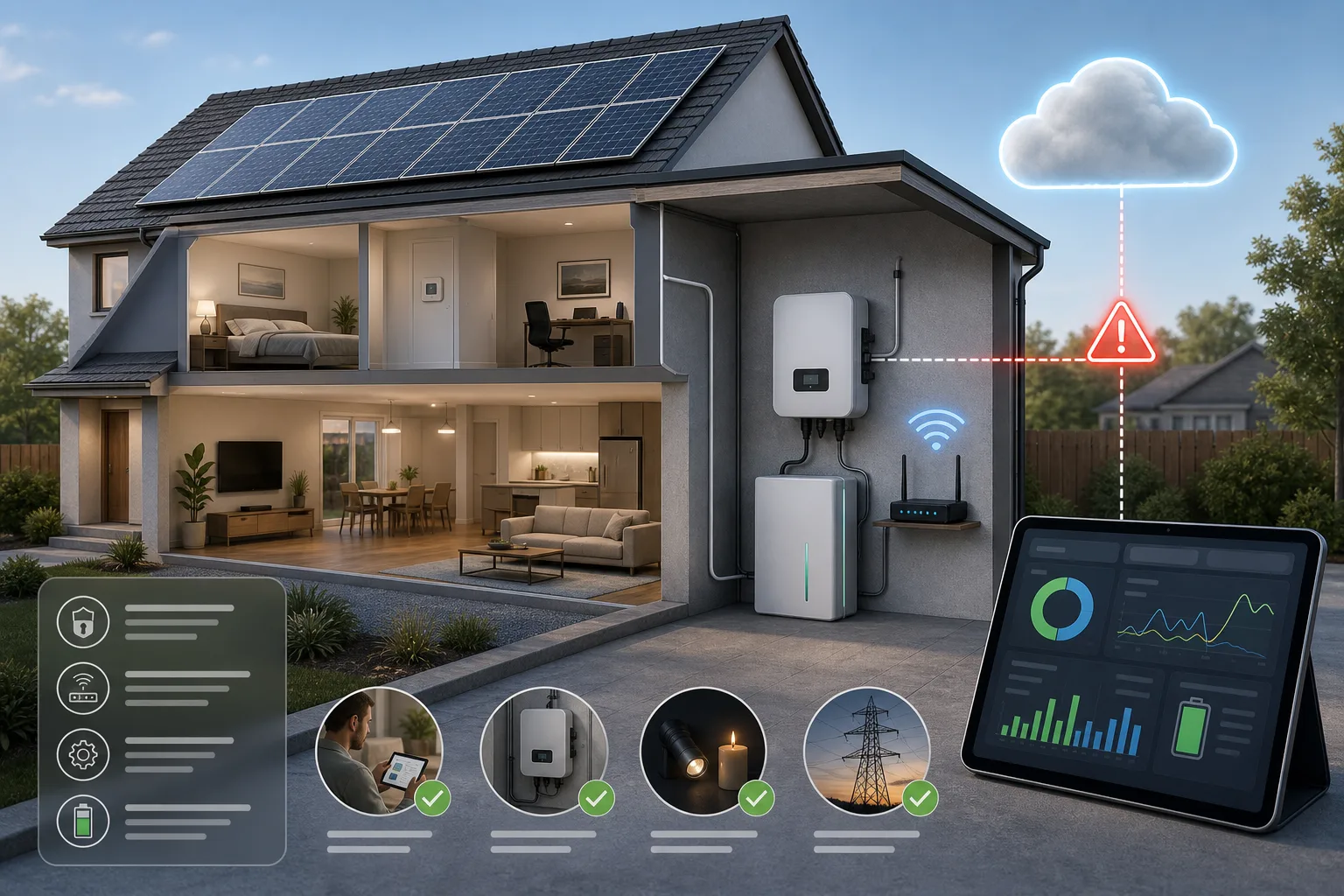
Your solar inverter is now a smart-home cloud question
The FCC inverter decision is not a recall. It is a reminder to ask whether home solar, batteries and backup power still work when the vendor cloud does not.
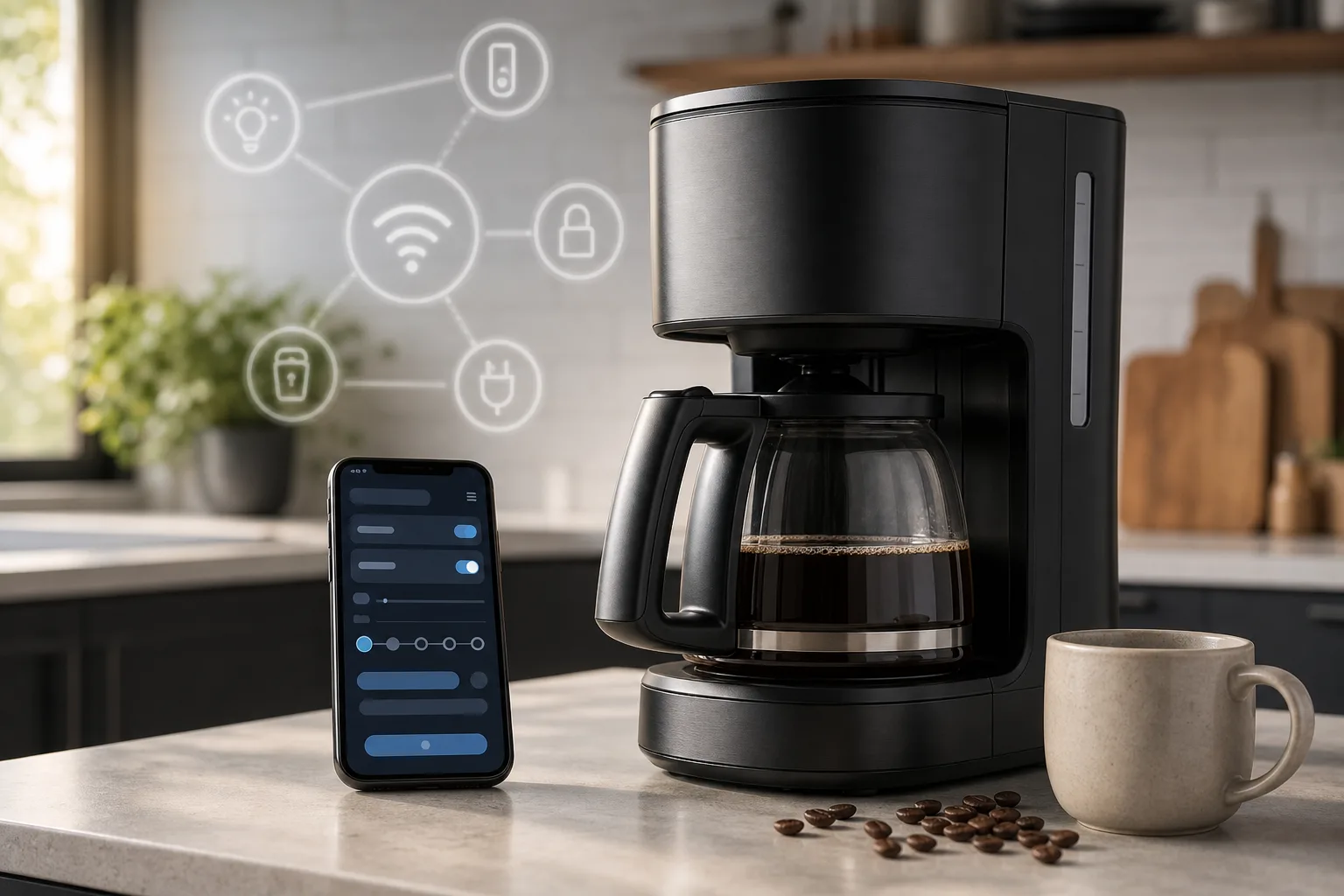
Should you buy a Wi-Fi coffee maker?
A connected coffee maker can be useful, but only if the coffee maker is good before the app gets involved.
Comments
Sign in to comment.
No comments yet.