GitHub Copilot Cloud Sandboxes Start Billing: What Engineering Teams Should Audit in November
GitHub’s connected Copilot cloud experience makes agent sessions portable across devices, but cloud sandbox usage now draws from shared Actions entitlement and incurs usage-based costs. Teams need budgets, repository controls, and a clearer owner for agent compute.

The November change is a cost-model change, not just a Copilot feature launch

GitHub’s connected Copilot cloud experience changes the operational question for engineering teams. The visible feature is portability: users can start or resume a cloud session from github.com, GitHub Mobile, VS Code, the Copilot app, the command-line interface, Slack, or Teams. The more important change is that the work no longer belongs neatly to one editor, laptop, or developer workflow. A session can move with its user across entry points, while the compute behind it remains an organizational resource that must be governed and accounted for.
That distinction matters because cloud sandbox usage is scheduled to begin drawing from a shared, dollar-based Actions entitlement in November. The same entitlement also covers hosted runners and other compute, so Copilot cloud execution cannot be treated as an isolated add-on with a separate cost owner. A task that begins as an interactive Copilot session may consume capacity from a pool already associated with CI, automation, or other Actions workloads. The interface says Copilot; the accounting boundary sits below it, in the shared compute model described in GitHub’s connected Copilot announcement.
For platform and engineering leaders, this is a change in cost visibility as much as a change in price exposure. Before connected sessions are broadly enabled, the useful inventory is not limited to who has a Copilot seat. Teams need to know which organizations can use cloud sandboxes, which repositories are in scope, where users can initiate or resume sessions, and which group owns the shared Actions entitlement. Portability increases the number of places from which work can be launched; it also makes it easier for a session to outlive the context in which it began. A developer may start in a browser, continue from a phone, and return through an IDE without any of those surfaces being the natural home for budget accountability.
That is why November should be treated as an audit point rather than a routine feature rollout. The first control question is not simply whether cloud sandboxes are useful. It is whether the organization can connect a cloud session to an owner, a repository scope, and a budget understood alongside existing Actions demand. GitHub documents cloud and local sandboxes as distinct execution choices, while its organization-management guidance describes controls for enabling or disabling cloud sandboxes. Those controls help administrators decide where cloud execution is allowed, but they do not by themselves define who reviews the resulting consumption.
The shared-entitlement model should also change how teams communicate the feature internally. A Copilot cloud session is not merely a private convenience that disappears when a user switches devices. Its execution can draw on organizational capacity, and the connected experience makes that execution available from multiple products. A launch announcement focused only on productivity could leave developers unaware that their work participates in a common Actions consumption model. A blanket restriction, however, could block legitimate work where a cloud sandbox is the appropriate environment. The practical boundary should be explicit: local and cloud execution are different paths, and cloud work belongs in the organization’s normal access, repository, and spend conversations.
Teams should establish a baseline before interpreting future usage. If current Actions consumption is not recorded by organization and repository, a change after cloud-sandbox enablement will be difficult to attribute. The goal is not to predict one universal bill; the supplied guidance does not support that. The goal is to document existing compute demand, identify teams that depend on shared entitlement, and determine where a new Copilot workload could compete with hosted-runner or other Actions usage. That record gives finance, platform, and engineering owners a common starting point when billing-cycle changes appear.
The key ownership decision is organizational, not technical. Someone must own the cloud-sandbox policy, someone must understand repository eligibility and automation paths, and someone must reconcile Copilot-related compute with existing Actions demand. Those responsibilities may belong to one platform group or be distributed across an enterprise, but they cannot be inferred from Copilot access alone. Seat ownership, repository administration, Actions administration, and spend approval are related controls, not interchangeable ones.
The November change is therefore best understood as two decisions arriving together. GitHub is adding a connected way to work with Copilot in the cloud, while the organization is accepting another path into shared compute entitlement. Teams that separate those decisions may approve a portable workflow without deciding who owns its cost. Teams that review them together can decide where cloud sandboxes belong, which repositories should be enabled, and what evidence they need before expanding access. The next audit question is specific: what exactly is metered once a cloud session is allowed to run, and how can that usage be connected to an owner after the user leaves the screen where it started?
What GitHub is actually metering
GitHub’s cloud-sandbox model is not a single flat Copilot charge. The documented billing surface has several dimensions: compute time, the memory allocated to the sandbox, and storage used by snapshots. That distinction matters because an agent task can consume resources while it is actively running, while a retained snapshot can continue to represent a separate storage obligation after the interactive work has stopped. Engineering teams therefore need to treat a cloud session as a small, stateful compute environment rather than as an isolated chat interaction.
The connected Copilot experience also changes how usage is observed. A session can be started or resumed from supported GitHub surfaces, including github.com, GitHub Mobile, VS Code, the Copilot app, the command-line interface, Slack, and Teams. The work may feel like one continuous interaction to the developer, but the underlying use is still accounted for through the product’s published rates. GitHub says the relevant usage is deducted at those rates and reset with the billing cycle. In practice, that means a session’s portability does not make its compute free or detach it from the organization’s normal accounting period; it makes it easier for work to continue across interfaces and, potentially, across longer spans of the cycle.
The first audit question is therefore not “How much does one Copilot session cost?” There is no universal answer that can be inferred from a single task description. The more useful question is which metered resources a team is authorizing, for which repositories, and for how long. Compute time is the obvious component: an active sandbox needs execution capacity while the agent performs work. Allocated memory is a second component, because the size of the environment is part of the documented calculation. Snapshot storage is the third, and it is the one most likely to disappear from a developer’s mental model when the visible task has ended. A team that records only session starts and completions can miss the cost associated with environments kept available for later resumption.
That is also why “paused” should not automatically be treated as synonymous with “free.” A paused or suspended workflow may no longer be consuming compute in the same way as an actively running task, but the resulting state can still be retained as a snapshot. The exact charge depends on the resources and rates that apply to the organization’s plan and usage, so the safe operational assumption is that stopping active execution and deleting retained state are different actions. Teams should verify what remains after a session is paused, how long snapshots are kept, and which control removes them when the work is no longer needed. Those checks are more reliable than assuming that a dormant session has no billing effect.
The shared entitlement adds another layer to the calculation. Cloud-sandbox use draws against a dollar-based Actions entitlement that is also used for hosted runners and other compute. The entitlement is therefore a common pool rather than a private allowance reserved only for Copilot cloud work. An organization can see an apparently modest change in sandbox activity and still experience pressure on the same budget used by existing CI workloads. Conversely, a team reviewing Actions spend may need to distinguish ordinary workflow execution from cloud-agent activity before deciding whether a change is a pipeline problem, a sandbox problem, or both.
Included entitlement and overage exposure should be separated in internal reporting. The entitlement defines the amount of shared usage available under the relevant arrangement; it does not mean that every enabled repository has unlimited headroom. Once usage exceeds what is included, the organization needs to understand how additional usage is charged and who is authorized to incur it. The published rate, allocated memory, active compute time, and retained snapshot state all matter to that assessment. A budget review that looks only at the number of Copilot users, or only at the number of sessions, will not capture the full exposure.
A practical ledger can keep the distinction clear. For each organization and repository, record the cloud-sandbox sessions that were enabled, the compute activity associated with them, the memory configuration in use, and snapshots that remain after work is paused. Keep those entries alongside hosted-runner and other Actions consumption, because they draw from the same shared entitlement. Then compare the combined usage with the entitlement and the billing-cycle reset, rather than assigning an arbitrary per-session estimate. This approach preserves the useful detail without pretending that one example bill applies to every plan, repository, or workload.
The point of the November review is not to make developers avoid cloud sandboxes. It is to make the resource boundary visible. A portable session can be convenient precisely because it survives a change of device or interface; that same continuity can make abandoned environments and retained snapshots less obvious. Before expanding access, owners should be able to answer three concrete questions: what is still running, what state is still stored, and which shared Actions budget will absorb the next unit of use. Until those answers are visible, a Copilot cloud session is easy to experience as a feature and harder to manage as metered infrastructure.
The governance surface spans users, repositories, and automations
GitHub’s cloud Copilot controls turn what looks like an individual developer feature into an organization-level governance problem. The first question is not simply whether a person can open a cloud session; it is where that person is allowed to use it, under which organization policy, and against which repositories. Administrators therefore need an inventory of the organizations and repositories where cloud-agent work is enabled, rather than relying on a list of Copilot seat holders. A user may have access to Copilot while the organization still restricts cloud sandboxes or limits the repositories that can be used for this kind of work.
There is an important policy detail behind that distinction: cloud sandboxes do not have a separate access switch. GitHub says access is governed through Copilot policies, while spending is controlled through budgets. For organization members, the “Copilot in the cloud” policy determines whether they can start cloud sessions from supported Copilot clients. Enterprise-level settings can also determine whether an organization may override or narrow that policy. The audit should therefore record the effective enterprise and organization settings, including whether the feature is enabled everywhere, disabled everywhere, or enabled only for selected organizations.
Repository scope is the next boundary. GitHub’s organization controls make the cloud agent available to all repositories by default when Copilot in the cloud is enabled, but owners can block it from some or all repositories or restrict access to selected repositories. Once the agent is enabled for a repository, a user with Copilot access and write permission can delegate work to it. That makes repository selection a meaningful control over both access and spend. Production code, sensitive services, and projects with unusual build or deployment paths may require a different review before cloud execution is permitted, even when the same users are allowed to use Copilot elsewhere.
The same inventory must include automations. Interactive use is visible when a developer starts a task, but scheduled or event-driven work can create a less obvious path to compute consumption. GitHub documents automations as sessions that run automatically on a schedule or in response to events. They are allowed by default in repositories where Copilot in the cloud is available, and the organization can control that setting separately from the broader Copilot in the cloud policy. Teams should identify which repositories permit automation, which workflows or integrations can trigger sessions, and whether those triggers are scheduled, tied to repository events, or initiated from another connected surface.
The purpose is not to treat every automation as unsafe; it is to make its trigger, repository scope, permissions, and owner explicit before shared Actions entitlement becomes the default funding source. A repository that allows cloud sessions but also permits unattended automation has a different operational profile from one used only for an engineer’s interactive task. The review should make that difference visible and should record whether the automation can create changes, open or update work, or otherwise act with permissions that require a separate approval path.
A useful control record can be small, but it should answer operational questions that billing data alone cannot. For each enabled repository, record the organization, responsible team, business purpose, permitted users or groups, automation path, and person accountable for reviewing usage. Mark whether access is limited to members authenticated through the organization’s normal identity controls, and separately review external collaborators or other users whose repository access does not follow the same internal ownership model. SSO scope belongs in this review because the question is not only whether access exists, but whether the organization can identify and remove it when a person, team, or project changes. GitHub notes that members must use SSO to access session data from repositories associated with an organization when SSO is enabled.
Budgets make the ownership question concrete. GitHub’s management documentation describes budgets for cloud sandbox usage at organization or enterprise scope, including the option to budget all cloud sandbox usage or a specific cloud sandbox SKU. Platform or FinOps teams should decide which level owns the guardrail and which team receives the signal when consumption rises. A budget without an owner becomes an alert that nobody is expected to interpret; a repository owner without a budget has no clear mechanism for limiting an unexpectedly expensive pattern. The practical assignment should connect the shared Actions entitlement to named organizational responsibility: who approves broader cloud-sandbox access, who reviews repository exceptions, who checks automation, and who responds to usage against the budget.
This is why policy review should happen before broad enablement. Start with repositories and automation routes that have a clear maintainer, a known purpose, and a way to inspect usage. Then compare the effective organization or enterprise settings with the intended access model. If a repository is enabled but has no current owner, no documented automation purpose, or no agreed response to budget pressure, it is not ready for unrestricted cloud workflows. The control can be temporary: disable cloud sandboxes for that scope, narrow permitted repositories, or require a decision from the accountable team before enabling it again.
The resulting governance model should preserve a clear boundary between local and cloud execution. Local work may be sufficient for tasks that do not need a remote environment or cross-device continuity, while cloud work should have an identifiable repository, user or automation trigger, and cost owner. That boundary gives engineering teams a way to discuss access as an operational choice rather than a blanket Copilot entitlement. It also creates the records needed to explain shared Actions consumption when the same dollar-based pool is used by cloud sandboxes, hosted runners, and other compute: not merely that usage occurred, but which organization, repository, workflow, and accountable team authorized it.
A practical November audit for engineering and platform teams
The safest response to the November billing change is to treat cloud sandboxes as a shared engineering resource, not as an isolated Copilot feature. Before enabling broader access, export the organization’s current Actions and Copilot usage data and establish a baseline by organization and repository. The purpose is not to produce a universal estimate for every team, but to make existing compute ownership visible. Actions already covers hosted runners and other compute, while cloud sandbox activity draws from the same shared, dollar-based entitlement. A team that reviews only Copilot seats can therefore miss the point at which agent work begins competing with other workloads for the same budget.
That baseline should identify which organizations and repositories are already eligible for cloud-agent work, which users can start sessions, and which teams own the relevant repositories. Record the policies that govern access, including SSO scope and any external-user path that could place cloud execution outside the assumptions used by the platform team. The inventory should also distinguish interactive sessions from scheduled or event-driven automation. Those paths may be enabled through different controls, but they ultimately create the same operational question: who approved the work, who can stop it, and which budget absorbs the resulting usage?
Set budgets before broad enablement, and make the budget owner explicit. GitHub’s organization and enterprise controls provide the policy surface for managing Copilot in the cloud, while separate governance settings determine whether cloud sandboxes are enabled and which repositories can use them. A budget without an owner becomes an alert that nobody acts on; an owner without repository-level visibility cannot tell whether a rising total comes from legitimate development work, an automation default, or a session that was left available after its task was complete. The audit should therefore pair every budget with a named operating team and a review path for exceptions.
A focused test on a paid plan can expose the behavior that dashboards alone may hide. Start a representative cloud session, move it through the products supported by the connected experience, pause it, resume it, and observe how the session and its associated resources are represented in the organization’s usage records. Then check what happens to any retained snapshot. The point is to validate the team’s understanding of lifecycle and cost attribution, not to turn one test into a promised bill for all projects. Cloud sandbox usage is documented through compute time, allocated memory, and snapshot storage, so the cleanup procedure must address both active execution and retained state.
Teams should document a simple decision rule for local versus cloud execution. Local execution remains the appropriate default when the required tools, repository context, and developer environment are already available locally and portability adds little value. A cloud session is easier to justify when work must continue across supported devices or when the team deliberately needs the connected environment, but that choice should be visible rather than accidental. The policy should state who approves higher-cost or longer-running work, what repository scope is acceptable, and when an automation is permitted to start without an interactive request.
The final step is operational cleanup and repetition. After each task, the user or owning team should stop or delete snapshots according to the documented workflow, confirm that no scheduled or event-driven path remains active unintentionally, and review the resulting usage against the baseline. Platform teams can use those reviews to tighten repository defaults, narrow access, or move suitable work back to local execution. Engineering leaders should ask for the same evidence when approving expansion: enabled repositories, automation paths, accountable owners, budget status, and the rule used to decide whether cloud compute was necessary.
This sequence turns the November change into a manageable control exercise. The key deliverable is not a single forecast, but a working map from user and repository access to session behavior, automation, shared Actions entitlement, and an accountable budget owner. Once that map exists, teams can expand cloud Copilot use deliberately, preserve the portability that makes the connected experience useful, and limit billing exposure through controls they can actually operate.
Related articles

Should you pay for Claude after Opus 5?
Opus 5 makes Claude more tempting, but Pro, Max and API credits solve different problems. Buy the workflow, not the launch week excitement.


AI coding agents are useful now. That is why they need security rules
GhostApproval, Friendly Fire and Ghostcommit show that coding agents have become privileged automation, not just smarter autocomplete.

NVIDIA OpenShell puts agent permissions under policy control — what is ready to test
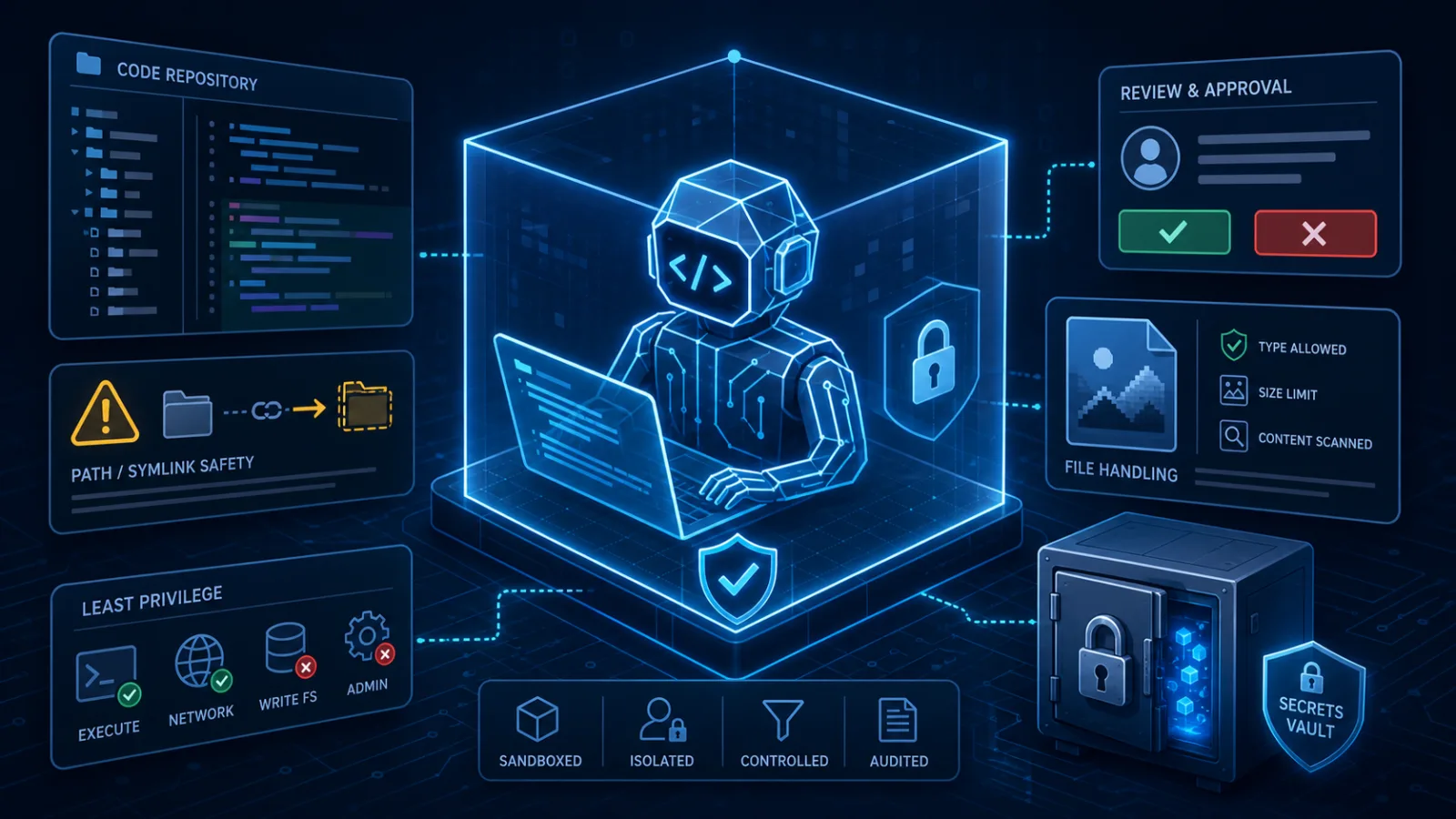
NVIDIA OpenShell is an Apache-licensed runtime for placing coding and autonomous agents inside policy-controlled sandboxes. Its useful idea is not another agent framework, but a boundary around files, processes, networks, credentials, and policy changes.

Alera turns parallel CLI coding agents into a worktree-first desktop workflow
Alera is an open-source desktop workbench for running several CLI coding agents side by side. Its useful idea is not another chat panel, but a shared layer of Git worktrees, real terminals, persistent sessions, and resource visibility.

Comments
Sign in to comment.
No comments yet.