Cat carrier panic: make the box familiar before vet day
A practical guide to safer carrier choice, calmer familiarization and the red flags that call for veterinary advice.

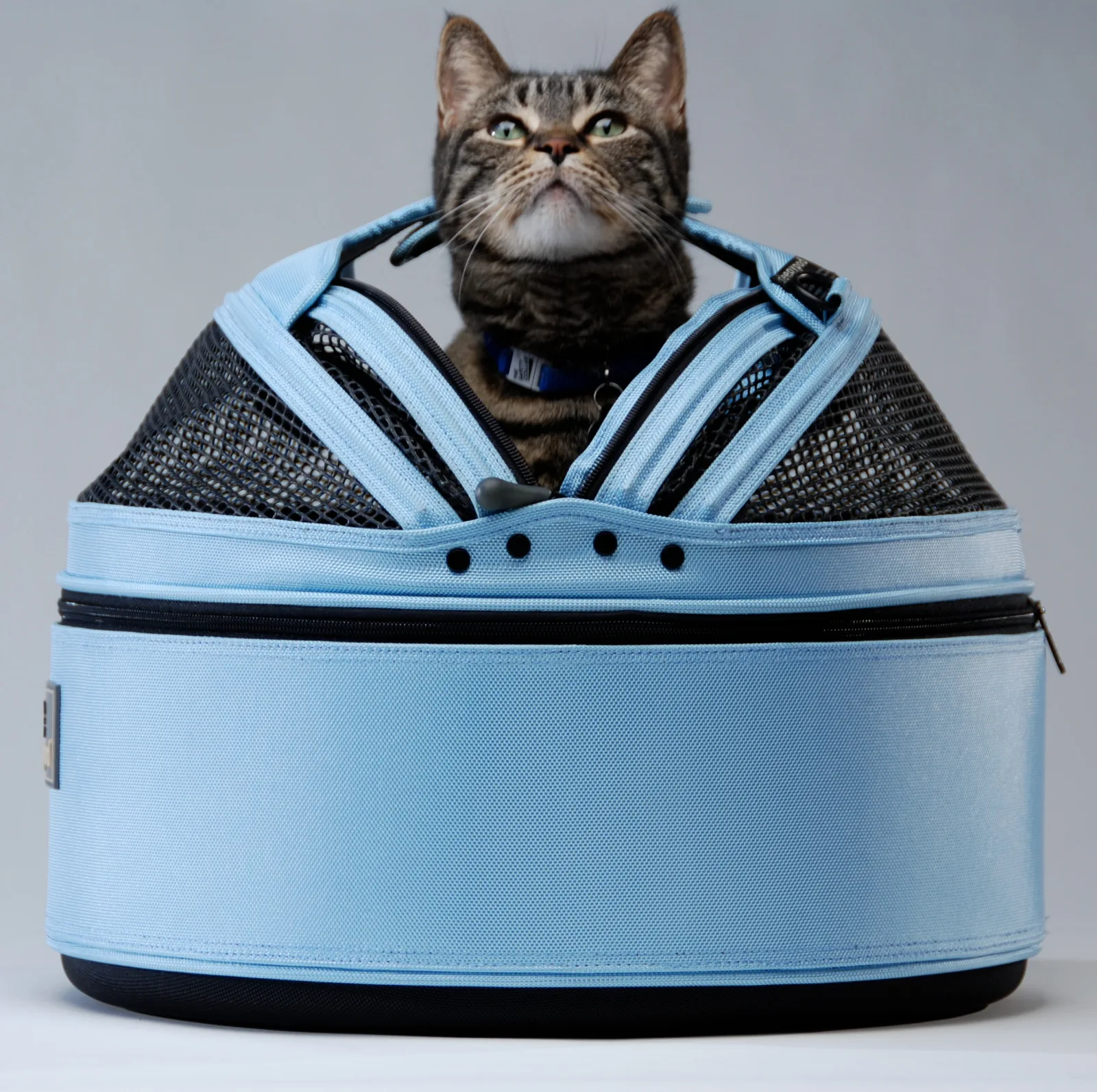
The carrier often becomes the loudest object in a cat owner’s home without making any sound. It lives in a closet for months, then appears ten minutes before a vaccination appointment, a nail problem, boarding, a move or a sudden trip to the veterinary clinic. The cat sees the box, vanishes under the bed, stiffens when picked up or fights the front door of the carrier with all four paws. The owner starts wondering whether the carrier is wrong, whether the cat is being stubborn, or whether there is one loading trick everyone else knows.
The better question is calmer: what has the carrier been teaching the cat? For many cats, the carrier is not a neutral piece of pet gear. It is a signal that ordinary territory is about to disappear, that handling may become rushed, and that a car ride or clinic smell may follow. That does not make the cat spiteful or dramatic. It means the object has acquired a strong association, and the owner is trying to change that association at the hardest possible moment.
This article is general pet-care guidance, not a diagnosis or a behavior plan for an individual animal. Carrier fear can be learned fear, poor timing, awkward handling, unstable equipment or simple lack of practice. It can also sit beside pain, illness or a sudden change in how the cat feels about being touched. If a cat suddenly hides, refuses food or water, seems painful, limps, has breathing trouble, collapses, may have been injured or poisoned, cannot urinate, has repeated vomiting or diarrhea, becomes extremely lethargic, or shows a persistent or fast-worsening behavior change, the answer is a veterinarian, not a new bag from a product list.
Why the carrier turns into a warning signal
Most owners do not mean to train the wrong lesson. They simply store bulky equipment where it is out of the way. But from the cat’s view the pattern is clear. The carrier appears rarely, the household energy changes, the owner moves faster, doors close, hiding places are blocked, and the next experience may involve a car, a waiting room, unfamiliar animals, a scale, restraint or a medical smell. One bad trip can be enough for a cautious cat to learn that the carrier predicts loss of control.
Smell matters too. A carrier that waits in a garage, storage room or clinic trunk may smell dusty, chemical, damp or like another animal. Plastic can hold odor; fabric can hold both comforting and frightening smells. A towel that has been used only for stressful transport may become part of the same warning. Bringing the carrier out at the last minute then asking the cat to relax inside it is like asking a person to nap peacefully in a suitcase that appears only before dental surgery.
Design can make the association worse. A narrow front door asks the owner to push a reluctant cat through a small opening while the cat braces against the frame. A carrier with a wobbly base shifts under the paws. A zipper that catches fur, a latch that snaps loudly, a door that swings into the cat’s face or a top that cannot be removed can turn every loading attempt into a physical argument. Even a good carrier can feel unsafe if it tilts when lifted or slides across the car seat.
The human side matters as much as the product. Last-minute chasing teaches the cat that hiding works until the owner escalates. Shouting, punishment, spraying water, shaking the carrier or forcing the cat in by surprise may get the appointment completed once, but it teaches the carrier to mean panic. Ordinary owners need a method that starts before urgency, not a heroic move in the hallway.
What a good carrier has to do
A carrier is first a safety tool. ASPCA travel guidance says pets in vehicles should be kept safe and secure in a well-ventilated crate or carrier, and that the carrier should be secured so it does not slide or shift during an abrupt stop. The carrier should allow the pet to stand, sit, lie down and turn around. Humane World for Animals makes the same practical point for cats in cars: many cats are not comfortable traveling, and a carrier helps prevent escape if a door or window opens and the cat is startled.
That size rule is not a luxury formula. It is a common-sense check. A carrier that is too small can make the cat feel trapped and twisted. A carrier that is enormous may allow the cat to slide around when the car turns or brakes. The goal is enough room for normal posture while keeping the animal contained, ventilated and stable. For most home-to-vet trips, stability and secure closure matter more than fashionable labels.
Hard plastic carriers remain useful because they are stable, washable and often easier for veterinary staff if the top half can be removed. A removable top can let a frightened cat stay on the carrier base for part of an examination instead of being pulled through a front door. The downsides are bulk, storage space and the hollow sound that some cats dislike.
Soft-sided carriers can feel less box-like and are lighter to carry. They are not automatically gentler. A soft carrier should hold its shape, have good ventilation, close securely, and not collapse onto the cat. Zippers need to be strong and easy to check. Mesh panels should not invite clawing through weak seams. If the base sags like a grocery bag, the cat may feel less secure, not more.
Top-loading carriers can help because the owner can lower the cat in without a wrestling match at a narrow front opening. They still need familiarization. A top door is a better access point, not a magic spell. Backpack-style, expandable or airline-marketed carriers may suit some travel contexts, but novelty is less important than ventilation, escape-proof closures, a solid base, easy cleaning and whether the cat can be introduced to the carrier calmly at home.
Make the carrier part of normal territory
The single biggest change is to stop treating the carrier as an appointment alarm. Leave it in a living area days or weeks before it is needed. Put it somewhere the cat can investigate without being trapped: near a favorite room edge, not in the middle of a noisy walkway. Open or remove the door if that is safe with the design. Add a washable blanket or towel that already smells like home. If the carrier is dusty or has a strong odor, clean and dry it well before training starts.
At first, the aim is not loading. The aim is boredom. The cat should be allowed to sniff, walk past, sit near it and leave. Scatter a few treats nearby or feed part of a meal near the entrance. When that is ordinary, place treats just inside the doorway, then farther inside. Some cats will walk in after one afternoon; others may need many tiny sessions. The owner’s job is to keep the stakes low enough that the cat does not rehearse panic.
Closing the door comes much later than many people think. A useful progression is: cat approaches, reward; cat puts front paws in, reward; cat enters and turns around, reward; door moves slightly, reward; door closes for one second, opens, reward; door closes for a few seconds, reward. The session should end before the cat feels trapped. If the cat bolts, the step was probably too big. Go back to an easier version.
Practice does not have to be long. Two calm minutes while coffee brews can be better than a twenty-minute campaign. Some owners use “carrier appears, treat, carrier disappears” sessions when storage space makes permanent placement impossible. The key is that the carrier predicts something mild or pleasant many times, not only the rare stressful trip.
Loading without turning the house into a chase
Even with practice, real appointment days need management. Prepare the carrier early, before the house feels frantic. Close access to unsafe hiding places gently in advance if needed, not by chasing the cat from room to room. Keep your own movements slow. Support the cat’s body securely if you pick the cat up; avoid dangling, squeezing or carrying the cat at arm’s length toward the carrier like a parcel.
If a front-loading carrier is the only option, place it with the opening facing upward or against a secure corner only if the design allows safe handling and the cat’s body can be supported. Never drop or shake the cat in. A removable top, a wide opening or a top-loading carrier may make loading calmer for some households. For a cat that resists being picked up, teaching the cat to walk in for treats well before the appointment is usually kinder than perfecting a last-second grab.
Once the cat is inside, carry the carrier from underneath with two hands and keep it level. A handle alone may make the box swing and bang against the owner’s leg. In the car, secure the carrier so it cannot slide. Keep the cat inside until you are safely indoors at the destination. A loose cat on a lap may look comforting in a quiet driveway, but a startled cat can interfere with driving, escape through an opened door or hide under a seat.
Do not leave a cat alone in a parked vehicle. ASPCA travel guidance warns that parked cars can become dangerous quickly in heat, and cold weather can also be unsafe. Short practice should not become “the cat waits in the car while I run an errand.” If travel, anxiety, illness, senior frailty, pregnancy, breathing issues or medication questions are part of the situation, discuss the plan with a veterinarian rather than experimenting with sedatives or calming products on your own.
Behavior problem or medical warning sign?
Carrier fear can be a behavior-and-equipment problem when the pattern is narrow. The cat eats normally, uses the litter box normally, moves comfortably, plays or rests as usual, and panic appears mainly when the carrier comes out or the owner begins appointment-day handling. The fear may improve when the carrier is left out, paired with food and handled more gently. That points toward learned association and practice, not toward a product miracle.
Medical concern enters when the pattern changes. A cat that suddenly refuses to be picked up, cries when touched, hides with appetite loss, limps, breathes abnormally, stops urinating, repeatedly vomits, has diarrhea, collapses, seems injured, may have eaten something toxic, or becomes severely lethargic needs veterinary attention. Sudden aggression during handling may be fear, but it may also reflect pain. Do not decide that a cat is “just being difficult” when the rest of the animal’s behavior has changed.
Persistent fear also deserves help. If weeks of gentle familiarization do not move the needle, if the cat injures itself trying to escape, or if necessary veterinary care becomes impossible, ask a veterinarian or qualified cat-behavior professional for guidance. The point is not to label the cat. The point is to keep essential care possible without escalating into repeated battles.
What not to do
Do not bring out the carrier only in the final five minutes and then chase the cat. Do not punish, shout, spray water, bang the carrier, shake treats angrily or block every exit while the cat panics. Do not rely on a “calming” spray, supplement, pheromone or sedative as a substitute for veterinary advice and slow practice. Do not buy a novelty carrier and assume the object alone will erase the memory of previous trips. Do not let the cat ride loose in the car because the destination is close. Do not ignore urgent health signs because carrier drama has happened before.
Also avoid turning training into a test of obedience. The carrier is not a moral exam. A cat that hesitates is not insulting the owner. The animal is making a risk calculation based on history, smell, balance, handling and the owner’s energy. Owners get better results when they change those inputs instead of demanding instant trust.
A practical carrier-day checklist
Before the appointment, make sure the carrier is clean, dry, ventilated and securely closing. Put familiar bedding inside, but do not overfill the space. Check latches and zippers. Place absorbent material under the blanket if the cat tends to urinate from stress. Have a spare towel available. Keep the route to the door simple. In the car, secure the carrier and keep temperature comfortable. At the clinic or destination, keep the carrier covered lightly with a towel if that helps the cat feel less exposed, while preserving ventilation.
For longer travel, prepare basics such as food, water bowl, waste supplies, medications already prescribed for that animal, records and identification as appropriate. Keep this article’s focus narrow: ordinary owners preparing for necessary travel and veterinary visits. Airline rules, interstate documents and complex medical travel plans need current official requirements and veterinary advice.
Bottom line
The best cat carrier is not simply the highest-rated product. It is the carrier that is safe, stable, well ventilated, easy to clean, easy to open, secure in the car and familiar before it is needed. A hard plastic box, a soft-sided bag or a top-loading model can all fail if it appears only at stressful moments. A modest carrier can work well if the cat has learned that entering it does not always mean a chase, a car and a clinic.
Training is not a trick for forcing a cat into a box. It is a way to make unavoidable care less frightening. Start when nothing urgent is happening, reward tiny steps, keep the carrier level and secure, and separate ordinary learned fear from signs that the cat may be painful or unwell. When red flags appear, call the veterinarian. When the issue is the carrier’s history, change the history one calm repetition at a time.
Sources consulted for this article included ASPCA travel safety guidance, Humane World for Animals car-travel advice, International Cat Care travel guidance, VCA Hospitals carrier-training guidance, AAHA/Cat Friendly veterinary-visit material where accessible, current consumer carrier roundups as market-interest signals, and Reddit cat-owner discussions only as evidence of the everyday question owners are asking.
Related articles
An AI Image Is Not Proof: How to Handle a Message Claiming Someone Found Your Lost Pet
A new wave of lost-pet scams uses stolen details, urgent payment demands and AI-generated images. Here is a calm verification plan that protects your money, accounts and search effort without dismissing a genuine finder.
Pet Toy Safety After the 2026 Warning: How to Spot Choking, Swallowing and Dental Risks
A practical toy-safety audit for dogs and cats: match the item to the way your pet plays, supervise the first sessions, retire damaged toys early and know which signs need veterinary advice.
Cooling Mats, Gel Packs and Pets: The New Household Hazard Owners Need to Check
A new ASPCA warning links some hydrogel cooling products with severe illness after pets chew or swallow the gel. Here is how to inspect mats and packs, reduce exposure, and recognize when a veterinarian is needed.
The September 2026 Pet-Food Recall Check: How to Audit Supplements, Raw Food and Kitchen Habits
Two recent FDA-listed recalls show why a pet-food safety check must include supplements, frozen raw food, lot codes and household hygiene—not just the main bag of kibble.
Comments
Sign in to comment.
No comments yet.