What Happens After an Article Is Finished?
Writing an article is only the beginning. Discover what happens after the final draft—and why translations, updates, and distribution should remain part of one publication with one permanent link.

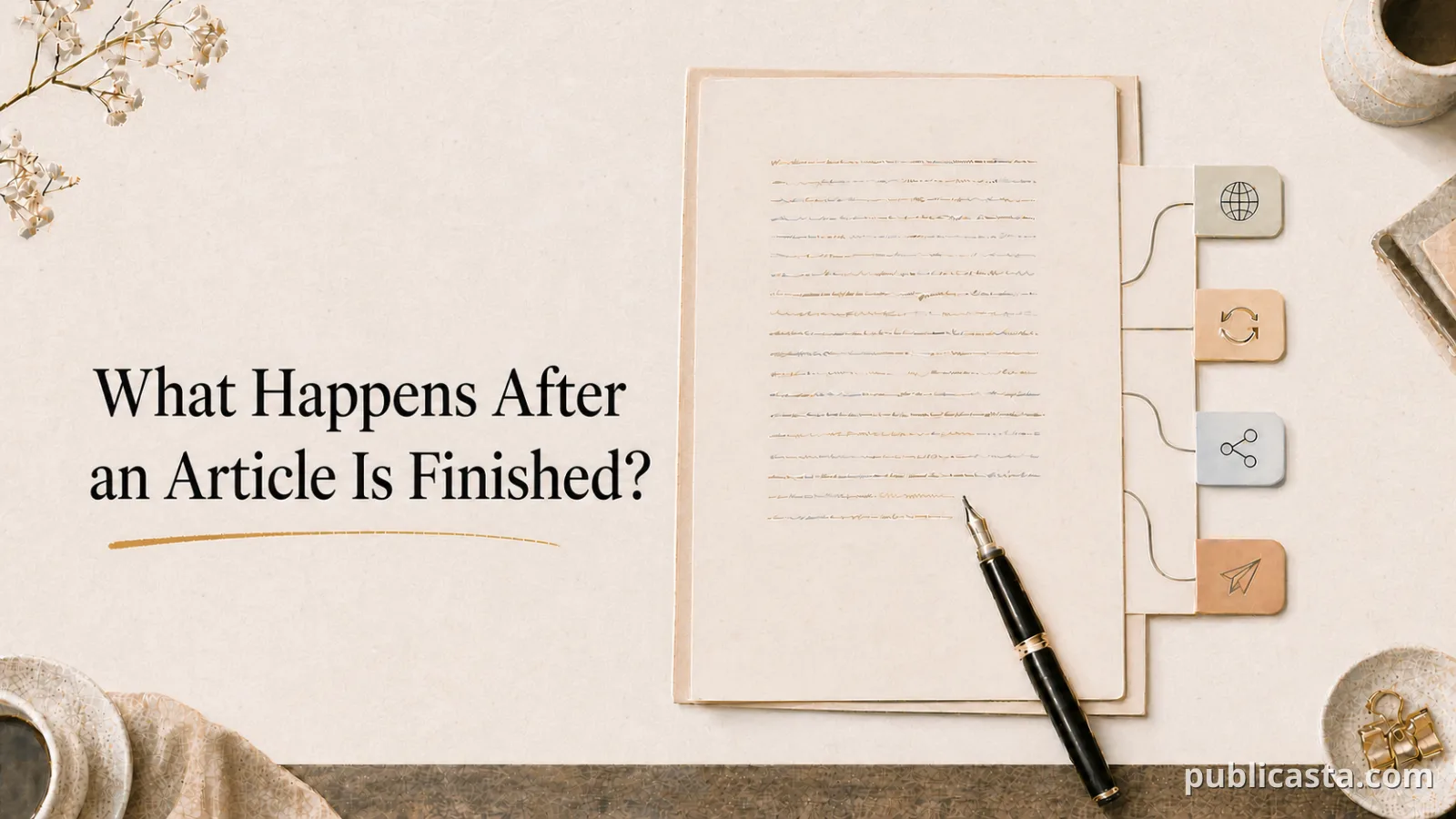
Writing feels like the hard part.
You research.
You think.
You rewrite.
Eventually, you place the final period.
The article is done.
Or is it?
Because that's exactly when a completely different kind of work begins.
Writing is only half of publishing
As an author, your focus is the content.
As a publisher, your focus changes completely.
How will people discover the article?
Which link should you share?
How will readers in other countries access it?
What happens when you update the content?
How do translations stay in sync?
None of these questions exist while you're writing.
They appear only after the article is finished.
Publishing is no longer about one audience
Imagine you've written an article in English.
A week later, you translate it into Spanish.
Then into German.
Then into French.
On most publishing platforms, each translation becomes a separate publication.
A separate URL.
A separate page.
Separate analytics.
Separate comments.
Separate search rankings.
Even though it's still the same article.
One article slowly turns into many copies
Over time, the questions start to pile up.
Which link should you put in your profile?
Which one should you post on social media?
Which version should someone bookmark?
If you discover a mistake, how many pages do you need to update?
Every new language makes the problem a little bigger.
Readers don't care which language came first
Readers want something much simpler.
Open a link.
Start reading.
In their own language.
Without searching for another version.
Without switching websites.
Without asking:
"Do you have this in Spanish?"
This is already how we expect modern software to work.
Applications adapt to our language automatically.
Why shouldn't articles do the same?
After writing comes publishing
Translation.
Editing.
Updates.
Distribution.
Sharing.
Managing every language version.
None of this is writing anymore.
It's publishing.
Yet most platforms focus almost entirely on helping you create new content.
Very few help you manage what happens after it's published.
That's why we built Publicasta
We believe a translation is not a new article.
It's another language version of the same publication.
One article.
One permanent URL.
One publishing history.
Readers simply open the link they receive and read the article in their own language whenever that version exists.
Authors continue working with a single publication instead of maintaining a growing collection of copies.
Because writing an article is where an author's work ends.
Publishing it to the world is where a publishing platform should begin.
Related articles
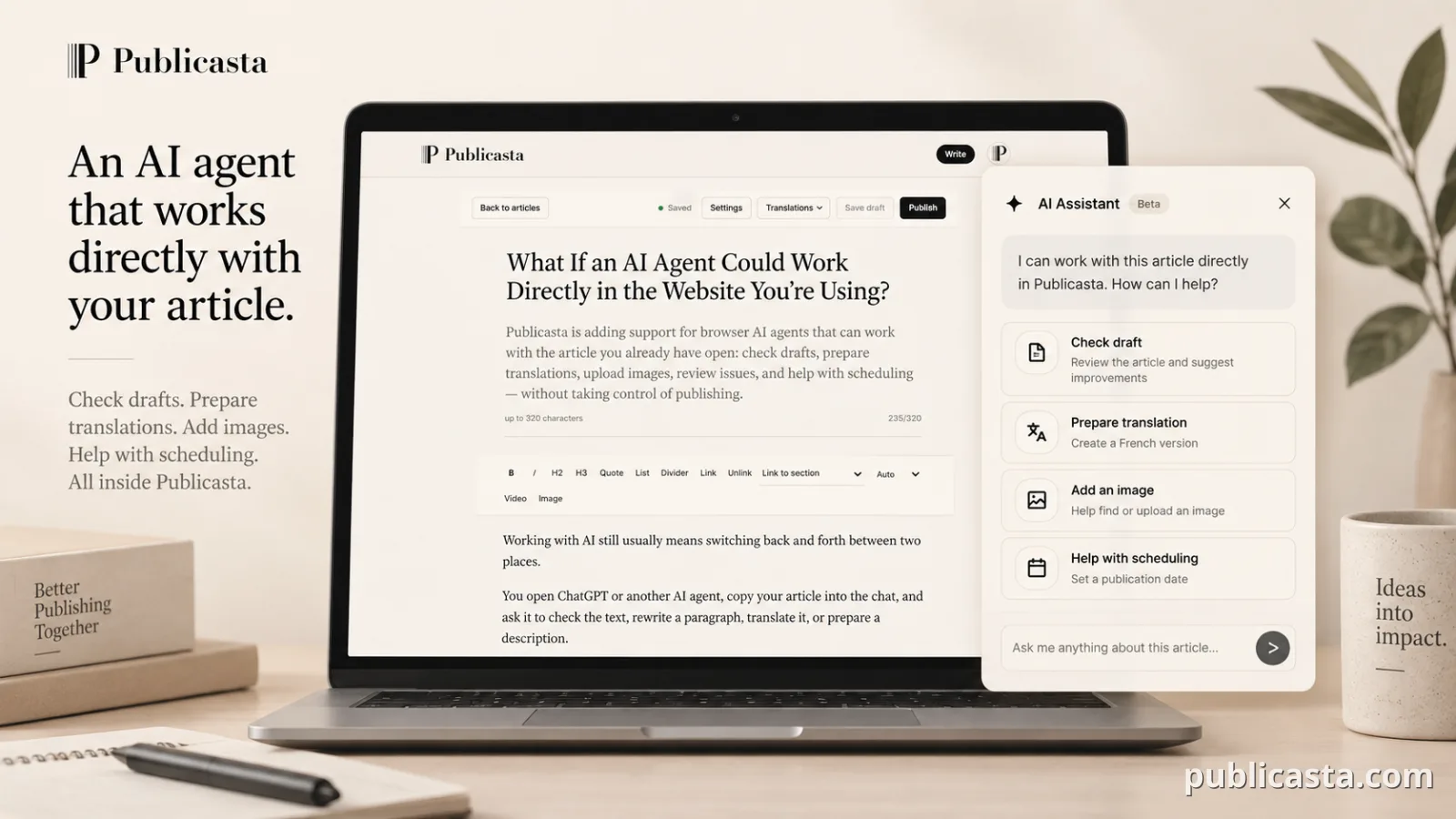
What If an AI Agent Could Work Directly in the Website You’re Using?
Publicasta is adding support for browser AI agents that can work with the article you already have open: check drafts, prepare translations, upload images, review issues, and help with scheduling — without taking control of publishing.

Halloween Candy in 2026: A Practical Parent Plan for Treats, Allergies and the Switch Witch
The Switch Witch is back in family conversations, but trading away a child’s Halloween haul is not the only option. Here is a calmer plan for candy, food allergies, toddlers, dental care and the social side of trick-or-treating.

Schengen in September 2026: How Temporary Border Checks Can Change a Cheap Multi-Country Trip
Several Schengen countries have active internal border controls this September, while the EU’s digital Entry/Exit System is already operating at external borders. Here is how to check a route, protect connections and budget for delays before booking.

Fall Garlic Needs a Reserved Bed Before It Needs a Planting Day
Gardeners are buying seed garlic now, but the useful move is not always planting immediately. Match the bed, mulch and spacing to your first hard freeze so next summer’s bulbs are worth the space.
Comments
Sign in to comment.
No comments yet.