When does an electric bicycle stop being a bicycle?
Fast e-bikes are forcing buyers, parents, police, and riders to face the line between a bicycle, a moped, and a loophole.

On July 1, 2026, a Reddit post in r/ebikes carried the kind of sentence that makes a transport fight suddenly legible: "First time I actually agree with the police." The thread, discovered through an RSS feed with 197 entries, roughly the original post plus 196 comments, was not really about whether electric bicycles are good or bad. It was about a harder question: when does an electric bicycle stop being a bicycle?
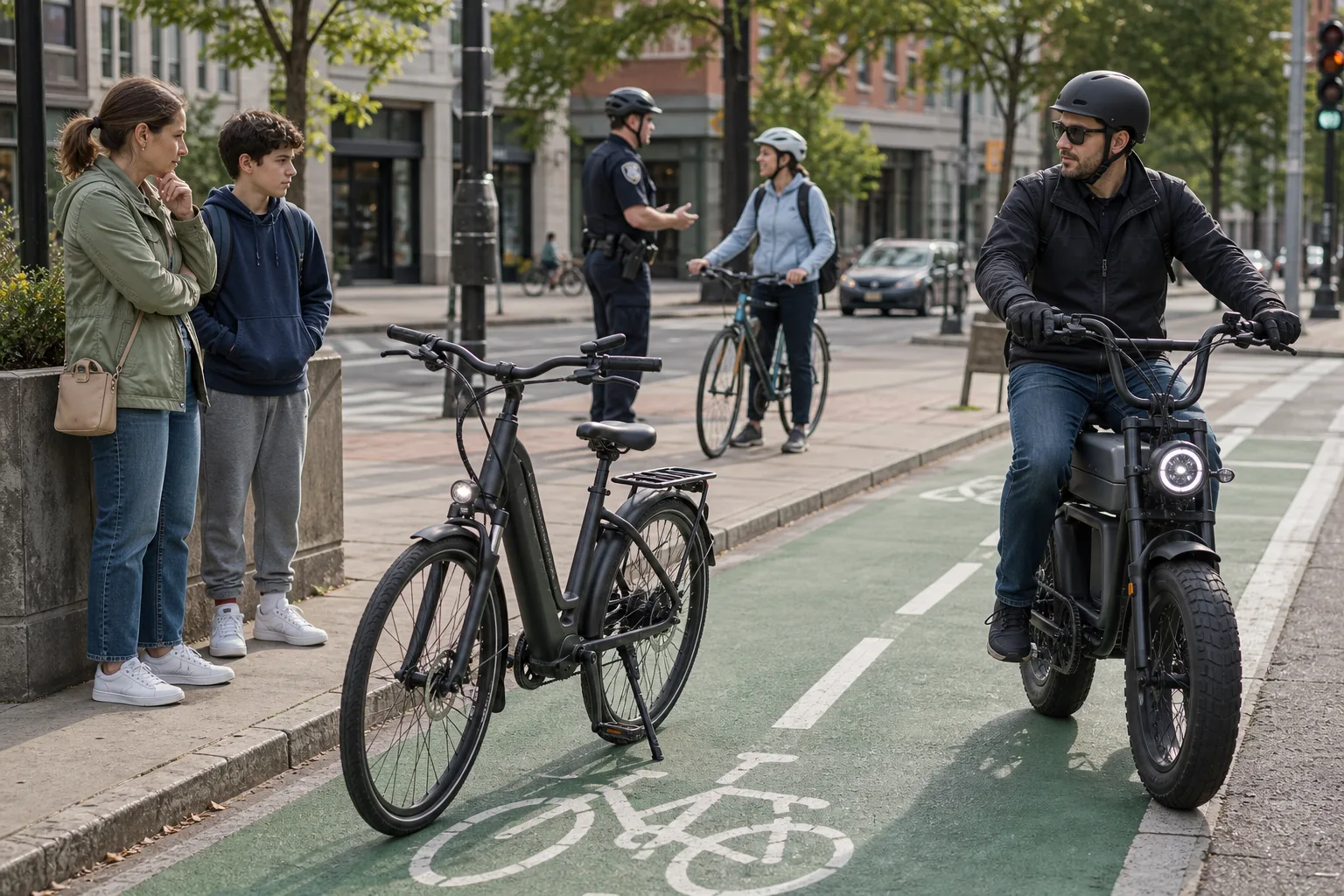
That question now matters to buyers as much as it matters to police departments. A normal pedal-assist city e-bike can replace car trips, flatten hills, carry groceries, and make commuting possible for people who would never ride a purely acoustic bike every day. But the same aisle, the same online marketplace, and sometimes the same marketing language also contain heavy throttle machines that can run with traffic, carry passengers, and behave less like bicycles than small electric mopeds with decorative pedals.
The Reddit argument flared because many riders recognize both truths at once. E-bikes are one of the best urban transport tools available. Some fast machines sold or used as e-bikes are not being treated with the licensing, helmet, insurance, path-access, and age limits that society normally attaches to motor vehicles. That gray zone is where parents, riders, pedestrians, cyclists, police, manufacturers, and retailers are now colliding.
The New Jersey example shows why the fight is becoming practical rather than theoretical. Police departments in the state reminded residents and parents about e-bike and e-scooter rules as summer use increased. A Rutgers Alan M. Voorhees Transportation Center summary highlighted the warning and the basic legal split: low-speed electric bicycles and faster class 3 or motorized bicycles are not the same thing under New Jersey rules.
In New Jersey, a low-speed electric bicycle is limited to a maximum speed of 20 mph and 750 watts or less. It can use pedal assist or a throttle. It does not require a driver's license, insurance, or registration, and operators generally follow bicycle laws. Riders under 17 must wear a helmet. That category is the legal home for the ordinary city-assist e-bike most people imagine when they hear the word e-bike.
New Jersey's class 3 or motorized bicycle category sits above that. Machines in the 20 to 28 mph range, including some electric pedal bicycles and mopeds, require a license, registration, insurance, and a helmet. The point is not a minor paperwork distinction. It is the law saying that extra speed changes the social contract. A vehicle that can cruise near moped speed asks more of the rider and creates more risk for everyone sharing the street or path.
The Reddit thread reflected the same boundary problem in street language. Commenters argued that pedals alone should not make a vehicle an e-bike. Some supported a sharper separation between ordinary e-bikes and e-motos. Others worried that any enforcement wave would punish normal riders who bought legal assist bikes and use them responsibly. The concerns clustered around kids, passengers, helmets, bike paths, registration, insurance, and powerful machines disguised as bicycles.
For a buyer, the lesson is simple: do not shop only by top speed, battery size, or whether the listing shows pedals. Shop by the legal category and the real use case. If the machine is meant to behave like a bicycle, it should be comfortable at bicycle speeds, usable under pedal power, accepted on bike infrastructure, and legal without motor-vehicle paperwork where you ride. If the machine is meant to behave like a moped, buy it, insure it, register it, and equip yourself like a moped rider.
Why the issue flared up now
The conflict has been building for years, but it becomes visible when summer arrives. More teenagers are outside. More families are buying transport for school, work, beaches, parks, and local errands. More visitors are on sidewalks and paths. Police receive complaints about speed, passengers, close passes, and helmet use. Retailers advertise machines that look fun and accessible. Parents often see a bicycle with a battery, not a regulated vehicle category.
The market also moved faster than public understanding. Early mainstream e-bikes were mostly pedal-assist commuters, cargo bikes, and comfort bikes. They helped a rider do normal bicycle things with less strain. The newer mixed market includes fat-tire throttle bikes, long-bench passenger bikes, off-road styled models, and high-output machines that are technically or practically outside ordinary bicycle behavior. Many are useful. Some are excellent. But the buyer has to understand what they are buying.
Infrastructure adds pressure. A painted bike lane, a multi-use path, a school approach road, and a suburban arterial are not the same operating environment. A 17 mph pedal-assist bike may fit naturally among bicycles. A 28 mph throttle-heavy machine with a passenger may feel intimidating on the same path and vulnerable in car traffic. Riders then choose the least bad space, and every other user experiences that choice as somebody else's problem.
Law enforcement is late to the scene because the category used to be small. When only a few commuters rode low-speed assist bikes, ambiguity did not dominate the public conversation. Once fast e-bikes became common among teens and casual riders, the ambiguity turned into a visible enforcement question. Police departments are being asked to distinguish a legal bicycle-like e-bike from an unregistered motorized vehicle in real time, often based on behavior rather than a clean label.
That is why the Reddit post landed. The author did not have to reject e-bikes to agree that some machines and riding patterns deserve police attention. Many enthusiasts are tired of seeing responsible riders blamed for the behavior of people using high-powered machines as unlicensed street vehicles. At the same time, they are justifiably nervous that broad crackdowns will treat every battery-assisted bicycle as suspicious.
The line that matters
There is no single universal answer because laws vary by jurisdiction, but a buyer can still use a practical line. A bicycle is a human-scale vehicle first. A low-speed e-bike is a bicycle that adds measured electric help. A motorized bicycle, moped, or e-moto is a motor vehicle that may happen to include pedals or bicycle-like styling. The difference is not only the presence of a motor. It is speed, power, weight, throttle behavior, where the vehicle is used, and what rules the rider must follow.
An ordinary bicycle has no motor and depends on the rider. It is slow enough that paths and bike lanes were largely designed around its behavior. It can still be ridden badly, but its mass and acceleration usually keep it within the social expectations of cycling infrastructure.
A low-speed e-bike keeps that bicycle identity. In New Jersey's rule set, it is capped at 20 mph and 750 watts or less, may use pedal assist or throttle, needs no license, insurance, or registration, and follows bicycle laws. The rider still has to behave like a cyclist. That means yielding where required, controlling speed around pedestrians, using lights, respecting local path rules, and putting helmets on riders under 17.
A faster electric bike or motorized bicycle changes the equation. In New Jersey's 20 to 28 mph class 3 or motorized bicycle range, the state requires license, registration, insurance, and a helmet. This is the zone where a product can still have pedals but no longer belongs in the buyer's mind as a casual bicycle purchase. The legal obligations are a warning label about the machine's role in traffic.
An e-moto goes further. It may be marketed with bicycle cues, but if the rider mostly uses throttle, travels at motor-traffic speeds, carries passengers, and relies on motor power rather than cycling effort, it should be treated as a small motor vehicle. That does not make it bad. It means the buyer should stop asking, "Can I get away with calling this an e-bike?" and start asking, "What motor-vehicle rules apply here?"
| Category | Typical behavior | New Jersey rule signal | Buyer takeaway |
|---|---|---|---|
| Ordinary bicycle | Human-powered, bicycle speeds | Bicycle laws | Best for riders who want simplicity and maximum path acceptance |
| Low-speed e-bike | Assist or throttle up to 20 mph, 750 watts or less | No license, insurance, or registration; helmet under 17 | Best default for commuters, families, cargo errands, and urban trips |
| Class 3 / motorized bicycle | 20 to 28 mph, including some electric pedal bicycles and mopeds | License, registration, insurance, and helmet required | Buy only if you are ready to follow motorized-vehicle obligations |
| E-moto or disguised moped | Motor-first riding, high power, passenger use, street-speed behavior | Depends on local motor-vehicle law | Treat as a scooter or motorcycle, not a bicycle workaround |
Why pedals are not enough
Pedals are easy to see, so they become an easy argument. A seller can point to them. A rider can say the machine is still a bike. A parent can feel reassured. But pedals alone do not answer the legal or safety question. A heavy machine with a powerful throttle and pedals that are rarely used does not become bicycle-like merely because the pedals exist.
The better test is whether pedaling remains central to the vehicle's normal use. Can an average rider move it comfortably without motor power? Does the motor assist cycling, or does cycling merely decorate a motor platform? Is the advertised speed within the low-speed e-bike category where you live? Does the bike's weight and acceleration make sense on shared paths? Does the manufacturer clearly state class, wattage, assisted top speed, and throttle behavior?
Parents should be especially skeptical of vague product pages. Phrases like "off-road mode," "unlockable speed," "racing controller," or "for private land" may mean the vehicle is not legal for the street or path use the family has in mind. A teenager may experience that as a feature. A parent should read it as a legal and liability warning.
Retailers have a role here. If a shop sells a 20 mph commuter bike, the conversation is straightforward. If it sells a high-output throttle machine, it should explain where the vehicle can be used, what class it falls into, whether it needs registration, and whether a minor can legally operate it. Online sellers should do the same, but many product pages blur the line because blur sells.
What each stakeholder is really worried about
Riders want freedom, speed, and a cheaper alternative to cars. Many are not trying to evade the law; they are trying to get to work, school, or the store without sitting in traffic. For them, broad suspicion of e-bikes feels like punishment for choosing a cleaner, smaller vehicle. They are right to defend the ordinary e-bike as a legitimate bicycle-scale transport tool.
Parents want mobility for their children, but they often underestimate the difference between a bicycle and a fast throttle machine. A 15-year-old on a normal bicycle is familiar. A 15-year-old carrying a friend on a heavy machine at 25 mph is a different risk profile. Helmet rules, passenger limits, age rules, and insurance exposure are not abstract when the rider is a minor.
Pedestrians and slower cyclists want predictability. They can share space with bicycles when speeds are moderate and passing behavior is respectful. They become alarmed when a silent, heavy vehicle appears from behind at moped pace on a path. Their complaint is not always anti-bike. Often it is a request that path users match the design speed of the path.
Police want enforceable categories. A rule that depends on hidden controller settings is hard to apply from the roadside. A bike that can be limited in one mode and unlocked in another creates obvious enforcement problems. Officers may focus on visible behavior: speed, passengers, helmets, sidewalk use, reckless riding, and whether the machine appears to exceed legal limits.
Manufacturers and retailers want growth. The best companies can grow by making categories clear and by selling the right vehicle for the right job. The worst incentive is to market moped-like performance while leaning on bicycle imagery to avoid buyer resistance. That strategy may move inventory, but it poisons the category for everyone else.
Cities and states want mode shift without chaos. An e-bike can reduce car dependence, parking demand, emissions, and congestion. But that public benefit depends on trust. If voters and local officials come to associate e-bikes mainly with underage riders, sidewalk speeding, and unregistered high-power machines, they will write blunt rules that make good uses harder too.
How to check whether your e-bike is legal
Start with the jurisdiction, not the product page. Laws are local. New Jersey's split between low-speed electric bicycles and 20 to 28 mph class 3 or motorized bicycles is a useful example, but it is not a substitute for your state, province, country, city, campus, park, or trail rule. The same bike can be legal on a street, banned on a path, and restricted in a park.
Then identify the machine's class and specifications. Look for assisted top speed, motor wattage, throttle presence, pedal-assist behavior, weight, passenger rating, and any unlock modes. If the seller hides those details or describes the machine mainly with hype, treat that as a reason to pause. A lawful bicycle-scale product should be easy to describe in lawful bicycle-scale terms.
Check the paperwork requirements. If your vehicle is in a category requiring a license, registration, insurance, and a helmet, do not pretend those are optional because the vehicle has pedals. If the legal category is unclear, ask the local motor vehicle agency or police department before buying. A cheap online purchase can become expensive if it cannot be registered and also cannot be legally used as a bicycle.
Check where you intend to ride. Streets, protected bike lanes, multi-use paths, sidewalks, school zones, boardwalks, parks, and private land can all have different rules. A commuter who rides in traffic may reasonably want a faster class. A parent buying for a child who will ride around parks and neighborhood paths should usually prioritize a lower-speed, clearly legal e-bike.
Check the rider. Age, maturity, helmet compliance, ability to control a heavy bike, and willingness to follow traffic rules matter as much as the spec sheet. A fast e-bike can be too much vehicle for a young rider even if an adult could use it responsibly. Passenger carrying deserves special scrutiny because many bikes are not designed or legally approved for improvised two-up riding.
Use this buyer checklist before paying:
- Confirm the legal category in your jurisdiction.
- Verify assisted top speed and motor wattage from the manufacturer, not only a reseller.
- Check whether throttle use changes the category.
- Look for unlock modes or off-road modes that could make street use illegal.
- Confirm license, registration, insurance, and helmet requirements.
- Check local path, sidewalk, park, campus, and school rules.
- Match the vehicle to the rider's age, judgment, and strength.
- Avoid passenger use unless the bike is designed, rated, and legal for it.
- Budget for lights, locks, helmet, maintenance, and, where required, insurance.
- Walk away from vague listings that rely on pedals to excuse motor-vehicle performance.
Buyer verdict
Buy a low-speed e-bike if you want the bicycle experience with practical help. For most adults and families, the sweet spot is a legal 20 mph, 750-watt-or-less machine with clear labeling, reliable brakes, integrated lights, a sensible battery, and geometry that encourages controlled riding. Commuter bikes, cargo bikes, utility step-throughs, and moderate fat-tire models can all make sense if they remain within the rules and fit the routes you actually use.
Choose pedal assist over raw throttle performance if your main goal is transportation. A throttle can be useful for starts, hills, disability access, and cargo loads, and New Jersey's low-speed category can include throttle bikes. But a bike that feels good only when used like a small motorcycle is telling you something. If pedaling feels irrelevant, the vehicle may not belong in bicycle spaces.
Avoid buying a fast, unlockable machine for a child or casual rider just because it looks exciting. The problem is not that young people should never have mobility. The problem is that speed, passenger carrying, traffic exposure, and weak legal understanding stack together quickly. A parent who would not hand a minor an uninsured moped should be cautious about handing over an e-bike that performs like one.
Skip vague marketplace specials that do not state class, wattage, speed limit, braking equipment, and passenger rating. Also be wary of bikes advertised as legal because they have pedals while the rest of the specification points toward moped behavior. A bargain is not a bargain if it attracts enforcement, cannot be insured, or gets banned from the places you bought it to ride.
Choose a moped, scooter, or motorcycle instead when your real need is sustained 25 to 35 mph travel, regular passenger carrying, long arterial-road trips, or keeping up with traffic rather than fitting into bicycle infrastructure. That choice may add licensing, registration, insurance, and helmet obligations, but those obligations match the vehicle's job. A legal moped is often a cleaner decision than an illegal e-bike compromise.
For city governments and police, the best answer is precise enforcement. Target reckless riding, underage operation where prohibited, illegal passenger use, sidewalk speeding, unregistered motorized vehicles, and machines that exceed the legal category. Do not treat a parent on a cargo e-bike, a commuter on a 20 mph assist bike, and a teenager on an unlocked throttle machine as the same problem.
For manufacturers, the best answer is honest labeling. Put class, assisted top speed, wattage, throttle behavior, passenger rating, and legal warnings where buyers can see them. Make compliant modes clear and difficult to misuse. Stop relying on the cultural softness of the word bicycle when the product is really selling moped performance.
For riders, the best answer is to protect the category by riding in a way that makes sense to others. Slow down near pedestrians. Do not crowd paths. Wear a helmet even when the law does not force you. Use lights. Do not carry passengers unless the bike is built and legally allowed for it. The more normal and predictable e-bike riding looks, the harder it is for blunt restrictions to gain support.
The honest verdict is pro-e-bike but anti-confusion. A clear, legal, bicycle-scale e-bike is still one of the smartest purchases in urban transport. It can replace car trips, expand the range of cycling, and give families a practical tool that is cheaper and smaller than a second car. But a fast throttle machine that behaves like a moped should be bought and regulated as a moped. The problem is not e-bikes themselves. The problem is the gray zone between bicycle and motorcycle, and buyers should stop letting that gray zone make the decision for them.
Related articles
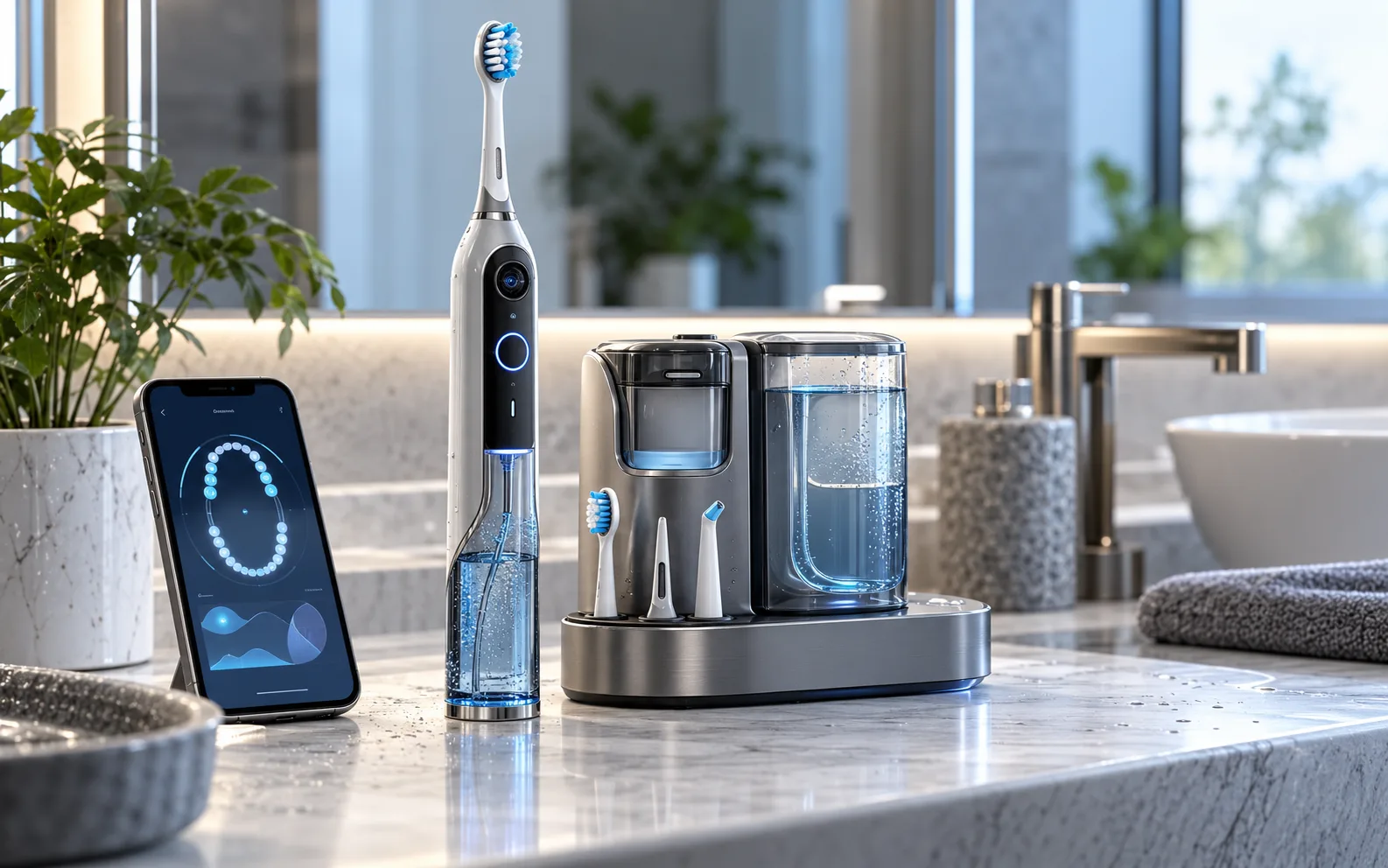
Should You Buy the Dyson CameraJet? The $500 Toothbrush Needs a Reliability Pause
Dyson’s CameraJet combines sonic brushing, mouthwash jets, a camera and app guidance, but early component failures and a temporary supply interruption change the buying decision. Here is who should wait, who might still consider it, and what to check first.

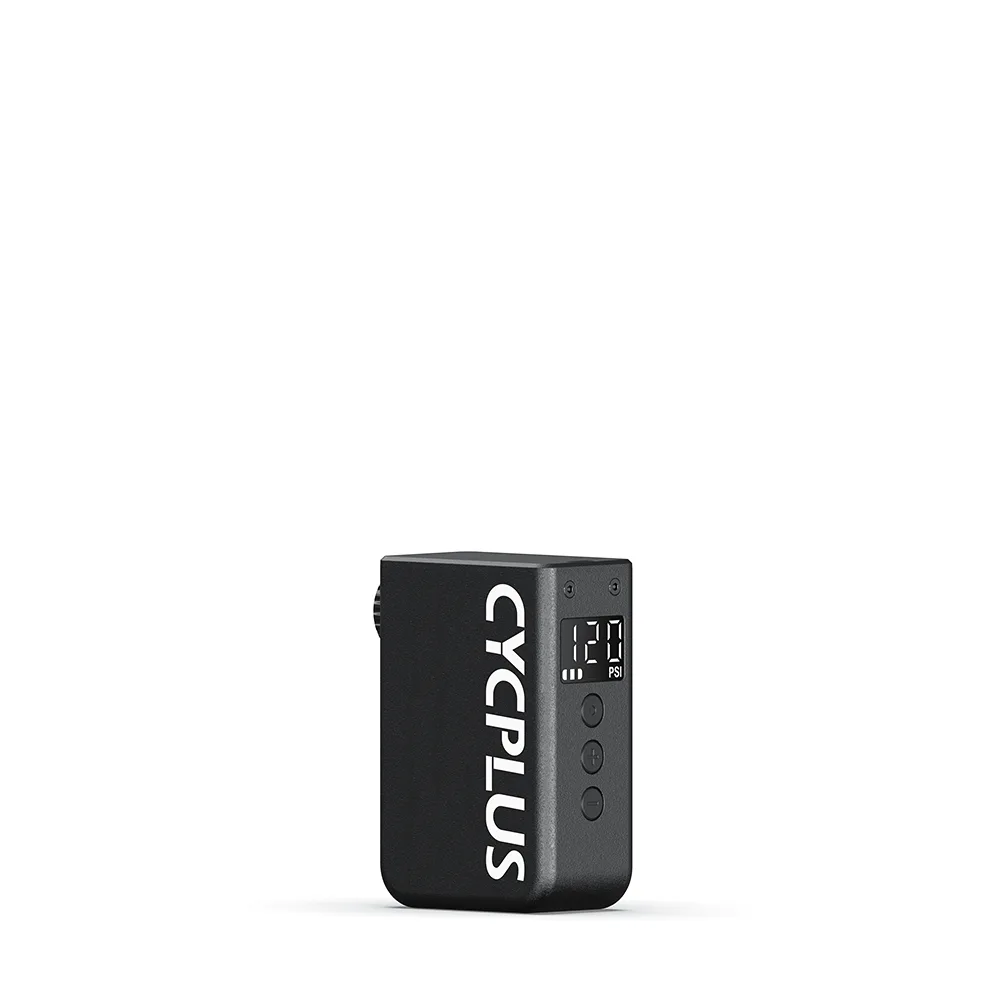
Tiny electric bike pumps from AliExpress: useful ride backup or rechargeable gimmick?
A practical buyer check for 120–150 PSI mini inflators, with valve, battery, heat and backup-plan caveats before you trust one on a ride.

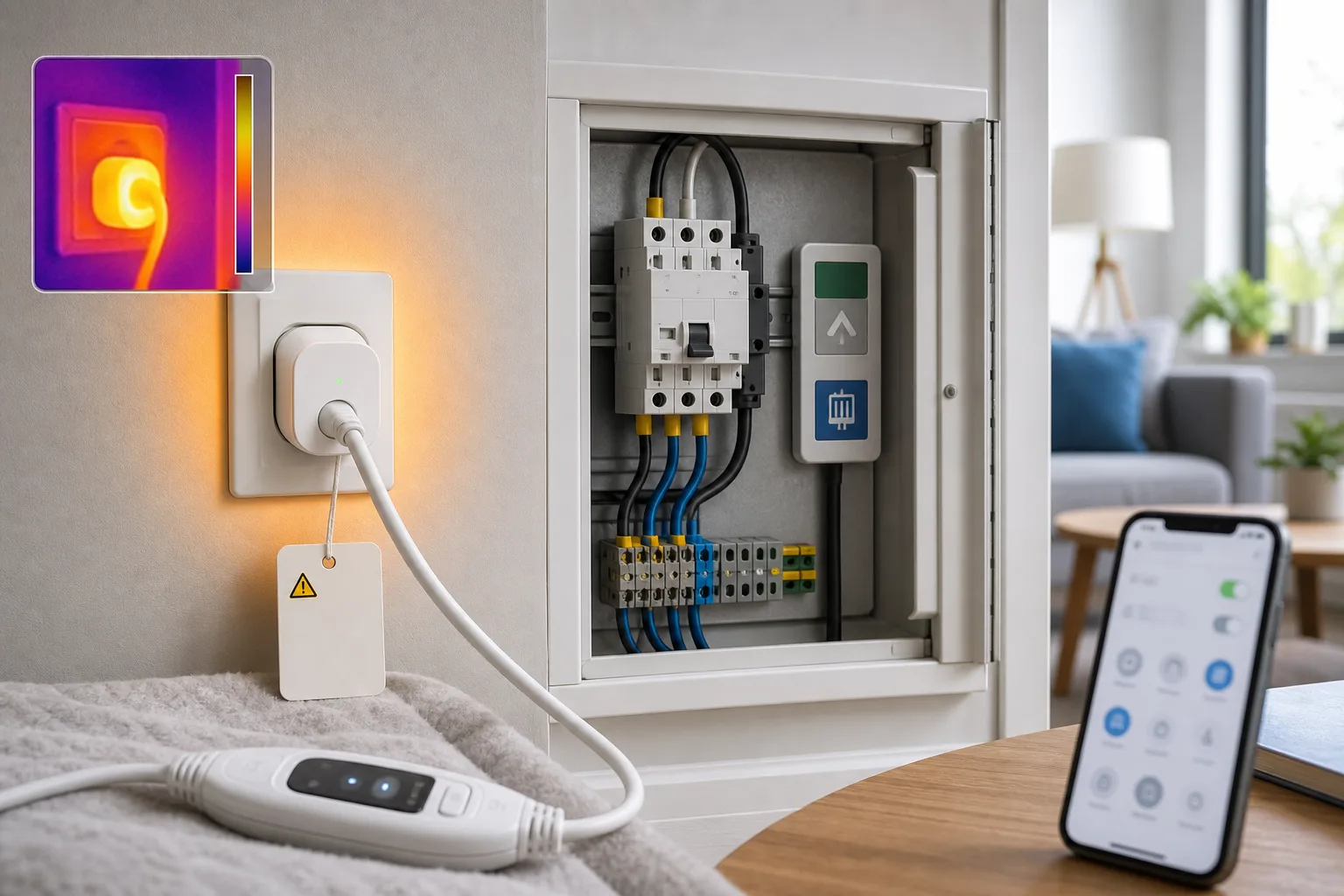
Wi-Fi smart plugs for heaters, boilers and electric blankets: convenience with electrical limits
A smart plug can be useful for lamps and fans, but heaters, boilers and electric blankets turn convenience into a power-electrics decision.
Should you buy a portable power station in 2026?
A practical verdict on portable power stations: when they help, when they disappoint, and what to check before spending money.
Comments
Sign in to comment.
No comments yet.