Will your smart home survive when the app disappears?
Wemo’s cloud shutdown is a practical warning for anyone buying smart plugs, bulbs, switches or appliances: the safest smart home is the one whose basic controls do not depend on one vendor server.
A smart plug looks like a simple household object until the company behind it turns off the service that made it smart. The relay may still click. The lamp may still switch on at the wall. But the app no longer signs in, the voice assistant stops seeing the device, remote control disappears, and the automation that used to make the house feel modern suddenly depends on a server nobody in the home can reach.
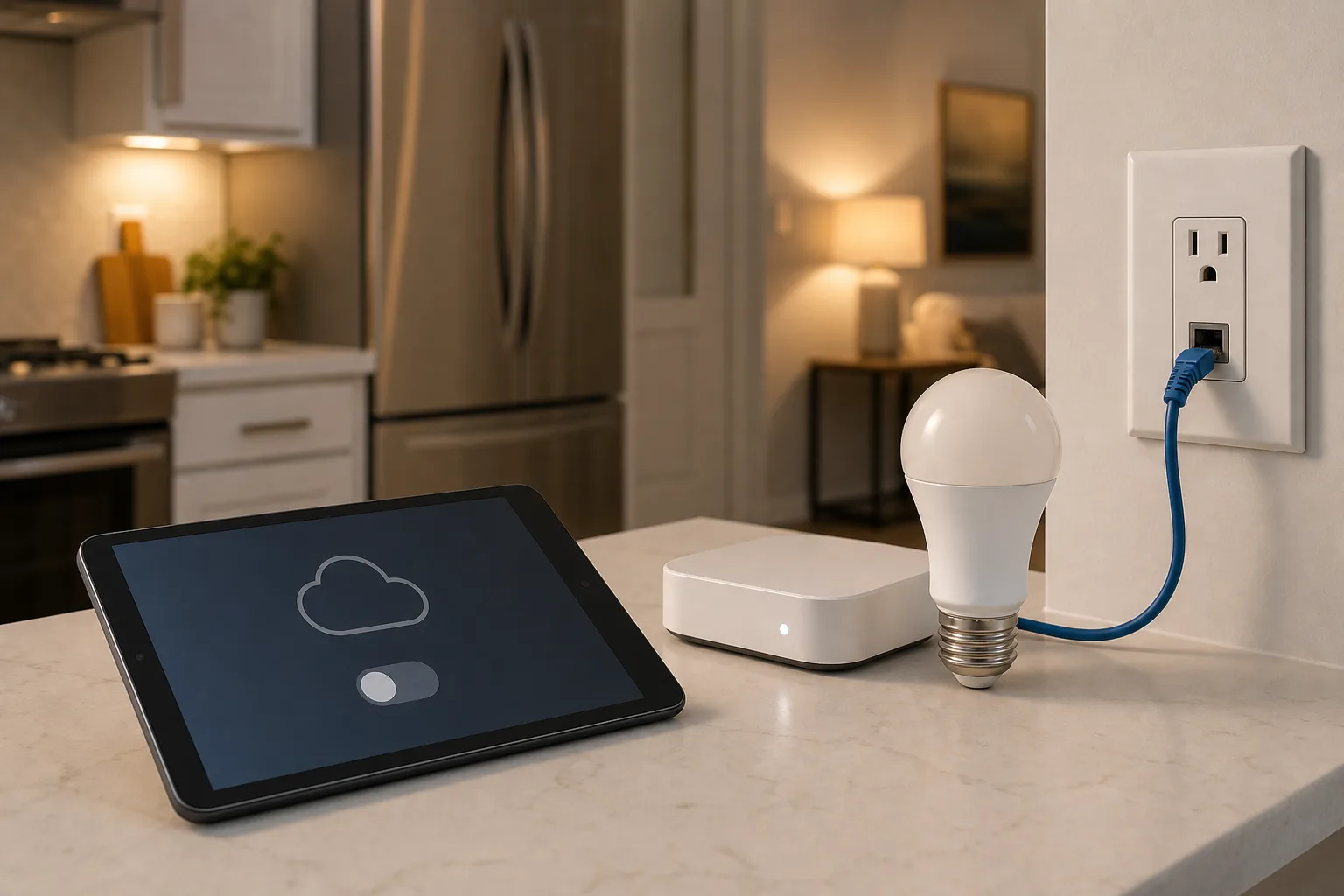
That is the practical lesson behind Belkin's Wemo shutdown. Belkin's own support page says it is discontinuing Wemo cloud services and app support for select products effective January 31, 2026. The affected list is not a tiny footnote: it includes plugs, switches, dimmers, a motion sensor, a baby monitor, lighting products, a humidifier, heaters, an air purifier, a coffee maker and more. Belkin says cloud-based features such as remote access, Amazon Alexa integration and Google Assistant integration stop working for those products, and that new setup or reconfiguration through the Wemo app or HomeKit is not available after the deadline.
The story is not that every Wemo device instantly became a useless brick. That would be too simple and, in some cases, wrong. Some Thread-based Wemo products are outside the shutdown, and a number of models can keep working through Apple HomeKit if they were configured in time. Some switches and plugs remain electrically useful as ordinary devices. Home Assistant can still talk locally to certain Wemo devices on the LAN. But the more important point is harder to ignore: a product sold for the home can lose much of its advertised value because a vendor decides the cloud no longer deserves a budget line.
This is why the Wemo case matters beyond Wemo. Owners of other inexpensive Wi-Fi bulbs and plugs are asking similar questions in forums and app reviews. A recent r/smarthome discussion about modding a Sengled bulb is not proof of an official Sengled shutdown, and it should not be treated as one. It is, however, a useful signal: people are trying to rescue ordinary lighting hardware from app, account and support problems. The anxiety is no longer theoretical. Smart-home buyers are learning that they did not only buy a switch or a bulb. In many cases they bought a dependency.
What Wemo actually changed
Belkin's wording is careful. It is not saying electricity stops flowing through every affected product. It is saying Wemo cloud services and app support end for select Wemo products. The distinction matters because a smart-home device usually has several layers. There is the physical relay or LED driver. There is local firmware. There may be a local network protocol. There is often a vendor app. There may be a vendor cloud. Then there are integrations with Alexa, Google Assistant, HomeKit, Matter controllers, Home Assistant and other platforms.
When the vendor cloud goes away, the physical device may still exist but the convenient layer can collapse. Remote control is the obvious loss. Voice assistants are another. Setup and reconfiguration can be just as important: if the app is the only way to move a plug to a new Wi-Fi network, reset a schedule, pair HomeKit, update firmware or recover from a router change, a working piece of plastic can become a fragile artifact. It works only as long as you never need to touch the part that used to live in the app.
Belkin's official affected list is broad enough to feel like a small museum of the first consumer smart-home era: Wemo Link, Wemo Motion Sensor, Wemo Insight, Wemo Switch, Mini Smart Plug models, Outdoor Plug, dimmers and switches, plus appliance-like products such as a Crock-Pot, heaters, humidifier, air purifier, coffee maker and Wi-Fi baby monitor. That mix is important. These were not all hobbyist boards sold to tinkerers. Many were marketed like household conveniences.
The exceptions are just as instructive. Belkin identifies Thread-based products such as Wemo Smart Plug with Thread, Wemo Stage Smart Scene Controller, Wemo Smart Video Doorbell Camera and a newer Wemo light switch as not affected in the same way because they continue through Apple HomeKit. Other HomeKit-capable products could also continue if they were configured before the deadline. PCWorld, Android Authority and 9to5Google all highlighted the same practical warning in their January coverage: owners had to save setup codes and finish HomeKit setup before the window closed.
That last detail is the whole story in miniature. A local or semi-local standard can extend the life of a device, but only if the owner has the pairing credentials, the right controller and the setup already done. Resilience is not a brand sticker. It is an architecture.
Why this is not just an old-gadget problem
It is tempting to dismiss Wemo as a case of aging devices reaching the end of life. Some Wemo products are old. Some have been out of the spotlight for years. Every connected product eventually needs a support policy, and no company can maintain every service forever.
But that argument is not enough. First, many smart-home products are bought like appliances, not like phones. A light switch in a wall is expected to last longer than a social app. A plug controlling a lamp or aquarium pump is not something most owners expect to replace because a cloud integration has become inconvenient for the manufacturer. Second, the useful life of the electronics and the useful life of the cloud are different clocks. The relay may be fine. The enclosure may be fine. The household need may be unchanged. The weak link is the service layer.
Third, Belkin's own refund language shows the consumer-rights tension. The company says owners of products still under warranty on or after January 31, 2026 may be eligible for a refund with proof of purchase. ClassAction.org and law firms such as Sauder Schelkopf have been soliciting affected Wemo owners and exploring legal theories, including mass arbitration or consumer-protection claims. That does not mean a court has found Belkin liable. It does mean the dispute has moved beyond a few angry comments. Connected hardware raises a real ownership question: what exactly did the buyer purchase if the advertised smart functions can be withdrawn while the physical item still sits in the home?
Wemo is also not the first warning. Revolv told customers in 2016 that its hub and app would no longer work after Nest acquired the company. Insteon's 2022 outage showed how quickly cloud-dependent homes can lose app control, schedules and automations, even though some wall switches still behaved as ordinary switches and the brand later returned under new ownership. Wink's 2020 subscription shift was different but related: the company said one-time hardware revenue did not cover ongoing cloud costs and support for millions of connected devices. The pattern is not one villain. It is a business model problem.
Where the device's intelligence really lives
A useful way to judge any smart-home product is to ask where its intelligence lives when the internet cable is unplugged.
In the weakest design, the device is little more than a Wi-Fi endpoint for the vendor cloud. The app talks to the cloud. Alexa or Google talks to the cloud. Schedules may be stored in the cloud. Pairing and account state sit in the cloud. If the vendor loses interest, changes API policy, gets acquired, starts charging or shuts down, the home loses functions that felt local because they were physically nearby.
A stronger design keeps basic control on the local network. A HomeKit accessory can often respond through a home hub and local controller. A Zigbee or Z-Wave device talks to a coordinator or hub in the home. A Matter device is designed around IP-based local connectivity, although it still needs a Matter controller and, for Thread devices, a Thread border router. A Shelly-style local Wi-Fi relay, an ESPHome device or a Tasmota-compatible switch can expose local APIs that a controller such as Home Assistant can use without asking a vendor cloud for permission.
The strongest design separates critical household behavior from remote convenience. The wall switch still works by hand. A thermostat has a safe local fallback. A leak sensor can trigger a local siren or valve through a local controller. Remote access, dashboards and voice commands are nice additions, not the only path to control.
That does not mean every home needs a complicated rack of servers. Smarter Home is not a channel for turning apartments into data centers. The practical lesson is simpler: the more important the device is, the less it should depend on a single external account.
Matter and Thread help, but they are not magic words
Matter is often marketed as the cure for smart-home fragmentation, and it does solve a real problem. Google's developer documentation describes Matter as an IP-based local connectivity protocol, and local connectivity can mean lower latency and better reliability than cloud-to-cloud integrations. Thread can give low-power devices a mesh network that does not depend on a Wi-Fi radio in every sensor.
But Matter does not erase every dependency. A Matter device still needs a controller from Apple, Google, Amazon, Samsung, Home Assistant or another ecosystem. A Thread device needs a Thread border router. Apple notes that automations, notifications and remote control with Thread accessories require suitable home-hub or border-router infrastructure. Firmware updates may still pass through a vendor app. Some advanced settings may remain proprietary. Pairing codes still matter. If you lose the QR code, replace the controller or reset the device at the wrong time, the standard alone does not guarantee a painless recovery.
The honest verdict is that Matter and Thread improve the odds. They make it more likely that basic control can survive a vendor cloud decision. They make it easier to move devices between ecosystems. They are better buying signals than a mystery Wi-Fi bulb that only speaks to one app. But they are not a lifetime support contract.
HomeKit deserves a similar treatment. It can be a practical low-complexity path for many households, especially if the owner already uses Apple devices and an Apple TV or HomePod as a home hub. The Wemo case shows both the value and the limits. Devices that were already set up in HomeKit had a better chance of continuing. Devices that needed setup after the app-support deadline were in a worse position. Local standards help most when they are configured before the crisis.
The Sengled lesson: do not confuse a signal with a verdict
The briefing that led to this article included a fresh Reddit signal: a user asking how to hack or mod a Sengled bulb because the normal support path no longer felt reliable. App-store signals around Sengled are also not glowing; the Sengled Home iOS app has a low average rating, and owners of different Sengled product lines complain about pairing, app reliability and support.
That is enough to discuss a pattern. It is not enough to write that Sengled has officially ended support for all bulbs, or that every Sengled product line is dead. Wi-Fi bulbs, Zigbee bulbs, Bluetooth products and camera or Snap-era products are different. A Zigbee bulb paired to an independent coordinator can have a very different future from a Wi-Fi bulb tied to one cloud account. An app outage, an Alexa integration problem, a bad firmware path and a true end-of-life notice are different facts.
For buyers, the useful takeaway is not brand gossip. It is the question the Sengled discussion raises: if this bulb stops pairing in the vendor app tomorrow, what can I still do with it? Can it join a standard Zigbee network? Can it be controlled locally? Is there an independent integration? Is the firmware locked? Is the device cheap enough to treat as disposable, and if so, are you comfortable with that waste?
A smart home built only from low-cost cloud Wi-Fi devices can feel wonderfully simple on day one. It can also become surprisingly expensive when the owner has to replace twenty bulbs because the cheap path had no exit.
A practical risk test before buying
Before buying any smart plug, switch, bulb, thermostat, sensor, camera or appliance, ask five boring questions.
First: can the device be controlled without the vendor's cloud? The answer does not have to be perfect for every feature, but basic on/off, dimming, sensor state or thermostat control should have a local path if the device will matter to daily life.
Second: what standard does it speak? Zigbee and Z-Wave devices usually need a compatible hub or coordinator, but they are not tied to Wi-Fi credentials or one vendor account in the same way. Matter over Wi-Fi or Thread is promising when the device is actually certified and when the home has the required controller. HomeKit can be a strong path for Apple households. A proprietary Wi-Fi app with no documented local integration is the riskier end of the spectrum.
Third: what happens during an internet outage? This is the simplest home test. If the device cannot run a basic schedule, respond to a local button or be controlled from the local network when the broadband link is down, it is not only dependent on the vendor. It is dependent on the router, ISP, DNS, authentication service and every cloud hop in between.
Fourth: how are setup and firmware handled? Some products can run locally after setup but still need the vendor app for firmware updates, pairing, calibration or advanced features. That may be acceptable, but it should be a known compromise. Save setup codes, QR codes and manuals in a folder before you need them. A HomeKit or Matter code taped to the device or stored in a password manager can be the difference between recovery and replacement.
Fifth: how critical is the job? A decorative lamp can tolerate more cloud risk than a heating control, lock, leak valve, freezer alarm, medical-device power monitor or baby-room device. The more serious the consequence, the more you should prefer physical controls, local automation and products with long support expectations.
What to do if your home already has cloud-dependent devices
Do not start by tearing everything out. Start with an inventory. List plugs, bulbs, switches, sensors, cameras, thermostats and appliances. Note the brand, model, how each one connects, which app owns it, whether it also appears in HomeKit, Matter, SmartThings, Alexa, Google Home, Home Assistant, Zigbee2MQTT, Z-Wave JS or another local controller, and whether you have the setup codes.
Then classify devices by consequence. Decorative lights can wait. Anything related to heat, water, security, access, children, pets or appliances should be examined first. If a smart plug controls a heater, boiler, electric blanket, pump or other high-load device, cloud support is not the only issue; electrical rating and fail-safe behavior matter too.
For Wemo owners, the realistic rescue paths depend on model and state. If a device was already configured in HomeKit before the cutoff, keep the setup code and avoid unnecessary resets. If Home Assistant can discover the device locally, give it a static DHCP lease and keep it on the same subnet when possible. Home Assistant's Wemo documentation notes local push and local polling behavior, port 8989, subnet assumptions and several caveats. That is useful, but it is not a blanket guarantee for every Wemo product.
For Sengled and similar bulbs, separate Wi-Fi from Zigbee. A Zigbee bulb may be salvageable through a local coordinator even if the vendor app is poor. A Wi-Fi bulb with no local API is much harder. Do not assume every product under one brand behaves the same.
Finally, move automations gradually. If a routine matters, rebuild it in a local controller before the old cloud path fails. Home Assistant, Apple Home, Hubitat, Homey, SmartThings with local-capable devices, Zigbee2MQTT and Z-Wave setups all have different trade-offs. The right answer is not the most powerful platform. It is the one you will maintain.
Replacement choices that age better
For simple lighting in an apartment, a local-first approach can still be easy. A small Matter-over-Thread plug or bulb, controlled through an Apple TV, HomePod, compatible Google or Amazon controller, or Home Assistant with a Thread border router, can be less fragile than a no-name Wi-Fi cloud device. Zigbee bulbs and sensors through a reliable coordinator are mature and inexpensive, but they require the owner to accept a hub. Z-Wave remains attractive for switches, sensors and locks in regions where device availability is good.
For relays and switches, products with documented local control are worth paying attention to. Shelly devices are popular because many models expose local control and do not require the cloud for basic use. Lutron Caséta is not the cheapest route, but its dedicated bridge and reputation for lighting reliability make it a common recommendation for people who want boring switches that keep working. ESPHome and Tasmota are powerful for tinkerers, but they are not the easiest path for a non-technical household.
For appliances, cameras and baby monitors, be more conservative. These categories often hide the most cloud dependence because video, notifications and accounts are central to the product. If the device is meant to watch a child, secure a door or control heat, do not buy it solely because the app screenshots look friendly. Look for local viewing options, standard protocols, clear end-of-life policy, physical controls and a manufacturer with a support record.
The paradox is that the most durable smart home may look slightly less magical. It has a hub. It has labels. It has saved codes. It has automations that keep working when the internet is down. It avoids putting every function in the cheapest possible app. That is not unnecessary complexity. It is the minimum structure that prevents one company's shutdown notice from becoming your weekend project.
What manufacturers should promise
Consumers should not have to become protocol experts to buy a light switch. Manufacturers can make this problem smaller by publishing support lifetimes, separating local control from cloud extras, providing exportable setup credentials, documenting local APIs where safe, and offering migration tools before services end. If a company cannot maintain a cloud forever, it can still design an exit that respects the buyer.
A decent end-of-life policy for connected home devices would say how long cloud services are guaranteed, what happens after that, which features remain local, how owners can retrieve setup codes, whether firmware updates continue, whether the device can be moved to a standard controller, and how warranty or refunds work. For abandoned hubs or apps, open-sourcing a server component or releasing a local-control firmware path will not fit every product, but it should be part of the conversation.
Regulators are also circling adjacent issues. The FTC has treated repair restrictions as a competition and consumer-harm problem. The European Union is expanding right-to-repair expectations. Those policies do not automatically solve cloud shutdowns, but they point in the same direction: a product should not become waste merely because the easiest official service path no longer suits the seller.
The simple rule
The simplest smart home is not the one with the fewest boxes. It is the one with the fewest hidden single points of failure.
A cloud account is fine for remote control. A vendor app is fine for onboarding. Voice assistants are convenient. But the home should not depend on any one of them for basic life. If a lamp, switch, sensor or thermostat matters, it should have a local path, a physical fallback, a saved setup code and a clear replacement plan.
Wemo's shutdown is a useful warning because it is ordinary. It is not a futuristic disaster. It is a support page, a date, a list of product numbers and a lot of households discovering where the intelligence in their devices really lived. The next purchase should be made with that map in mind.
Related articles
Home Assistant 2026.7 makes automations feel less like homework
Home Assistant’s July release makes automations easier to start, but the useful smart home still needs backups, testing and honest Matter troubleshooting.
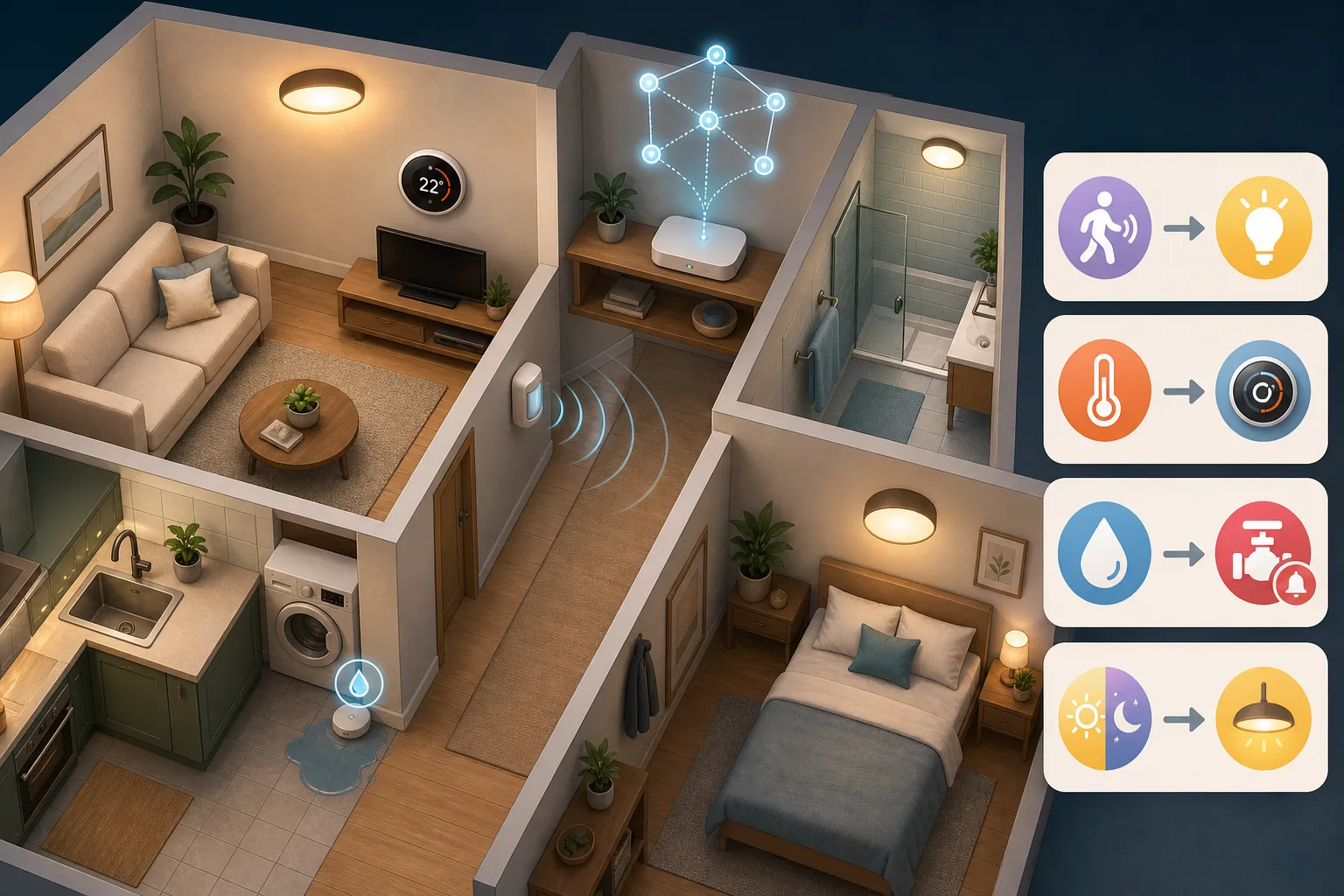
A smart home needs a local Plan B when Google Home goes quiet
The August Google Home and Nest outage was fixed, but it exposed a design problem many apartments and houses still have: basic controls often depend on a remote service. The practical response is not panic or a server rack, but a simple local fallback plan.
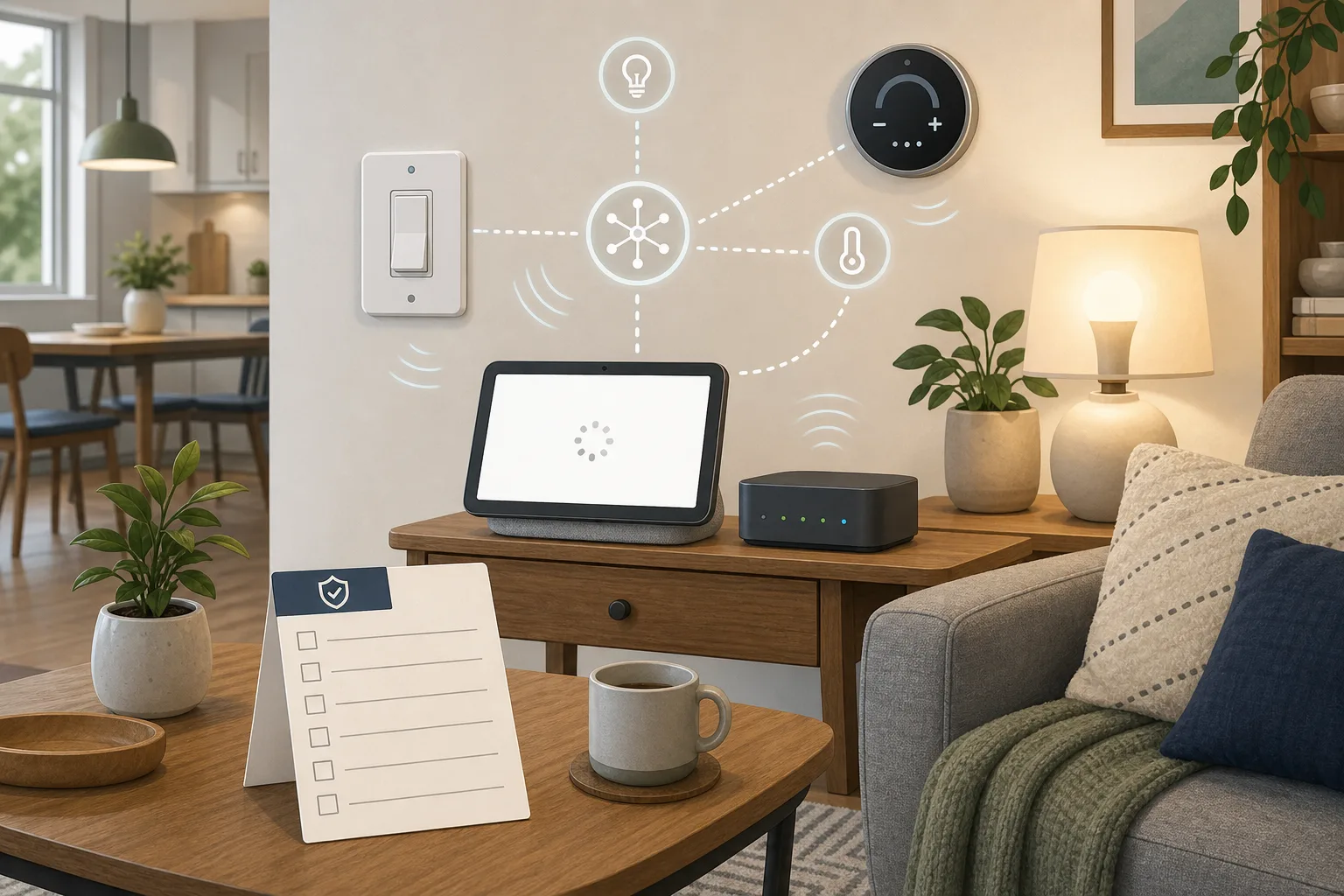
A smart feeder should not wait for the cloud
The Petlibro outage is a calm reminder to test local schedules, manual controls and backup bowls before a connected device becomes part of a critical home routine.
IFA 2026’s Local AI Home Hubs: What They Replace, What They Don’t, and Who Should Wait
IFA 2026 has made local AI the smart-home pitch of the moment. Here is how to separate a useful local camera and automation hub from an expensive pre-order, and how to test whether it fits the home you already have.

Comments
Sign in to comment.
No comments yet.