Security chores that beat panic when the week is already noisy
A practical, source-backed look at what is worth changing now and what is only noise.

This is the kind of story that looks smaller than it is. The useful thread is not panic about one spectacular hack. It is hygiene: keep browsers boring, extensions scarce, dependencies visible, servers patched, and AI coding tools boxed inside the same review rules used for any junior contributor. The week has enough noise already, so the useful question is simple: what should a reader actually change after reading the news?

Browser extensions are now part of the attack surface
For browser extensions are now part of the attack surface, check 1.1 is deliberately narrow. The useful reading of browser extensions are now part of the attack surface starts with evidence, not mood. SecurityWeek reported on a harmless-looking repository attack against Claude Code, a Linux kernel DirtyClone privilege-escalation issue, WhatsApp username rollout, and PeopleSoft breach fallout. The Hacker News separately described a malicious Perplexity Chrome extension and Mustang Panda use of Zoho WorkDrive. BleepingComputer covered Nissan and NAIC breach notices tied to Oracle zero-day campaigns, Windows Server 2022 hotpatching support, and a U.S. reward for hackers targeting encrypted messaging users. NCSC recently warned about AI-assisted software development risk and Fortinet targeting. Put together, those references describe a practical pattern rather than a single miracle fix. In this section, the practical check is audit browser extensions.
For browser extensions are now part of the attack surface, check 1.2 is deliberately narrow. For a reader, the first question is ownership. Who can change this setting, buy this part, schedule this patch, or stop this habit? If the answer is nobody, the story is only background. If the answer is a named person or household routine, it becomes work. In this section, the practical check is separate AI tool permissions.
For browser extensions are now part of the attack surface, check 1.3 is deliberately narrow. The second question is reversibility. Good operational advice leaves room to undo a decision. A browser extension can be removed, an irrigation timer can be tested on one bed, an AI-agent rule can be trialed on a low-risk ticket, and a public-service kiosk can run beside the old counter until trust is earned. In this section, the practical check is schedule kernel and server updates.
For browser extensions are now part of the attack surface, check 1.4 is deliberately narrow. The uncomfortable detail is that boring checks usually beat dramatic fixes. Inventory, logs, soil moisture, accessibility testing, plain-language instructions and rollback plans do not make flashy headlines. They do keep people from being surprised twice by the same failure. In this section, the practical check is prefer usernames or aliases where available.
For browser extensions are now part of the attack surface, check 1.5 is deliberately narrow. There is also a cost to overreacting. Teams that chase every alert burn attention; gardeners who water every leaf invite disease; managers who give an AI agent a heroic assignment create review debt; agencies that buy a shiny system without support make the service harder for the very people it should help. In this section, the practical check is review exposed enterprise portals.
For browser extensions are now part of the attack surface, check 1.6 is deliberately narrow. A better rule is to make the next action small enough to finish. Choose one account class, one bed, one workflow, one public counter, or one device family. Fix that slice, write down what changed, and only then widen the circle. In this section, the practical check is assign one owner for patch notes.
For browser extensions are now part of the attack surface, check 1.7 is deliberately narrow. The reader takeaway is not to admire technology from a distance. It is to ask whether the tool reduces a real failure mode. Does it save a trip, prevent exposure, keep water at the roots, make a review easier, or give staff a way to help without improvising? If not, it can wait. In this section, the practical check is write a household recovery sheet.
AI coding tools need sandbox rules
For ai coding tools need sandbox rules, check 2.1 is deliberately narrow. For a reader, the first question is ownership. Who can change this setting, buy this part, schedule this patch, or stop this habit? If the answer is nobody, the story is only background. If the answer is a named person or household routine, it becomes work. In this section, the practical check is separate AI tool permissions.
For ai coding tools need sandbox rules, check 2.2 is deliberately narrow. The second question is reversibility. Good operational advice leaves room to undo a decision. A browser extension can be removed, an irrigation timer can be tested on one bed, an AI-agent rule can be trialed on a low-risk ticket, and a public-service kiosk can run beside the old counter until trust is earned. In this section, the practical check is schedule kernel and server updates.
For ai coding tools need sandbox rules, check 2.3 is deliberately narrow. The uncomfortable detail is that boring checks usually beat dramatic fixes. Inventory, logs, soil moisture, accessibility testing, plain-language instructions and rollback plans do not make flashy headlines. They do keep people from being surprised twice by the same failure. In this section, the practical check is prefer usernames or aliases where available.
For ai coding tools need sandbox rules, check 2.4 is deliberately narrow. There is also a cost to overreacting. Teams that chase every alert burn attention; gardeners who water every leaf invite disease; managers who give an AI agent a heroic assignment create review debt; agencies that buy a shiny system without support make the service harder for the very people it should help. In this section, the practical check is review exposed enterprise portals.
For ai coding tools need sandbox rules, check 2.5 is deliberately narrow. A better rule is to make the next action small enough to finish. Choose one account class, one bed, one workflow, one public counter, or one device family. Fix that slice, write down what changed, and only then widen the circle. In this section, the practical check is assign one owner for patch notes.
For ai coding tools need sandbox rules, check 2.6 is deliberately narrow. The reader takeaway is not to admire technology from a distance. It is to ask whether the tool reduces a real failure mode. Does it save a trip, prevent exposure, keep water at the roots, make a review easier, or give staff a way to help without improvising? If not, it can wait. In this section, the practical check is write a household recovery sheet.
For ai coding tools need sandbox rules, check 2.7 is deliberately narrow. The useful reading of ai coding tools need sandbox rules starts with evidence, not mood. SecurityWeek reported on a harmless-looking repository attack against Claude Code, a Linux kernel DirtyClone privilege-escalation issue, WhatsApp username rollout, and PeopleSoft breach fallout. The Hacker News separately described a malicious Perplexity Chrome extension and Mustang Panda use of Zoho WorkDrive. BleepingComputer covered Nissan and NAIC breach notices tied to Oracle zero-day campaigns, Windows Server 2022 hotpatching support, and a U.S. reward for hackers targeting encrypted messaging users. NCSC recently warned about AI-assisted software development risk and Fortinet targeting. Put together, those references describe a practical pattern rather than a single miracle fix. In this section, the practical check is audit browser extensions.
Patch rhythm matters more than threat theatre
For patch rhythm matters more than threat theatre, check 3.1 is deliberately narrow. The second question is reversibility. Good operational advice leaves room to undo a decision. A browser extension can be removed, an irrigation timer can be tested on one bed, an AI-agent rule can be trialed on a low-risk ticket, and a public-service kiosk can run beside the old counter until trust is earned. In this section, the practical check is schedule kernel and server updates.
For patch rhythm matters more than threat theatre, check 3.2 is deliberately narrow. The uncomfortable detail is that boring checks usually beat dramatic fixes. Inventory, logs, soil moisture, accessibility testing, plain-language instructions and rollback plans do not make flashy headlines. They do keep people from being surprised twice by the same failure. In this section, the practical check is prefer usernames or aliases where available.
For patch rhythm matters more than threat theatre, check 3.3 is deliberately narrow. There is also a cost to overreacting. Teams that chase every alert burn attention; gardeners who water every leaf invite disease; managers who give an AI agent a heroic assignment create review debt; agencies that buy a shiny system without support make the service harder for the very people it should help. In this section, the practical check is review exposed enterprise portals.
For patch rhythm matters more than threat theatre, check 3.4 is deliberately narrow. A better rule is to make the next action small enough to finish. Choose one account class, one bed, one workflow, one public counter, or one device family. Fix that slice, write down what changed, and only then widen the circle. In this section, the practical check is assign one owner for patch notes.
For patch rhythm matters more than threat theatre, check 3.5 is deliberately narrow. The reader takeaway is not to admire technology from a distance. It is to ask whether the tool reduces a real failure mode. Does it save a trip, prevent exposure, keep water at the roots, make a review easier, or give staff a way to help without improvising? If not, it can wait. In this section, the practical check is write a household recovery sheet.
For patch rhythm matters more than threat theatre, check 3.6 is deliberately narrow. The useful reading of patch rhythm matters more than threat theatre starts with evidence, not mood. SecurityWeek reported on a harmless-looking repository attack against Claude Code, a Linux kernel DirtyClone privilege-escalation issue, WhatsApp username rollout, and PeopleSoft breach fallout. The Hacker News separately described a malicious Perplexity Chrome extension and Mustang Panda use of Zoho WorkDrive. BleepingComputer covered Nissan and NAIC breach notices tied to Oracle zero-day campaigns, Windows Server 2022 hotpatching support, and a U.S. reward for hackers targeting encrypted messaging users. NCSC recently warned about AI-assisted software development risk and Fortinet targeting. Put together, those references describe a practical pattern rather than a single miracle fix. In this section, the practical check is audit browser extensions.
For patch rhythm matters more than threat theatre, check 3.7 is deliberately narrow. For a reader, the first question is ownership. Who can change this setting, buy this part, schedule this patch, or stop this habit? If the answer is nobody, the story is only background. If the answer is a named person or household routine, it becomes work. In this section, the practical check is separate AI tool permissions.
Identity and phone-number privacy are getting practical
For identity and phone-number privacy are getting practical, check 4.1 is deliberately narrow. The uncomfortable detail is that boring checks usually beat dramatic fixes. Inventory, logs, soil moisture, accessibility testing, plain-language instructions and rollback plans do not make flashy headlines. They do keep people from being surprised twice by the same failure. In this section, the practical check is prefer usernames or aliases where available.
For identity and phone-number privacy are getting practical, check 4.2 is deliberately narrow. There is also a cost to overreacting. Teams that chase every alert burn attention; gardeners who water every leaf invite disease; managers who give an AI agent a heroic assignment create review debt; agencies that buy a shiny system without support make the service harder for the very people it should help. In this section, the practical check is review exposed enterprise portals.
For identity and phone-number privacy are getting practical, check 4.3 is deliberately narrow. A better rule is to make the next action small enough to finish. Choose one account class, one bed, one workflow, one public counter, or one device family. Fix that slice, write down what changed, and only then widen the circle. In this section, the practical check is assign one owner for patch notes.
For identity and phone-number privacy are getting practical, check 4.4 is deliberately narrow. The reader takeaway is not to admire technology from a distance. It is to ask whether the tool reduces a real failure mode. Does it save a trip, prevent exposure, keep water at the roots, make a review easier, or give staff a way to help without improvising? If not, it can wait. In this section, the practical check is write a household recovery sheet.
For identity and phone-number privacy are getting practical, check 4.5 is deliberately narrow. The useful reading of identity and phone-number privacy are getting practical starts with evidence, not mood. SecurityWeek reported on a harmless-looking repository attack against Claude Code, a Linux kernel DirtyClone privilege-escalation issue, WhatsApp username rollout, and PeopleSoft breach fallout. The Hacker News separately described a malicious Perplexity Chrome extension and Mustang Panda use of Zoho WorkDrive. BleepingComputer covered Nissan and NAIC breach notices tied to Oracle zero-day campaigns, Windows Server 2022 hotpatching support, and a U.S. reward for hackers targeting encrypted messaging users. NCSC recently warned about AI-assisted software development risk and Fortinet targeting. Put together, those references describe a practical pattern rather than a single miracle fix. In this section, the practical check is audit browser extensions.
For identity and phone-number privacy are getting practical, check 4.6 is deliberately narrow. For a reader, the first question is ownership. Who can change this setting, buy this part, schedule this patch, or stop this habit? If the answer is nobody, the story is only background. If the answer is a named person or household routine, it becomes work. In this section, the practical check is separate AI tool permissions.
For identity and phone-number privacy are getting practical, check 4.7 is deliberately narrow. The second question is reversibility. Good operational advice leaves room to undo a decision. A browser extension can be removed, an irrigation timer can be tested on one bed, an AI-agent rule can be trialed on a low-risk ticket, and a public-service kiosk can run beside the old counter until trust is earned. In this section, the practical check is schedule kernel and server updates.
PeopleSoft and Oracle stories are a reminder about old enterprise seams
For peoplesoft and oracle stories are a reminder about old enterprise seams, check 5.1 is deliberately narrow. There is also a cost to overreacting. Teams that chase every alert burn attention; gardeners who water every leaf invite disease; managers who give an AI agent a heroic assignment create review debt; agencies that buy a shiny system without support make the service harder for the very people it should help. In this section, the practical check is review exposed enterprise portals.
For peoplesoft and oracle stories are a reminder about old enterprise seams, check 5.2 is deliberately narrow. A better rule is to make the next action small enough to finish. Choose one account class, one bed, one workflow, one public counter, or one device family. Fix that slice, write down what changed, and only then widen the circle. In this section, the practical check is assign one owner for patch notes.
For peoplesoft and oracle stories are a reminder about old enterprise seams, check 5.3 is deliberately narrow. The reader takeaway is not to admire technology from a distance. It is to ask whether the tool reduces a real failure mode. Does it save a trip, prevent exposure, keep water at the roots, make a review easier, or give staff a way to help without improvising? If not, it can wait. In this section, the practical check is write a household recovery sheet.
For peoplesoft and oracle stories are a reminder about old enterprise seams, check 5.4 is deliberately narrow. The useful reading of peoplesoft and oracle stories are a reminder about old enterprise seams starts with evidence, not mood. SecurityWeek reported on a harmless-looking repository attack against Claude Code, a Linux kernel DirtyClone privilege-escalation issue, WhatsApp username rollout, and PeopleSoft breach fallout. The Hacker News separately described a malicious Perplexity Chrome extension and Mustang Panda use of Zoho WorkDrive. BleepingComputer covered Nissan and NAIC breach notices tied to Oracle zero-day campaigns, Windows Server 2022 hotpatching support, and a U.S. reward for hackers targeting encrypted messaging users. NCSC recently warned about AI-assisted software development risk and Fortinet targeting. Put together, those references describe a practical pattern rather than a single miracle fix. In this section, the practical check is audit browser extensions.
For peoplesoft and oracle stories are a reminder about old enterprise seams, check 5.5 is deliberately narrow. For a reader, the first question is ownership. Who can change this setting, buy this part, schedule this patch, or stop this habit? If the answer is nobody, the story is only background. If the answer is a named person or household routine, it becomes work. In this section, the practical check is separate AI tool permissions.
For peoplesoft and oracle stories are a reminder about old enterprise seams, check 5.6 is deliberately narrow. The second question is reversibility. Good operational advice leaves room to undo a decision. A browser extension can be removed, an irrigation timer can be tested on one bed, an AI-agent rule can be trialed on a low-risk ticket, and a public-service kiosk can run beside the old counter until trust is earned. In this section, the practical check is schedule kernel and server updates.
For peoplesoft and oracle stories are a reminder about old enterprise seams, check 5.7 is deliberately narrow. The uncomfortable detail is that boring checks usually beat dramatic fixes. Inventory, logs, soil moisture, accessibility testing, plain-language instructions and rollback plans do not make flashy headlines. They do keep people from being surprised twice by the same failure. In this section, the practical check is prefer usernames or aliases where available.
What a small team should do before Friday
For what a small team should do before friday, check 6.1 is deliberately narrow. A better rule is to make the next action small enough to finish. Choose one account class, one bed, one workflow, one public counter, or one device family. Fix that slice, write down what changed, and only then widen the circle. In this section, the practical check is assign one owner for patch notes.
For what a small team should do before friday, check 6.2 is deliberately narrow. The reader takeaway is not to admire technology from a distance. It is to ask whether the tool reduces a real failure mode. Does it save a trip, prevent exposure, keep water at the roots, make a review easier, or give staff a way to help without improvising? If not, it can wait. In this section, the practical check is write a household recovery sheet.
For what a small team should do before friday, check 6.3 is deliberately narrow. The useful reading of what a small team should do before friday starts with evidence, not mood. SecurityWeek reported on a harmless-looking repository attack against Claude Code, a Linux kernel DirtyClone privilege-escalation issue, WhatsApp username rollout, and PeopleSoft breach fallout. The Hacker News separately described a malicious Perplexity Chrome extension and Mustang Panda use of Zoho WorkDrive. BleepingComputer covered Nissan and NAIC breach notices tied to Oracle zero-day campaigns, Windows Server 2022 hotpatching support, and a U.S. reward for hackers targeting encrypted messaging users. NCSC recently warned about AI-assisted software development risk and Fortinet targeting. Put together, those references describe a practical pattern rather than a single miracle fix. In this section, the practical check is audit browser extensions.
For what a small team should do before friday, check 6.4 is deliberately narrow. For a reader, the first question is ownership. Who can change this setting, buy this part, schedule this patch, or stop this habit? If the answer is nobody, the story is only background. If the answer is a named person or household routine, it becomes work. In this section, the practical check is separate AI tool permissions.
For what a small team should do before friday, check 6.5 is deliberately narrow. The second question is reversibility. Good operational advice leaves room to undo a decision. A browser extension can be removed, an irrigation timer can be tested on one bed, an AI-agent rule can be trialed on a low-risk ticket, and a public-service kiosk can run beside the old counter until trust is earned. In this section, the practical check is schedule kernel and server updates.
For what a small team should do before friday, check 6.6 is deliberately narrow. The uncomfortable detail is that boring checks usually beat dramatic fixes. Inventory, logs, soil moisture, accessibility testing, plain-language instructions and rollback plans do not make flashy headlines. They do keep people from being surprised twice by the same failure. In this section, the practical check is prefer usernames or aliases where available.
For what a small team should do before friday, check 6.7 is deliberately narrow. There is also a cost to overreacting. Teams that chase every alert burn attention; gardeners who water every leaf invite disease; managers who give an AI agent a heroic assignment create review debt; agencies that buy a shiny system without support make the service harder for the very people it should help. In this section, the practical check is review exposed enterprise portals.
What households can copy from professional security
For what households can copy from professional security, check 7.1 is deliberately narrow. The reader takeaway is not to admire technology from a distance. It is to ask whether the tool reduces a real failure mode. Does it save a trip, prevent exposure, keep water at the roots, make a review easier, or give staff a way to help without improvising? If not, it can wait. In this section, the practical check is write a household recovery sheet.
For what households can copy from professional security, check 7.2 is deliberately narrow. The useful reading of what households can copy from professional security starts with evidence, not mood. SecurityWeek reported on a harmless-looking repository attack against Claude Code, a Linux kernel DirtyClone privilege-escalation issue, WhatsApp username rollout, and PeopleSoft breach fallout. The Hacker News separately described a malicious Perplexity Chrome extension and Mustang Panda use of Zoho WorkDrive. BleepingComputer covered Nissan and NAIC breach notices tied to Oracle zero-day campaigns, Windows Server 2022 hotpatching support, and a U.S. reward for hackers targeting encrypted messaging users. NCSC recently warned about AI-assisted software development risk and Fortinet targeting. Put together, those references describe a practical pattern rather than a single miracle fix. In this section, the practical check is audit browser extensions.
For what households can copy from professional security, check 7.3 is deliberately narrow. For a reader, the first question is ownership. Who can change this setting, buy this part, schedule this patch, or stop this habit? If the answer is nobody, the story is only background. If the answer is a named person or household routine, it becomes work. In this section, the practical check is separate AI tool permissions.
For what households can copy from professional security, check 7.4 is deliberately narrow. The second question is reversibility. Good operational advice leaves room to undo a decision. A browser extension can be removed, an irrigation timer can be tested on one bed, an AI-agent rule can be trialed on a low-risk ticket, and a public-service kiosk can run beside the old counter until trust is earned. In this section, the practical check is schedule kernel and server updates.
For what households can copy from professional security, check 7.5 is deliberately narrow. The uncomfortable detail is that boring checks usually beat dramatic fixes. Inventory, logs, soil moisture, accessibility testing, plain-language instructions and rollback plans do not make flashy headlines. They do keep people from being surprised twice by the same failure. In this section, the practical check is prefer usernames or aliases where available.
For what households can copy from professional security, check 7.6 is deliberately narrow. There is also a cost to overreacting. Teams that chase every alert burn attention; gardeners who water every leaf invite disease; managers who give an AI agent a heroic assignment create review debt; agencies that buy a shiny system without support make the service harder for the very people it should help. In this section, the practical check is review exposed enterprise portals.
For what households can copy from professional security, check 7.7 is deliberately narrow. A better rule is to make the next action small enough to finish. Choose one account class, one bed, one workflow, one public counter, or one device family. Fix that slice, write down what changed, and only then widen the circle. In this section, the practical check is assign one owner for patch notes.
What to do next
Pick one small change, do it today, and leave a note for the person who will inherit the system tomorrow. That is not glamorous. It is how useful work survives a noisy week.
Related articles

Kids’ headphones for school and travel: volume limits are only the first check
A practical, no-guilt checklist for choosing children’s headphones by age, fit, volume, breaks and real family routines.


SwitchBot K11+ Pro launches at $399.99: the compact robot vacuum is really a space-saving trade-off
SwitchBot’s new K11+ Pro puts an auto-empty dock, LiDAR mapping and a claimed 12,000Pa of suction into a small body. Its appeal is clear in cramped homes, but the missing test data and limited wiping system matter more than the headline number.

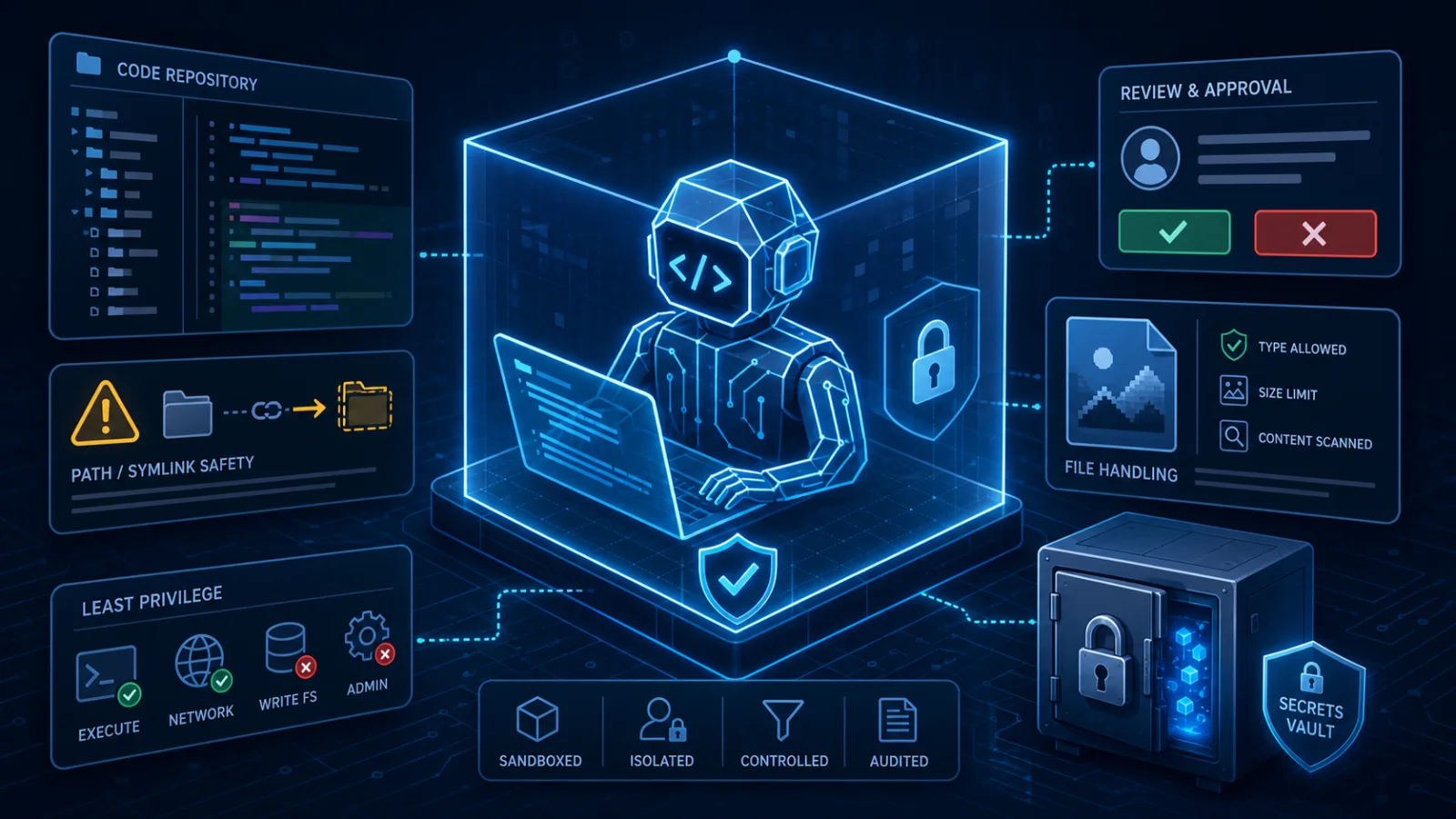
AI coding agents are useful now. That is why they need security rules
GhostApproval, Friendly Fire and Ghostcommit show that coding agents have become privileged automation, not just smarter autocomplete.
Fairphone Gen. 6+ in the US: the seven-year ownership test
Fairphone’s first official US phone pairs replaceable parts with support promised through 2033. Here is how its repair case, warranty, carrier limits and everyday compromises hold up before you spend $649.99.

Comments
Sign in to comment.
No comments yet.