My Eicher shows why connected fleet security starts with the API
A published fleet-platform case study points to account, GPS and document exposure risks without needing Hollywood claims about remote truck control.

The My Eicher case is easy to overstate and too important to ignore. It is not a confirmed story about someone remotely steering trucks. It is a story about a fleet-management cloud platform where, according to a published researcher write-up, ordinary API and identity flaws could expose accounts, vehicle data, location visibility and driver documents at very large scale.
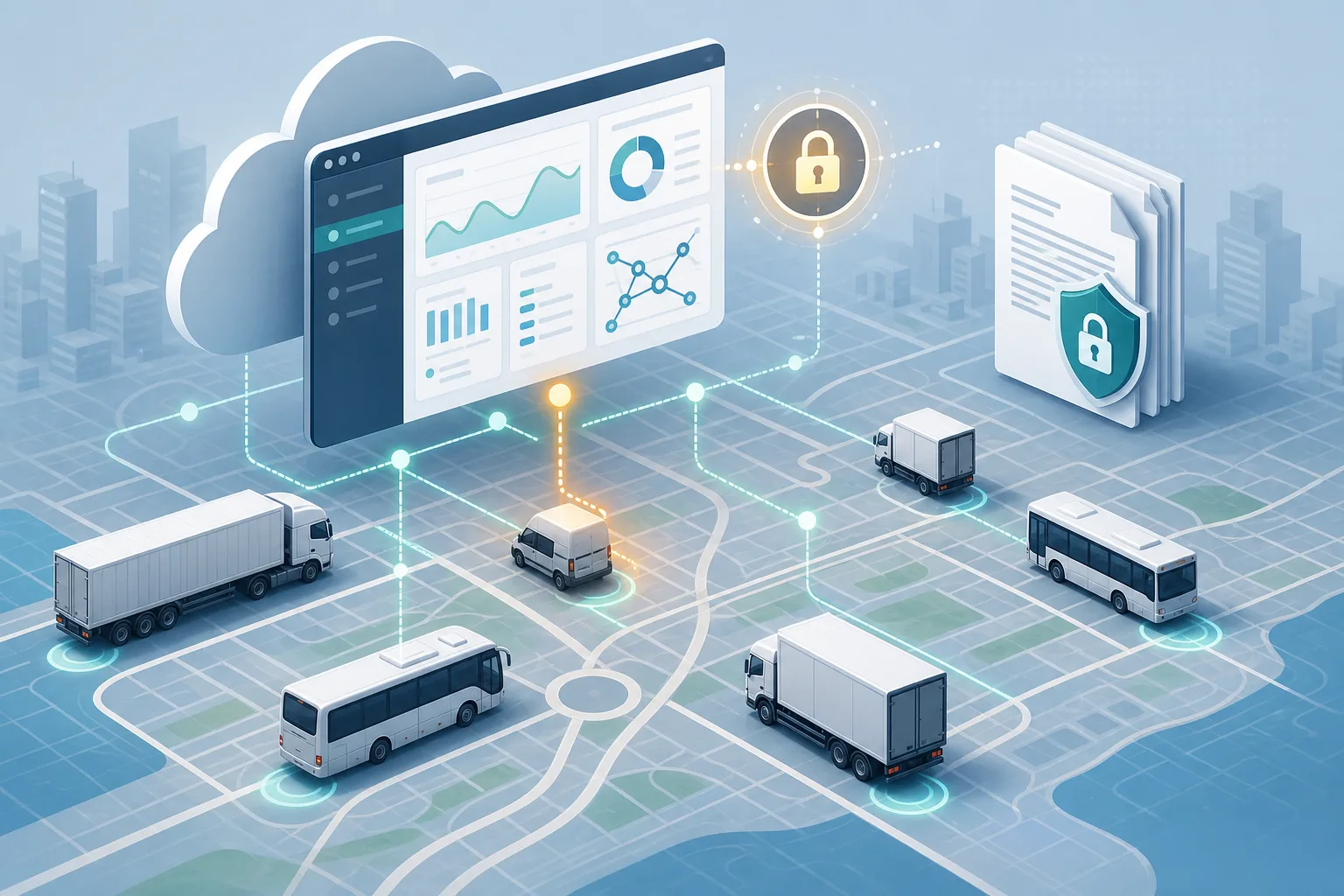
That distinction matters. Connected commercial vehicles are not only machines on the road anymore. For many operators, the daily control plane is a web dashboard: GPS tracking, fleet lists, driver records, service workflows, documents, alerts and account administration. If that dashboard is weak, the risk is not theoretical. It can affect privacy, operations, customer trust and, in some cases, physical-world decision making.
Eaton Works published the research on July 27, 2026 under the title “Exploiting Volvo/Eicher’s fleet management platform to gain control over all users and vehicles.” The post says VE Commercial Vehicles, a joint venture between Volvo Group and Eicher Motors, maintains My Eicher for Indian commercial vehicle customers. The official Eicher product page describes My Eicher as a fleet management and vehicle GPS tracking system for commercial vehicle owners, fleet managers and operators.
The timing makes the case useful rather than merely alarming. The researcher says the issue was reported on November 3, 2025, followed up on November 10 and November 17, and that the primary internal API exposure was no longer accessible on November 20. The public post came much later, on July 27, 2026. In other words: this should be read as a defensive case study unless new evidence shows current exposure.
The high-level bug chain was familiar to anyone who has reviewed SaaS APIs. The researcher says an exposed API path made it possible to discover internal or admin API routes that were not properly authenticated. Those routes reportedly exposed customer, user, person, vehicle and document records. From there, the risk moved from “data can be read” to “accounts can be taken over,” because the post says an OTP-related API returned records that could be looked up by mobile number.
The reported scale is large, but it needs careful wording. Eaton Works lists API-derived counts of roughly 748,000 customers, 174,000 users, 186,000 persons, 676,000 vehicles and 76,000 documents. The same post also notes a separate public 2024 adoption figure of 275,000 vehicles and 115,000 customers, and says it is unclear why the API-derived numbers were higher. That uncertainty should not be buried. Counts from an exposed API are not the same thing as an independently verified affected population.
The document exposure is the part that should make privacy teams sit up. The researcher says uploaded documents included Aadhaar cards and driving licences. Even without vehicle-control claims, that would be a serious data-protection problem: identity documents, driver records and fleet customer information can be abused for fraud, harassment, doxing and account recovery attacks elsewhere.
The account takeover claim is also serious, but it should not be confused with direct physical control. After taking over a fleet account, the researcher says the platform exposed vehicle lists, live GPS maps, individual vehicle tracking details, live cluster or telematics views and other fleet-management features shown in screenshots. The post does not prove remote steering, braking or engine control. A calm reading says: cloud account control over fleet visibility and management functions is bad enough. We do not need to invent a movie plot.
Hacker News picked up the story quickly. The HN item was created on July 27 at 15:08:16Z and the Firebase API showed 147 points and 49 comments when checked. The discussion centered on the right questions: what “control over vehicles” actually means, why internal APIs were reachable, where account takeover ends and safety impact begins, and what fleet customers should demand from telematics vendors.
The first lesson for fleet operators is vendor assessment. If a vendor’s dashboard can see every vehicle, every driver and every uploaded document, it belongs in the same risk conversation as payroll, banking and healthcare systems. Ask for API inventory, tenant-isolation tests, penetration-test scope, authentication design, OTP handling, password reset controls, audit logging, incident notification terms and disclosure process. A glossy GPS map is not enough.
The second lesson is identity hygiene. OTPs should be short-lived and hard to retrieve in bulk. Password reset flows need strong authorization, notification and audit trails. Support workflows that reveal a masked phone number or email can be useful, but they must not become account-enumeration tools. Every tenant boundary must be enforced on every backend endpoint, not only in the user interface.
The third lesson is monitoring. Fleet platforms should flag impossible logins, unusual role changes, mass document access, sudden exports, many vehicles viewed in a short period, bulk GPS queries and password resets that do not match normal user behavior. Logs need to be retained long enough to investigate. If a platform cannot tell a customer what data was accessed after an incident, the customer is left guessing.
Developers should take the case personally. The dangerous piece was not exotic automotive firmware work. It was web application security: route discovery, missing authentication, broad internal endpoints, OTP storage and tenant authorization. Those are ordinary mistakes. In a fleet platform, ordinary mistakes can touch thousands of vehicles and real people’s identity documents.
There is also a disclosure lesson. The researcher’s timeline shows repeated follow-ups and a fix before publication, but no public advisory was found during this research pass. SaaS incidents often fall into a gap: there may be no CVE because there is no packaged software release, and customers may not know what was exposed unless the vendor communicates clearly. Fleet buyers should put incident notice and post-remediation reporting into contracts before they need it.
For executives, the risk framing should be sober. Do not panic about “hackable trucks” unless evidence supports a physical control path. Do not dismiss the issue as “just a website” either. The website is where dispatchers, drivers, managers and service teams see the fleet. In connected operations, the cloud dashboard is operational infrastructure.
For customers using telematics or connected-vehicle SaaS, the practical checklist is short. Limit admin roles. Review who can see documents and live location. Remove old users. Require MFA where available. Ask the vendor how OTPs are stored and expired. Ask whether all backend routes enforce tenant authorization. Ask how quickly they can disable exposed endpoints. Ask what logs they can provide if your account is compromised.
The broader automotive security story has shifted. Firmware, CAN bus research and keyless entry attacks still matter. But cloud APIs, mobile apps, identity flows and vendor portals now carry a large part of the risk. A truck may be mechanically safe while its fleet account is not. That is the uncomfortable lesson from My Eicher.
The right response is not fear. It is discipline: authenticated APIs, short-lived secrets, tenant checks everywhere, tested incident response and honest communication with fleet customers. Connected fleets are useful. They also deserve security engineering that treats location, identity and operations as critical data.
Related articles
Cursor, git.exe, and the Trust Boundary Developers Keep Crossing
The Cursor repo-poisoning dispute is not a reason to panic. It is a clear reminder that unknown repositories, AI coding tools, and Windows developer workstations need sharper trust boundaries.

Phone thermal cameras from marketplaces: what a $300 plug-in imager can actually diagnose
USB-C thermal cameras are becoming a tempting marketplace buy for electronics, HVAC and home checks. Here is what the category can reveal, where temperature readings mislead, and which buyers should skip the gadget.


Do Not Build the Smart Home on One Cloud Speaker
Fresh Google Home problems are a reminder to design smart homes with voice as a convenience, local logic for important routines, and physical fallback for the things people use every day.


The software updates quietly changing daily work
Recent releases from VS Code, n8n, Home Assistant and Immich point to the same trend: work keeps moving into integrated, browser-shaped systems.
Comments
Sign in to comment.
No comments yet.