Noisy Toys and Children’s Hearing: A Practical Holiday Buying and Safety Guide
A toy can pass ordinary safety checks and still be uncomfortably loud. Here is how to judge sound-producing toys, reduce the risk at home, and recognize when a child’s ears need professional attention.

The loudest toy in a child’s playroom is easy to dismiss as an irritation. A siren-equipped car, talking doll, toy phone, keyboard or squeaky animal may run for only a few seconds at a time, and children often love the noise precisely because it is dramatic. But distance changes the calculation. A toy held beside a toddler’s ear is a very different sound source from the same toy sitting across the room.
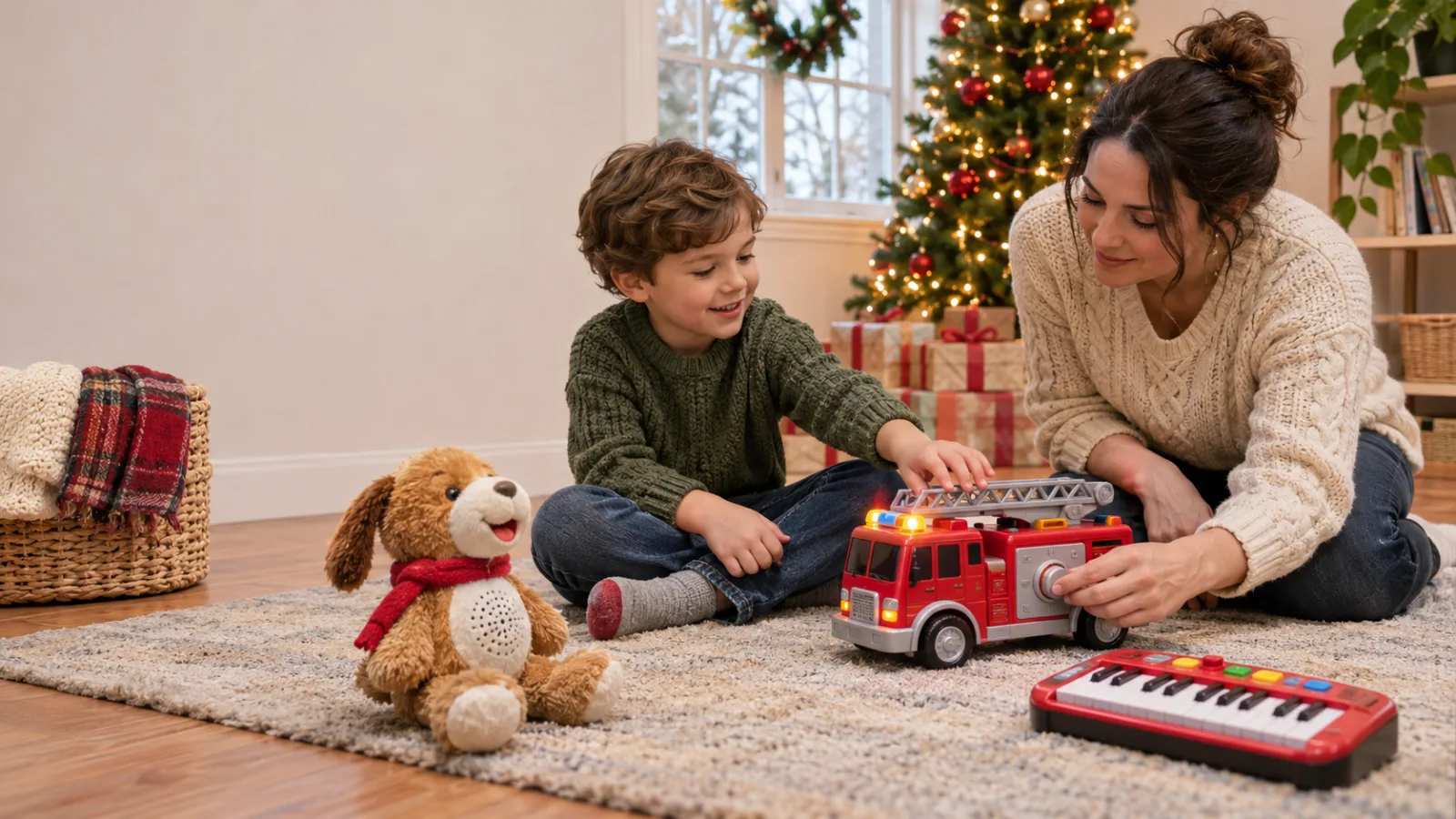
That distinction is behind a recent round of holiday warnings about noisy toys. Parenting coverage has highlighted advice from the Mayo Clinic, while the American Speech-Language-Hearing Association (ASHA), the American Academy of Pediatrics (AAP), the Centers for Disease Control and Prevention (CDC) and the U.S. Consumer Product Safety Commission (CPSC) all offer pieces of the same practical message: volume, distance, duration and repetition matter together.
The useful takeaway is not that families must avoid every electronic toy. It is that sound deserves the same quick pre-purchase check as small parts, batteries, sharp edges and age labeling. A child can enjoy music, pretend play and cause-and-effect toys without being exposed to an unnecessarily aggressive speaker.
Why a toy can be louder for a child than for an adult
Sound is measured in decibels, often written as dB or dBA when the measurement uses an A-weighting designed to reflect human hearing. The number is logarithmic rather than a simple percentage: a modest-looking increase represents a substantial increase in sound energy. Exposure risk also depends on how long the sound lasts, how often it is repeated and how close the source is to the ear.
A child’s normal play pattern can combine all four factors. Young children may press the same button repeatedly, carry a toy from room to room, put a toy against their cheek, or hold a sound-producing object directly beside one ear. Infants and younger toddlers may not understand that a noise is harmful or know how to move away from it. They may also be unable to communicate clearly that their ears hurt or are ringing.
ASHA notes that a sound-producing toy can seem substantially louder when it is held close to the head. Earlier ASHA guidance warns that some toys can reach around 90 dBA in ordinary use and much higher at the ear when placed directly against it. For perspective, the CDC’s National Institute for Occupational Safety and Health (NIOSH) uses 85 dBA averaged over eight hours as a recommended occupational exposure limit for adults, with the recommended exposure time cut in half for each additional 3 dBA. That workplace benchmark is not a child-toy approval label, but it helps explain why “it only plays for a minute” does not answer every safety question.
The AAP also emphasizes that children’s smaller ear canals can intensify some higher-frequency sounds and that noise effects are not limited to hearing. A noisy setting can interfere with sleep, concentration, communication and play. The evidence is not a reason to treat ordinary family life as dangerous; it is a reason to notice repeated, avoidable noise when a quieter design would work just as well.
What the current toy standard does—and does not—tell you
Parents sometimes assume that a toy sold by a mainstream retailer has been tested to a level that is automatically comfortable for every child. Product compliance is important, but compliance is not the same as a promise that the toy will be quiet in every real-life position.
In the United States, children’s toys are covered by mandatory safety requirements based on ASTM F963. The CPSC says the latest accepted version, ASTM F963-23, applies to toys manufactured after April 20, 2024, and that sound-producing toys have specific requirements. The commission also explains that different sections of the standard apply to different products. A toy that meets the applicable rule is not necessarily a toy that a particular child will tolerate well at close range, especially if the child has sound sensitivity.
ASHA has pointed out that some U.S. regulatory changes allow a maximum of 94 dBA for certain push or pull toys in particular modes, while other situations remain subject to different limits. That figure should not be read as a target for shopping. It is a reminder that a legal maximum can still be louder than most parents would choose for a toy used near a young child’s face.
Labels also have limits. An age range tells you about intended developmental use and some hazards, but it rarely tells you whether a siren is piercing, whether a volume control can be locked, or whether the speaker is placed where a child will naturally hold it. Customer reviews can reveal that a toy is painfully loud, but reviews are inconsistent and are not a substitute for an actual measurement.
The practical question is therefore simple: does this toy produce more sound than the child needs for the play value it provides, and can the family control how it is used?
A five-minute check before buying
You do not need laboratory equipment to reject an obviously loud toy. If you are in a store, press every sound button. Try the toy at the position where a child is likely to use it, not only from the distance at which it sits on a shelf. If you can hear it clearly from another room, or if you would have to raise your voice to talk to someone standing a short distance away, treat that as a strong warning sign.
For online purchases, look for specific information rather than vague language such as “immersive sound” or “powerful speaker.” Check whether the product has:
- a genuine low-volume or parental-volume setting;
- a physical switch that a child cannot easily reset;
- a clear off button rather than a toy that continues making sounds after activation;
- a speaker positioned away from the child’s face during normal play;
- reviews that describe volume in practical terms, such as whether adults can talk over it;
- an accessible return policy if the real product is much louder than expected.
A phone sound-meter app can be useful for comparison, particularly if you measure the same toy at a consistent distance. It is not a medical instrument, and measurements vary with the phone, the app, the room and the angle of the speaker. Use it as a screening tool, not as proof that a toy is harmless. The NIOSH Sound Level Meter app is one official option for compatible iOS devices, but a consumer measurement should never be used to justify exposing a child to a loud sound for longer.
When possible, buy from a retailer that allows inspection or returns. A toy that sounds acceptable in a large shop may be harsher in a small bedroom with hard floors and walls that reflect sound.
Which toy categories deserve extra attention
Some categories repeatedly bring the speaker close to the child’s head or encourage repeated activation. That does not make every product in the category unsafe, but it makes a closer check worthwhile.
Toy vehicles and emergency toys. Fire engines, police cars, ambulances, construction vehicles and ride-on toys often use sirens, horns and engine sounds. Look for independent volume control and consider whether the toy will be used indoors. A push toy can be especially tricky because the child may keep the sound source close while walking behind it or pull it beside their body.
Talking dolls and electronic plush toys. These may be held against the face, placed beside a sleeping child, or activated repeatedly by squeezing a hand or pressing a button. Avoid leaving a sound-producing plush toy in a crib or bed. Soft toys also require the usual age, attachment and small-part checks; hearing safety is only one part of the decision.
Toy phones, walkie-talkies and pretend microphones. These products are often used near the ear or mouth. A walkie-talkie can be particularly loud when the speaker is close to the listener and another child speaks directly into it. Test the volume at the distance children actually use, and create a rule that children do not press the speaker against an ear.
Musical toys and beginner instruments. A small keyboard, electronic drum, whistle or recorder may be appropriate for a preschooler or school-age child, but “musical” does not automatically mean gentle. For an older child learning an instrument, time and distance still matter. For drums and amplified equipment, ear protection and breaks may be sensible, especially in a small room.
Toy vacuums, tools and household appliances. A pretend vacuum or drill may imitate a loud real-world object. If the toy is marketed for toddlers, check whether its sound can be reduced or disabled. The child may not be able to judge when the noise is too much, particularly during energetic pretend play.
Ride-on and outdoor toys. Horns, motor sounds and alarms may be less intrusive outdoors, but children can still bring them close to their ears. Outdoor use also creates a different risk: a child may be around lawn equipment, generators, fireworks or amplified events at the same time. A quieter toy does not protect a child from a loud environment around it.
What to do if the toy is already in the house
If a child has received a noisy toy, the first step is not necessarily to throw it away. Start by observing how the toy is used. Does the child hold it beside the ear? Is it played with for ten minutes or for hours? Does the child become distressed, cover their ears or try to escape the room? Does the toy remain switched on while the child is doing something else?
For some products, the safest practical fix is to remove the batteries or use the manufacturer’s low-volume setting. ASHA also suggests placing a small piece of masking tape over the speaker as a temporary way to reduce the sound. That modification can change the toy’s sound and should not cover ventilation openings, battery compartments, safety labels or parts that become hot. Do not make an alteration that creates a loose piece a young child could remove and swallow.
A quieter location helps. Keep sound-producing toys away from a baby’s head, and do not place them in a crib, bassinet or sleep space. Use them in a room where an adult can notice if the child holds the toy too close. Set a play-time limit for repetitive sirens or music, then switch to a quiet activity. The point is not to enforce a perfect schedule; it is to prevent a loud source from becoming background noise for an entire afternoon.
If several toys make noise, avoid turning them all on at once. Multiple moderate sources can produce a stressful environment even when no single toy seems extreme. Children who are sensitive to sound may need a quiet place to reset, not an instruction to “get used to it.”
Age and supervision matter
For babies and young toddlers, direct supervision is the most important control. They may not recognize a warning, move away from a loud source or reliably follow a rule such as “keep it away from your ear.” Choose toys that remain quiet when held close, and avoid products that startle, shriek or play automatically.
For preschool children, show rather than lecture. Demonstrate that a toy belongs on the floor or in the hands, not against the ear. Teach a short rule such as “If it hurts, rings or feels too loud, turn it off and tell an adult.” Give children permission to stop a toy without worrying that they are being difficult.
For school-age children, involve them in the check. Ask whether they can hear another person speaking from a few feet away while the toy is playing. Let them help choose between two products, one with a controllable speaker and one without. This makes hearing protection a practical part of using equipment, rather than a punishment for enjoying noise.
For older children and teenagers, the conversation often shifts to headphones, gaming, concerts and personal devices. The AAP advises that a child should be able to hear when spoken to while using a personal listening device and should take breaks. Volume limiting is useful, but it is not foolproof if a child can change the setting or if background noise encourages them to turn the volume up. Over-ear protection can be more practical than small earplugs for young children, and the AAP cautions that earplugs can present a choking hazard for children who are too young to use them safely.
A child with autism, ADHD, sensory-processing differences or another condition that affects sound tolerance may need an individualized approach. Noise-canceling headphones or hearing-protection earmuffs can reduce unwanted sound, but they should not be treated as a universal solution or worn continuously in situations where a child must hear safety instructions. Ask a pediatrician or audiologist for advice if sound sensitivity is persistent or interferes with daily activities.
White-noise machines are part of the same conversation
A toy is not the only sound source in a nursery. Families may use white-noise machines, fans, sleep soundtracks or mobile devices to mask household noise. These products can be helpful for some routines, but they should be placed as far from the baby’s head as possible, kept at a low volume and used for a limited period rather than running loudly beside the crib.
ASHA advises keeping a sound machine around 50 dBA or lower and placing it across the room from the crib. The AAP also notes that some infant sleep machines can produce hazardous levels. Parents do not need to measure every ordinary household sound, but they should be cautious when a machine is loud enough to dominate the room or when the baby is sleeping directly beside it.
The same distance rule applies to a tablet, phone or speaker used for a child’s bedtime audio. A device placed under a pillow or next to the head is a poor setup even if the volume sounds modest from across the room.
How to recognize a possible problem
A child may not say, “My hearing is temporarily muffled.” Watch for practical clues after a loud toy, concert, fireworks display or extended headphone session. The CDC lists ringing or buzzing in the ears, sounds seeming dull or flat, and difficulty hearing ordinary sounds as warning signs. ASHA also recommends attention to a child who turns the television up to an uncomfortable level, struggles to follow instructions, or develops unexplained difficulties at school or socially.
A single loud blast can cause immediate injury, while repeated exposure can produce gradual noise-induced hearing loss. Persistent ear pain, ringing, buzzing, muffled hearing, unusual sound sensitivity, dizziness or a noticeable change in how a child responds to speech deserves medical advice. An audiologist can perform an appropriate hearing evaluation; a phone app cannot diagnose hearing loss.
Seek urgent medical care after a very loud blast accompanied by severe pain, sudden hearing loss, bleeding or other serious symptoms. For less urgent concerns, contact the child’s pediatrician and describe the sound source, approximate distance, duration, symptoms and whether they continued into the next day. Do not keep testing the child with the same loud toy while waiting to see whether the symptoms disappear.
A calmer way to make the holiday decision
Noise is one item on a buying checklist, not a reason to make every gift feel risky. A sound-producing toy may offer meaningful pretend play, musical exploration or social interaction. The better question is whether the sound is controllable, whether the child can use the toy at a safe distance, and whether the family can pause it without an argument every few minutes.
A quiet alternative can preserve the same play idea. Choose a non-electronic vehicle instead of one with a siren, a puppet instead of a talking doll, wooden blocks instead of an always-on activity center, or a simple instrument that lets the child create sound rather than receiving a fixed recording at full volume. These are not morally superior toys; they are options that give the child more control and give adults more control over the room.
For a noisy toy that is already beloved, try a lower setting, a temporary speaker cover, a different location and shorter play periods before deciding what to do next. If the toy remains painfully loud, cannot be controlled, or is repeatedly held to the ear, returning it is a reasonable safety decision. The child has not failed at playing with it, and the parent has not failed by changing course.
A useful final rule is easy to remember: if the sound is uncomfortable for an adult at the distance where the child uses the toy, it is too loud for that child. Move the source away, turn it down, take a break or choose something quieter. That small check can prevent a great deal of avoidable noise while leaving plenty of room for music, imagination and energetic play.
Sources and further guidance
- American Speech-Language-Hearing Association: Holiday Health Alert—Noisy Toys Can Cause Hearing Loss
- American Academy of Pediatrics: How Noise Affects Children
- American Academy of Pediatrics: AAP Sounds Alarm on Excessive Noise Risks to Children
- CDC/NIOSH: Noise-Induced Hearing Loss
- U.S. Consumer Product Safety Commission: Toy Safety
- Mayo Clinic News Network: So your kids were gifted noisy toys: Now what?
Related articles

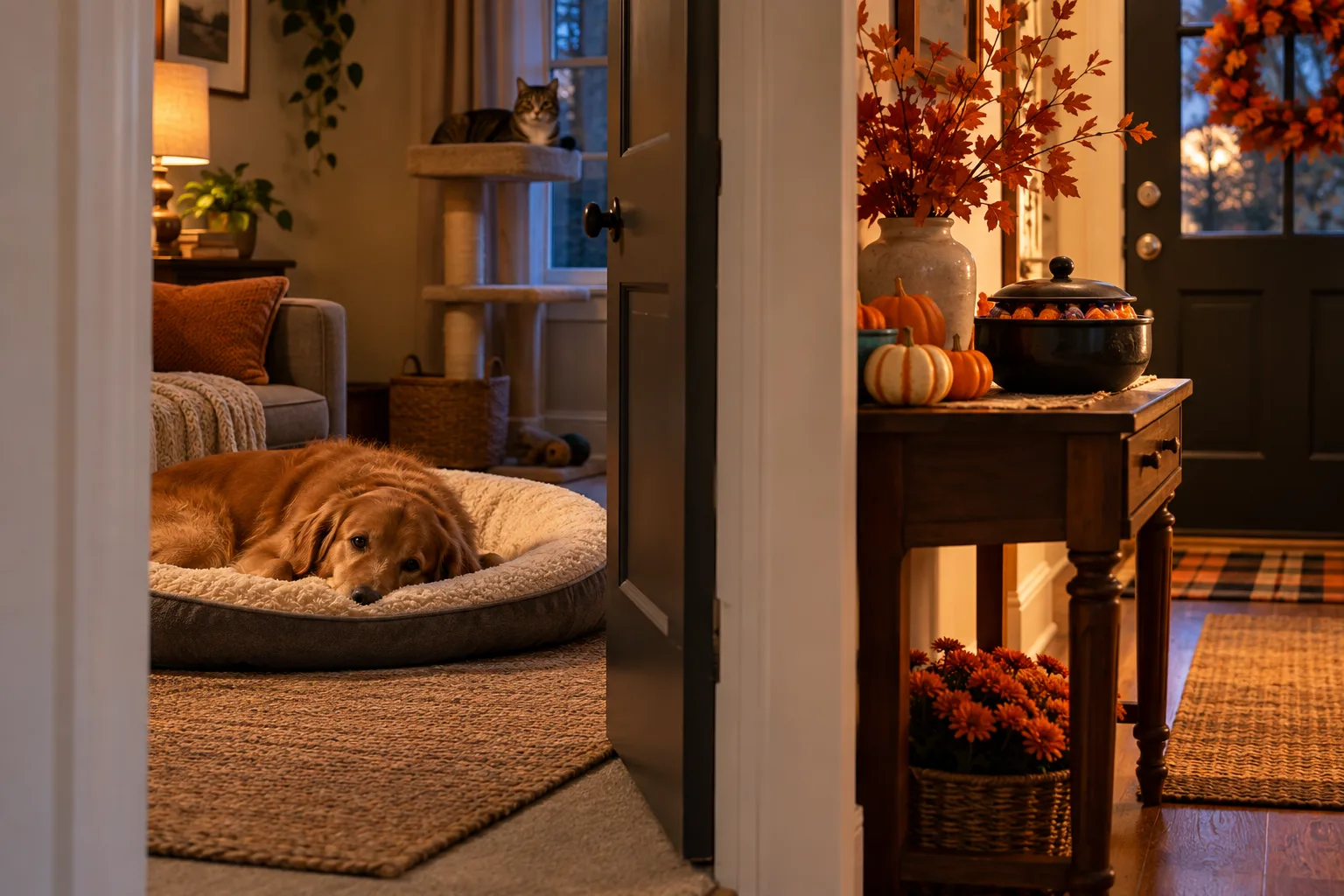
Halloween and Pets: A Calm, Practical Safety Plan for Candy, Costumes, Doors and Decorations
Halloween changes a home in ways pets may find confusing: open doors, unfamiliar visitors, tempting food and chewable decorations. A few simple preparations can prevent poisoning, escapes and unnecessary stress without excluding animals from the evening.
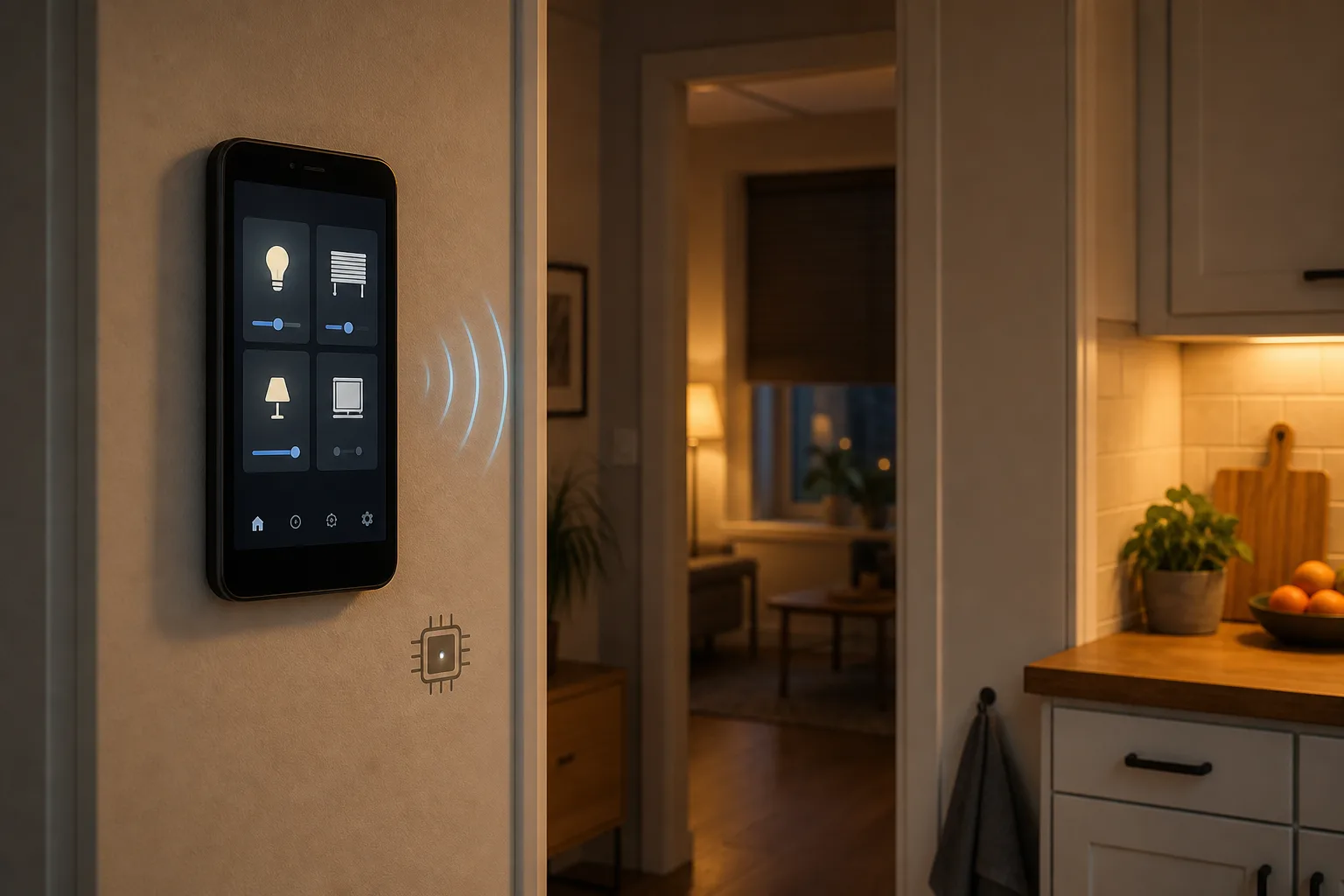
An old Android phone could become a better Home Assistant voice panel — but not yet
Europe’s Android interoperability decision could fix a real smart-home nuisance: local wake words on phones without killing battery or replacing the default assistant.

After AliExpress’s €550 Million Fine: How to Check a Marketplace Gadget Before You Buy
A marketplace listing can look polished and still leave the important safety questions unanswered. Here is a practical pre-purchase check for chargers, batteries, lights and other electronics, using recent regulator findings as context.
Kids’ headphones for school and travel: volume limits are only the first check
A practical, no-guilt checklist for choosing children’s headphones by age, fit, volume, breaks and real family routines.
Comments
Sign in to comment.
No comments yet.