Роботакси упёрлись не только в AI, но и в городские правила
Uber, Waymo, Tesla и регуляторы превращают автономные такси в спор о сенсорах, труде, emergency response и контроле над рынком поездок.

Роботакси перестали быть только задачей робототехники. Они стали задачей городского закона.
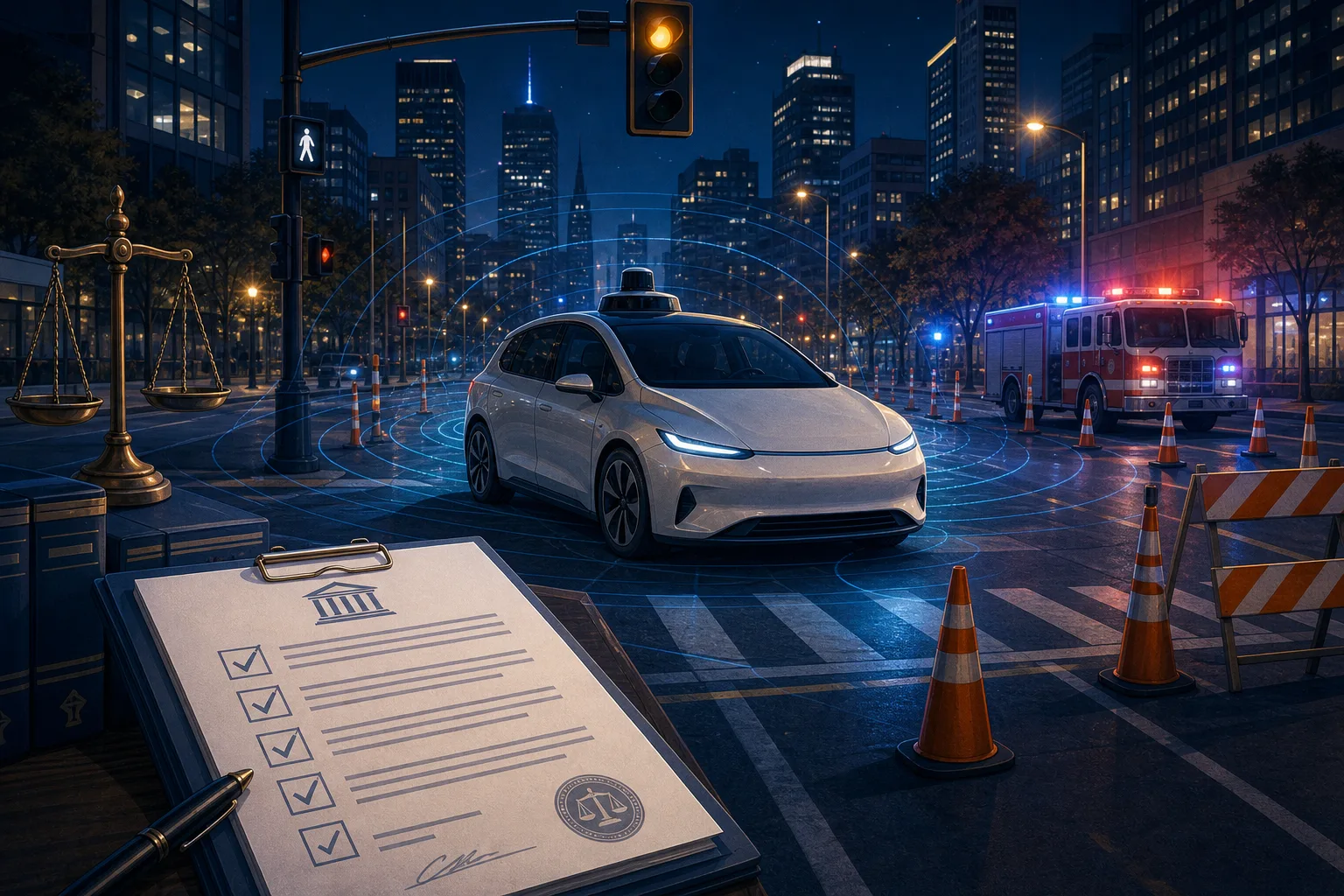
За одну неделю спор об автономных такси ушёл из инженерных презентаций в слушания, налоги, требования к сенсорам, правила для водителей и требования emergency response. Вашингтон, D.C., рассматривает закон, который разрешит коммерческие driverless services. Нью-Джерси обсуждает pilot program, где fully autonomous vehicles должны использовать камеры плюс ещё два типа сенсоров, обычно lidar and radar. Uber продвигает hybrid network, в которой роботакси работают рядом с human drivers на ride-hailing platforms. А NHTSA говорит разработчикам AV: если машина блокирует скорую, пожарных или полицию, это не редкий edge case, а functional insufficiency.
Это важнее очередного demo video. Следующая фаза autonomous transport — не только вопрос "умеет ли машина ехать". Вопросы другие: кто решает, что достаточно безопасно, какой hardware считать обязательным, кто платит за улицы, что будет с human drivers и как робот ведёт себя в хаотичном городе.
Вашингтон решает, кто будет управлять рынком
TechCrunch 13 июля сообщил, что proposed D.C. bill стал test case для рынка robotaxi. Закон должен обновить district's 2012 autonomous-vehicle law и разрешить driverless testing and commercial driverless operations. Сейчас компании могут тестировать AV with human safety operator, но полноценному driverless deployment нужна новая рамка.
Требования серьёзные. По TechCrunch, речь о minimum $5 million liability insurance, crash reporting within eight or 72 hours depending on vehicle type, $0.15 per-mile vehicle-miles-traveled tax, $1 million application fee and $5 million non-refundable permit fee after approval. Доход от VMT tax должен идти partly to public transit and partly to education or workforce development for ride-hail and taxi drivers.
Это не только safety regulation. Это market design.
Uber выступает против D.C. bill в текущем виде. Компания говорит, что first-party robotaxi model может вытеснить human drivers и дать Waymo слишком сильную позицию. Uber хочет hybrid model: riders should access robot rides and human-driven rides inside ride-hailing networks, rather than letting autonomous operators build stand-alone robotaxi businesses.
Waymo смотрит иначе. Компания поддерживает D.C. bill and argues that autonomous operators should be able to deploy safely without being forced into one kind of network. Неловкость в том, что Uber and Waymo are also partners in some cities. Это нынешний robotaxi market: partnership в одном городе, regulatory combat в другом.
Uber пытается удержать platform layer
WIRED 12 июля сообщил, что lobbying Uber не ограничивается D.C. В Нью-Джерси представитель Uber circulated language, по которому driverless ride-hailing platforms должны были бы три года обеспечивать 85 percent of rides by human drivers. По WIRED, это предложение не входит в New Jersey bill, но оно показывает стратегию.
Uber уже не строит autonomous stack сам. Более сильная позиция компании — стать commercial layer, где пассажир получает любую поездку: human, Waymo, Nuro, Baidu, Volkswagen's MOIA or another operator. Uber говорит, что это practical transition, который защищает riders, cities and drivers. Критики видят другое: platform пытается записать gatekeeper role into law before robotaxi companies can sell directly to passengers.
Обе версии частично правдоподобны. Города правда должны думать о labor and accessibility. Сервис только с driverless cars может хуже помогать пожилым пассажирам или людям с инвалидностью, которым нужна физическая помощь. Но правило, которое заставляет autonomous operators идти через incumbent ride-hailing networks, может снизить конкуренцию и замедлить deployment по причинам, далёким от safety.
Поэтому robotaxi regulation already political. Вопрос не "люди или роботы". Вопрос — кто контролирует dispatch layer, когда водитель исчезает.
Нью-Джерси превращает сенсоры в закон
Спор в Нью-Джерси более технический и более взрывной. The Verge 8 июля сообщил, что state bill S1677 создаёт three-year pilot program для fully autonomous vehicles and requires cameras plus two additional sensing technologies. На практике это обычно lidar and radar.
Если текст будет принят в таком виде, это станет first state law with hardware mandate for fully autonomous vehicles. И это фактически закроет Нью-Джерси для current camera-only Tesla Robotaxi approach, если Tesla не поменяет hardware.
Сенатор Andrew Zwicker, sponsor bill, сказал The Verge, что это не anti-Tesla, а pro-New Jersey safety. Его аргумент простой: in the densest U.S. state, single-sensor approach has not yet proven enough for public driverless operation. Bill также reportedly requires supervised miles before removing safety driver, plus authorization and reporting.
Сторонники Tesla видят другой риск. Если lawmakers mandate lidar and radar, они могут frozen one engineering philosophy into statute and block a competitor before performance data decides the argument. Это реальная проблема. Technology law can age badly when it specifies components instead of outcomes.
Но обратный риск тоже реален. Performance-based rules sound elegant, пока city has to decide whether camera-only car can handle glare, smoke, flares, traffic cones, night construction, emergency vehicles and unusual human behavior. Lawmakers выбирают не между innovation and bureaucracy in abstract. Они выбирают, сколько proof нужно before removing human driver.
Политическая мобилизация уже началась. The Verge reported that Zwicker's office received about 4,000 emails in one day after Tesla contacted owners. У материала было more than 200 comments. Это уже не нишевый engineering debate.
NHTSA говорит: emergency scenes не edge cases
Федеральный сигнал важнее всего для safety. 8 июля NHTSA Administrator Jonathan Morrison sent a letter to automated-driving-system developers, saying the agency identified a clear pattern of driverless AVs interfering with law enforcement and first responders. TechCrunch reported that the letter cited vehicles entering active emergency scenes, blocking ambulances or firefighters, and failing to respond to flashing lights, flares, smoke, fire and traffic cones.
Главная фраза меняет тон: emergency scenes are not rare or extreme edge cases.
И это верно. Город — не controlled test track. В нём есть fire trucks, police gestures, temporary cones, broken traffic lights, road workers, flooded streets, construction crews, parades, collisions and confused human drivers. Если robotaxi cannot safely handle the emergency layer of a city, это не missing corner case. Это failure in operating environment.
NHTSA не назвала компании в письме, но context points at robotaxi operators. TechCrunch ранее documented repeated run-ins between Waymo vehicles and first responders. Waymo declined to comment to TechCrunch on the July 8 story.
Agency asked developers and operators to present solutions by the end of the month. It did not define penalties or one approved fix. Возможны разные engineering approaches: better detection, remote assistance procedures, emergency-service communication channels, updated operational design domains, geofencing around active scenes, new training data. Но message blunt: city will not rewrite emergency response around robotaxi limitations.
Сенсоры — только часть спора
Легко свести всё к Tesla vs Waymo, cameras vs lidar. Но главное шире.
Sensors matter. Lidar and radar provide redundancy, especially at night, in glare, poor visibility or unusual road scenes. Camera-only systems may eventually prove good enough in some domains, but regulators ask whether "eventually" is enough for public deployment now.
Platform rules matter too. Robotaxi app that bypasses human-driver platforms may speed competition and lower costs. It may also accelerate job loss and make accessibility harder if the service is not designed for riders who need assistance.
Taxes and fees matter. D.C.'s proposed per-mile tax is not a side detail. Robotaxis can cruise empty, add vehicle miles, compete with transit and use curb space. Cities will want revenue, data and leverage before fleets scale.
Emergency behavior matters most. No city can accept a mobility product that turns emergency scenes into negotiation points between software and firefighters.
Кто выигрывает от разных правил
A law requiring multiple sensors helps companies already built around sensor fusion, such as Waymo and Zoox. It hurts Tesla's current camera-first strategy. A law requiring human-driver ride-hailing networks helps Uber and Lyft. It may hurt autonomous operators that want direct customer relationships. High fees favor the biggest companies and can keep smaller robotics firms out.
Labor rules help human drivers in the short term, but can be written in ways that protect platforms more than workers. Accessibility rules may require more than app button: some passengers need help with doors, wheelchairs, luggage, service animals, pickup points or safe drop-offs.
Public-transit funding can make robotaxi growth less damaging to cities, but only if fees are calibrated well. Too low, and cities subsidize congestion. Too high, and only richest operators can enter.
Passenger sees only a car arriving without driver. Behind that ride is a stack of decisions about insurance, sensors, emergency response, labor, accessibility and data reporting.
Robotics lesson
Robotics becomes real not when machine works in a lab, but when machine has to live inside society with rules, unions, budgets, emergencies and lawsuits.
Robotaxis are at that point. Waymo moved from demonstration to commercial service. Tesla wants to prove a different autonomy stack. Uber wants to own marketplace. Cities want safety, revenue and labor protections. Federal regulators want autonomous vehicles to stop treating emergency scenes as rare exceptions.
The next robotaxi breakthrough may not look like a new neural network or better sensor. It may look like a city law that says exactly what a robot must prove before it can pick up passengers at scale.
Winners will not simply have the best driving software. They will show cities how their robots fit into traffic, public safety, disability access, labor transition and everyday street chaos without asking everyone else to adapt around them.
Related articles
Роботакси стали спором о том, кто пишет правила улицы
Uber, Waymo, Tesla, Нью-Джерси и NHTSA превращают автономные такси из технологического запуска в проверку городской политики.
Роботакси у школьных ворот: что на самом деле проверяет расследование Waymo
Редактированные документы NHTSA превращают низкоскоростной инцидент в вопрос о предосторожности роботакси и публичных доказательствах безопасности.
Карта роботакси — ещё не сервис
Геозона Tesla в Miami и recall Waymo из-за стоячей воды показывают: главная гонка роботакси теперь не за новые карты, а за доказанный operational design domain.
Дроны не убили танк: они изменили робототехнику вокруг него
Combined Resolve и Aurora 26 показывают, почему малые дроны, операторы и быстрые контуры обучения стали не менее важны, чем тяжёлые машины.
Comments
Sign in to comment.
No comments yet.