ChatGPT ads test the trust boundary of AI assistants
OpenAI can label sponsored placements and keep them separate from answers, but conversational advertising still changes how users judge an assistant’s incentives.

ChatGPT advertising is not another banner unit. That is the uncomfortable part.
People ask a conversational assistant to compare products, choose software, plan work, debug a workflow, pick a subscription or decide whether a service is worth paying for. In that moment the interface feels less like a feed and more like advice. OpenAI's new "Advertise in ChatGPT" materials turn that trust boundary into a business product: Ads Manager, campaigns, goals, budgets, measurement and sponsored placements inside ChatGPT.
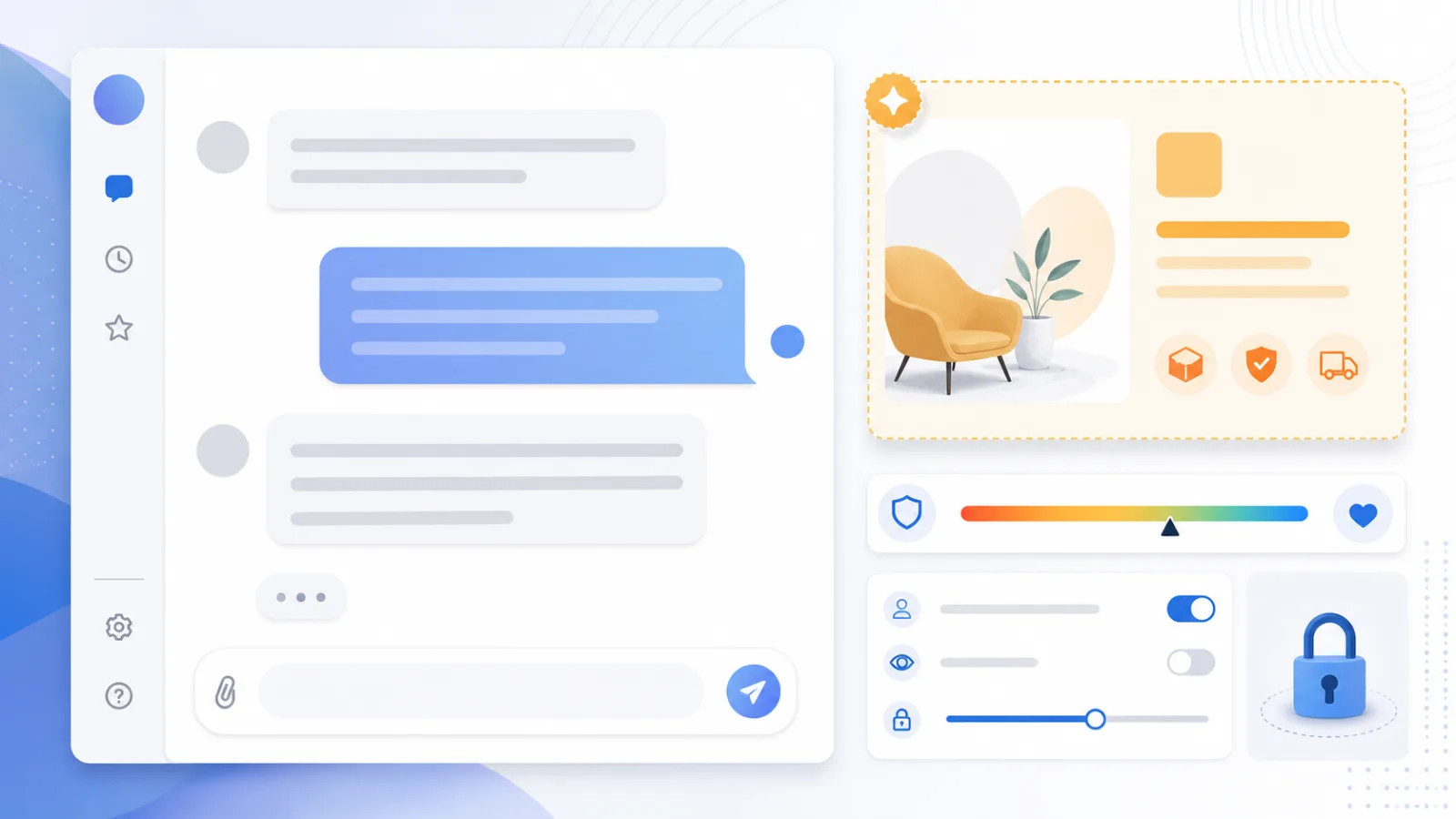
OpenAI says the ads are clearly labeled, separate from ChatGPT's answers and controlled by privacy settings. Its Help Center says ads may appear for Free and Go users, while Plus, Pro, Business, Enterprise and Edu accounts will not have ads. The company also describes an Ads-Free option for Free users, with lower usage limits and reduced access to some tools, and paid plans for users who want no ads without those reduced limits.
That is the product story. The harder question is whether a helper can sell attention without making every answer feel negotiable.
What OpenAI has actually put on the table
The public Ads page is blunt about the pitch. OpenAI wants advertisers to reach people while they explore options, compare choices and make decisions in ChatGPT. After signing up, an advertiser is taken into Ads Manager, where they can create campaigns, set budget and goal, add ad details, launch, measure results and optimize performance. The page includes a Best Buy quote saying consumers use platforms like ChatGPT to research and make decisions, and that Best Buy wants to show up in those moments.
OpenAI's user-facing FAQ adds the operating rules. Ads can appear below the end of a response, visually separated and labeled as sponsored. OpenAI says ads do not influence ChatGPT's answers, run on separate systems from the chat model and cannot be shaped, ranked or altered by advertisers. Seeing an ad also does not mean OpenAI endorses the advertiser.
For selection, OpenAI says it starts with the current chat thread and matches topics to submitted ads. If personalized ads are enabled, additional signals can include past chats, interactions with ads and memory. Advertisers, according to the FAQ, do not receive chats, chat history, memories, name, email, precise location, IP address or sensitive information. They receive aggregated, non-identifying performance data. Ads are not eligible near sensitive or regulated chats such as personal health, mental health or politics, and political advertising is currently not allowed.
Ads Manager availability is not global. OpenAI's availability page lists Australia, Canada, Japan, Korea, New Zealand, the United Kingdom and the United States as available markets. That matters because users and advertisers will see different products depending on plan and country.
Why this feels different from search ads
Search ads are already high-intent. Someone types "best CRM for small business" and ads appear near organic results. ChatGPT ads go one step deeper because the assistant may know the shape of the decision. It can see the current conversation, the constraints the user has already given, the tradeoffs they care about and, if personalization is enabled, relevant history or memory.
That makes the channel attractive. A sponsored card can show up after a user has described a budget, use case and buying stage. For marketers, that is a cleaner intent signal than many keywords. For OpenAI, it is a way to monetize expensive inference for users who do not pay subscription prices.
But the same context makes the format sensitive. A user does not experience ChatGPT as an ad marketplace. They experience it as a system that helps them think. Even if the sponsored card is technically separate, the placement sits next to advice in a trusted interface. That is why the backlash is not just "ads are annoying." It is about incentive alignment. If an assistant earns money when a user clicks a placement, users will ask whether the assistant still works only for them.
The Hacker News thread around "Advertise in ChatGPT" reached roughly 1,066 points and 801 comments. The strongest comments kept returning to the same theme: an agent is valuable only if it is on the user's side. Some argued that free access has to be funded somehow. Others compared the move with user-funded search products such as Kagi, where the business model is easier to understand. The argument is not settled, because both sides have a point. Free AI is expensive, and advertising can subsidize access. Trust is also expensive to rebuild once users start doubting the answer box.
Privacy controls are not the whole answer
OpenAI is trying to draw a bright line: advertisers do not see your chats, ads are labeled, personalization can be controlled and sensitive topics are restricted. Those controls matter. They are better than vague promises.
Still, the hardest issue is perception. If a user asks for a laptop recommendation and a sponsored laptop card appears under the answer, the user may not care that ranking happened outside the model. They will see a recommendation-like object in a recommendation-like flow. The company can say "separate systems" and be technically correct. The user may still feel that the conversation has been commercialized.
Memory raises the stakes. A single search query can be narrow. A chat history can contain work habits, projects, medical anxieties, travel plans, family details, budget constraints and half-formed decisions. OpenAI says advertisers do not receive that data and that sensitive categories are protected. The practical advice for users is still simple: check ad personalization settings, understand whether past chats and memory can be used, use Temporary Chat for sessions that should not feed future context, and pick a paid plan or the Free Ads-Free mode if ads change how much you trust the tool.
Businesses have their own privacy question. Employees may ask ChatGPT about vendors, procurement, pricing, security tools, cloud migrations and competitors. If ads can appear in those workflows for Free or Go accounts, companies should decide whether those accounts are appropriate for work. Many will prefer Business or Enterprise accounts not because the ad is harmful by itself, but because the policy is easier: no ads, fewer ambiguity problems and clearer data controls.
The marketer's opportunity and the brand-safety trap
For advertisers, the opportunity is obvious enough. ChatGPT sits close to decisions. The user might be comparing project-management tools, planning a kitchen remodel, choosing a bank product, learning which camera to buy or deciding where to book a trip. A relevant sponsored placement in that moment could perform well.
The risk is just as obvious. If the placement feels manipulative, the brand takes some of the blame. A search ad is expected. A sponsored card inside an assistant can feel like an interruption in a private conversation. That means early advertisers should test cautiously. They should avoid overclaiming, keep landing pages clean, measure incrementality rather than raw clicks and watch for negative sentiment. A short-term conversion bump is not worth becoming the example people use when they complain that AI assistants have become shopping malls.
The ad policies show OpenAI understands part of this risk. The policies describe advertiser review, ad creative and landing-page review, placement controls, sensitive contexts, scam and fraud enforcement, and restrictions around categories such as health, finance and gambling. The policy surface is already closer to a large ad platform than to a simple beta experiment.
That is good. It also tells us where this is heading. Once you build advertiser verification, placement rules, creative review, eligibility categories, controls and reporting, you are not merely testing a card. You are building an advertising system.
The business pressure behind the move
The economics are not mysterious. ChatGPT has massive usage and expensive infrastructure. OpenAI has subscriptions, enterprise revenue, API usage and partnerships, but a huge free audience still creates pressure to find another revenue line.
Business Insider reported that OpenAI began selling ads in ChatGPT in February 2026 and that advertisers remain both interested and skeptical. Compared with Google and Meta, OpenAI has less mature tooling, less predictable inventory and less proof that conversational ads can scale without hurting the experience. BI also reported analyst doubts about aggressive ad-revenue projections, noting that the chatbot ad market may not be large enough yet to support the biggest numbers without much more user growth, aggressive pricing or a much heavier ad load.
That is the tension. OpenAI needs ads to be meaningful enough to matter financially but light enough not to poison the product. A chat interface cannot carry the same ad density as a social feed or a search results page. The more valuable the assistant feels, the more visible each commercial insertion becomes.
There is also a possible next step around publishers. Business Insider reported that an OpenAI job listing mentioned publisher-side monetization and integrations, then changed after the publication asked about it. OpenAI told BI the role covered agencies and brands and said it was not entering demand extension. The safe reading is not "OpenAI has launched an ad network." It has not publicly confirmed that. The safe reading is that advertisers want more supply than native ChatGPT placements may provide, and publisher distribution would be a logical direction if OpenAI ever chooses to go there.
What users should do
Users should treat ChatGPT ads as a settings and trust decision, not as a moral panic. First, check the plan. Free and Go may see ads in supported regions; Plus, Pro, Business, Enterprise and Edu should not. Second, open ad controls and look at personalization. If past chats and memory are enabled for ads, decide whether that tradeoff is acceptable. Third, use Temporary Chat for sessions that should not influence future personalization. Fourth, consider the Ads-Free Free option if it is available and lower limits are acceptable. If the tool is central to work, a paid no-ad plan may be cleaner.
Users should also develop a habit: separate the answer from the sponsored unit. If ChatGPT compares five options and a sponsored card appears below, treat the card as an ad, not as part of the ranking. Click through only after checking normal sources, prices, reviews and alternatives. That sounds obvious, but assistant interfaces blur boundaries by design. The label matters only if the user actually notices it.
What companies should do
Companies evaluating ChatGPT Ads should start small. Test narrow use cases where the user's intent is clear and the landing page genuinely helps. Measure incremental value, not just click-through. Watch assisted conversion paths, refunds, complaints and brand sentiment. Ask OpenAI what targeting signals are available, what is excluded, how sensitive contexts are filtered, how ads are ranked and what reporting is aggregated.
They should also decide what not to advertise. Some products may be legally allowed but wrong for the context. A mental-health, finance, insurance or medical-adjacent product in a conversational assistant carries more reputational risk than the same product in a normal ad slot. If the assistant is helping someone make a vulnerable decision, the brand should not want to look like it paid to whisper at the exact moment of uncertainty.
AI product teams should watch this launch even if they never buy a ChatGPT ad. Advertising is one answer to AI economics, but it changes product design. Every monetization model creates habits. Subscriptions push teams to justify ongoing value. Usage pricing makes every token visible. Enterprise seats push toward admin controls and compliance. Advertising pushes toward attention, targeting and measurable action. None of those models is pure. The point is to know which incentives you are inviting into the interface.
The trust test
OpenAI is trying to thread a narrow path: keep answers independent, label ads clearly, protect chats from advertisers and use advertising to fund broader access. That path is possible. It is also fragile.
The future of AI assistants will not be decided only by model scores, context windows or tool use. It will be decided by whether users believe the assistant is on their side when money enters the room. If the sponsored card feels like a separate offer, many users will accept it as the price of free access. If it feels like the answer has become a sales surface, the damage will be larger than one bad ad format.
ChatGPT ads are useful to study because they make the incentive question visible. Who pays for the assistant? Who benefits when the user clicks? Who controls the context used for targeting? And when advice and advertising sit in the same conversation, how much separation is enough?
Related articles
ChatGPT Slides Turns Presentation Work into a Shared Workflow. The Review Rules Still Matter
ChatGPT Slides is rolling out to eligible Pro, Business, and Enterprise users with Space access. Its practical value is collaborative editing; its main risks are access inheritance, hidden context, export drift, and weak review discipline.


ChatGPT Work turns AI from chat into an enterprise control plane
OpenAI’s new Work layer is less about better answers than delegated action across files, browser sessions and workplace apps. That makes governance the real story.

当基础 AI 变得免费:ChatGPT 的 Luna 与 Sol 真正改变了什么
ChatGPT 扩大免费文本访问后,购买决策的重点从模型入口转向控制、信任和工作流可靠性。

ChatGPT Slides превращает работу над презентацией в общий процесс. Но правила проверки по-прежнему важны
ChatGPT Slides выходит для пользователей Pro, Business и Enterprise с доступом к Space. Главная ценность — совместное редактирование, а основные риски связаны с наследованием доступа, скрытым контекстом, изменениями при экспорте и недостаточной проверкой.
Comments
Sign in to comment.
No comments yet.