Why We Built Publicasta
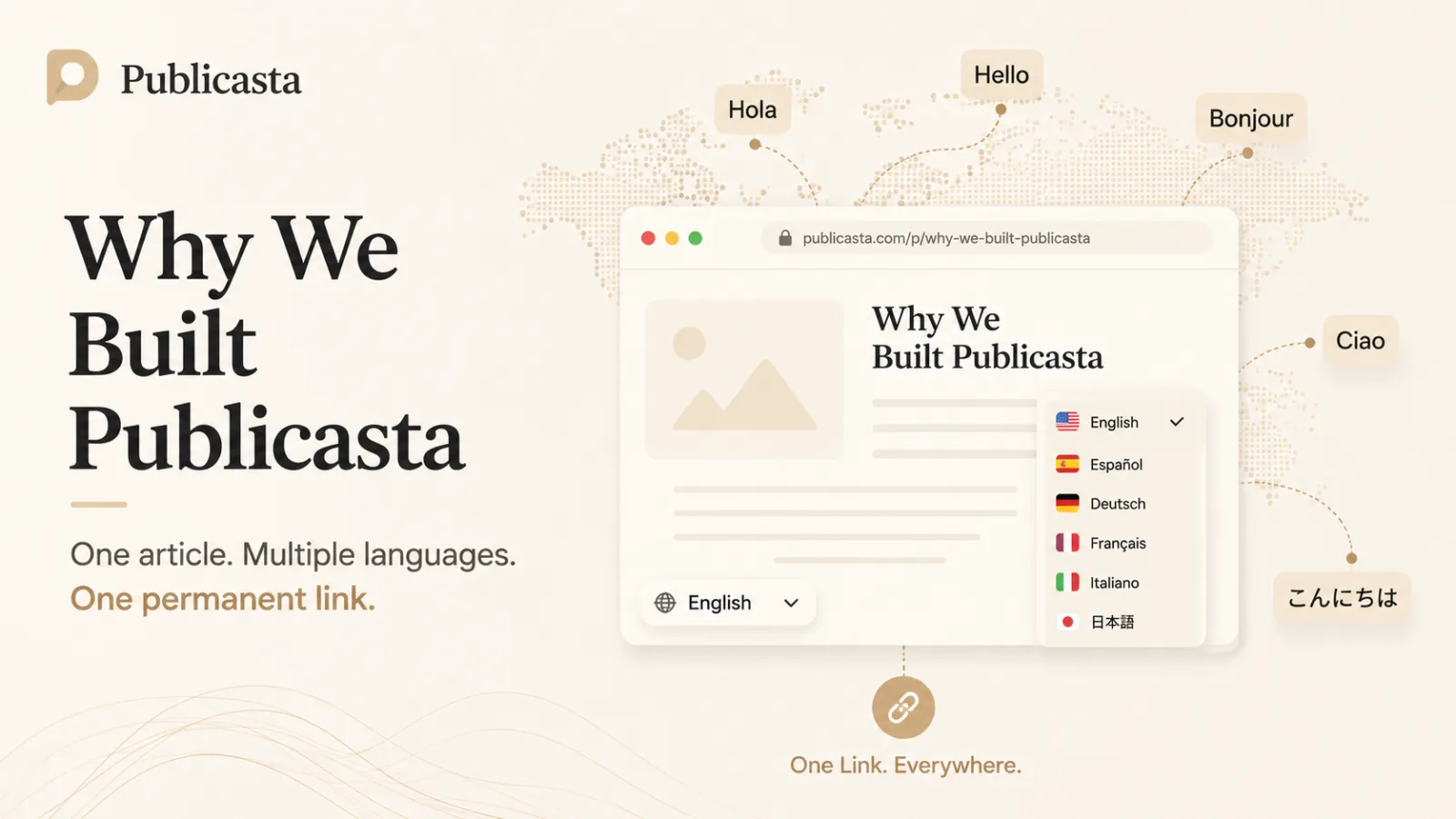
Why does the same article become multiple publications just because it's translated? This simple question led us to create Publicasta. One article, multiple language versions, and one permanent link that automatically opens in the reader's language.
Publicasta wasn't created because the world needed another publishing platform.
It was created because we ran into a problem we couldn't solve with the tools that already existed.
Over the past few years, we've lived in different countries while building products for an international audience.
At first, publishing everything in English seemed like the obvious choice. After all, English is the language of the tech industry.
Reality turned out to be different.
Most people prefer reading in their native language. Even when they understand English, they'll usually choose an article in Spanish, German, French, Italian, or any other language they use every day.
And that makes perfect sense.
As our projects reached more countries, a new challenge appeared.
How do you publish the same article in multiple languages?
We tried the usual approaches.
Separate websites.
Separate blogs.
Different publishing platforms.
Even our own publishing system.
But after a while we realized the platform itself wasn't the real problem.
The problem was that one article stopped being one article.
It became several independent publications.
Each had its own URL.
Its own settings.
Its own audience.
Its own life.
Even though the content was essentially the same.
That led us to a simple question.
Why should translating an article create a completely new publication?
A translation isn't a new article.
It's simply another language version of the same one.
That idea became the foundation of Publicasta.
In Publicasta, an article is a single entity.
It can exist in one language—or in ten.
Each translation is created and maintained by the author. Nothing is translated automatically.
But every language version remains part of the same publication.
The article has one permanent URL.
That's the only link you need to share on Facebook, X, LinkedIn, Telegram, email, your own website—or anywhere else.
When someone opens that link, Publicasta checks their browser language. If the author has provided a translation, that version is displayed automatically. If not, the reader can switch to any available language with a single click.
One article.
Multiple languages.
One permanent link.
That's the idea Publicasta was built on.
Related articles
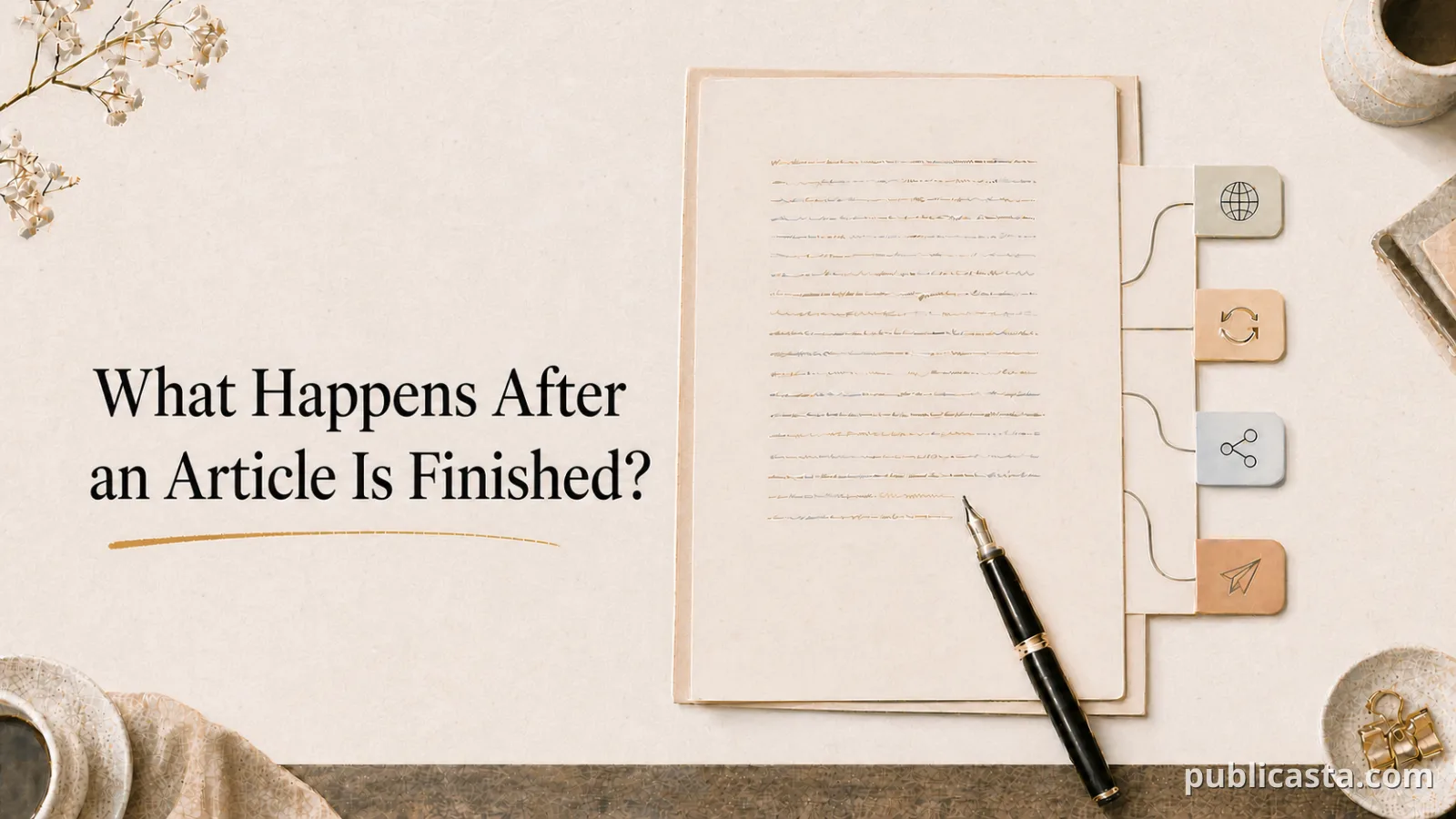
What Happens After an Article Is Finished?
Writing an article is only the beginning. Discover what happens after the final draft—and why translations, updates, and distribution should remain part of one publication with one permanent link.
Welcome to Publicasta 👋
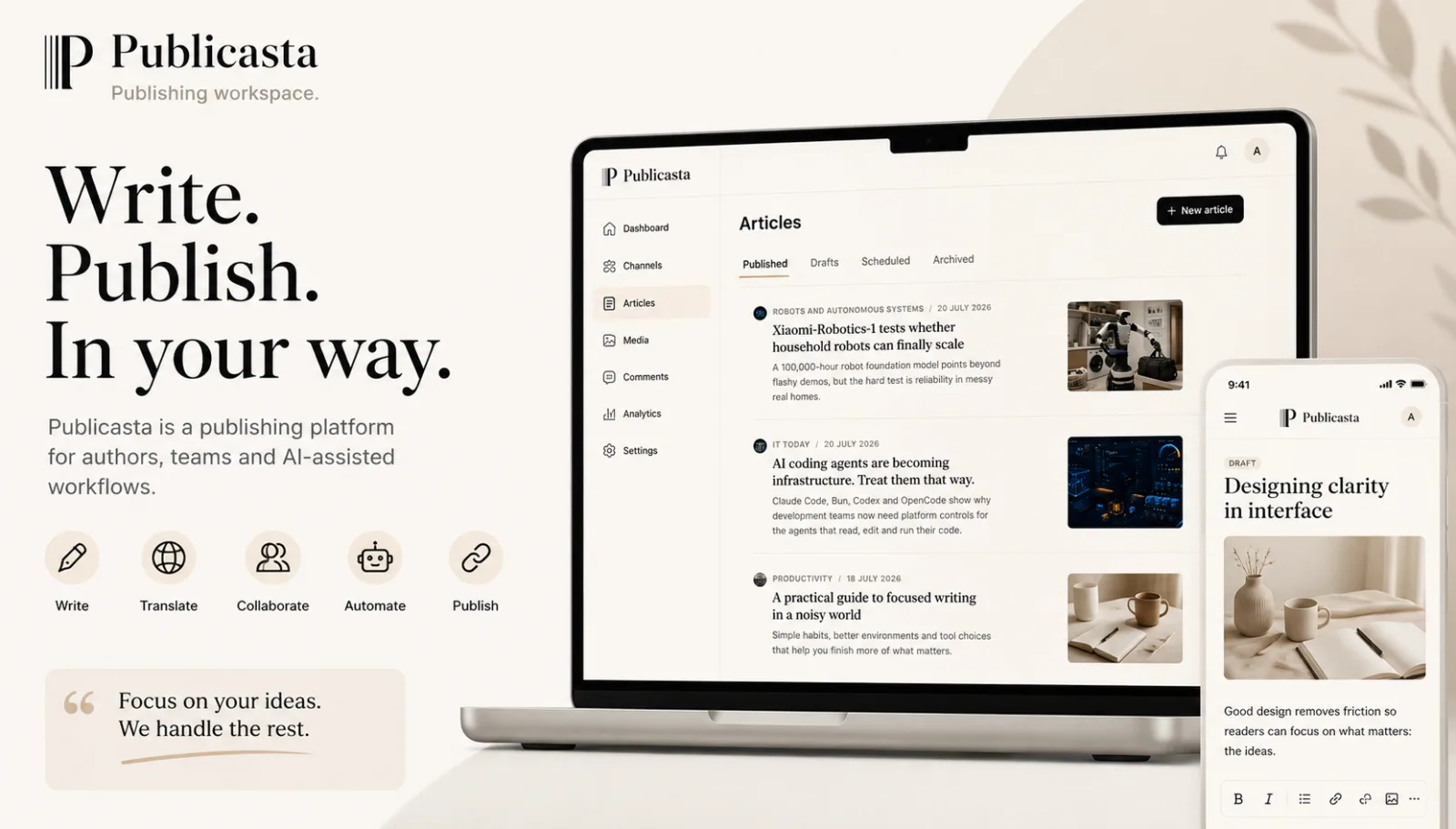
Welcome to Publicasta. We're building a modern publishing workspace where authors and teams can write, translate, collaborate and publish beautiful articles on the open web.
AI Learned to Write. But Who Will Publish What It Creates?
AI can already write. The bigger question is what happens next. Publishing, versioning, translations and ownership become the real challenges in a world where both humans and AI create content.
What if publishing an article could be simple again?
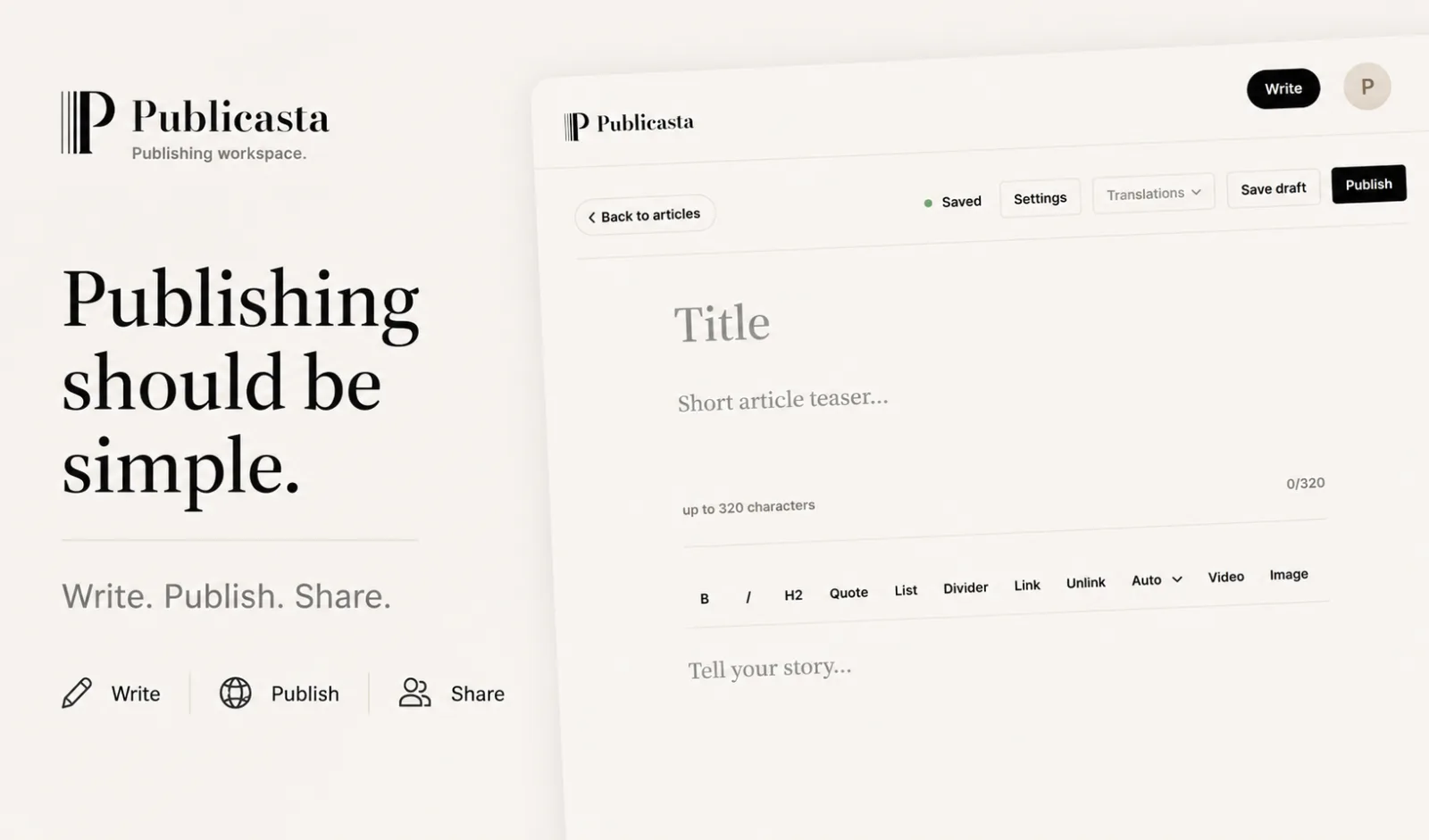
Publicasta is a publishing platform designed for authors, bloggers, and small teams. Create a channel, write an article, and publish it on the open web—without managing your own CMS or website.
Comments
Sign in to comment.
No comments yet.